
 Infos pour
 Accès direct
 UFR
UFR


Dr. Regine Bader
Wissenschaftliche Mitarbeiterin
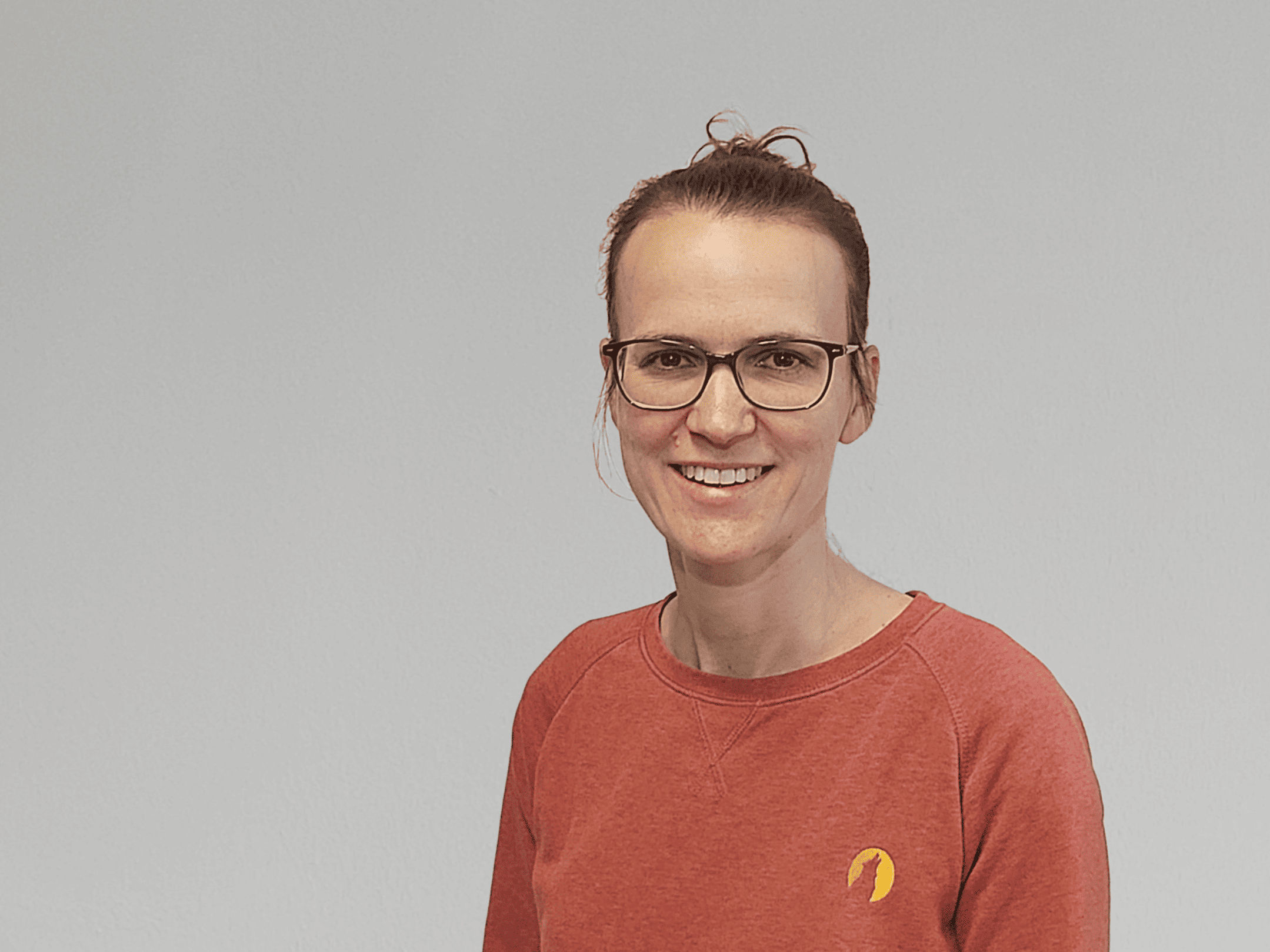
Dr. Regine Bader
Universität des Saarlandes
FR Psychologie
Campus A2 4
D-66123 Saarbrücken
Raum 2.11
Telefon (+49) 681/ 302 58082
regine.bader(at)mx.uni-saarland.de
Curriculum Vitae
Research Interests
- Neurocognition of long-term memory and language
- Spatiotemporal brain imaging (EEG; fMRI)
Education
- 2001-2006: B. Sc. in Computational Linguistics, Saarland University
- 2003-2009: Diploma in Psychology, Saarland University
- 2013: Ph.D. in Psychology, Saarland University. Dissertation: Using Unitization as Encoding Strategy in Associative Memory: Behavioral, ERP, and fMRI evidence
Career
- Sept 2009-Sept 2012: PhD position in the IRTG “Adaptive Minds”, Saarland University
- Feb 2012-March 2012: Research visit: Institute of Psychology at the Chinese Academy of Sciences, Beijing, China
- Nov 2012-Sept 2014: Research Associate, Department of Cognitive and Clinical Neuroscience, Central Institute of Mental Health, Medical Faculty Mannheim, Heidelberg University
- Since Oct 2014:Research Associate, Experimental Psychology Unit, Saarland University
Research Grants
- 2015-2020: Instantaneous association-building bypassing the hippocampus (DFG: BA 5381/1-1, together with Patric Meyer, Central Institute of Mental Health, Mannheim)
- 2021-2026: Nature, stability and integration of associations acquired by means of fast mapping (DFG: BA 5381/1-2, together with Patric Meyer, SRH University Heidelberg)
- 2022-2026: DFG Collaborative Research Center (CRC 1102): Information density and Linguistic encoding. Project A6: Expectancy-based mechanisms during language comprehension and their relation to memory formation and retrieval
- Since 2026: Examining the Complexity of Familiarity: Unified Process or Distinct Mechanisms? (DFG: BA 5381/3-1, together with Patric Meyer, SRH University Heidelberg)
Ad hoc reviewer for
Aging Brain / American Journal of Psychology / Biological Psychology / Brain and Behavior / Brain & Cognition / Brain Research / Brain Sciences / Cognition / Communications Psychology / Deutsche Forschungsgemeinschaft /European Journal of Psychological Assessment / Frontiers in Human Neuroscience / Frontiers in Psychology / International Journal of Psychophysiology / Journal of Cognitive Neuroscience / Journal of Memory and Language / Journal of Psychophysiology / Memory / Neurobiology of Learning & Memory / Neuropsychologia / Neuroscience Letters / PLOS ONE / Psychonomic Bulletin & Review / Psychophysiology / Quaterly Journal of Experimental Psychology / Scientific Reports / Science of Learning
Publications
Journal Articles (peer-reviewed)
2026
Bergum, A., Maurer, A. M., Peitek, N., Bader, R., Mecklinger, A., Demberg, V., ... & Apel, S. (2026). Fixation-related potentials reveal that confusing program code elicits a late frontal positivity. Scientific Reports, 16(1), 16833.
Festag, L., Zaiser, A. K., Meyer, P., & Bader, R. (2026). Retrieval processes reflect the representational format of memories acquired through fast mapping: ERP evidence for conceptual fluency-based familiarity. Neuropsychologia, 109507.
Huffer, V., Bader, R., & Mecklinger, A. (2026). The search for meaning: Age-related differences in the semantic N400 effect for picture pairs are unrelated to semantic benefits in episodic memory. Psychology and Aging.
Zogaj, D., Bader, R. & Mecklinger, A. (2026). How the Brain Segments Experience: ERP Evidence of Event Boundaries Enhancing Memory Formation in Narratives. Cognitive, Affective and Behavioral Neuroscience, 1-18.
2025
Festag, L., Tarantini, L., Mecklinger, A. & Bader, R. (2025). Discrepancy attribution depends on retrieval context: Evidence from the word frequency mirror effect. Memory and Cognition.
Höltje, G., Bader, R., Meßmer. J., Zogaj, D. & Mecklinger, A. (2025) Unexpected words that become your best memories: How sentential constraint and word expectedness affect memory retrieval. Frontiers in Human Neuroscience.
Spalek, K., Bader, R., Glaser, S., Höltje, G., & Mecklinger, A. (2025). Contrastive focus accent retroactively modulates memory for focus alternatives: evidence from event-related potentials. Language, Cognition and Neuroscience, 1-18.
2024
Meßmer, J.A., Bader, R. & Mecklinger, A. (2024). Schema-Congruency Supports the Formation of Unitized Representations. Evidence From Event-Related Potentials. Neuropsychologia, 108782.
2023
Bader, R., Tarantini, L., & Mecklinger, A. (2023). Task context dissociates the FN400 and the N400. Psychophysiology, e14258.
2022
Huffer, V., Bader, R., & Mecklinger, A. (2022). Can the elderly take the action?–The influence of unitization induced by action relationships on the associative memory deficit. Neurobiology of Learning and Memory, 107655.
Zaiser, A.-K., Bader, R., & Meyer, P. (2022). High feature overlap reveals the importance of anterior and medial temporal lobe structures for learning by means of fast mapping. Cortex. 146, 74-88.
Zaiser, A.-K., Meyer, P., & Bader, R. (2022). High feature overlap and incidental encoding drive rapid semantic integration in the fast mapping paradigm. Journal of Experimental Psychology: General, 151(1), 97-120.
2021
Meßmer, J.A., Bader, R. & Mecklinger, A. (2021) The more you know: Schema-congruency supports associative encoding of novel compound words. Evidence from event-related potentials. Brain and Cognition. 155, 105813.
Kuhn, L.K., Bader, R. & Mecklinger, A. (2021). Effects of emotional study context on immediate and delay recognition memory: Evidence from event-related potentials. Cognitive, Affective and Behavioral Neuroscience, 22, 57-74.
Tarantini, L., Bader, R. & Mecklinger, A. (2021): The ERP Correlate of Episodic Recollection is a Neurocognitive Determinant of Subjective Memory Complaints: Implications on their Predictive Validity. Neuropsychology, 35(7), 742-761.
2020
Bader, R., Mecklinger, A., & Meyer, P. (2020). Usefulness of familiarity signals during recognition depends on test format: Neurocognitive evidence for a core assumption of the CLS framework. Neuropsychologia, 148, 107659.
Eschmann, K. C., Bader, R., & Mecklinger, A. (2020). Improving episodic memory: Frontal-midline theta neurofeedback training increases source memory performance. NeuroImage, 222, 117219.
Mecklinger, A., & Bader, R. (2020). From fluency to recognition decisions: A broader view of familiarity-based remembering. Neuropsychologia, 146, 107527.
2019
Zaiser, A.-K., Meyer, P., & Bader, R. (2019). Evidence for fast mapping in adults – Moderating factors yet need to be identified [Commentary on the paper “Little evidence for fast mapping (FM) in adults: A review and discussion” by E. Cooper, A. Greve, & R. N. Henson]. Cognitive Neuroscience, 10, 232-233.
2018
Kamp, S-M., Bader, R., & Mecklinger, A. (2018). Unitization of word pairs in young and older adults: Encoding mechanisms and retrieval outcomes. Psychology and Aging. 33(3), 497-511.
Eschmann, K. C. J., Bader, R., & Mecklinger, A. (2018). Topographical differences of frontal-midline theta activity reflect functional differences in cognitive control abilities. Brain & Cognition, 123, 57-64.
2017
Bader, R. & Mecklinger, A. (2017). Separating event-related potential effects for conceptual fluency and episodic familiarity. Journal of Cognitive Neuroscience, 29(8), 1402-1414.
Bridger, E. K., Kursawe, A.-L., Bader, R., Tibon, R., Gronau, N., Levy, D., & Mecklinger, A. (2017). Age effects on associative memory for novel picture pairings. Brain Research, 1664, 102-115.
Kamp, S., Bader, R., Mecklinger, A. (2017). ERP subsequent memory effects differ between inter-item and unitization encoding tasks. Frontiers in Human Neuroscience, 11, 30.
2016
Kamp, S-M., Bader, R. & Mecklinger, A. (2016). The effect of unitizing word pairs on recollection versus familiarity-based retrieval - further evidence from ERPs. Advances in Cognitive Psychology, 12(4), 168-177.
2014
Bader, R., Opitz, B., Reith, W., & Mecklinger, A. (2014). Is a novel conceptual unit more than the sum of its parts?: FMRI evidence from an associative recognition memory study. Neuropsychologia, 61, 123–134.
Bridger, E., Bader, R., & Mecklinger, A. (2014). More ways than one: ERPs reveal multiple familiarity signals in the word frequency mirror effect. Neuropsychologia, 57, 179–190.
2012
Bridger, E. K., Bader, R., Kriukova, O., Unger, K. & Mecklinger, A. (2012). The FN400 is functionally distinct from the N400. NeuroImage, 63, 1334-1342.
2010
Wiegand, I., Bader, R., & Mecklinger, A. (2010). Multiple ways to the prior occurrence of an event: An electrophysiological dissociation of experimental and conceptually driven familiarity in recognition memory. Brain Research, 1360, 106-118.
Bader, R., Mecklinger, A., Hoppstädter, M., & Meyer, P. (2010). Recognition memory for one-trial-unitized word pairs: Evidence from event-related potentials. NeuroImage, 50, 772-781.
2008
Frings, C., Bader, R., & Spence, C. (2008). Selection in touch: Negative priming with tactile stimuli. Perception & Psychophysics, 70, 516-523.
Conference Contributions
Zogaj, D., Bader, R., & Mecklinger, A. (2026). Neural Signatures of Event Boundary Effects in Episodic Memory Retrieval. Poster presentation at the 33nd Annual Meeting of the Cognitive Neuroscience Society (CNS), Vancouver, Canada.
Zogaj, D., Bader, R., & Mecklinger, A. (2026). When Stories Shift: Event Boundaries Effects on Episodic Memory Formation. Poster presentation at 68th Tagung experimentell arbeitender Psycholog*innen (TeaP), Tübingen, Germany.
Bader, R., Engels, S., & Mecklinger, A. (2025). Confirmed and Violated Predictions Benefit Long-Term-Memory. Talk presented at RAILS, Saarbrücken, Germany.
Festag, L., Zaiser, A. K., Meyer, P., & Bader, R. (2025). Targeting the Specificity of Associations Encoded through Fast Mapping Using Explicit Measures. Poster presented at the 4th edition of the Recollection, Familiarity and Novelty (RFN) Conference, Liège, Belgium.
Festag, L., Zaiser, A. K., Meyer, P., & Bader, R (2025). Conceptual Fluency Supports Retrieval of Labels Encoded Through Fast Mapping: Evidence from Event-Related Potentials. Poster presented at the 32nd Annual Meeting of the Cognitive Neuroscience Society (CNS), Boston, USA.
Meyer, P., Zaiser, A. K., Festag, L., & Bader, R (2025). N400 Evidence for Rapid Semantic Integration Through Fast Mapping. Poster presented at the 32nd Annual Meeting of the Cognitive Neuroscience Society (CNS), Boston, USA.
Mecklinger, A., Zogaj, D., & Bader, R. (2025). Event boundaries trigger fast memory reinstatement of boundary words and of boundary-preceding words: Evidence from ERP subsequent memory effects. Talk at the 4th edition of the Recollection, Familiarity and Novelty (RFN) Conference, Liège, Belgium.
Zogaj, D., Bader, R., & Mecklinger, A. (2025). Marking the Moments: ERP Evidence of Event Boundaries Enhancing Memory Formation in Narratives. Poster presented at the 32nd Annual Meeting of the Cognitive Neuroscience Society (CNS), Boston, USA.
Zogaj, D., Bader, R., & Mecklinger, A. (2025). From Moments to Memories: Unveiling the Role of Event Boundaries in Narratives. Poster presented at the 2nd edition of the conference on Rational Approaches in Language Science (RAILS), Saarbrücken, Germany.
Meßmer, J. A., Bader, R., Höltje, G., Festag, L., Mecklinger, A. (2024). Less Time to Predict During Encoding Does Not Affect Memory for Expected but for Unexpected Information. Poster presented at the 64th Annual Meeting of the Society for Psychophysiological Research (SPR), Prague, Czech Republic.
Huffer, V., Bader, R., & Mecklinger, A. (2024). Age-related differences in the semantic N400 effect are unrelated to semantic benefits in episodic memory. Poster presented at the 31st Annual Meeting of the Cognitive Neuroscience Society (CNS) in Toronto, Canada.
Mecklinger, A., Bader, R., Glaser, S., Höltje, G., & Spalek, K. (2024). The neural signature of retrograde memory enhancement by contrastive focus accent. Poster presented at the 31st Annual Meeting of the Cognitive Neuroscience Society (CNS) in Toronto, Canada.
Bader, R., Braun, M., & Weigl, M. (2024). Item memory benefits from schema congruency and incongruency. Poster presented at the 31st Annual Meeting of the Cognitive Neuroscience Society (CNS) in Toronto, Canada.
Festag, L., Zaiser, A. K., Meyer, P., & Bader, R. (2023, March). Associations acquired by means of fast mapping are less flexible when critical preconditions are fulfilled. Poster presented at the 3rd edition of the Recollection, Familiarity and Novelty (RFN) Conference, Liège, Belgium.
Festag, L., Tarantini, L., Mecklinger, A., & Bader, R. (2023, March). Context modulates discrepancy attribution processes: Evidence from the word frequency mirror effect. Poster presented at the 3rd edition of the Recollection, Familiarity and Novelty (RFN) Conference, Liège, Belgium.
Huffer, V., Bader, R., & Mecklinger, A. (2023). Does that make sense? – The impact of semantic relationships between object pairs on the age-related associative memory deficit. Poster presented at the 3rd edition of the Recollection, Familiarity and Novelty Conference (RFN) in Liège, Belgium.
Zaiser, A.-K., Bader, R., & Meyer, P. (2023). Associations Acquired Through Fast Mapping Evoke an N400 Semantic Priming Effect When Feature Overlap is High. Poster presented at the 3rd edition of the Recollection, Familiarity and Novelty (RFN) Conference, Liège, Belgium.
Meßmer, J. A., Bader, R. & Mecklinger, A. (2022). The more you know: Schema-congruency supports familiarity-based retrieval of novel compound words. Evidence from event-related potentials [Talk as part of Symposium]. TeaP 2022 – 64th Conference of Experimental Psychologists, Cologne, Germany.
Huffer, V., Bader, R., & Mecklinger, A. (2021). Can you remember what you can do? – The impact of action relationships as bottom-up unitization approach on the associative memory deficit. Poster presented at the “46. Jahrestagung Psychologie und Gehirn online” in Tübingen, Germany.
Huffer, V., Bader, R., & Mecklinger, A. (2019). It’s time for Action! – Does the presence of an action relationship reduce the associative memory deficit? Poster presented at the 2nd edition of the Recollection, Familiarity and Novelty Conference (RFN) in Liège, Belgium.
Zaiser, A.-K., Bader, R., & Meyer, P. (2019, March). Degree of feature overlap modulates subsequent memory effects in medial and anterior temporal lobe structures in the fast mapping paradigm. Poster presented at the 26th Annual Meeting of the Cognitive Neuroscience Society (CNS) in San Francisco, USA.
Zaiser, A.-K., Meyer, P., Mecklinger, A., & Bader, R. (2017, August). Rapid integration of novel associations by means of fast mapping – the role of feature overlap. Poster presented at the 13th International Conference for Cognitive Neuroscience in Amsterdam, Netherlands.
Bader, R., Mecklinger, A., & Meyer, P. (2017, August). Effects of test format on familiarity-based recognition in tasks with similar foils: an ERP study. Poster presented at the 13th International Conference for Cognitive Neuroscience in Amsterdam, Netherlands.
Bader, R., & Mecklinger, A. (2016, April). Interactions of Conceptual Fluency and Episodic Familiarity as Reflected in Event-Related Potential. Poster presented at the 23rd Cognitive Neuroscience Society Annual Meeting, San Francisco, USA.
Kamp, S.-M., Bader, R., & Mecklinger, A. (2015, April). ERP subsequent memory effects differ between inter-item and unitization encoding tasks. Poster presented at the 22nd Cognitive Neuroscience Society Annual Meeting, San Francisco, USA.
Bader, R., Mecklinger, A., Opitz, B., & Reith, W. (2012, April). The influence of unitization encoding on the neural correlates of associative recognition: Evidence from functional magnetic resonance imaging. Poster presented at the 19th Cognitive Neuroscience Society Annual Meeting, Chicago, USA.
Bridger, E., Bader, R., Kriukova, O., Unger, K., & Mecklinger, A., Opitz, B., Reith, W. (2012, April). The FN400 is electrophysiologically and functionally distinct from the N400. Poster presented at the 19th Cognitive Neuroscience Society Annual Meeting, Chicago, USA.
Bader, R., Wiegand, I., & Mecklinger, A. (2010, July). Unexpected conceptual fluency influences familiarity in associative recognition memory: Evidence from event-related potentials. Poster presented at the Symposium: Recognition Memory Mechanisms: From proteins to patients in Bristol, UK.
Claus, B., & Bader, R. (2010, January). Desiderative Sentence Mood and Approach/Avoidance Actions. Poster presented at the EPS workshop: The Representation of Abstract Words in London, UK.
Claus, B., & Bader, R. (2009, March). Action-Mood-Compatibility: Desiderative Sentence Mood and Approach/Avoidance Actions. Poster presented at the 22nd Annual Meeting of the CUNY Conference on Human Sentence Processing in Davis, USA.
Mecklinger, A., Bader, R., Hoppstädter, M., & Meyer, P. (2009, April). Familiarity supports associative recognition of unrelated words: An event-related potential study. Poster presented at the 15th International Congress on Event-Related-Potentials of the Brain in Bloomington, USA.
Bader, R., Mecklinger, A., Hoppstädter, M., & Meyer, P. (2008, August). Electrophysiological evidence for familiarity-based recognition of one-trial-unitized word pairs in the absence of recollection. Talk at the ESRC Cognitive Electrophysiology UK Seminar 2 in Stirling, UK.
Claus, B., & Bader, R. (2008, July). Processing sentences in desiderative mood affects approach/avoidance actions. Talk at the XXIX International Congress of Psychology in Berlin, Germany.
Claus, B., & Bader, R. (2007, August). Pushing versus pulling: Desiderative sentence mood facilitates approach related motor actions. Talk at the Embodied Sentence Processing Workshop (ESP07) in Saarbrücken, Germany.
Frings, C., Bader, R., & Spence, C. (2007, August). Selection in touch: Negative priming with tactile stimuli. Poster presented at the European Conference of Cognitive Psychology 2007 in Marseille, France.