
 Information for
 Quick links
 Faculties


Willkommen auf der Lehrstuhl-Website!

Wie reagieren Staaten und internationale Institutionen auf systemischen Druck? Können sie aus Krisen lernen, ohne dabei rechtsstaatliche Bindungen preiszugeben? Diesen Fragen widmet sich der Lehrstuhl von Prof. Dr. Anne Dienelt, maîtr. en droit (Aix-en-Provence) an der Schnittstelle von öffentlich-rechtlichem Nachhaltigkeitsrecht, Völkerrecht und rechtswissenschaftlicher Resilienzforschung.
Der Lehrstuhl ist an der Rechtswissenschaftlichen Fakultät der Universität des Saarlandes angesiedelt. Als Clusterprofessur im CEUS — Cluster für Europaforschung ist er zugleich Teil des universitätsweiten Europaschwerpunkts und forscht an der Schnittstelle von Völkerrecht, europäischer und internationaler Mehrebenenarchitektur und rechtswissenschaftlicher Resilienzforschung.
Aktuelles

NEUE VORLESUNG an der UdS:
Nachhaltigkeit im Recht - Ein neues Rechtsgebiet?
Klimaklagen, IGH-Gutachten, Lieferkettenpflichten: Nachhaltigkeit ist längst ein Thema für Gerichte und Gesetzgeber, im deutschen Recht, im Europarecht und auch im Völkerrecht. Aber was genau folgt daraus rechtlich? Und gibt es überhaupt ein eigenes „Recht der Nachhaltigkeit“? In dieser Vorlesung von Prof. Dr. Anne Dienelt gehen wir dem nach: in kleiner Gruppe und mit viel Raum für Diskussion. Die Teilnehmenden üben, Rechtsfragen über mehrere Ebenen hinweg zu verbinden und eigene Positionen zu offenen Streitfragen zu begründen. Immer mittwochs um 10 Uhr c.t. in Geb. B4 1, Raum 0.20. Weitere Informationen und Anmeldung hier.
Seminar WS 2026/2027
Liebe Studierende,
die Themen für unser Seminar “Krieg und Recht im 21. Jahrhundert” sind nun online auf unserer Homepage. Sie werden während des Seminars intensiv durch die Aufgaben des wissenschaftlichen Arbeitens von uns begleitet. Weitere Informationen zu dem Seminar finden Sie hier.
Neue Cluster-Professur
Mit Prof. Dr. Anne Dienelt, maîtr. en droit (Aix-en-Provence), gewinnt das CEUS eine neue Clusterprofessorin für die rechtswissenschaftliche Europaforschung. Damit gehört sie zugleich künftig dem CEUS-Collegium an. Dienelt ist seit Juni 2026 Inhaberin des Lehrstuhls für Öffentliches Recht und Völkerrecht, insbesondere für Nachhaltigkeits- und Resilienzforschung, an der Universität des Saarlandes.
Zur gesamten Meldung hier entlang.
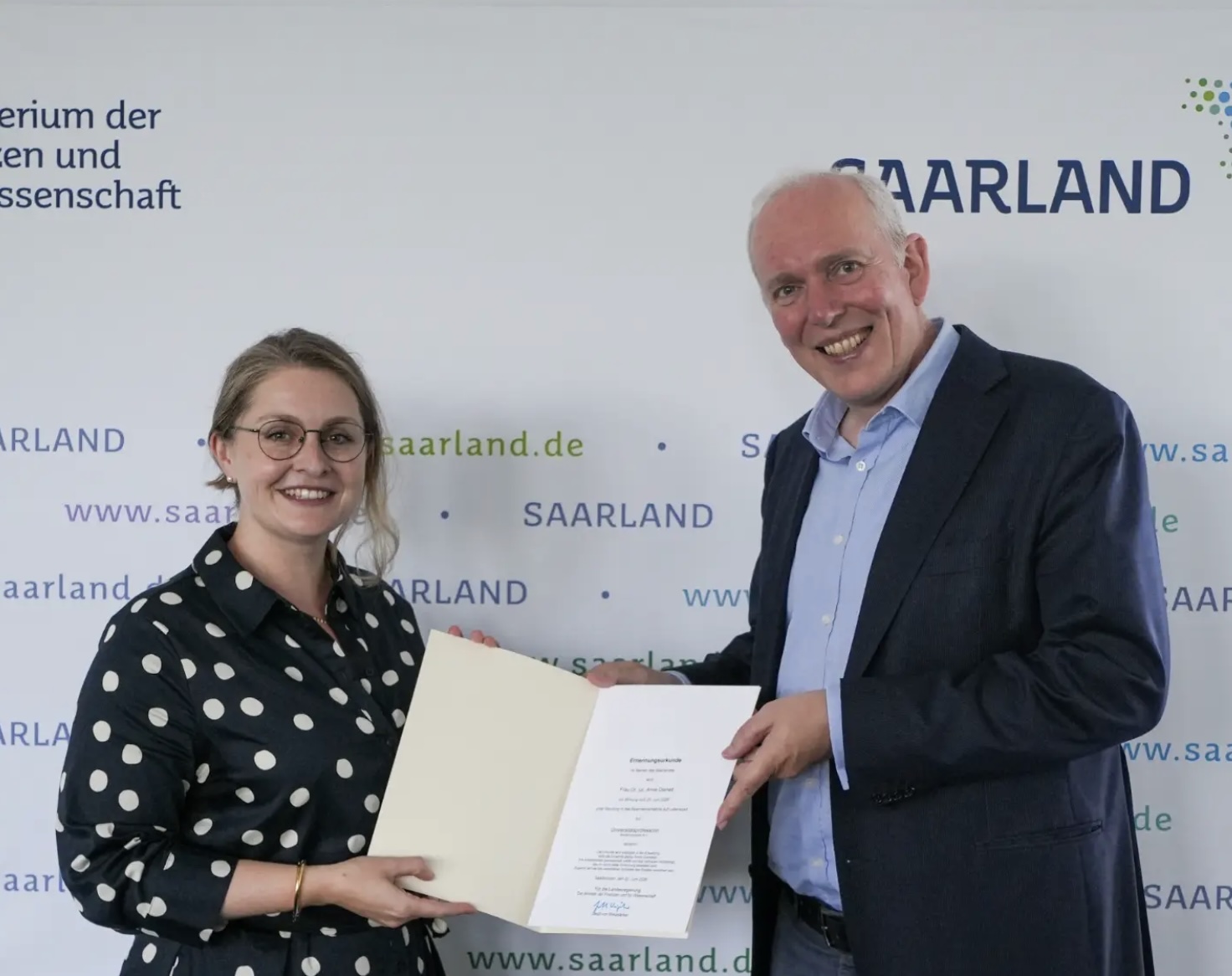
Neue Jura-Professorin verbindet das Recht der Nachhaltigkeit mit Fragen des lernenden Rechtsstaats
Staaten und internationale Institutionen stehen vor der doppelten Aufgabe, Stabilität zu gewährleisten und zugleich Wandel zu ermöglichen. Wie sie das Recht als Instrument dafür einsetzen können, und wo es dabei an seine Grenzen stößt, erforscht Dr. Anne Dienelt. Sie übernimmt zum 25. Juni den Lehrstuhl für Öffentliches Recht und Völkerrecht, insbesondere für Nachhaltigkeits- und Resilienzforschung an der Universität des Saarlandes.
Am 22. Juni hat Wissenschaftsminister Jakob von Weizsäcker die neue Professorin ernannt, die die strategischen Schwerpunkte der Universität auf den Gebieten der Nachhaltigkeit und der interdisziplinären Europaforschung stärken wird.
Zur gesamten Pressemitteilung hier entlang.
Veröffentlichungen
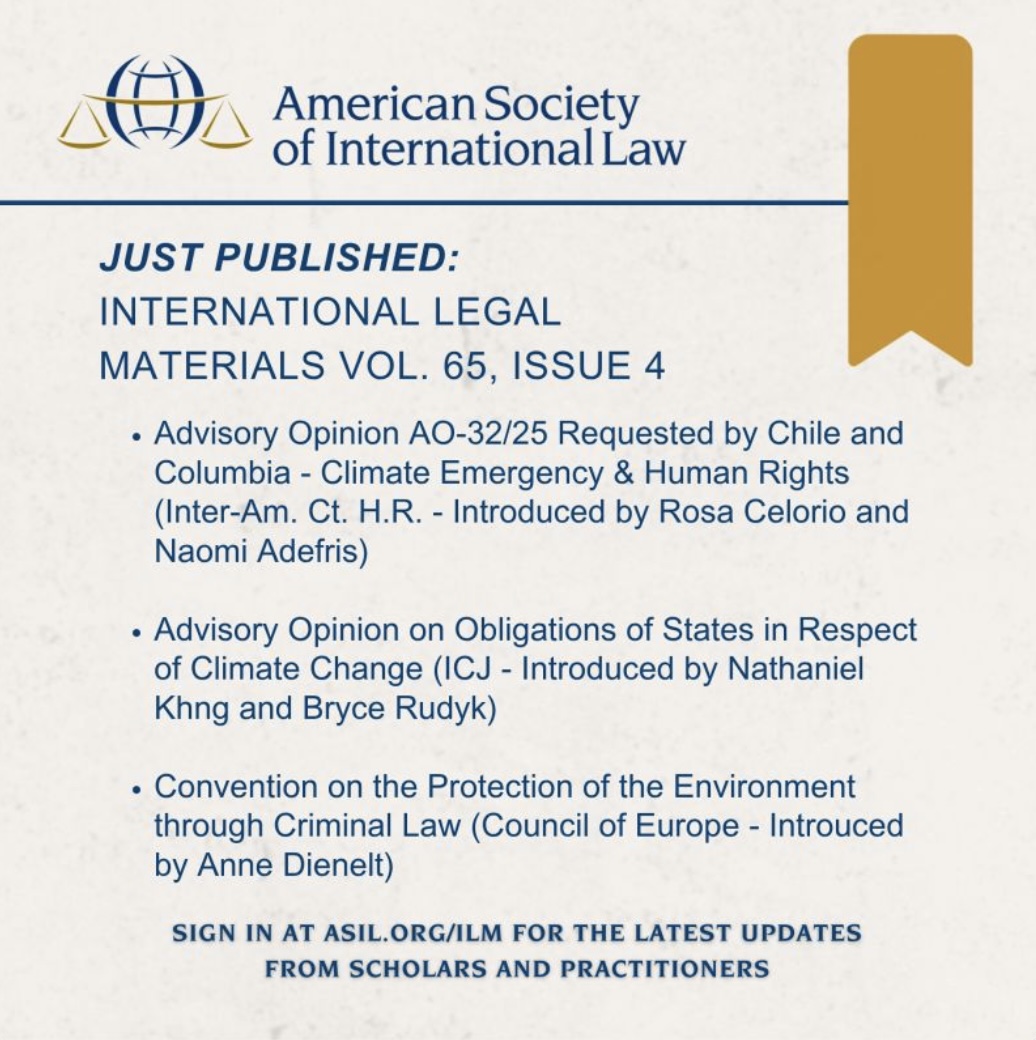
Anne Dienelt, Convention on the Protection of the Environment Through Criminal Law (Council Eur.). International Legal Materials 2026, S. 891 - 910
Abstract
This note analyses the Council of Europe’s Convention on the Protection of the Environment Through Criminal Law, adopted in May 2025, which has been open for signature since December 2025. It establishes an international framework that criminalizes environmental harm in peacetime and armed conflict; it introduces twenty distinct offenses, most notably “particularly serious offenses” that address intentional, catastrophic environmental damage as a legal proxy for ecocide. Diverging from traditional pollution-based models, the treaty adopts an ecosystem approach that also protects functional natural processes and services. The twenty environmental crimes are paired with enhanced protections for environmental defenders, NGO participation, and a monitoring mechanism. While closely aligned with EU Directive 2024/1203, the Convention’s “open” nature reflects a universal ambition to harmonize legal standards across legal systems. This note briefly evaluates the Convention’s drafting history, its innovative legal architecture, and its potential to establish a global “common legal space” against environmental destruction.
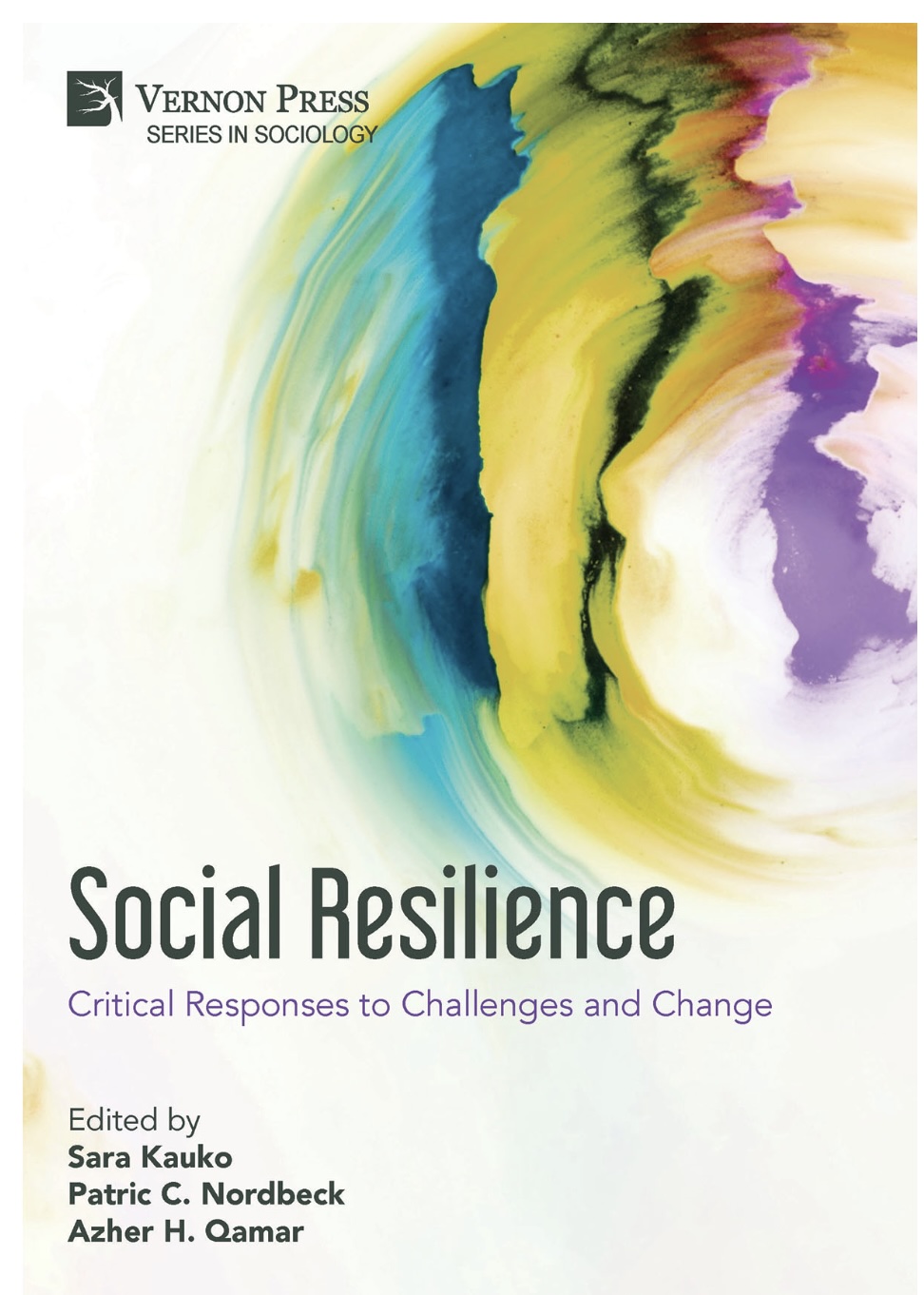
Anne Dienelt, "Bouncing Back, Bouncing Forward, or Bouncing Back Better? Reflections on a Legal Theory of Resilience," in: S. Kauko et al. (Hrsg.), Social Resilience: Critical Responses to Challenges and Change, Vernon Press 2026, S. 21 - 39
Abstract
This chapter looks at how law can deal in a clear and structured way with the idea of resilience, which has become very important but is used in many different and sometimes confusing ways. It asks a central question: how can we develop a legal theory of resilience that uses ideas from other disciplines, and at the same time helps law strengthen the resilience of the State, society, and the rule of law?
To answer this question, the chapter first shows how the concept of resilience developed in other fields such as materials science, psychology, ecology, and the social sciences. It explains how the focus shifted from “bouncing back” after a shock (stability and robustness) to “bouncing forward” (adaptation and transformation), and from mainly describing resilience to treating it as something we should actively aim for. It then gives an overview of the current debate on resilience in German legal scholarship and shows that most work so far looks only at how resilient laws or legal systems themselves are (an internal perspective). The chapter argues that this internal view is not enough. It should be combined with an external perspective that sees law as a “resilience tool” or “resilience mechanism” that helps make the State, societies, and the rule of law more resilient. Building on this, the chapter suggests a first draft of a legal theory of resilience with five steps: (1) identify what is supposed to be resilient (for example the State, society, the rule of law, or an institution), (2) describe the external or internal stressors that put this object under pressure, (3) decide which resilience dimension is at stake (stability, flexibility/adaptability, transformation/anticipation), (4) identify the relevant legal “resilience toolbox” (the legal instruments and mechanisms available), and (5) analyse the legal processes and results. The chapter concludes that this framework can help find concrete legal points of intervention, support targeted adaptation and transformation (including “bouncing forward”), and foster exchange between law and other disciplines. At the same time, it stresses that resilience concepts need to be carefully adapted to legal contexts—especially because law often has to deal with stressors that come from within the system—and that the framework is meant as a starting point for further critical discussion rather than as a finished theory.
Der gesamte Sammelband wurde Open Access als digitale, kostenfrei zugängliche Publikation veröffentlicht, abrufbar hier.
Prof. Dr. Anne Dienelt, maîtr. en droit (Aix-en-Provence)
Universität des Saarlandes
Rechtswissenschaftliche Fakultät
Campus C3 1, Raum 034, 66123 Saarbrücken
ls-dienelt(at)uni-saarland.de
Telefon: +49 681 302-4594
Sprechstunde: Dienstags von 10 - 12 Uhr (während der Vorlesungszeit) sowie nach Vereinbarung