
 Infos pour
 Accès direct
 UFR
UFR


Red Blood Cells in the Neuroacanthocytosis Syndromes
Background
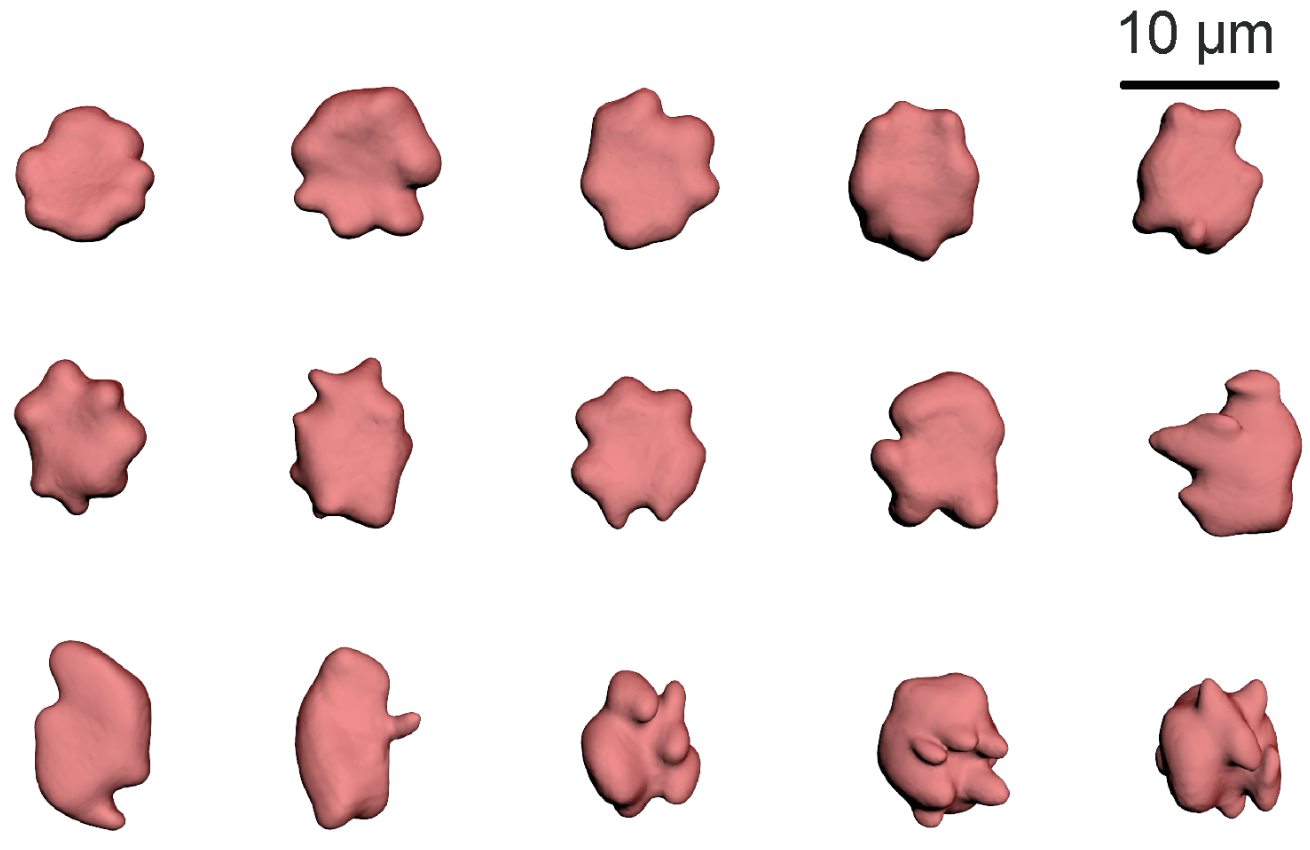
Neuroacanthocytosis syndromes (NAS) comprise two rare inherited neurodegenerative disorders: VPS13A disease and XK disease. Although caused by mutations in different genes and inherited through distinct genetic mechanisms, both conditions share characteristic neurological symptoms, including movement disorders resembling Huntington’s disease. A hallmark feature of these disorders is the presence of acanthocytes, red blood cells with irregular, spiky projections. The connection between the genetic defects, abnormal red blood cell morphology, and progressive neurodegeneration remains one of the major unanswered questions in the field. While acanthocytes are a visible and diagnostic feature of the disease, growing evidence suggests that membrane abnormalities affect a much larger proportion of circulating red blood cells than can be detected by morphology alone. Red blood cells from affected individuals show profound functional changes. They are less deformable and exhibit altered flow properties, impairing their ability to efficiently navigate the microvasculature. Several biophysical approaches, including erythrocyte sedimentation measurements, microfluidic analyses, and ektacytometry, reveal characteristic disease-specific signatures and provide valuable biomarkers for diagnosis and disease monitoring. At the molecular level, VPS13A and XK are involved in maintaining membrane lipid organization. VPS13A functions as a lipid transport protein, while XK acts as a lipid scramblase in the plasma membrane. Recent studies have demonstrated that these proteins form a functional complex that coordinates lipid movement and membrane homeostasis. Loss of this coordinated activity is considered a central pathogenic mechanism shared by both disorders.
Despite these advances, a fundamental question remains unresolved: how defects in membrane lipid regulation lead to both red blood cell dysfunction and selective degeneration of neurons. Red blood cells provide a uniquely accessible model system to study the consequences of VPS13A and XK deficiency and may offer important insights into disease mechanisms that are relevant throughout the body, including the nervous system.
Current Work
Our research focuses on the detailed characterization of red blood cells in patients with neuroacanthocytosis syndromes. We investigate a broad range of cellular and functional properties, including erythrocyte sedimentation rate, red blood cell lifespan, deformability, membrane organization, and cytoskeletal architecture. By combining biophysical, cellular, and molecular approaches, we aim to identify robust red blood cell signatures that can serve as biomarkers for disease diagnosis, progression, and therapeutic monitoring. Beyond their value as accessible biomarkers, we are also exploring whether red blood cells actively contribute to disease pathology. Altered red blood cell mechanics and circulation may affect tissue oxygen delivery, blood flow properties, and cellular homeostasis, potentially influencing neurological symptoms. Understanding these links may provide new insights into the systemic manifestations of neuroacanthocytosis syndromes. To address these questions, we employ a unique mouse model in which VPS13A is selectively deleted in the erythroid lineage, allowing us to investigate the specific consequences of VPS13A deficiency in red blood cells independent of its effects in the nervous system. This approach enables us to distinguish between red blood cell–intrinsic mechanisms and secondary disease processes, helping to clarify the role of erythrocytes in neuroacanthocytosis and to identify novel targets for diagnosis and treatment.