
 Information for
 Quick links
 Faculties



Welcome to our research group
Our research group focuses on the development and application of highly accurate and efficient quantum chemical methods for the description of atoms and molecules.
We develop methods and computer programs that can be used to investigate the electronic structure of molecules. In addition to the description of relativistic effects and the prediction of spectroscopic properties such as hyperfine parameters in, e.g., rotational spectroscopy or NMR chemical shifts, our focus also lies on the description of molecules in interesting and unusual chemical environments. Furthermore, we develop methods that allow the treatment of larger molecular systems through the use of Cholesky decomposition techniques and the further development of multiscale approaches.
Theses and research projects
We are always happy to hear from students interested in advanced lab projects (Vertiefungspraktika), Bachelor's, or Master's theses! Feel free to send a short email to Prof. Stella Stopkowicz, or simply approach us after a lecture or tutorial, or drop by our research group.
News and Publications

Laurenz Monzel successfully defended his doctoral thesis!
We sincerely congratulate Laurenz Monzel on the successful defense of his doctoral thesis, “Modeling Molecules in Linearly and Unpolarized Cavities via Quantum Electrodynamics Coupled Cluster Methods,” carried out under the supervision of Prof. Stella Stopkowicz.
In his dissertation, Laurenz introduced and realized novel computational approaches to capture the behavior of hybrid light-matter states (so-called polaritons) that form when molecules interact with confined electromagnetic fields inside optical cavities. His work provides valuable insights into the theoretical description of such coupled systems at a high level of accuracy.

Dunbo Xiao successfully completed his bachelor’s degree!
We are happy to announce that Dunbo Xiao completed his bachelor’s degree in chemistry! He carried out his thesis in our group under the supervision of Dr. Marios Petros Kitsaras with the project titled “Benchmark for adiabatic ionization Potentials”.
We congratulate him on this important milestone, marking his first steps in theoretical chemistry, and wish him all the best for the continuation of his academic journey!

Christoph Harrer graduates and starts his PhD!
We are very happy to announce that Christoph Harrer will continue his scientific journey with us as a PhD student!
After successfully completing his master’s thesis on Analytic Gradients for polaritonic and Magnetic-Field-dependent Hartree–Fock and Coupled Cluster Theory within our group, he will continue to focus on the incorporation of quantum electrodynamics into coupled-cluster theory within is doctoral research.
This project is part of the Graduiertenkolleg Ec = m² at Saarland University, which is designed to support the education of young scientists.
We wish him every success, perseverance, and the best of luck for the coming three years!
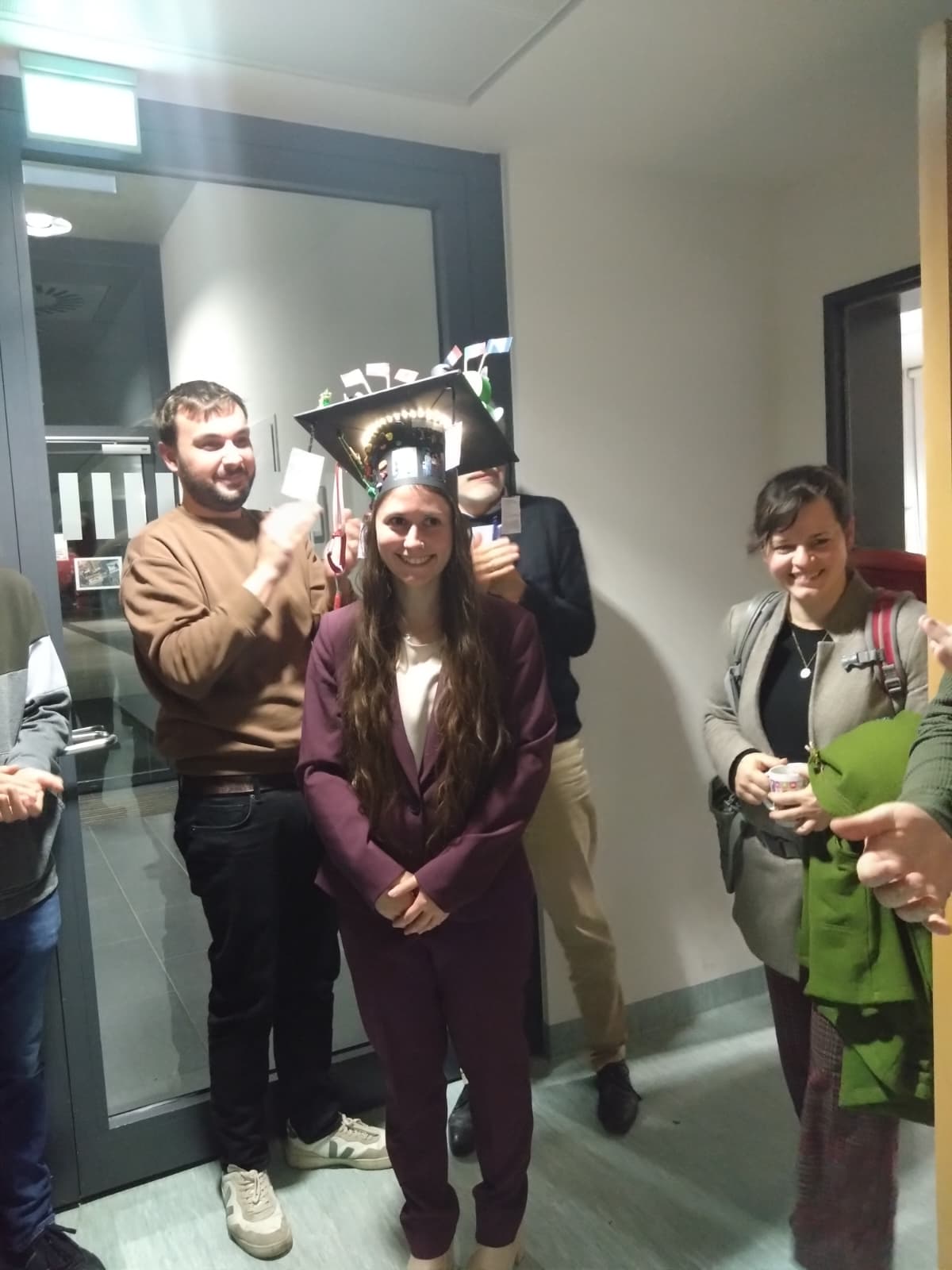
Sophia Burger successfully defended her doctoral thesis!
We warmly congratulate Sophia Burger on the excellent defense of her thesis, “Computation of Molecular Magnetic Properties using Cholesky Decomposition,” which she completed at JGU Mainz, co-supervised by Stella.
In her work, Sophia developed and implemented efficient methods for the computation of molecular magnetic properties, with a particular focus on nuclear shieldings and magnetizabilities. Her defense featured a remarkably clear and well-structured presentation of complex theoretical concepts. During the discussion, she impressed the committee with the breadth and depth of her knowledge, answering questions with confidence and insight.
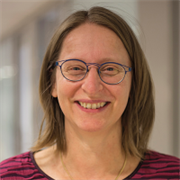
Prof. Elke Pahl (Auckland, New Zealand) is visiting us!
We were delighted that Prof. Elke Pahl spent two months of her sabbatical in our group! She is a Senior Lecturer of the Physics department in the University of Auckland, New Zealand. Her main areas of expertise are advanced computational methods for condensed matter and quantum systems, including simulations of phase transitions, matter under extreme conditions, and highly accurate potential energy surfaces, with a strong focus on method and code development (e.g. Monte Carlo and FCIQMC) and applications to complex energy landscapes and strongly correlated bosonic systems. She held two very interesting seminars for us titled: “Short Introduction to Quantum Monte Carlo Methods” and “Extreme(s) Matter and Excited States of the Fröhlich polaron using Full-Configuration Interaction Quantum Monte Carlo”.
We hope to meet again soon!
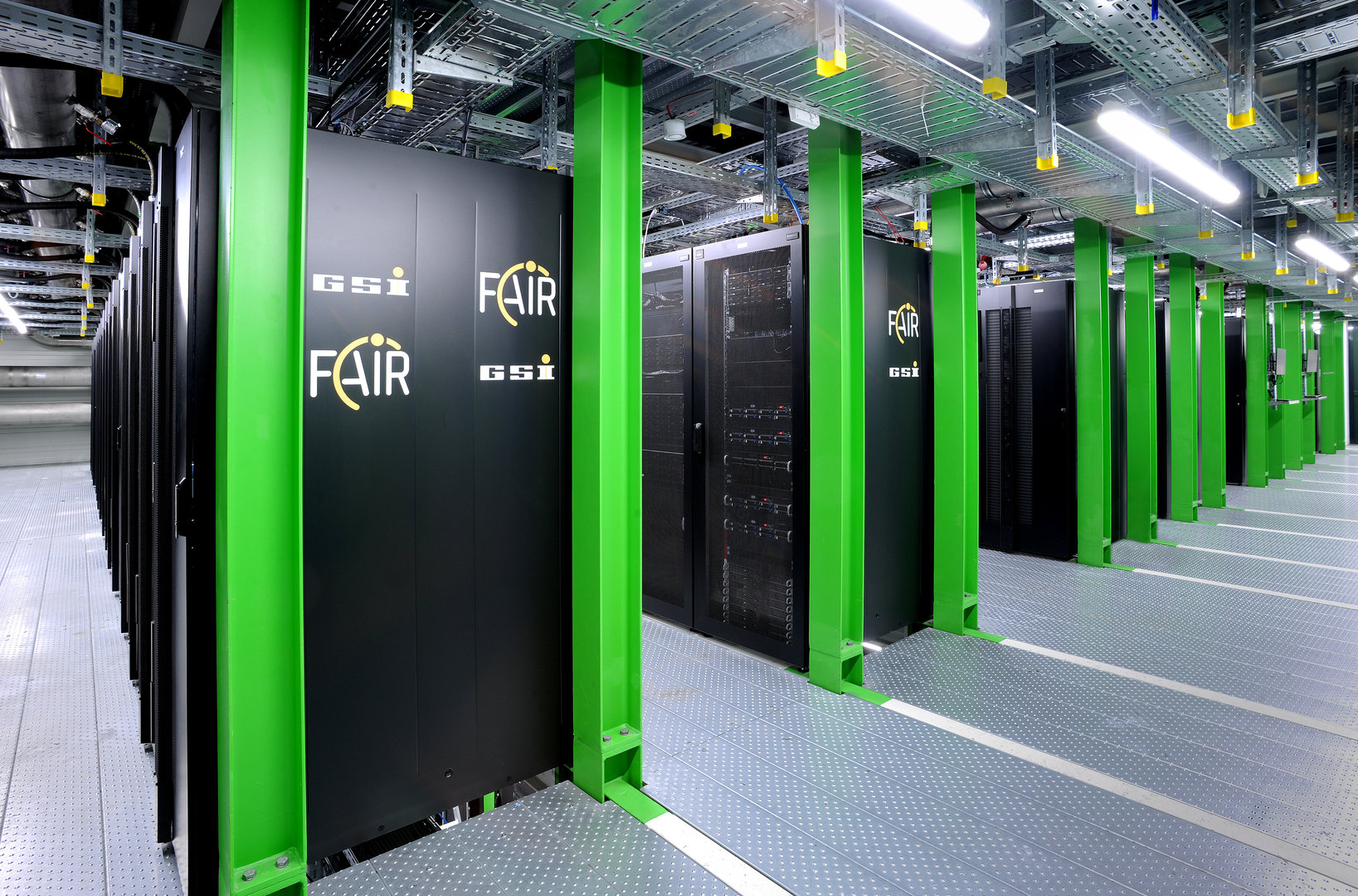
Cluster Version 2 goes online
We recently performed a complete upgrade of our core computing infrastructure to make it much more reliable and dependable. The overhaul of our cluster was done to make it highly available with the introduction of a new head node, where we added redundant technologies to our storage and hosting systems to distribute our computation load to be more even, effective and efficient. We are looking forward to many exciting computational projects in our group and the whole of chemistry in Saarbrücken!

Anthuan Ferino Pérez starts his post-doc position!
We are very happy to welcome Dr. Anthuan Ferino Pérez as our new postdoctoral researcher. His research topic is the development and implementation of methods based on non-Hermitian quantum mechanics for the study of electronic resonances in strong magnetic fields.
He completed his PhD in 2025 at KU Leuven, in Belgium. The thesis was titled: “Quantum-chemical methods for spectra and properties in condensed phase”.
We’re congratulating Dr. Pérez on his first postdoctoral research position and are looking forward to a productive cooperation!
Equation-of-Motion Coupled-Cluster Variants in Combination with Perturbative Triples Corrections in Strong Magnetic Fields
Journal of Chemical Theory and Computation
Marios-Petros Kitsaras, Florian Hampe, Lena Reimund and Stella Stopkowicz
In this paper, we report on the implementation of the EOM spin-flip (SF), ionization-potential (IP), and electron-affinity (EA) coupled cluster singles doubles (CCSD) methods for atoms and molecules in strong magnetic fields for energies as well as one-electron properties. Moreover, non-perturbative triples corrections using the EOM-CCSD(T)(a)* scheme were implemented in the finite-field framework for the EE, SF, IP, and EA variants. These developments allow access to a large variety of electronic states as well as the investigation of IPs and EAs in a strong magnetic field. The last two indicate the relative stability of the different oxidation states of elements. The increased flexibility to target challenging electronic states and access to the electronic states of the anion and cation are important for the assignment of spectra from strongly magnetic white dwarf (WD) stars. Here, we investigate the development of IPs and EAs in the presence of a magnetic field for the elements of the first and second rows of the periodic table. In addition, we study the development of the electronic structure of Na, Mg, and Ca in an increasingly strong magnetic field that aided in the assignment of metal lines in a magnetic WD. Lastly, we investigate the electronic excitations of CH in different magnetic-field orientations and strengths, a molecule that has been found in the atmospheres of WD stars.

Conference – 61. Symposium of Theoretical Chemistry
September 22-26, 2025, our group participated at the 61. Symposium of Theoretical Chemistry. This annual conference, this year organized by Prof. Bettina Keller and Prof. Beate Paulus at Freie Universität Berlin, brought together not only the German-speaking theoretical chemistry community but also numerous researchers from around the world.
We are pleased to report on the presentation by Dr. Laura Grazioli as well as on the many interesting poster contributions by Manola Bonsignore, Christoph Harrer, Lukas Schank, Szabolcs Góger, Christopher Röper, Elena Paulus, Laurenz Monzel, Davide Cianchino and Laura Grazioli. In particular, the poster presented by Laurenz Monzel on Unpolarized Cavities for QED-Coupled Cluster Calculations impressed the jury and was awarded a poster prize.

Lecture by Dr. Marios Petros Kitsaras
We were delighted that Dr. Marios Petros Kitsaras, a former PhD and post-doc in our group, joined us today!
After his postdoctoral time in our group, he moved to France to take up a new postdoctoral position at the CNRS in Toulouse with Pierre-Francois Loos. His work focuses now on Green’s function approaches, in particular GW and Bethe-Salpeter methods, to accurately and efficiently describe charged and electronically excited systems without empirical parameters, achieving accuracy comparable to coupled-cluster theory.
Today he updated us on his current projects with a presentation titled: “Analytic G0W0 gradients: An IP/EA-EOM-lambda-rCCD reformulation”.
We hope to meet you again soon!

Summer school – Modern Wavefunction Methods in Electronic Structure Theory
Lukas Schank, Christopher Matthias Röper, Davide Cianchino, Sabolcz Góger, Elena Paulus and Christoph Harrer participated in this year’s Summer School on Modern Wavefunction Methods in Electronic Structure Theory at the University of Pisa. The week of intensive lectures and hands-on exercises was a great experience for all participants. Not only did we gain deeper insights into the challenging field of quantum chemistry, but we also established valuable connections within the European quantum chemistry community and related fields.
In this context, we are especially pleased to report that Teresa Guidone was awarded a poster prize for her presentation entitled A Cholesky-Based CASSCF Implementation for Atoms and Molecules in Strong Magnetic Fields.
Beyond the scientific program, the beautiful atmosphere of the historic city of Pisa, the excellent local cuisine, and the warm hospitality of our hosts from the group of Prof. Filippo Lipparini all contributed to the overall success of the summer school.

Lukas Schank starts his PhD!
“Pushing electrons with protons” or, in more technical terms “Proton coupled electron transfer” (PCET) is a fundamental principle of many (bio)chemical processes in nature, e.g. Photosynthesis.
We are delighted to announce the start of Lukas Schank’s Ph.D. project within the framework of SFB 1633, which is funded by the German Research Foundation (DFG). Over the next three years, Lukas will contribute to the project's theoretical foundation, focusing on the fundamental research of PCET's physicochemical properties and ways to model them theoretically on triad model systems in collaboration with the groups of Prof. Katja Heinze (JGU Mainz) and Prof. Dirk Schwarzer (MPI NAT).
We wish him every success and an inspiring start to this exciting new chapter.
Unitary Coupled-Cluster theory for the treatment of molecules in strong magnetic fields
Laura Grazioli, Marios-Petros Kitsaras, Stella Stopkowicz
In Coupled-Cluster (CC) theory, unphysical complex energies may arise in the presence of strong magnetic fields, near conical intersections, or in systems exhibiting complex Abelian point group symmetries. This issue originates from the non-Hermitian nature of the CC energy expression. A promising solution is provided by unitary Coupled-Cluster (UCC) theory, which retains the advantages of an exponential parameterization while ensuring real-valued energy eigenvalues. In this work, we present an implementation of finite-field second-order (ff-UCC2) and third-order (ff-UCC3) UCC theory. We assess the performance of these truncation levels in comparison to conventional finite-field CC methods, using the methylidyne ion, water, and boric acid.
Polaritonic Coupled Cluster Theory for Unpolarized Cavities Exploiting Point Group Symmetry
Laurenz Monzel, Stella Stopkowicz
We introduce a generalization of the quantum electrodynamic coupled cluster (QED-CC)wave function ansatz, to describe the strongly coupled light-matter system in an unpolarized optical Fabry-Pérot cavity. This is achieved by explicitly treating two cavity modes in our calculation with perpendicular polarizations and demonstrate that this ansatz preserves the symmetry of an unpolarized cavity. Furthermore, exploiting point-group symmetry enables the assignment of polaritonic excited states as well as their targeted calculation. Using our implementation, the aromatic species benzene, fluorobenzene and azulene are investigated. We demonstrate that molecules in unpolarized cavities have a complicated excited-state landscapes with a plethora of avoided-crossings. We compare the results for a cavity with a single polarization to those of an unpolarized cavity described by two perpendicular polarization vectors using the excited states of the H2 molecule as an example.
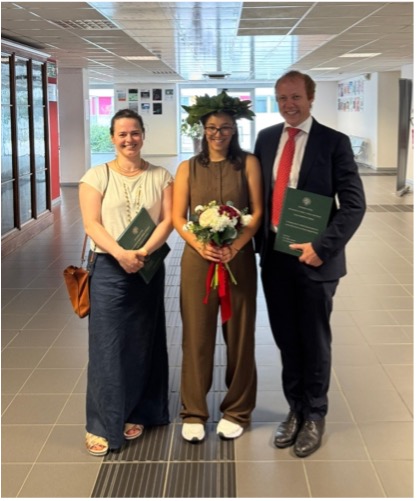
Teresa Guidone successfully defended her master’s thesis!
We are very happy to announce that Teresa Guidone, a former visiting student, completed her master’s degree by successfully defending her thesis!
Her project, titled “A Cholesky-based CASSCF implementation for atoms and molecules in strong magnetic fields.”, was developed through a collaboration between our group and Prof. Filippo Lipparini’s group, in Pisa (Italy).
We congratulate her on this academic milestone and wish her all the best for the next steps of her career!

Mini-Symposium in Theoretical Chemistry with Lectures by Prof. Jürgen Gauss and Prof. Anna Krylov
On July 17, 2025, we had the pleasure of welcoming two guest lectures in our research group for a mini symposium in Theoretical Chemistry: Prof. Anna Krylov, who visited us for a whole week, and Prof. Jürgen Gauss.
Prof. Jürgen Gauss spoke about “Direct-Product Decomposition in Case of Non-Abelian Point-Group Symmetry” and Prof. Anna Krylov presented a talk entitled “Ultrafast transversal CISS effect observed in a chiral molecular photoswitch”.
Following the scientific discussion, the group enjoyed tapas in a relaxed atmosphere at the restaurant Zapata.
We are already looking forward to the next visit!

Mohammed Farhan Parvaes starts position as IT Assistant!
Today, Mohammed Farhan Parvaes started his position as IT Assistant within our group. With his expertise in computer science, he will support Lukas Schank in the upgrade and management of the Chemistry High Performance Cluster at Saarland University. His contribution will be invaluable during the transition to cluster version 2.
We warmly welcome him to our group and wish him all the best in his new role.

Conference - WATOC
From June 21 to June 27, our research group traveled to Oslo, Norway, to attend WATOC 2025, the world’s largest international conference on theoretical and computational chemistry.
Prof. Stella Stopkowicz presented her research in an invited talk entitled “Prediction and Assignment of Strongly Magnetized White Dwarf Spectra”, while Elena Paulus, Petros Kitsaras, Davide Cianchino, Lukas Schank, Laura Grazioli, Christopher Röper, Laurenz Monzel and Jeremias Oswald [SS1] showcased their work through poster presentations. We were especially happy to see Dr. Laura Grazioli, now a postdoctoral researcher with Eric Cancès, present her work at the inaugural Young WATOC, and Dr. Marios-Petros Kitsaras, currently a postdoc with Pierre-François Loos, give a talk at the main WATOC conference.
In addition to the scientific program, a free afternoon offered the opportunity to explore Oslo through a boat tour, hiking, and visits to museums such as the Munch Museum.
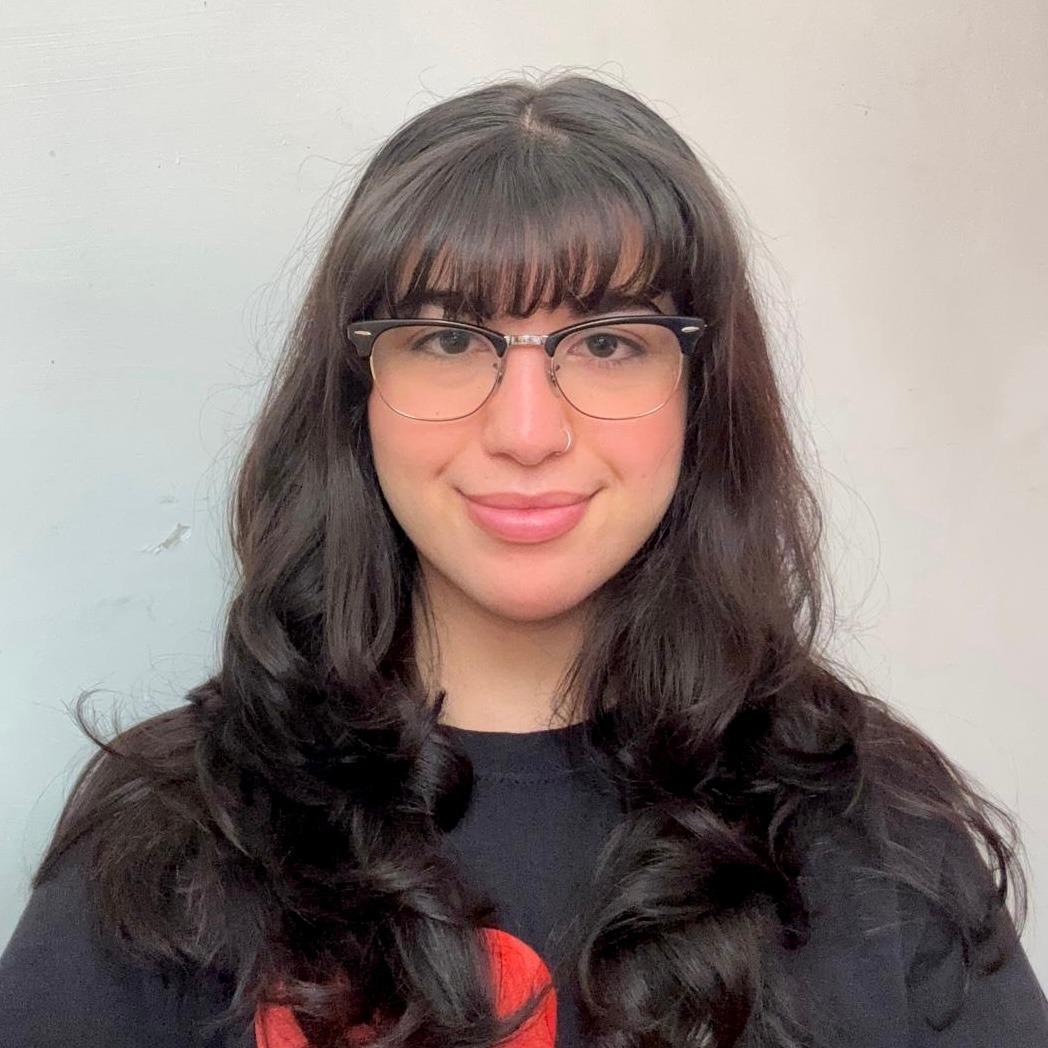
Manola Bonsignore starts her Master thesis!
Today, Manola Bonsignore from the University of Pisa started both her internship in Germany and her master’s thesis within our group. Over the next nine months, she will work on Excited-state properties in strong magnetic fields using equation-of-motion coupled-cluster methods, employing finite-field DIP- and DEA-EOM-CCSD approaches.
These investigations aim to provide a deeper understanding of how the spectral lines of observational spectra in magnetic white dwarfs are affected by the strong magnetic fields present on such stars for electronic states that are otherwise difficult to access with standard EOM approaches. We hope that the coming months will be an interesting and valuable experience for her both scientifically and personally and wish her every success in this endeavor.

Vortrag von Dr. Laura Grazioli
Wir freuen uns sehr, dass Dr. Laura Grazioli unsere Gruppe in Saarbrücken besucht hat. Laura hat ihre Promotion bei Stella Stopkowicz im Arbeitskreis in Mainz abgeschlossen und ist für eine Post-Doc Stelle nach Paris in die Gruppe von Eric Cancès gegangen und forscht dort zur Interpretation von elektronisch angeregten Zuständen für nicht lineare Modellwellenfunktionen. Die Ergebnisse ihrer Arbeit hat Laura in ihrem Vortrag "Excited states as critical points of the potential energy surface” vorgestellt und mit uns diskutiert. Zum Abschied sind wir gemeinsam im Restaurant Zapata eingekehrt und haben uns dort durch eine Auswahl von Tapas probiert.
Wir freuen uns schon auf das nächste Wiedersehen!

Szabolcs Góger starts his post-doc position!
We are very happy to welcome Dr. Szabolcs Góger as our new postdoctoral researcher, funded by a Marie Skłodowska-Curie grant. His research focuses on how optical quantum cavities can influence atomic and molecular response functions, enabling the tailoring of optical properties and collective interactions at the molecular level. To this end, he develops quantum electrodynamics coupled-cluster methods.
He completed his PhD in physics in 2023 at the Université du Luxembourg under the supervision of Prof. A. Tkatchenko. His doctoral research focused on the development of practical non-local many-body polarization functionals. Following this, he continued as a postdoctoral researcher in the same group for one year.
We’re congratulating Dr. Góger on his Marie Skłodowska-Curie grant and are looking forward to a productive cooperation!
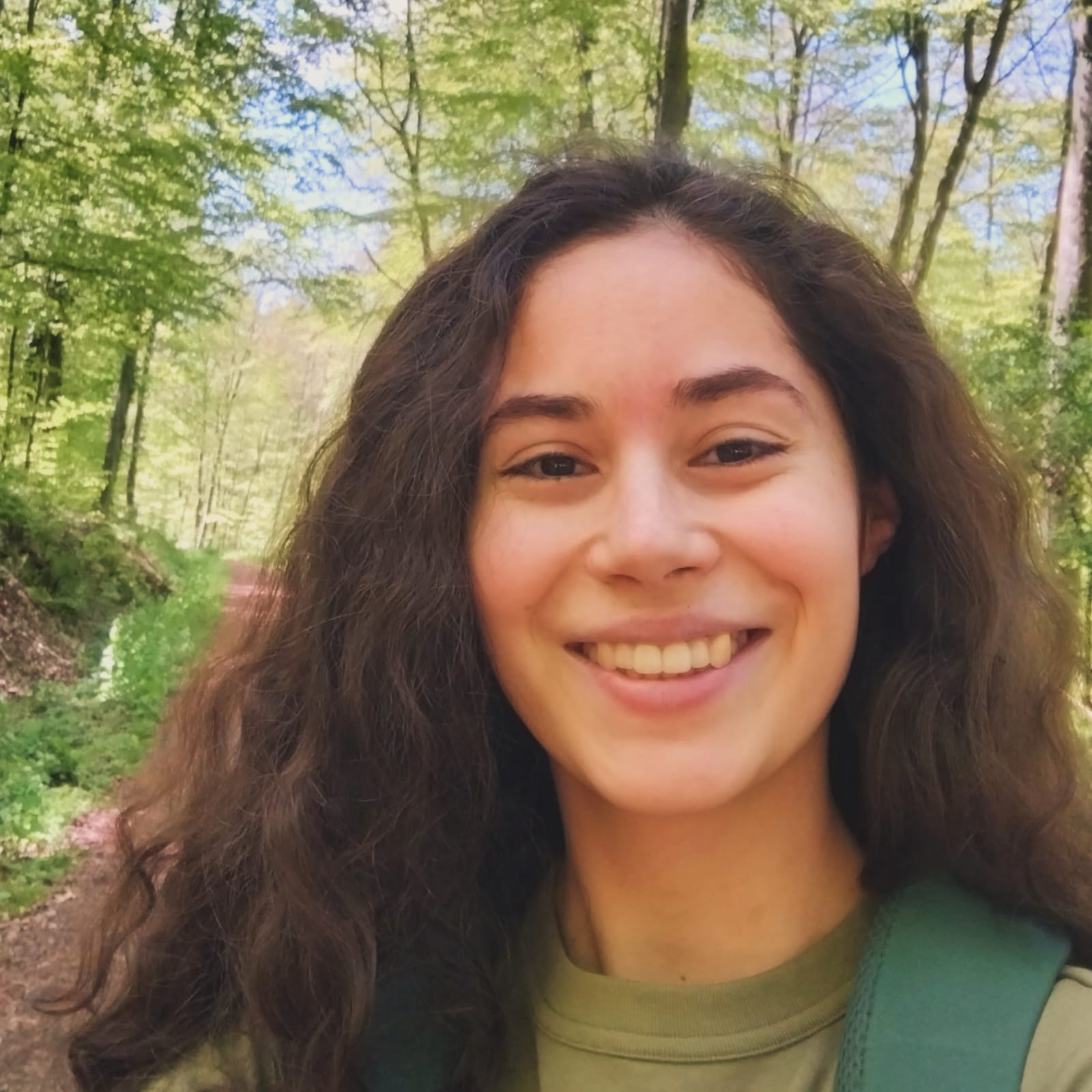
Elena Paulus beginnt ihre Promotion!
Wir freuen uns sehr, dass Elena Paulus bei uns ihre Promotion beginnt! Elena hat ihren Master in Konstanz gemacht und wird sich in ihrer Promotion mit den Kerndynamiken innerhalb eines externen Magnetfeldes befassen. Dies erfordert eine Beschreibung der Kernabschirmung von den Elektronen, welche Elena während ihre Promotion für eine Coupled Cluster Wellenfunktion implementieren wird. Darauf aufbauend, wird Elena Molekulardynamiksimulation in externen Magnetfeldern durchführen, was es uns ermöglicht Spektren in starken Magnetfeldern vorrauszusagen.
Wir wünschen Elena ganz viel Erfolg bei ihrer Arbeit!
Workshop - Emerging Excited-State Methods in Electronic Structure
Stella Stopkowicz wurde für einen Workshop nach Toulouse (Frankreich) eingeladen um dort unsere neusten Entwicklungsarbeiten vorzustellen. In Ihrem Vortrag “High-accuracy methods for atoms and molecules in strong magnet fields and applications to white dwarf spectra” stellte Stella vor wie Moleküle in starken Magnetfeldern beschrieben werden können, mit einen Fokus auf elektronisch angeregte Zustände. Es freut uns besonders, dass Stella unseren Alumni Marios-Petros Kitsaras getroffen hat, welcher für eine Post-Doc Stelle nach Toulouse gezogen ist.
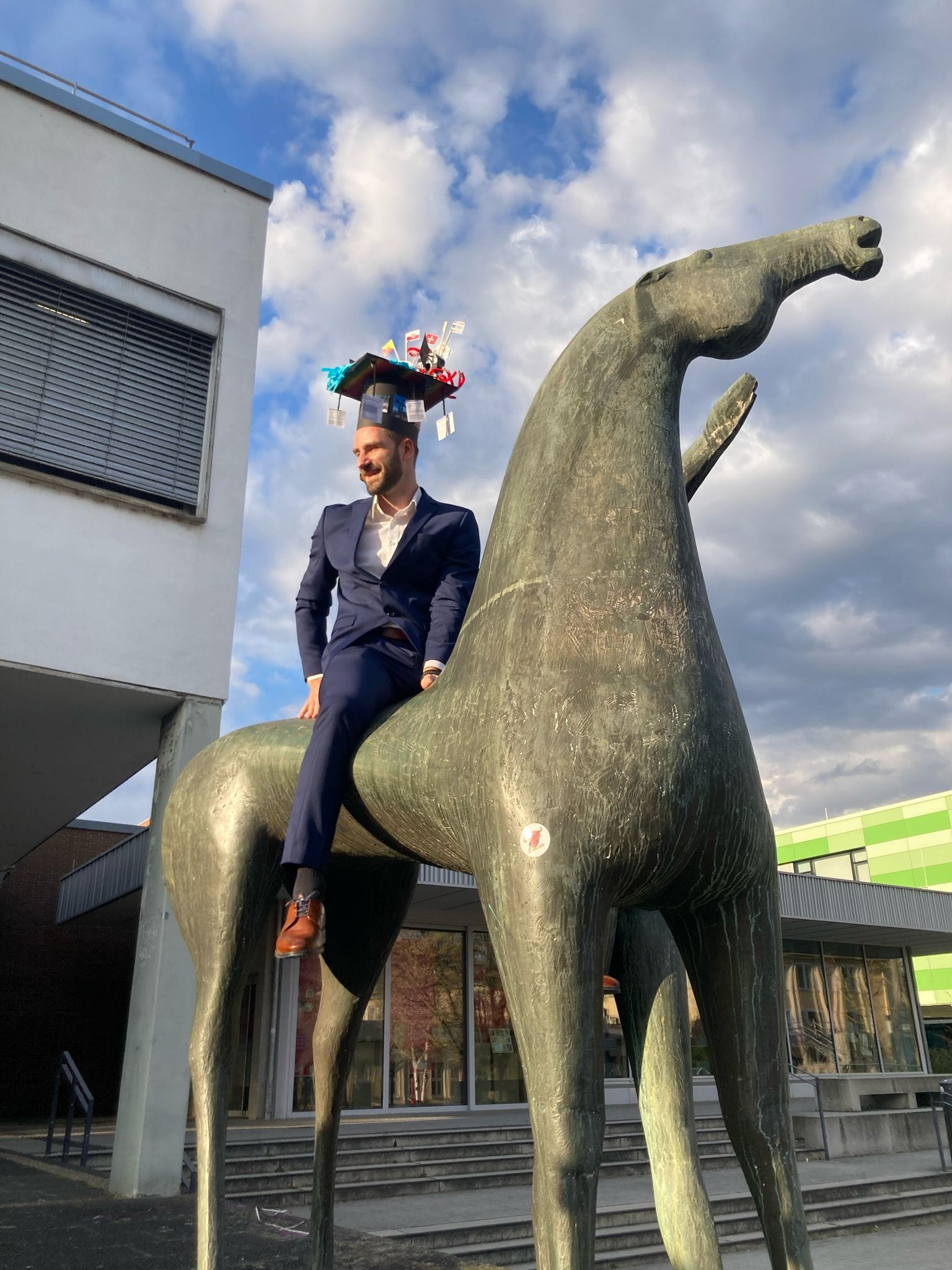
Simon Blaschke verteidigt erfolgreich seine Doktorarbeit
Wir gratulieren Simon Blaschke zur erfolgreichen Verteidigung seiner Doktorarbeit mit dem Titel “Effiziente quantenchemische Berechnungen von Atomen und Molekülen in starken Magnetfeldern”. Die in der Arbeit vorgestellten Methoden ermöglichen es quantenchemische Rechnungen an Molekülen in starken Magnetfelder mit Hilfe der Cholesky-Zerlegung durchzuführen. Durch die Cholesky-Zerlegung konnte Simon die erforderliche Rechenkapazität drastisch reduzieren, was es uns ermöglicht Rechnungen an großen Systemen durchzuführen. Durch die in der Arbeit vorgestellten Entwicklungen konnten wir hoch genaue Vorhersagen für Metalle eingebettet in super dichte Helium Atmosphäre treffen, welche in den Standardmethoden nicht möglich gewesen wäre.
Die Arbeit wurde der Johannes-Gutenberg Universität Mainz vorgelegt.

Davide Cianchino beginnt seine Promotion!
Wir freuen uns sehr, dass Davide Cianchino bei uns seine Promotion begonnen hat! Davide hat seinen Master in Pisa (Italien) gemacht und wird sich in seiner Promotion mit den Kernschwingungen innerhalb eines finiten Magnetfeldes befassen. Davide wird für post-HF Methoden die zweite Ableitungen nach den Kernkoordinaten implementieren wobei er unteranderem Cholesky-Zerlegungen verwendet wird. Dies erlaubt es Kernschwingungen in einer harmonischen Näherung vorher zu sagen. Langfristig wird uns das ermöglichen die Feinstruktur in Spektren von elektronischen Übergängen auf magnetischen weißen Zwergen zu interpretieren.
Wir wünschen Davide ganz viel Erfolg bei seiner Arbeit!
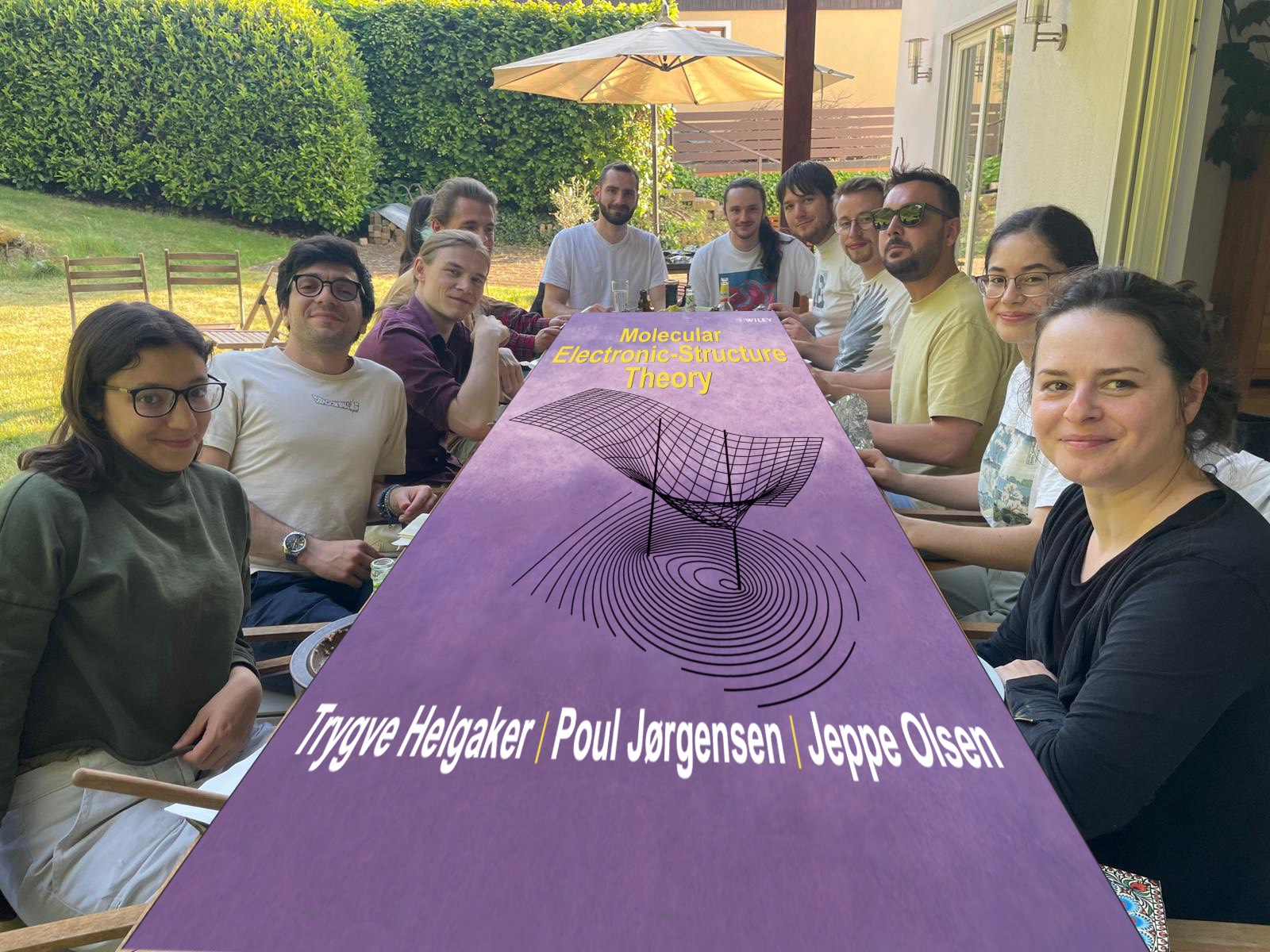
Teresa Guidone starts her Erasmus!
We are very pleased to welcome Teresa Guidone from the University of Pisa and a member of the Scuola Normale Superiore to our research group. Over the next three months, she will complete an internship in our group, focusing primarily on the development and extension of Cholesky-decomposed complete active space methods in finite magnetic fields.
These new methodological developments in the field of astrochemistry could enable ab initio descriptions of larger molecules and multi-reference states, which are essential for accurately modeling the dense atmospheres of certain extraterrestrial bodies. We wish her all the best for the challenges ahead and are confident that she will master them with excellence.

Contact
Postal address
Universität des Saarlandes
Physikalische und Theoretische Chemie
Raum 2.02 - 2.18
Campus B2 2
66123 Saarbrücken
Germany