
 Information for
 Quick links
 Faculties


-
-
more Studies
Studies
-
Research Groups
more Research Groups -
more Research
Research
-
-
-
more Continuing Education
Continuing Education
-
Schools (in German)
more Schools (in German)
-
more International Contacts and Studies
International Contacts and Studies
-
Workshop & Service
more Workshop & Service
-
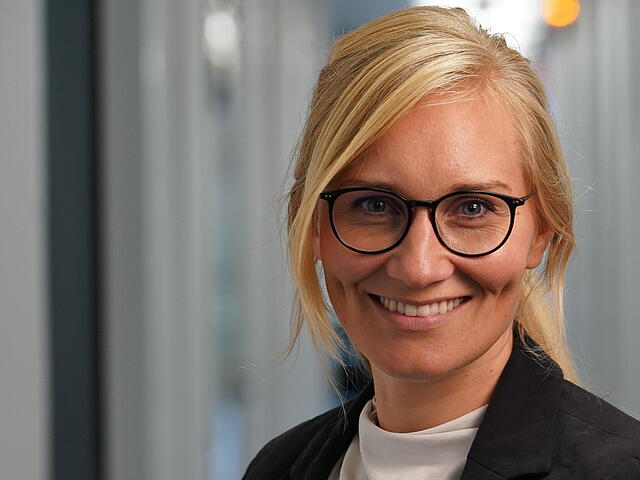
24.09.2026 | Jola Pospech has been appointed Professor of Organic Chemistry at Saarland University
Light opens up new ways of producing chemical molecules efficiently and in a resource-conserving manner. The underlying processes are not yet fully understood – a major hurdle to industrial application. Chemist Jola Pospech is investigating how these possibilities offered by light-driven catalysis can be specifically harnessed for the synthesis of active compounds. To this end, she aims to understand the underlying mechanisms in detail. Jola Pospech has now been appointed Professor of Organic Chemistry.
The interaction between light and catalysts plays a vital role in nature, for example in photosynthesis. However, light is also increasingly becoming a driver of chemical processes in the laboratory. Unlike in traditional, heat-driven synthesis, light can be used to achieve reactions and reactivity that are either impossible or very difficult to achieve by thermal means. The chemical industry’s interest in this is correspondingly high: Many companies have established their own research and development departments to harness these new principles for the production of molecules. However, there is still a long way to go before reliable and efficient application on an industrial scale can be achieved. A key reason for this is that the underlying reaction mechanisms are not yet fully understood, and side reactions and degradation reactions remain difficult to predict.
This is precisely where Jola Pospech’s research comes in. At Saarland University, the chemist aims to investigate how photocatalysts interact with light and the molecules involved – and how these processes can be tracked and understood step by step until the desired molecule is formed. On this basis, new strategies are also to be developed to optimise photocatalytic reactions in a targeted and efficient manner.
To gain a comprehensive understanding of these complex processes, Jola Pospech relies on close collaboration across the boundaries of individual disciplines. Methods from spectroscopy and theoretical chemistry play just as important a role as digitalisation and automation. Her research approach thus opens up numerous points of connection within Saarland University and strengthens interdisciplinary exchange in the natural sciences and engineering.
Jola Pospech’s research priorities therefore enrich the academic environment at Saarland University in a number of ways. There are particularly close links to the Research Training Group ‘Regulation of Covalent Bonds in Molecules and Materials’, in which several research groups from the Faculty of Science and Technology are involved and which will continue to be funded by the German Research Foundation (DFG) until 2030. Jola Pospech will take up her post at Saarland University on 1 October 2026.
Brief CV of Jola Pospech
Jola Pospech has been a research group leader at the Leibniz Institute for Catalysis (LIKAT) in Rostock since 2022, where she initially established a junior research group in the field of catalytic functionalisation of organic molecules between 2017 and 2022. A native of Schleswig-Holstein, she studied chemistry at the Georg-August University of Göttingen and, following periods abroad at Stockholm University (Sweden) and ETH Zurich (Switzerland), obtained her PhD at the University of Rostock as part of her research work at LIKAT. She then spent two years conducting research at the University of Illinois at Urbana-Champaign (USA), working, amongst other things, on the development of light-driven total syntheses of active compounds and natural products.
July 7, 2026 | Continuous monitoring of water quality: Chemistry department supports water monitoring in Saarland
The Water Monitoring Working Group takes continuous real-time measurements of important water quality parameters of the river Saar at sites in Lisdorf, Rehlingen and Mettlach on behalf of the Saarland Ministry for the Environment, Climate, Mobility, Agriculture and Consumer Protection. Water temperature, oxygen concentration, pH value and chlorophyll concentration are - among other parameters - recorded as an indicator of phytoplankton biomass. Current measuring data can be accessed under the following link: https://www.gewaesser-monitoring.de/?Messdaten-Saar.
Continuous monitoring enables a timely assessment of the ecological status of the Saar and the early detection of critical developments. Thermal loads, oxygen deficiency or increased algae growth can be quickly identified and evaluated. Amid the current heat and drought period, the measurements provide an important decision basis for measures of water protection. These may e.g. include restrictions on the withdrawal of irrigation water or requirements for the discharge of cooling water.
To improve the oxygen supply and reduce the water temperature, a so-called “Wehrüberfall” is currently being operated at the locks. This measure promotes the oxygenation of the water and reduces the ecological burden on the river Saar. This measure has been reported in the "Aktueller Bericht" (Saarländischer Rundfunk) (see: aktueller bericht - aktueller bericht (07.07.2026) - watch here)
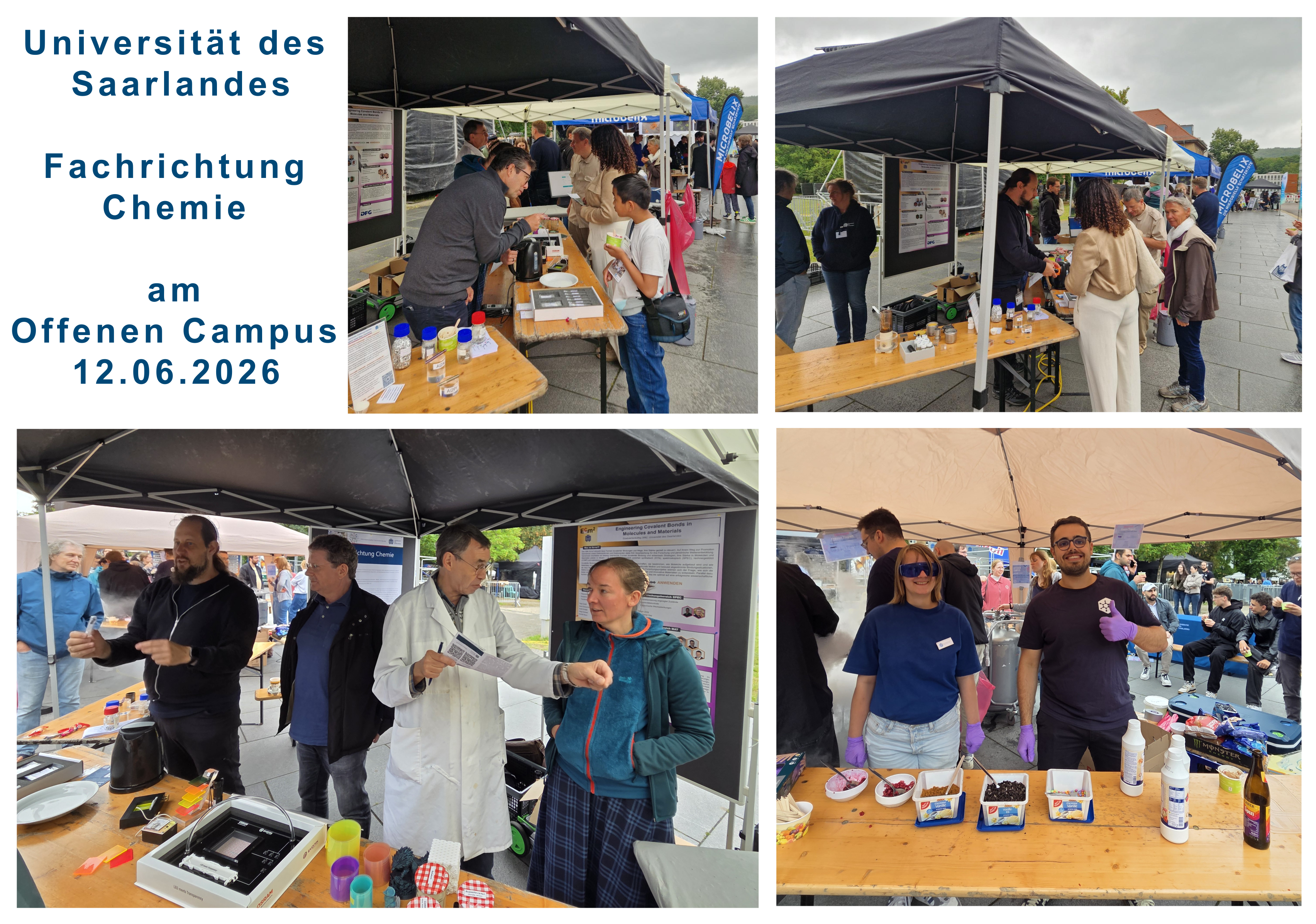
12.06.2026 | Looking Back: The Chemistry Program at Open Campus 2026
The Department of Chemistry at Saarland University presented a diverse and interactive program for prospective students, high school students, and the general public at the 2026 Open Campus. During the event, the academic advisor, Dr. Christian Völzing, provided information about the chemistry program in Saarbrücken and was available for one-on-one consultations. In addition, the Chemistry Student Council offered authentic insights into everyday student life and the campus. A special highlight was the NanoBioLab’s nitrogen show. Furthermore, professors, postdocs, and doctoral students presented current research projects and provided insights into the diverse fields of work within chemistry as a core science. The numerous hands-on activities were also very well received: In the hands-on chemistry lab, visitors could conduct experiments themselves—ranging from simple experiments with common household materials for children ages five and up to exciting experiments in organic chemistry for older teens and adults. The NanoBioLab student lab also offered practical insights into experimental work and modern research.
Open Campus 2026 was a complete success for the Department of Chemistry. Thank you to everyone who participated.
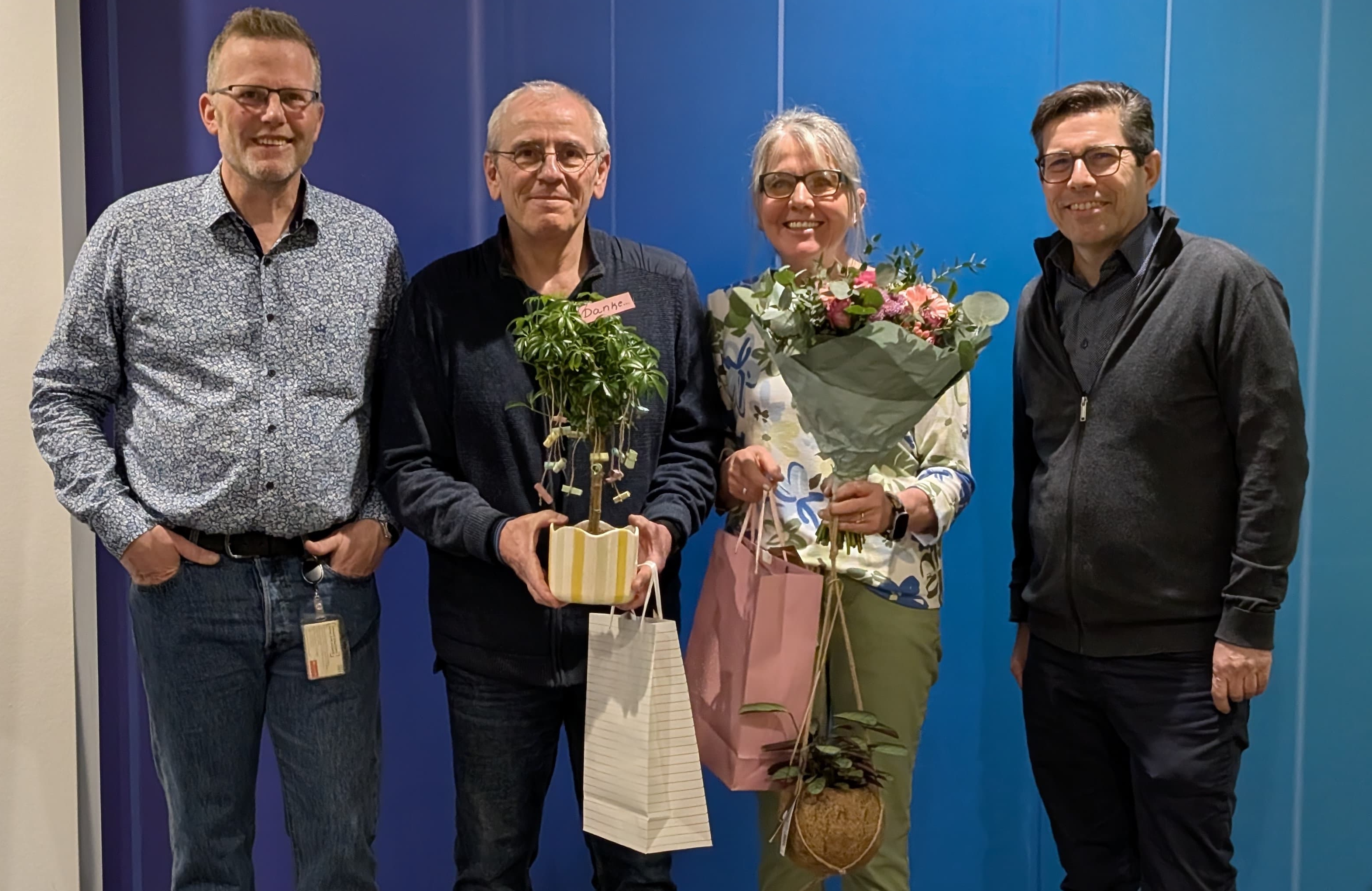
31.03.2026 | Susanne Harling and Andreas Adolf are retiring
Two influential figures in the field of inorganic chemistry are retiring after many years of dedicated service. Susanne Harling most recently oversaw CHN analysis for the Department of Chemistry and, through her reliable and competent work, played a key role in shaping day-to-day research activities. Andreas Adolf was considered a central pillar of the Experimental Chemistry lecture series and was an indispensable part of the popular Christmas lecture for many years. During a ceremony, Professors Kickelbick and Seschkewitz honored the extraordinary, long-standing dedication of both colleagues. Particular emphasis was placed on their great dedication to teaching and research, their open and approachable manner, and the high regard in which they were held within the inorganic chemistry research groups. The Department of Chemistry extends its heartfelt thanks for their outstanding collaboration and wishes Ms. Harling and Mr. Adolf all the best for this new chapter in their lives.
27.02.2026 | Strong ranking for Saarland University
TIME ranks Saarland University #144 worldwide and #10 in Germany (TIME World's Top Universities of 2026). Great recognition and way to go!
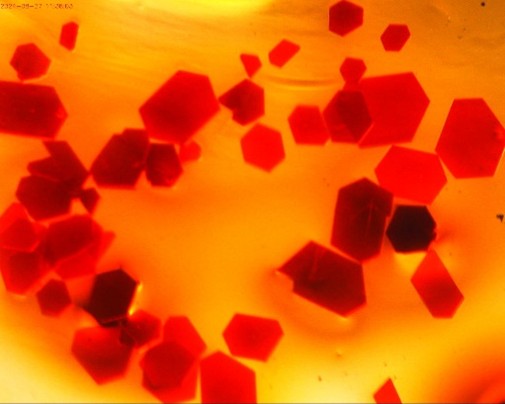
06.02.2026 | Chemists from Saarland University create iconic aromatic molecule with silicon
Congratulations to Ankur from the Scheschkewitz group on his fantastic work on the stable all-silicon analog of the iconic cyclopentadienide published today in Science (https://doi.org/10.1126/science.aed1802). After almost half a century of pursuit by chemists worldwide, silicon aromaticity takes a big leap forward. According to experimental and computational evidence, the five-membered ring of the pentasilacyclopentadienide walks the edge between resonance and equilibrium. Kudos to those undergraduate students who always “claimed” that both are the same. In a mind-boggling twist of fate, the group of Takeaki Iwamoto (Sendai, Japan) obtained precisely the same compound as we at Saarland University, only by a different route, now published in the same issue as our results (https://doi.org/10.1126/science.aed0168)
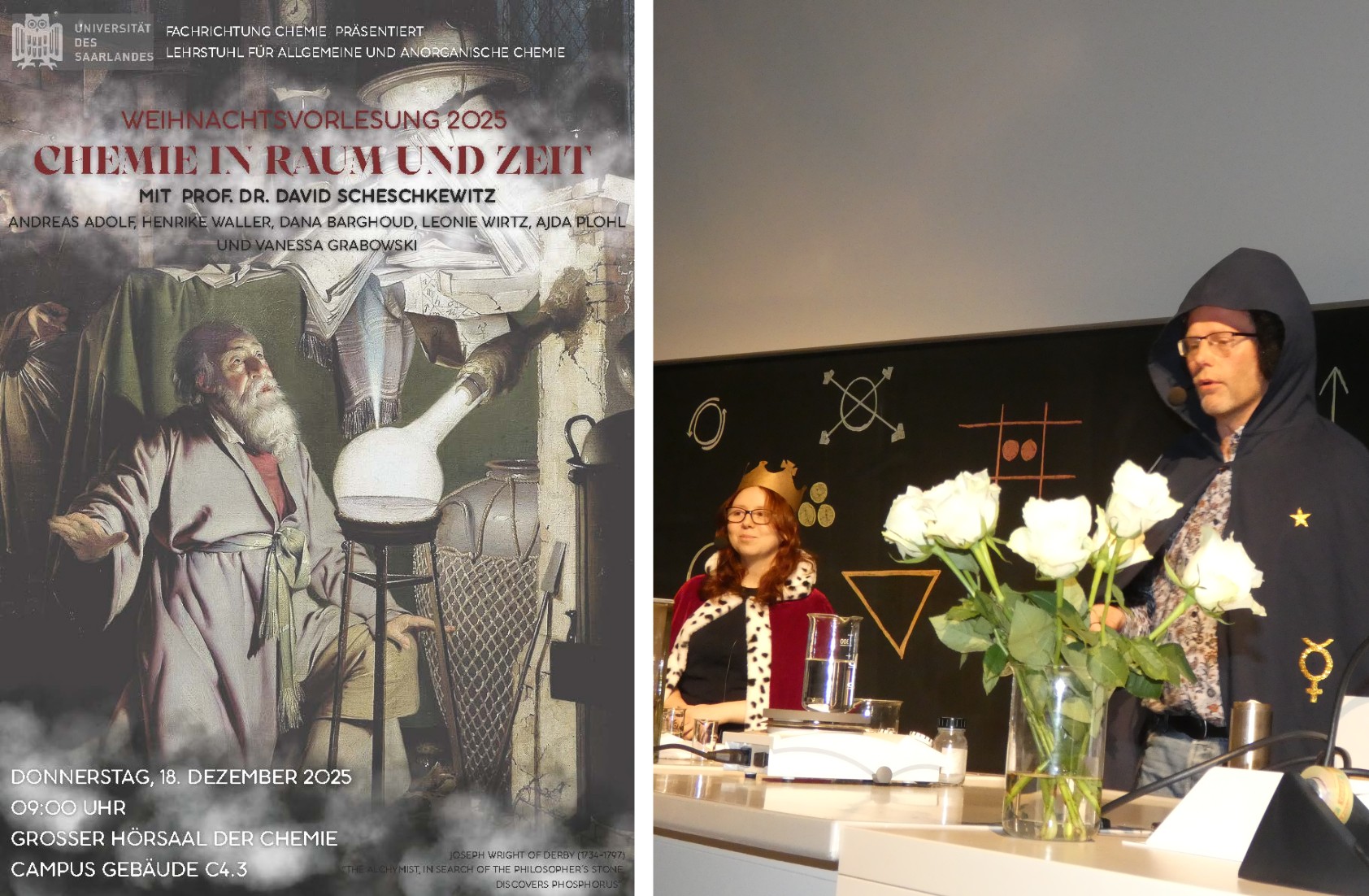
18.12.2025 | Chemistry Christmas Lecture: A Journey Back in Time to the Age of Alchemy
The large chemistry lecture hall was filled to capacity when this year's Christmas lecture took guests on a fascinating journey into the world of alchemy. Led by Prof. David Scheschkewitz, the team presented spectacular experiments that were once intended to fulfill alchemists' dreams of gold – including the transformation of base metals into “silver” and “gold.” Of course, the traditional explosions were also part of the show, leaving the audience amazed. A special moment was the farewell to Andreas Adolf, the long-time laboratory assistant for experimental chemistry and creative mind behind the Christmas lectures of recent years, as he entered his well-deserved retirement. The new team that will organize the Christmas lecture in the future consists of laboratory assistants Dana Barghoud, Ajda Plohl, Vanessa Grabowski, Henrike Waller, and Leonie Wirtz.
17.12.2025 | Joining forces for clean water: Pioneering project strengthens water protection in Saarland
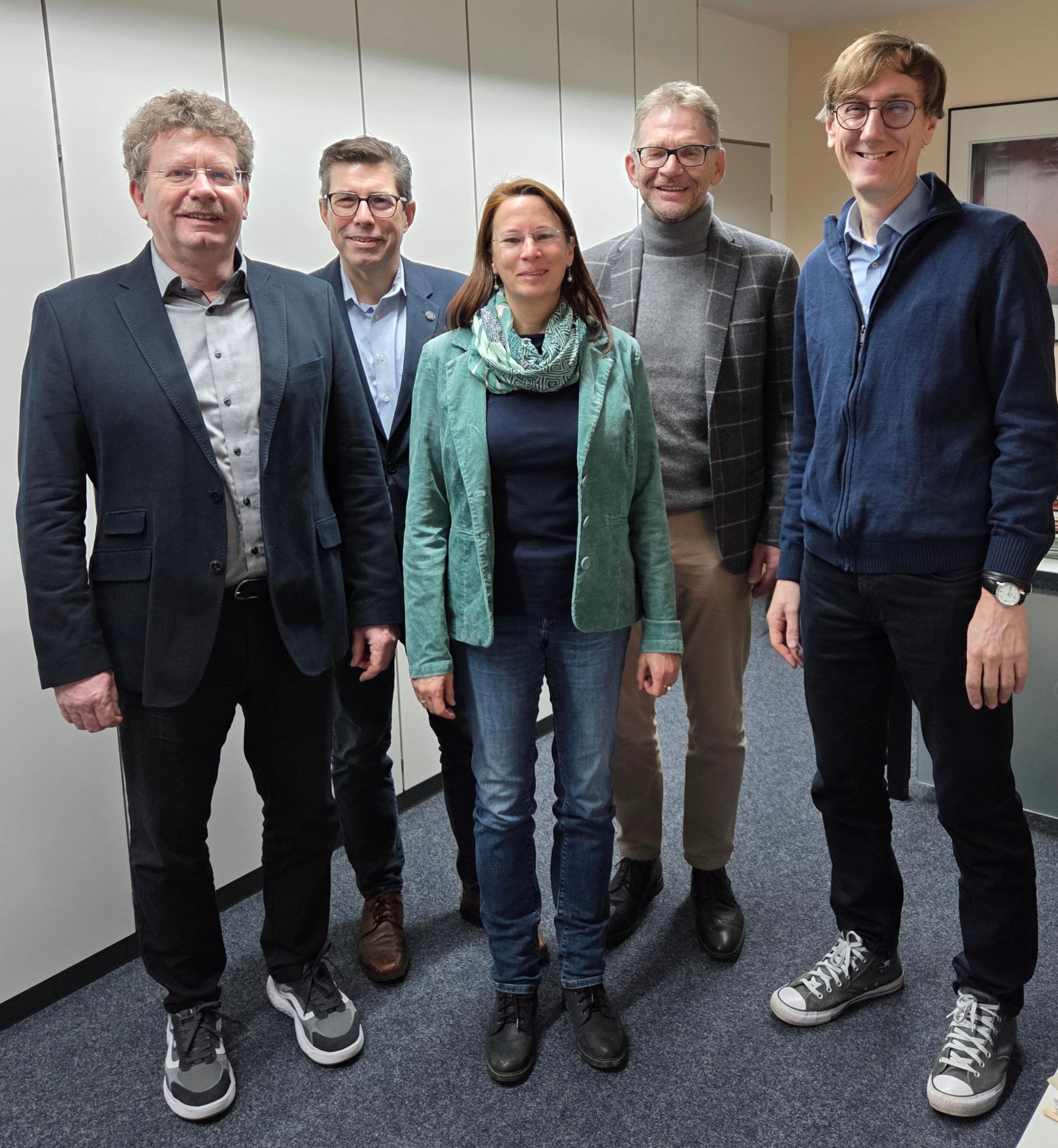
The Department of Inorganic Chemistry at Saarland University and the Ministry for the Environment, Climate, Mobility, Agriculture, and Consumer Protection (MUKMAV) are continuing their long-standing successful collaboration. With the completion of the previous project and the start of a new five-year joint project in mid-2026, research into assessing the condition of Saarland's waters will be intensified. One focus is on the effects of new requirements under the EU Municipal Waste Water Directive and the implementation of the Water Framework Directive in Saarland. In addition to established real-time measurements using mobile measuring stations, automatic samplers will also be used to detect organic and inorganic micropollutants (“emerging pollutants”) from diffuse and point sources. In addition, the project is dedicated to the analysis of small catchment areas in order to answer specific environmentally relevant questions. With this project, the partners are making a decisive contribution to the sustainable development and protection of Saarland's waters.
Hydrogen certificate now available for purchase
From the 2026/27 winter semester onwards, it will be possible for the first time to obtain a hydrogen certificate at the Faculty of Natural Sciences at Saarland University. Registration closes on 30 October 2026.
Courses on sustainability in the winter semester 2026/27
The Faculty of Natural Sciences is offering a range of courses on the topic of sustainability in the 2026/27 winter term. Anyone interested is very welcome to attend!