
 Information for
 Quick links
 Faculties


Open Access
Open access means free and unrestricted access to scientific and scholarly information on the internet – worldwide and for everyone.
What does 'open access' mean in practice?
The basic definition originates from the Budapest Declaration (2002), which states that journal literature should be accessible in such a way that it may be
- read free of charge
- downloaded, copied and distributed
- searched and cited
- used without any financial, legal or technical barriers.
The only requirement is that the authors are properly acknowledged and cited.
Why is open access important?
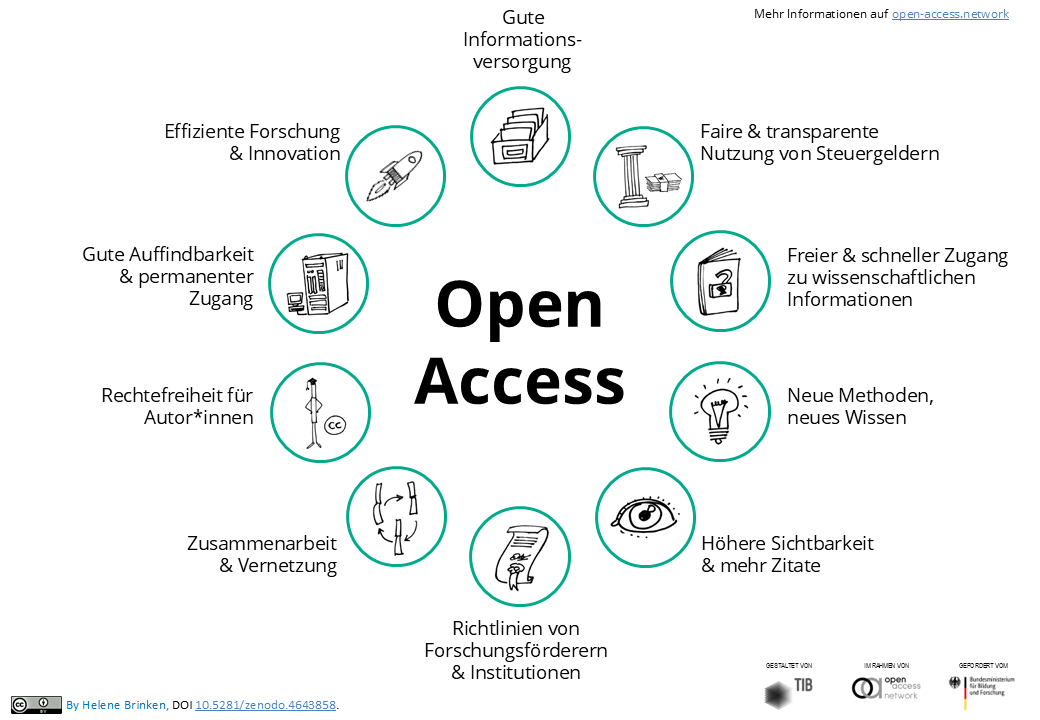
A large proportion of scientific and scholarly research is publicly funded. It is therefore reasonable that the results of this research should also be made freely available to the public.
Open access helps to:
- make knowledge widely available
- promote equal opportunities in access to research
- strengthen the transfer of research findings into society and practice.
Contact
The Saarland University and State Library provides guidance and advice on all matters relating to open access.
You can also find information on Saarland University's open access publication fund web page.