
 Information for
 Quick links
 Faculties


Open Source
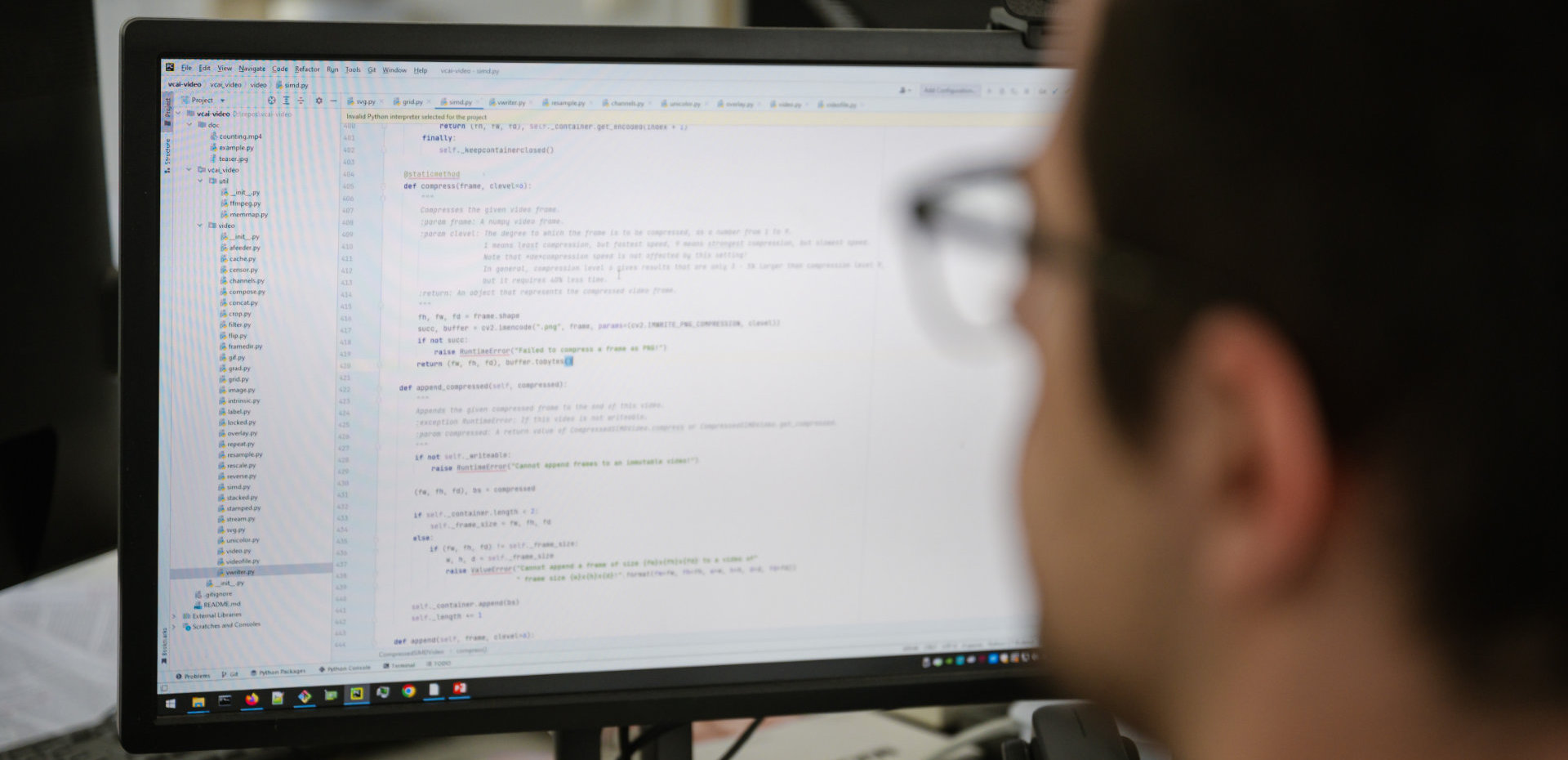
Research outputs in the form of research software and the accompanying documentation should be made publicly available and citable wherever possible. This promotes the visibility of software development as an independent research outcome and facilitates transparency, reuse and further development by other researchers.
Releasing scientific software under an open-source licence is established good practice.
What does 'open source' mean?
The Open Source Initiative® has defined the following criteria for open-source software:
1. Free redistribution: The software may be sold or given away free of charge.
2. Source code: The source code must be included or made easily accessible.
3. Modifications: Modifications and derivative works are permitted and may be distributed.
4. Integrity of the author's source code: Modified code may be restricted, but patch files must be permitted.
5. No discrimination against individuals or groups: Anyone may use the software, regardless of their identity.
6. No discrimination against fields of endeavour: Use must be permitted in all fields of endeavour (e.g. research, business).
7. Distribution of licence: No additional licence agreement is required when redistributing the software.
8. Licence must not be specific to a product: These rights apply regardless of whether the software forms part of a specific product.
9. Licence must not restrict other software: The licence must not place restrictions on other software that is distributed along with the licensed software.
10. Licence must be technology-neutral: The licence may not stipulate any individual technology or style of interface.
Copyleft and licence types
Open-source licences differ in the extent to which they impose restrictions on derivative works ('copyleft'):
- Strong copyleft
If licensed code is modified or incorporated into a derivative work, the entire derivative work must be released under the same licence.
(e.g. GPL) - Weak copyleft
Changes to a copyleft-licensed component must be released under the same licence. However, the component may be incorporated into a larger work under a different licence without the copyleft terms generally applying to the entire work.
(e.g. LGPL) - No copyleft (permissive licences)
The code may generally be modified, distributed and incorporated into works under other licences. Copyright and licence notices must be retained.
(e.g. MIT licence)
Licence recommended by Saarland University
In accordance with Saarland University’s IP Policy, the following licence should be used as standard:
GNU Affero General Public License (AGPL). This licence ensures that the software can be used and developed in a way that is open and remains accessible to the general public. Should anything prevent the release under AGPL or should a dual-licensing model be an option, please consult the Intellectual Property Services team at Triathlon's Technology Transfer Office.
Further information can be found in the 'Open Source Guide: Practical Recommendations for Open Source Software' published by the digital industry association Bitkom e.V.
Good practice: Publication and citability
In addition to software you have developed yourself, any software used and project-specific code should also be documented and published where possible. This increases the transparency and reproducibility of research results.
Recommendations:
- Use of repositories such as GitHub or GitLab
- Clear licence information in the repository
- Assignment of permanent identifiers (e.g. DOI)
→ e.g. via GitHub + Zenodo
Further information
Here are some external links to help you further explore the topic of open source:
- Bitkom e.V.: Open Source
- Open Source Initiative (OSI)
- Federal Office for Information Security
- IBM – What is open source software?
- OpenCoDE – The platform for digital sovereignty
Saarland University cannot be held liable for the content of external websites.