
 Infos für
 Direkt zu
 Fakultäten


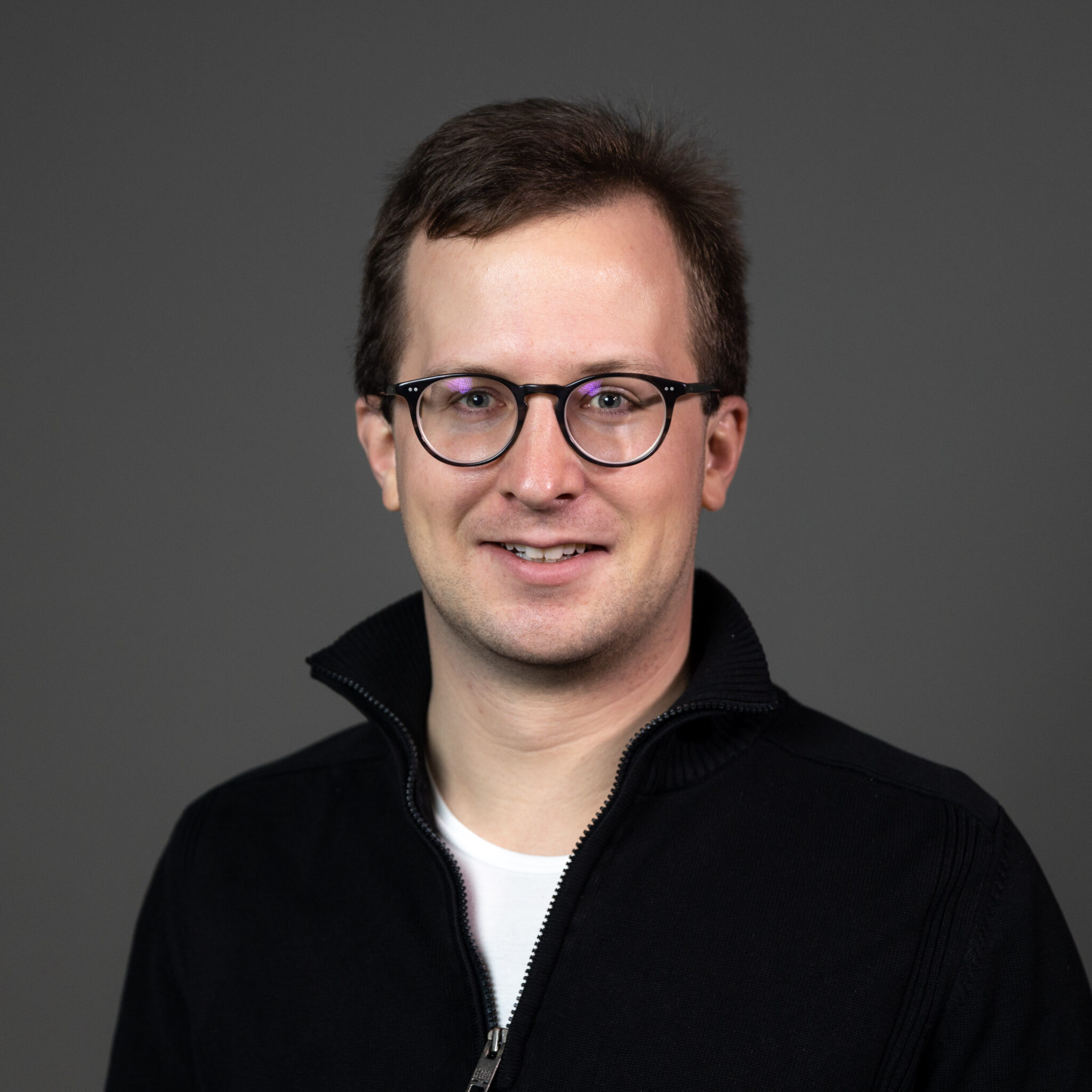
Prof. Dr. Andreas Rupp
Universität des Saarlandes
FR Mathematik
Professur für Angewandte Mathematik
Campus E2 4, Raum 4.25
66123 Saarbrücken
Tel.: +49 681 302-2705
andreas.rupp(at)uni-saarland.de
Sprechstunde nach Vereinbarung
Werdegang
- Seit 09/2024: Unversitätsprofessor (W2) für Angewandte Mathematik an der Universität des Saarlandes
- 09/2023–08/2024: Academy Research Fellow an der Lappeenranta–Lahti University of Technology LUT mit dem Projekt „Uncertainty Quantification for PDEs on Hypergraphs“
- 06/2021–08/2024: Assistant Professor (tenure track) für Computational Engineering an der Lappeenranta–Lahti University of Technology LUT
- 04/2019–06/2021: Wissenschaftlicher Mitarbeiter im DFG-Exzellenzcluster STRUCTURES an der Ruprecht-Karls-Universität Heidelberg
- 01/2016–04/2019: Wissenschaftlicher Mitarbeiter im DFG-Projekt MAD Soil an der Friedrich-Alexander-Universität Erlangen-Nürnberg
- 04/2015–04/2019: Wissenschaftliche Hilfskraft am Lehrstuhl für Angewandte Mathematik I der Friedrich-Alexander-Universität Erlangen-Nürnberg
- 2019: Promotion in Angewandter Mathematik (Nebenfach Bodenkunde) - Friedrich-Alexander-Universität Erlangen-Nürnberg, summa cum laude
- 12/2015: Master of Science Mathematik (Nebenfach Informatik) - Friedrich-Alexander-Universität Erlangen-Nürnberg
- 08/2014: Bachelor of Science Mathematik (Nebenfach Informatik) - Friedrich-Alexander-Universität Erlangen-Nürnberg
Forschungsprojekte
- Towards uncertainty quantification for PDEs on networks
Fördermittelgeber: Deutsche Forschungsgemeinschaft
Rolle: Projektleiter - Uncertainty quantification for PDEs on hypergraphs (2023–2027)
Fördermittelgeber: Akademie Finnlands / Finnischer Forschungsrat
Rolle: Projektleiter - Flagship of advanced mathematics for sensing, imaging and modelling (2024–2028)
Fördermittelgeber: Finnischer Forschungsrat
Rolle: Projektleiter - Doctoral education pilot for mathematics of sensing, imaging and modelling (2024–2027)
Fördermittelgeber: Finnisches Ministerium für Bildung und Kultur
Rolle: Projektleiter
Frühere Projekte
- Localized orthogonal decomposition for high-order, hybrid finite elements (2024–2026)
Fördermittelgeber: Finnischer Forschungsrat
Rolle: Projektleiter (übertragen an Zhi-Song Liu, 09/2024) - High-order hybrid multiscale methods for rough heterogeneous structures (2024–2025)
Fördermittelgeber: Deutscher Akademischer Austauschdienst (DAAD)
Rolle: Projektleiter auf finnischer Seite (übertragen an Zhi-Song Liu, 09/2024) - 3D-Cure: 3D printing for personalized medicine and customized drug delivery (2023–2025)
Fördermittelgeber: Business Finland
Rolle: Projektmanager (übertragen an Jarkko Suuronen, 09/2024) - Mathematical models and numerical methods for water management in soils (2022–2024)
Fördermittelgeber: Akademie Finnlands
Rolle: Projektleiter - Discontinuous Galerkin methods and parameter estimation for microstructure models in porous media (2022–2023)
Fördermittelgeber: Deutscher Akademischer Austauschdienst (DAAD)
Rolle: Projektleiter auf finnischer Seite - Modeling large near-fractal pre-planetary dust aggregates (2019–2021)
Fördermittelgeber: Deutsche Forschungsgemeinschaft (Exzellenzcluster STRUCTURES)
Rolle: Wissenschaftlicher Mitarbeiter - Mechanistic modelling of the formation and consolidation of soil microaggregates (2016–2019)
Fördermittelgeber: Deutsche Forschungsgemeinschaft (Forschergruppe MAD Soil)
Rolle: Wissenschaftlicher Mitarbeiter
Forschungsinteressen
- Numerische Lösung partieller Differentialgleichungen (PDEs)
- Finite-Elemente-Methoden, insbesondere
- Discontinuous Galerkin (DG)
- Hybridizable Discontinuous Galerkin (HDG)
- Hybrid High-Order Methoden (HHO)
- Enriched Galerkin Methoden
- Multiskalen- und Mehrgitterverfahren
- PDEs auf Netzwerken und Hypergraphen
- Unsicherheitsquantifizierung (Uncertainty Quantification)
- Inverse Probleme und Parameterschätzung
- Wissenschaftliches Rechnen und Hochleistungsnumerik
- Maschinelles Lernen in der Numerik und Modellreduktion
- Strömungen und Transporte in porösen Medien
- Mathematische Modellierung in Geowissenschaften, Medizin und Ingenieurwissenschaften
Aktuelle Lehre
Vorlesungen
- Einführung in die Numerik → Anmeldung über CMS
- Funktionenräume mit Anwendungen → Anmeldung über CMS
- Mathematik für Studierende der Biologie und des Lehramtes Chemie → Anmeldung über CMS
Seminare
- Matrixfunktionen → Anmeldung über CMS
Betreuung
Abgeschlossene Promotionen
- Mathematical Models and Optimization Methods in Biomedical Applications (2026), Lappeenranta–Lahti University of Technology
Laufende Promotionen
- Towards Uncertainty Quantification for PDEs on Networks, Saarland University
Begutachtung von Promotionen
- Generalised Coupling Conditions for Multi-Dimensional Flows in Fluid–Porous Systems, University of Stuttgart (2026)
- Hilbert Space Projection Methods for Numerical Integration and State Estimation, Aalto University (2024)
15 Masterarbeiten
6 Bachelorarbeiten
2026
- Enforcing Constraints in Neural Network Simulations – Gustave Herve Mpong (AIMS Rwanda)
- Coupled 1D/2D Modeling of Coastal Ocean Circulation with the Discontinuous Galerkin Method – Veronika Christiane Riedl (Universität Bayreuth)
2025
- Symplectic Integrators for Hamiltonian Systems – Stephen Aduragbemi Taiwo (AIMS Rwanda)
- Delay Differential Equations in Modeling Schistosomiasis Transmission Dynamics – Aubrey Undi Phiri (AIMS Rwanda)
2024
- Playing Oware Nam-nam with Deep Q-Networks – Chantelle Amoako-Atta (LUT University)
- Kalman Inversion Methods for Large-Scale Inverse Problems – Ville-Petteri Manninen (LUT University)
- Modeling Diseases with Delay Equations – Joseline Doriane Simo Tekeu (AIMS Rwanda)
2023
- Spatial Decomposition Methods for Modelling Multi-Resolution European Electricity Systems with High Shares of Renewables – G. Harish Kaushik (LUT University)
- Modelling Water Reinjection after Methane Extraction in Lake Kivu – Jean Modeste Mushimiyimana (LUT University)
- Artificial Intelligence versus Statistical Methods in Parameter Estimation for Discrete Models – Ouraga Aime Cevert Ballou (AIMS Rwanda)
- Identifying Hidden Parameters in Cellular Automata with Neural Networks – Valery Ashu (LUT University)
- Prudent Response Surface Models: Exploring a Framework for Approximating Simulations with Confidence and Certainty – Juniper Tyree (University of Helsinki)
2022
- Modeling the Temperature in Lake Kivu – Désiré Kabuya (AIMS Rwanda)
2020
- Analysis and Implementation of an Enriched Galerkin Scheme for the Shallow Water Equations – Moritz Hauck (FAU Erlangen–Nürnberg)
2018
- A Hybridizable Discontinuous Galerkin Scheme with Different Orders of Approximation Spaces Capable of Dealing with Jump Conditions: Analysis and Implementation – Markus Musch (FAU Erlangen–Nürnberg)
2024
- Parameter Estimation of Chaotic Systems using Python Library – Max Wesamaa (LUT University)
- Empirical Cumulative Distribution Functions for Calibrating Random Processes – Veeti Rajaniemi (LUT University)
2023
- Parameter Estimation for Cellular Automata – Joona Lappalainen (LUT University)
- Man vs Machine: Beating Humans in a Multiplayer Card Game without Lookahead – Ilmari Vahteristo (LUT University)
2018
- Stabilization Techniques for the Finite Element Method Applied to Advection-Dominated Problems – Moritz Hauck (FAU Erlangen–Nürnberg)
- Jacobian-Free Newton–Krylov Methods Applied to the Cahn–Hilliard Equation with Degenerate Mobility – Tim Roith (FAU Erlangen–Nürnberg)
Frühere Lehre
Universität des Saarlandes
Lappeenranta–Lahti University of Technology
Internationale Gastlehre
Friedrich-Alexander-Universität Erlangen–Nürnberg
Vorlesungen
- Mathematische Modellierung (2026)
- Advanced Numerical Methods for Partial Differential Equations (2026)
- Elemente der Programmierung (2026)
- Introduction to Numerical Methods for Partial Differential Equations (2025–2026)
- Theory and Numerics of Ordinary Differential Equations (2025)
- Introduction to Numerics (2024–2025)
Seminare
- Numerical Methods (2026)
- Seminar für Lehramtsstudierende (2026)
- Research Seminar (seit 2024)
- Numerics of Eigenvalues (seit 2025)
- Numerics for Teaching Degree Students (seit 2025)
Vorlesungen
- Mathematical Modeling with PDEs
- Numerical Methods 2
- Scientific Computing
Seminare
- Computational Engineering Seminar
African Institute for Mathematical Sciences (AIMS), Ruanda
- Numerical Methods for Climate Science (2022)
- Numerical Analysis (2023–2026)
Weitere Gastveranstaltungen
- AI in Atmospheric Science, Universität Helsinki (2023)
- Mathematical Concepts of Artificial Intelligence, Summer School „First Steps in Biosphere–Atmosphere Modelling“ (2023)
Tutorien
- Analysis I–III
- Einführung in die Funktionalanalysis
- Numerical Methods for PDEs
- Advanced Numerics for PDEs
- Mathematik für Ingenieurwissenschaften