
 Information for
 Quick links
 Faculties


Archive
Job advertisement: Additional student assistant sought
The Chair of Political Science with a focus on European Integration and International Relations is seeking 1 research assistant for 10 hours per week starting on 15 February 2026 to support the research project “Total Annotation Variation”.
Tasks and activities:
- Systematic literature research: Identification, review and summarisation of scientific studies on: annotation, reliability and variation between annotators
- Support in the development of an annotation platform: assistance with simple programming tasks, interface checks and usability tests
- Data management and preparation: organising data sets, maintaining documentation, performing version control and creating descriptive summaries
- Supporting test runs: preparing annotation tasks, testing procedures, assisting with data quality monitoring
- General support for research in the fields of computer science and political text analysis
Requirements for applicants:
- Enrolled student at the University of Saarland
- Very good knowledge of English and German
- Good computer skills; experience with Python and/or R
- Experience in data processing
- Good knowledge of MS applications (including Word, Excel and Teams)
- Basic knowledge of and interest in topics such as annotation, natural language processing, text analysis
- Organisational skills, attention to detail and reliability
- Ability to work both independently and in a team
- Good communication skills
- Commitment and willingness to learn
Please send your CV and a letter of motivation in English (in one file) by email with the subject line “Application: Annotation Project” to Mr Giuseppe Carteny by 31 December 2025: Giuseppe.Carteny@uni.saarland.de

Job advertisement: Four new student assistants wanted
Tasks and activities:
- Supporting project management and procurement processes in the public sector
- Supporting political science research activities in the field of opinion polling
- Supporting data management and statistical analysis
Requirements for applicants:
- Enrolled student at the University of Saarland
- Very good written and spoken German
- Very good knowledge of English
- Knowledge of Turkish, Russian, Polish or Arabic is also advantageous
- Excellent organisational skills, focus on administrative tasks
- Good knowledge of MS applications (including Word, Excel and Teams)
- Good knowledge of data management and basic computer skills
- Knowledge of or interest in literature on experimental research design, political attitudes and political behaviour
- Good ability to work and communicate independently and in a team
- Reliability, commitment and willingness to learn
What we offer:
- Interesting insights into the field of political science research
- Teaching of research and investigation skills
- A friendly and motivated working environment
Please send your CV and a letter of motivation (in one file) by email to Mr Alexander Hartland: Alexander.Hartland(at)uni-saarland.de by 11 December 2025.
Job advertisement: Teamlead Data Development Pool SOUNDS (m/w/d)
The Societal Observatory Using Novel Data Sources (SOUNDS) is an interdisciplinary research project at Saarland University (UdS), funded by the state's transformation fund. It investigates societal transformation processes using innovative data sources such as satellite images, social media, and barcode scanners. The aim is to link computer science and social sciences and to strengthen the use of data-intensive methods. In the long term, the goal is to establish an institute based on the structures that have been developed. SOUNDS works closely with partners such as the I2SC (Interdisciplinary Institute for Societal Computing) and the Max Planck Institute for Software Systems. The project addresses disciplines such as political science, sociology, and macroeconomics and offers strategic interfaces to regional politics and economics. Cooperation with administrations should help to integrate scientific findings directly into decision-making processes. Many research projects are based on common data types such as social media data, mobility data, or satellite images. To promote efficiency, quality, and an open scientific culture, we are establishing a central technology and data pool, for which we are looking for a team lead as soon as possible who will supervise at least three data engineers.
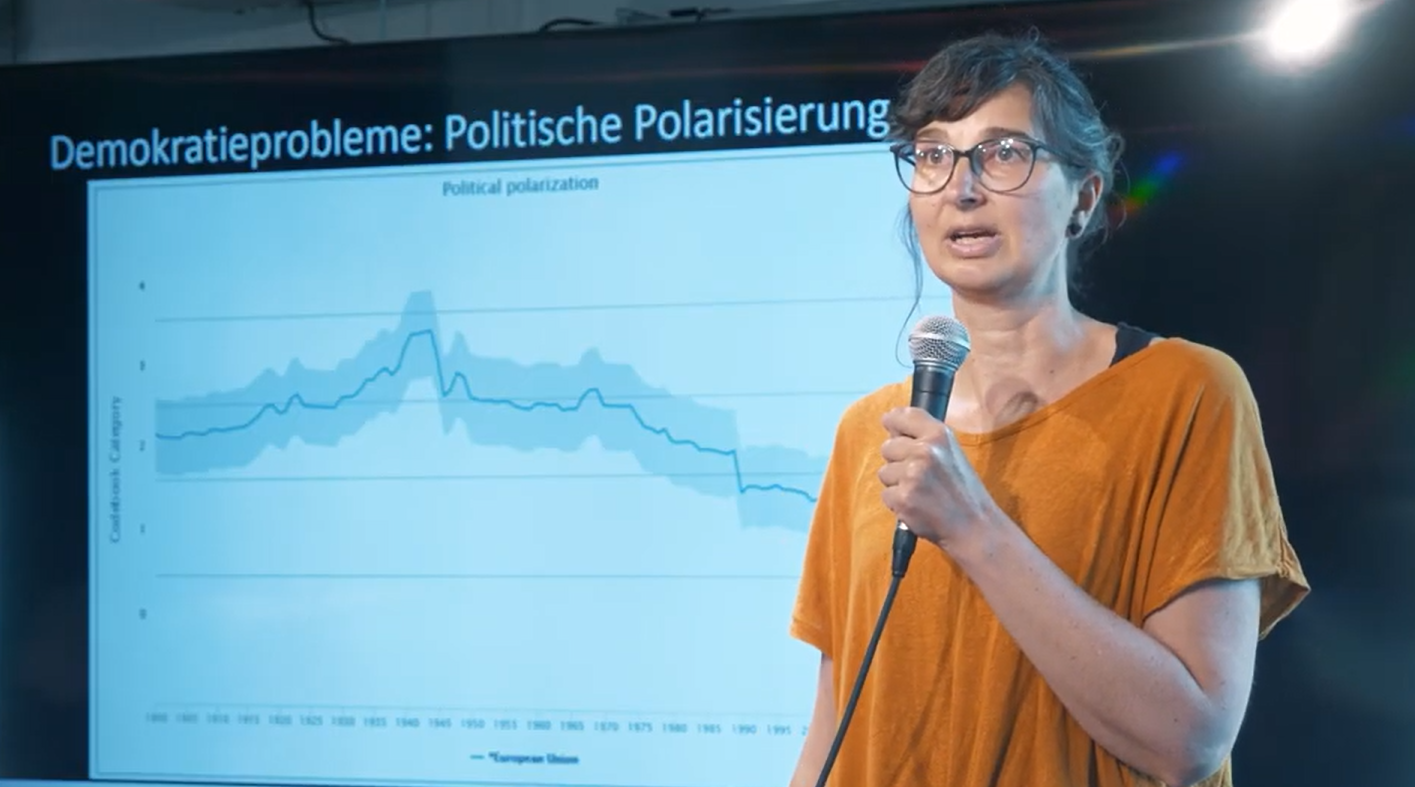
TEDx Talk by Prof Dr Daniela Braun: "How can we get more people involved in politics?"
In her talk at TEDx Saarbrigge, Prof Dr Daniela Braun highlights the current challenges facing democracies: declining voter turnout, growing polarisation and a loss of trust in political parties. She presents traditional approaches and innovative digital solutions – from citizens' assemblies to new communication formats – and calls for a collective rethinking of democracy. The recording of the talk is now available on the YouTube channel "TEDx Talks".

Lecture at the annual conference "Ten Years of Critical Security Studies" at Dresden Technical University
The annual conference of the Critical Security Studies thematic group took place on 6 and 7 November 2025 at TU Dresden, marking the group's tenth anniversary. Around 70 researchers discussed developments, perspectives and challenges in the field. The focus was on reflections on security discourses in the context of the war in Ukraine, the climate crisis and social polarisation. Several contributions emphasised the importance of power-critical, intersectional and interdisciplinary approaches. A roundtable with founding members took stock and outlined ways to strengthen institutional and international networking. The participants agreed to further expand the exchange between theory and practice.
Our chair also participated: Djamila Jabra gave a presentation in the panel “Climate security and speculative governance” entitled “Beyond Soft Power: Assessing the Salience of Climate Security in Political Parties in Europe”.

New publication: „Citizen’s trust and societal polarization in times of transformation“
The 2025 conference of the research section “Comparative Politics” of the German Political Science Association (DVPW) was dedicated to the topic: “Citizen’s Trust and Societal Polarization in Times of Transformation: Comparative Perspectives from Different World Regions.” Around 100 scholars from across Europe gathered from March 27 to 28 at Saarland University in Saarbrücken for the largest political science event to date hosted by the two political science chairs of the university’s still young department for European Social Research.
The conference is the result of two international research projects that are part of the Horizon Europe program: “Activating European Citizens Trust in Times of Crises and Polarization” (ActEU, led by the University of Duisburg-Essen and Saarland University) and PROTEMO (“Emotional dynamics of protective policies in an age of insecurity”, led by Saarland University). The aim of the conference was to address and discuss the most pressing challenges facing representative democracy across 20 panels: citizens’ trust—or distrust—in “their” political system, institutions, political representatives, and the EU as well as the interrelationships between trust, emotions and societal polarization. These overall topics are linked to long-term transformations related to migration and integration, climate change, technological change, gender inequalities, Europeanisation or region-specific challenges.

Bachelor's degree in European Studies – over 60 students begin their studies
66 new students began their Bachelor's degree in European Studies at Saarland University in the winter semester 2025/26 and were welcomed on 10 October 2025 with a Welcome Day organised by the study coordinators and the European Studies student council.
The first-year students are distributed across the four specialisations offered as follows: 19 students in Geographies of Europe, 15 students in Modern History, 27 students in Politics, Law and Society, and five students in Comparative Literature. In addition, five junior students are getting a taste of university life during the winter semester while still at school, attending lectures and seminars. A total of 168 students are currently enrolled in the Bachelor's programme in European Studies. In addition, there are 23 students from the German-French programme in European and International Politics who began their second year of study in Saarbrücken in the winter semester 25/26 and who also took part in the European Studies Welcome Day.

Gender Politics in Germany: Evidence and Recommendations from the UNTWIST EU Horizon Project
As part of the UNTWIST project, Prof. Dr. Daniela Braun, Chair of Political Science with a focus on European Integration and International Relations at Saarland University (UdS), and Dr. Giuseppe Carteny, research assistant specialising in political behaviour, party politics and quantitative methods at UdS, will present their key findings and results at the online event ‘Gender Politics in Germany: Evidence and Recommendations from the UNTWIST EU Horizon Project’ on 9 November.
The contents at a glance:
- Gender politics in Germany
- Polarisation between parties
- Citizens' perspectives on equality and care
- Policy recommendations
Please register – with specific questions if you wish – by 21 November 2025 at: Vinciane.Pilz@uni-saarland.de
After registering, you will be sent a link to participate.
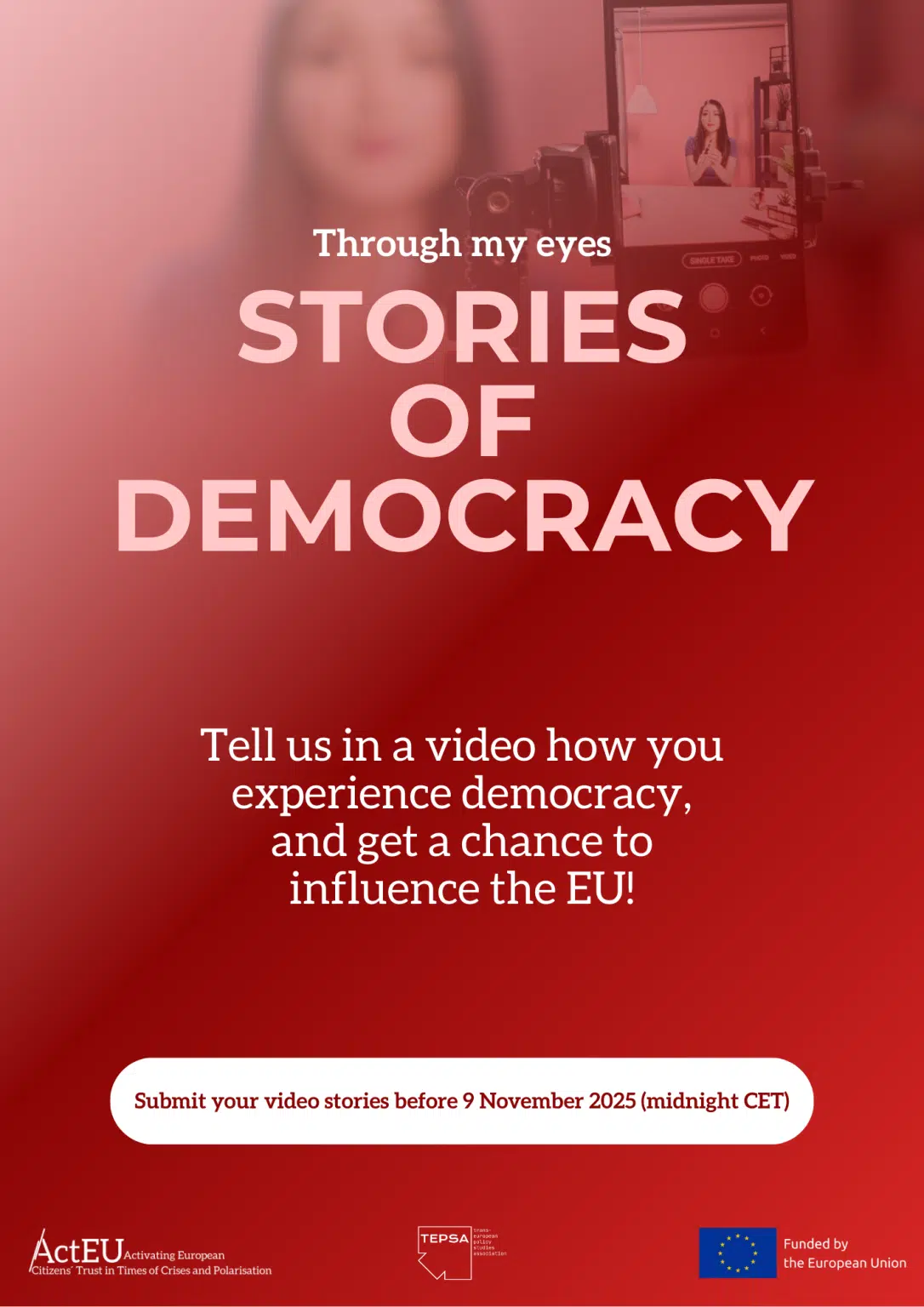
ActEU video competition offers trip to Brussels as prize
What does democracy look like to you? Is it electing your representatives and trusting them to make decisions that benefit the general interests? Is it feeling part of a society and of the decisions that affect you? Or is it about fighting for your struggles: for change, for being heard, having your voice matter?
In a time of political division, polarised debates and declining trust, democracy can feel distant, though it remains deeply personal. Because behind every headline, statistic or political statement, there are real human stories. With this video contest TEPSA invites you to share your perspectives and have your voice amplified across Europe.
Video entries of up to three minutes in length that creatively address this question can be submitted until 9 November. The winning video will be rewarded with a trip to Brussels to attend the ActEU final conference.
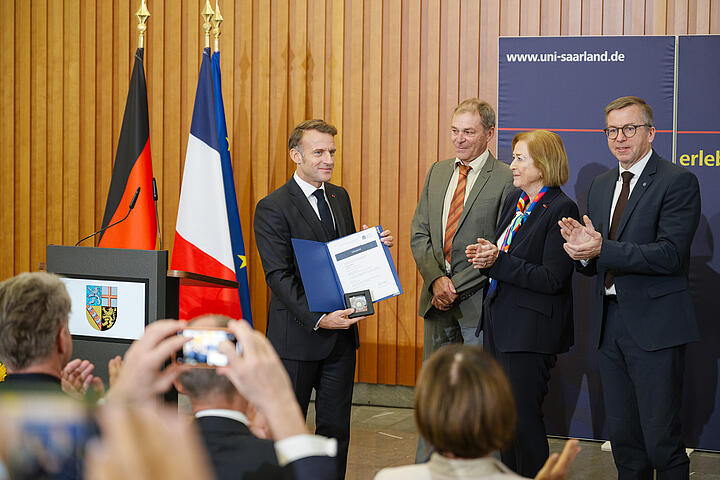
French President Emmanuel Macron awarded honorary doctorate by Saarland University
French President Emmanuel Macron has been awarded an honorary doctorate by the Faculty of Human and Business Sciences at Saarland University in recognition of his exceptional contributions to European higher education and to scientific and academic cooperation. The award ceremony took place in Saarbrücken on 3 October as part of the German Unity Day celebrations.
In its official statement, the university describes the French head of state as a 'political trailblazer whose ideas and initiatives have laid the groundwork for a new generation of European universities'. French President Emmanuel Macron has played a pivotal role in shaping European science and higher education policies. His landmark speech at the Sorbonne on 26 September 2017 stands out as a defining moment, in which he set out a bold agenda for a new European education area.
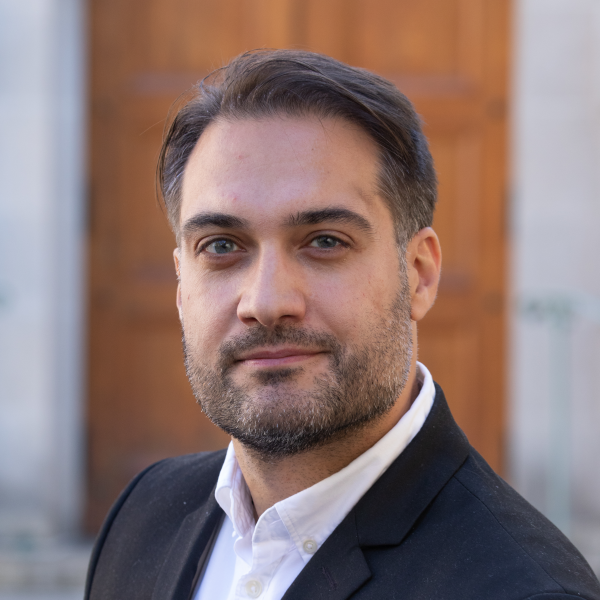
Date: 04.11.2025
Time: 16:30-18:00 Uhr
Place: Geb. B3 1, Hörsaal I
Pascal König is an assistant professor of public administration at the Department of Political Science and Public Administration at Vrije Universiteit Amsterdam. In his lecture as part of the lecture series Politics in Europe, he explains how cultural values and political ideologies are embedded in AI systems, creating new tensions between society, politics and technology.
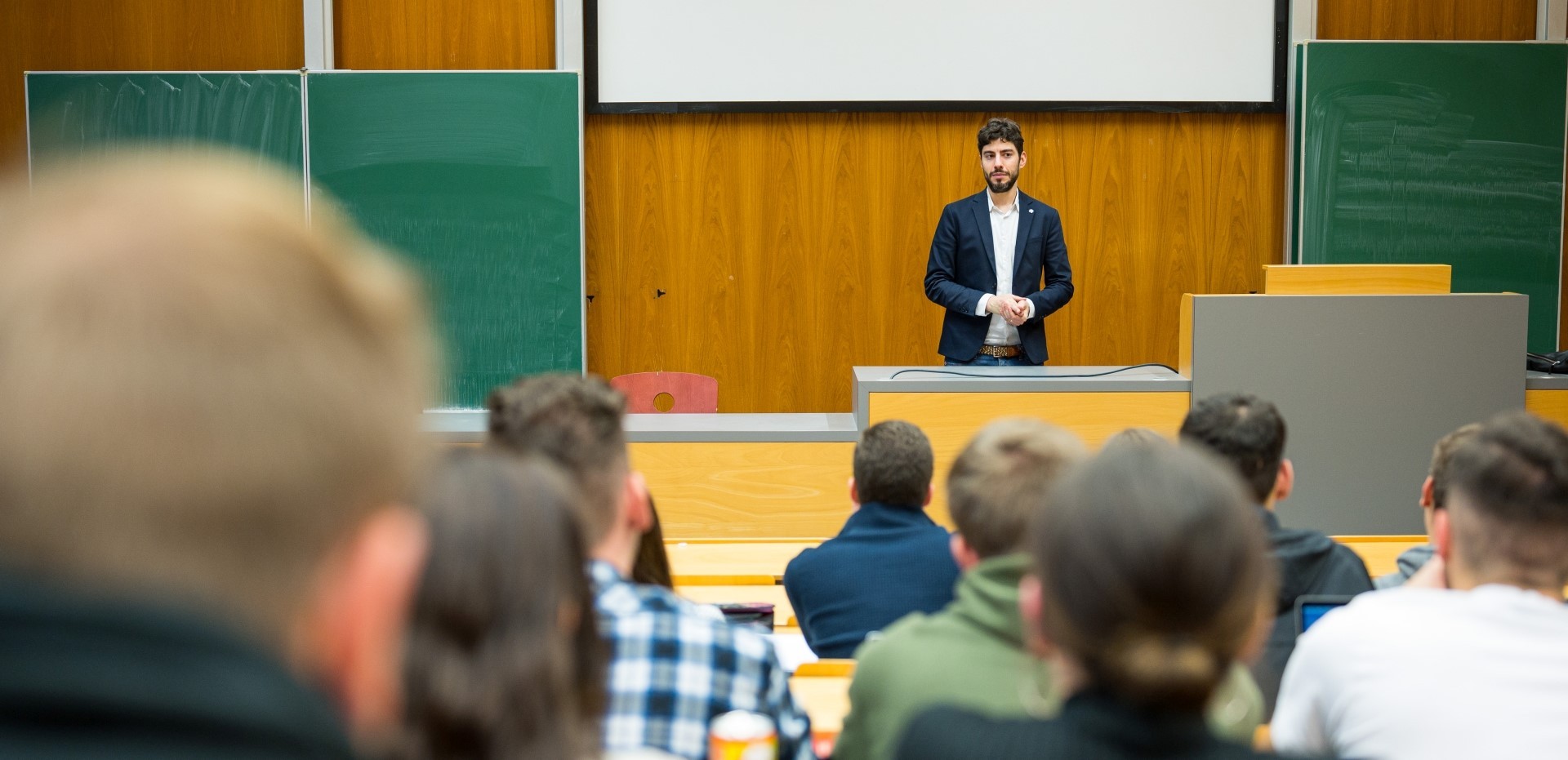
Interdisciplinary lecture series "European Transformations" in the winter semester
The winter semester 2025/26 will see the launch of the “European Transformations” lecture series, organised by junior professor Dr Carole Fricke as part of the Master's programme Spaces, Politics and Societies of Europe. The interdisciplinary lectures will be given by lecturers from the Department of European Social Studies. The European Transformation lecture series deals with the dynamic and multifaceted transformation processes that are shaping contemporary European society, spatial planning and politics. It offers a comprehensive overview of current changes and addresses critical issues such as polarisation, populism, digitalisation, questions of (in)security, urbanisation and conflicts over space and resources. The lecture series not only addresses changes in European politics and society in general, but also offers detailed insights into spatial changes within European cities and border regions. Each lecture focuses on a selected topic or concept, drawing on both subject-specific debates and interdisciplinary discourses in/about Europe.
As part of the lecture series, Dr Giuseppe Carteny will give a lecture entitled „The politicisation of gender in contemporary European politics“. This lecture examines the contemporary politicisation of gender in European politics, highlighting the significant increase in the prominence of gender-related issues in public discourse, electoral competition, and policy debates. Drawing principally on empirical contributions, the seminar will survey recent findings from studies of public opinion, voting and party politics. We will pay particular attention to the mechanisms linking changing attitudes to political behaviour, including turnout and vote choice, and to the ways in which political parties shape, respond to and strategically frame gender claims. The contemporary features of this politicisation will be emphasised, including multidimensionality, salience and polarisation, while considering intersectionality and transnational diffusion — or lack thereof. The lecture aims to provide students with the analytical tools necessary to assess the circumstances in which gender becomes politicised, the parties that benefit or lose out in this process, and its consequences for democratic representation and public policy in Europe.
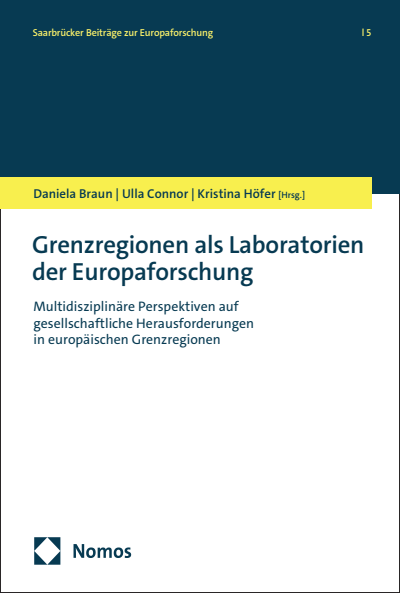
Now six volumes long: Saarbrücken Contributions to European Studies
The Saarbrücker Beiträge zur Europaforschung (Saarbrücken Contributions to European Studies) bring together current academic findings from European studies historically anchored at Saarland University. The publication series of the Cluster for European Studies at Saarland University CEUS, in which the internationally renowned European expertise of Saarland University works together on an interdisciplinary basis, offers perspectives on current topics in European studies from the fields of humanities, literature, cultural studies, linguistics, social sciences, spatial studies and law in the form of anthologies and monographs. In this way, it is also a reflection of the CEUS's powerful formats and the excellent promotion of young researchers.
Job advertisement: Student assistant wanted
We are looking for a student/research assistant for the large-scale SOUNDS project!
- The tasks involve supporting project management in various organisational and administrative processes. For example:
- Supporting internal and external communication (e.g. website content, social media).
- Assisting with the creation of texts.
- Proofreading texts and presentations.
- Supporting the preparation, organisation and supervision of events, appointments, meetings and workshops.
- Conducting research.
- Supporting data management and analysis (no prior knowledge required).
Job advertisement: Project manager wanted
As part of the newly established interdisciplinary competence centre SOUNDS (Societal Observatory Using Novel Data Sources) at Saarland University, the following position is advertised with an application deadline of 10 October 2025:
Management of the large-scale SOUNDS project
In addition, further complementary positions as consultants and in the field of data engineering are planned in the near future, as well as a graduate college and the advertisement of new professorships in the field of computational social sciences.
We would be delighted if you could forward this advertisement to anyone who might be interested.

New publication: "Party competition on European issues in the 2024 EP elections"
by Giuseppe Carteny, Daniela Braun, Alex Hartland & Ann-Kathrin Reinl
Recent developments have turned European integration from a “sleeping giant” into an active political issue. The Maastricht Treaty politicized Europe in national and European Parliament elections. Cross-border crises, like migration and environmental challenges, have further increased the importance of coordinated EU responses. Moreover, an entirely new family of Eurosceptic parties has emerged and consolidated over the past decade. Given that one of their main aims is to challenge and criticise the European Union (EU), Eurosceptic parties have a particular interest in European issues - the European polity as well as major European policies. Against this background, this paper examines whether and how political parties have emphasised these issues during the 2024 EP elections, compared to 2019, and contrasting Eurosceptic and mainstream parties. Drawing on annotated data from the 2019 Euromanifesto project, we fine-tune transformer-based deep learning multilingual models to detect parties' salience and positions on European polity and policy issues in nine countries during the 2024 EP elections. Our analyses show that the salience of European issues has increased on average, in particular for the EU polity. In terms of positions, we detect a pattern of increasing negativity of mainstream parties on European policy issues, such as migration and the environment, whereas Eurosceptic parties (in particular of the far-right) appear to have become less negative on the EU. In sum, our results suggest an increasing relevance of EU-wide issues, with different patterns of polarisation.
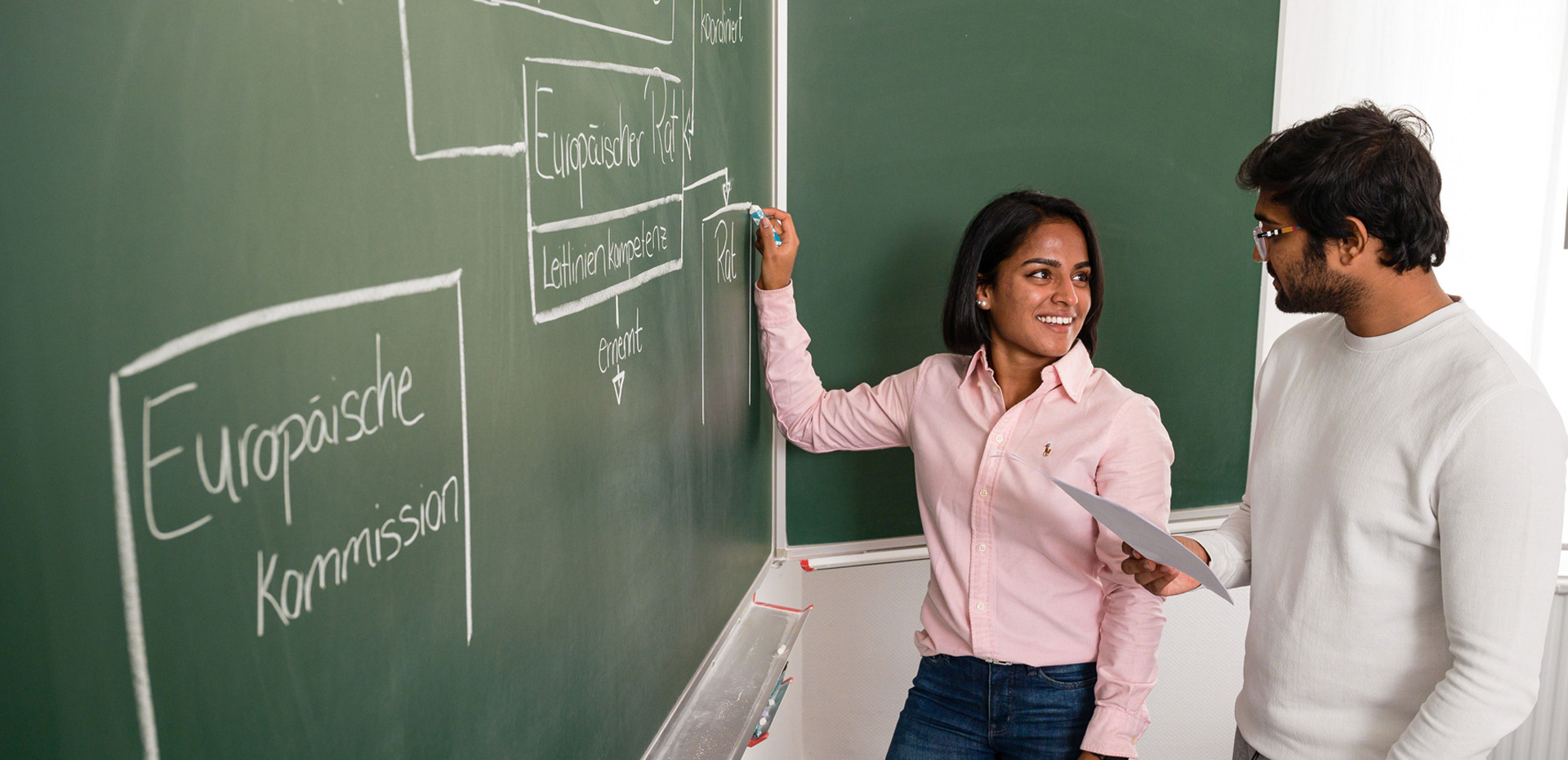
Enrolment in the Bachelor's programme in European Studies still possible
Prospective students can still enrol for the Bachelor's degree programme in European Studies until 30 September. This applies to the following specialisations: Geographies of Europe, Modern History and Comparative Literature. Enrolment takes place via the Saarland University online application portal for admission-free degree programmes.
In the 2025/26 winter semester, two block seminars in English and French will also be held for international students. The seminars are aimed at Erasmus incoming students and focus on European culture, intercultural communication and multilingualism. The courses will take place before the start of lectures, from 2 to 10 October 2025. Registration is possible via an online form and is open until the beginning of October.
Further information on the European Studies programme
Further information on the block seminar
New publication: "Political parties’ policy preferences on environmental issues in German border regions"
by Daniela Braun, Giuseppe Carteny, Alex Hartland, Djamila Jabra & Rosa Navarrete
Cross-border cooperation is an increasingly important issue in the EU, but little is known about its influence on domestic politics in EU member states. Previous studies suggest that border regions can influence political attitudes and party positions, but systematic analysis of these variations is lacking. We use Local Manifestos Project texts to measure the environ‐mental policy positions of political parties by location in Germany. By comparing the distance from the border of each locally-based party with the position expressed in their manifesto, we could identify any systemat‐ic variation in position relative to border proximity. We found minimal variation within parties regarding salience and position on environmental issues, suggesting that local branches of major parties tend to adopt similar strategies, possibly not adjusting the content of their electoral proposals to meet the specific demands of their constituents.

Saarbrücker Zeitung reports on SOUNDS
On 23 August, an article appeared in the Saarbrücker Zeitung introducing the new SOUNDS project, that is funded by the Saarland Ministry of Finance and Sciencefrom the Transformation Fund. It is intended to help develop a kind of early warning system - a democracy barometer - to monitor the mood within our society. To achieve this, it combines interdisciplinary social and computer science approaches. It analyses social transformation processes using innovative data sources such as satellite images, social media and barcode scanners. The aim is to link computer and social sciences and strengthen the use of data-intensive methods. In the long term, the aim is to create an institute based on the structures that have been established.

New publication: "Who engages with environmental issues in a multi-level system? An exploratory analysis of German parties’ issue emphasis"
by Daniela Braun & Martin Gross
Environmental policies are central to contemporary politics. Consequently, parties are incentivized to shape public discourse on environmental issues – a tendency particularly pronounced for left-wing parties. Within the European Union’s (EU) multi-level political system, this is a complex undertaking, as environmental policies are frequently decided and implemented across various political tiers. Utilizing a newly developed dictionary focused on environmental issues, we examine German parties’ emphasis on these issues in EU, federal, regional, and local election manifestos from 1989 to 2021. Our findings indicate that parties’ strategic considerations are the primary factors correlating with variations in their environmental issue emphasis across political levels. Particularly non-left-wing parties place less emphasis on environmental issues when facing electoral competition from successful Green parties at the same political level. Moreover, left-wing parties have a stronger incentive to emphasize environmental policies, including explicit state interventions. Yet, this electoral challenge is significant only within the same political level and not across different levels. Furthermore, the economic context in which parties compete is crucial: they tend to place greater emphasis on environmental issues when economic conditions are more favorable.
New publication: "Euroskeptizismus in der deutsch-französischen Grenzregion. Eine Tageszeitungsanalyse zu den Kommunalwahlkämpfen in Saarbrücken und Forbach"
by Daniela Braun & Friederike Hommel
This article examines the observation that approval ratings for the Eurosceptic party Rassemblement National are high in the German-French border region, especially on the French side. EU border regions are often seen as prime examples of European integration. However, this can manifest itself in two ways, as both the advantages and disadvantages of the border location are clearly felt here. A qualitative content analysis was used to examine whether and in what form Euroscepticism is expressed at the local political level in the reporting on the mayoral elections in the two border towns of Forbach and Saarbrücken. The results show that, at least in the two selected border towns, Euroscepticism did not play a decisive role in the local election campaign and that European and border region issues were generally not particularly visible. In this respect, the findings of the study offer many possible starting points for further research to better understand European border regions.

SR reports on SOUNDS
In its latest report, Saarländischer Rundfunk (SR) covers the SOUNDS project at Saarland University, which is dedicated to evaluating unconventional data such as social media analyses, satellite images and web search trends. SR interviewed political scientist Prof. Dr. Daniela Braun and computer scientist Prof. Dr. Ingmar Weber about the project. By combining the expertise of Saarland University in the field of computer science with findings from social science research, SOUNDS aims to become a central hub for innovative, empirical studies addressing current social challenges. Ultimately, SOUNDS aims to inform decision-making processes, promote public engagement and support democratic resilience, thereby positioning itself both as a research centre and as a think-and-do tank dedicated to solving real social problems.

Millions in state funding: analysing society and the economy with new data sources
Satellite images, social media and barcode scanners in shops offer a wealth of data that has so far been little used in the social sciences. New AI-supported methods are helping with the evaluation of this data, but they require a great deal of IT expertise and legal and ethical classification. This interdisciplinary expertise is now to be pooled in a competence centre called "Societal Observatory Using Novel Data Sources (SOUNDS)".
The state government is supporting this with 29 million euros from the Transformation Fund in order to generate not only scientific insights but also concrete economic impetus for the transformation of the Saarland economy.

New publication: "Is secular–religious party competition moving online? Digital religious profiles of candidates running for the European Parliament"
by Eva-Maria Euchner, David Schweizer & Daniela Braun
New digital technologies alter various societal spheres, including the landscape of religion and politics. “Christianity influencers,” faith tweets, digital chaplaincy and online Islamic hate speech are notable examples in place. The rapidly growing body of scholarship known as digital religion studies explores the extent to which traditional religious practices are being adapted to digital environments. However, while this nascent field profits from interdisciplinary perspectives, the political dimension of this transformation is still underdeveloped. Specifically, it is unclear how political actors refer to religion during online campaigning across Europe and whether the existing patterns reflect “classical offline divides” between secular and religious parties. This paper contributes to this gap by providing first-hand empirical evidence of online references to religion by candidates running for the European Parliament in 2019 in four countries (Germany, Sweden, the Netherlands and the United Kingdom). The study uses a mixed-methods approach, combining qualitative and quantitative analyses of European politicians’ X (formerly Twitter) profiles. Overall, religion plays a subordinate role in online political campaigning; however, there is substantial country variation, indicating a higher salience of religion in Swedish and Dutch campaigns in comparison to German or British online discourses. Furthermore, candidates from political parties with religious roots are more likely to refer to religion than those from more secular parties, reflecting traditional secular-religious divisions. The paper advances existing research on religion and party politics through its fresh perspective on religion outside classical arenas of political conflict and inside important alternative venues of political competition.
New publication: "Climate Change and Political Parties: Higher Salience and More Diversification Over Climate Change in the 2024 EP Elections?"
by Daniela Braun, Djamila Jabra und Jan Pollex
The EU faced several crises during the Parliament’s last term, notably the Covid-19 pandemic and Russia’s invasion of Ukraine. However, advanced by the new Commission President von der Leyen and her European Green Deal, one of the major issues the Parliament was supposed to tackle was the climate crisis and the transition to climate neutrality. In line with the European Green Deal, the European Commission indeed prioritised mitigating climate change as part of the European agenda after the 2019 EP elections. However, in the later period of the legislature, farmers’ protests across Europe encouraged in particular conservative political parties to challenge this European Green Deal. Against this background, we expected that the issue of how best to combat climate change would be widely debated in campaigns for the 2024 EP elections. Therefore, based on manifesto data from the main transnational party federations, we empirically study (using a mixed-methods approach) both the salience and framing of policies covering climate change-related issues in the 2024 EP election campaign. Our findings suggest that in these elections there is some evidence for a “greening” of Europarties: climate policy is more salient and parties engage intensively with the issue. However, marked differences regarding the importance accorded to climate policy emerge along a left-right divide. This is in line with much of the current research on partisan politics.
New publication: "Crises, Adaptation, and Resilience—Exploring Crises Responses of Regional Organizations from the Perspective of EU Studies and Comparative Regionalism"
by Alexander Libman, Lisa Anders & Daniela Braun
How do different types of regional organizations react to current challenges and crises? This special issue of the Politische Vierteljahresschrift explores this question by bringing together contributions from European Union studies and comparative regionalism. This introduction discusses the concepts of crisis, adaptation, and resilience as well as the value of the dialogue between the two subdisciplines, outlines the aims of the special issue, systematizes the main findings of the contributions, and reflects on their implications for future research.
Science communication officer wanted at CEUS
The Cluster for European Studies CEUS is looking for a Science Communication Officer to start as soon as possible. Detailed online applications (in a single PDF file) can be sent to bewerbung@uni-saarland.de until 27 August 2025. Please include the reference number N2180 in the subject line of your email.
The Cluster for European Studies CEUS, newly established in 2020, is a central academic institution at Saarland University. As a platform and centre of excellence, it brings together initiatives and projects in interdisciplinary European studies and other activities in the university's historically established focus on Europe. Its task is to establish and provide scientific support for knowledge transfer, to communicate the results of local European research and the expertise of its members to the public, to facilitate knowledge transfer through public formats and publications, and to raise the university's profile as a beacon of (inter)national European research.
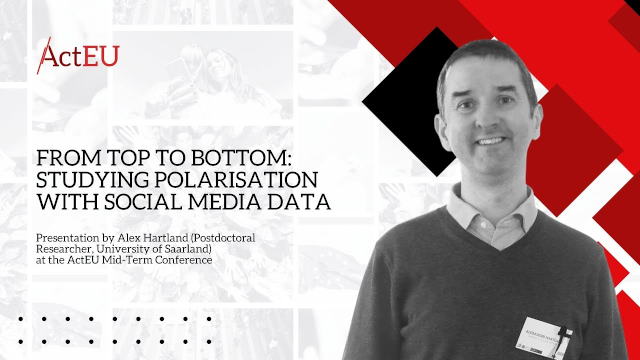
Alex Hartland: Studying polarisation with social media data
At the end of last year, the Trans European Policy Studies Association (TEPSA) organised the mid-term conference of the Horizon Europe project ActEU in Brussels. This academic conference, titled “Strengthening democracy: Building trust and tackling polarisation in Europe”, brought together researchers, policy-makers, and practitioners to assess the project’s key challenges and successes.
Dr Alex Hartland gave a lecture here on the study of polarisation based on data from social media and also discussed specific examples from Germany. TEPSA has now made a recording of the lecture available on YouTube.

Special Issue Workshop at Saarland University
On 17 and 18 July 2025, an international and interdisciplinary workshop funded by the Internationalisation Fund took place at Saarland University. The aim of this joint workshop was to publish a special issue (SI) in the renowned political science journal European Political Science Review. The initiators of this project are Prof. Dr. Daniela Braun from the Chair of Political Science with a focus on European Integration and International Relations in the newly established Department of Social Sciences European Studies, and Luca Carrieri and Nicolò Conti from Unitelma Sapienza University Rome. The idea for this SI was inspired by various ongoing or already completed projects based at Saarland University. Firstly, the ProConEU project (funding code 01UG2104B), which is funded by the German Federal Ministry of Education and Research and led by Daniela Braun. Several researchers involved in this SI (Daniela Braun, Giuseppe Carteny, Leonardo Puleo, Hermann Schmitt) collaborated on this project. Secondly, ActEU, a currently ongoing Horizon Europe project led by Daniela Braun and Michael Kaeding (UDE). Here, too, a number of researchers involved in this SI are participating (Daniela Braun, Giuseppe Carteny, Matilde Ceron, Alex Hartland, Zoe Lefkofridi, Rosa Navarrete, Ann-Kathrin Reinl). Thirdly, the articles in this SI present the results of a project funded by the Italian Ministry of University and Research (PRIN 2022 ‘Whither Sovereignty?’).
The workshop offered the researchers involved in the publication an intensive opportunity for exchange and collaboration with various intra- and international research groups in the fields of political science, social science and European studies.
1. It enabled and promoted new networking between the University of Saarland and other institutions and researchers working on the same topics.
2. The central goal of the workshop was achieved and is expected to be published in the second half of 2026 in the renowned journal European Political Science Review as a joint, interdisciplinary and international contribution to the latest state of research.
3. As an additional result, this fruitful meeting gave rise to a new project idea, which is to be finalised in the near future.
The opportunity for this close exchange between Prof. Dr. Daniela Braun's political science chair and the visiting guests has thus proved conducive to laying the foundation for international cooperation between the University of Saarland and other institutes worldwide and can be regarded as a complete success.

Throwback: "Democracy in the digital age: ideas that shape our future"
At TEDx Saarbrigge, we turned things upside down and reimagined democracy in the digital age: On 14 June 2025, under the motto ‘Democracy in the digital age: Ideas that shape our future,’ committed voices from civil society, academia and activism came together at the CoHub on Saarbrücken's Neumarkt.
The event was organised by Prof. Dr. Ingmar Weber from the Interdisciplinary Institute for Societal Computing at Saarland University together with Dr. Kevin Baum from the German Research Centre for Artificial Intelligence (DFKI) and other partners. Prof. Dr. Daniela Braun participated as a speaker.
We were delighted with the lively participation and the many ideas that were generated.
New publication: "Anti-feminism in the spotlight: Media coverage of German parties’ gender and sexuality policies in the 2024 European Parliament election campaign"
by Louise Luxton, Djamila Jabra and Daniela Braun
Abstract: Right-wing populist parties (RWPPs) across Europe are increasingly politicising anti-feminist positions on gender and sexuality issues. However, little is known about how this mobilisation translates into media coverage. We argue that RWPPs’ polarising positions appeal to news values like conflict and sensationalism, leading to greater visibility, particularly compared to traditional issue owners that promote gender equality. We conduct a quantitative content analysis of party manifestos and six months of newspaper coverage during the 2024 European Parliament elections in Germany to examine whether media attention on gender issues corresponds with parties’ manifesto emphasis and whether the RWPP Alternative für Deutschland (AfD) is disproportionately visible. Our findings show that the AfD promoted distinctly negative gender positions and received more gender-related coverage than any other party. While mostly negative in tone, this coverage amplifies the party's anti-feminist discourse, with broader implications for gender equality and the role of news media in democratic societies.
Digital information event on doctoral scholarships from the Heinrich Böll Foundation
14 July 2025
17:00 - 18:30
The Heinrich Böll Foundation awards scholarships for students and doctoral candidates. Scholarship holders receive both financial and non-material support in the form of events for political education and personal qualification as well as offers for networking and career entry. The foundation supports scholarship holders with particularly good academic or scientific achievements, who are socially committed and have an interest in politics. But what exactly does this mean and how do applicants present this convincingly in their application? Does your profile match the foundation, who exactly are we looking for?
At the information event, the foundation will provide information about the objectives of its doctoral funding programme, the selection criteria, the formal requirements for a doctoral scholarship, the expectations of applicants, the application documents to be submitted and the selection process, and will answer any open questions.
Regristration for the event
Info poster (German)
Publication: "Border regions as laboratories for European research"
by Daniela Braun, Ulla Connor & Kristina Höfer (eds.)
This interdisciplinary volume offers insights into the social challenges of European border regions. It centres on the question of what contribution the study of border regions makes to European research. The volume includes historical analyses as well as studies of current social, cultural, legal and political opportunities and challenges of European border regions. Case studies from different contexts analyse the political attitudes of political parties and the population, shed light on the consequences of deindustrialisation in border regions and examine cross-border cooperation in areas such as mobility, infrastructure, education and legal issues.
With contributions by Daniela Braun | Dominik Brodowski | Giuseppe Carteny | Julia Dittel | Stefan Ewert | Carola Fricke | Friederike Hommel | Ines Funk | Philip Hahn | Alex Hartland | Djamila Jabra | Alexander Kratz | Fabian Lemmes | Nikolaus Marsch | Birgit Metzger | Jochen Müller | Rosa M. Navarrete | Claudia Polzin-Haumann | Christina Reissner | Alexandra Schartner | Stefanie Thurm | Florian Weber | Georg Wenzelburger

Vacancies for student assistants
The Chair of European Integration and International Relations is looking for two student assistants to help analyse multilingual social media content. Requirements are diverse language skills and an interest in polarisation and party competition. The closing date for applications is 11.07.2025.
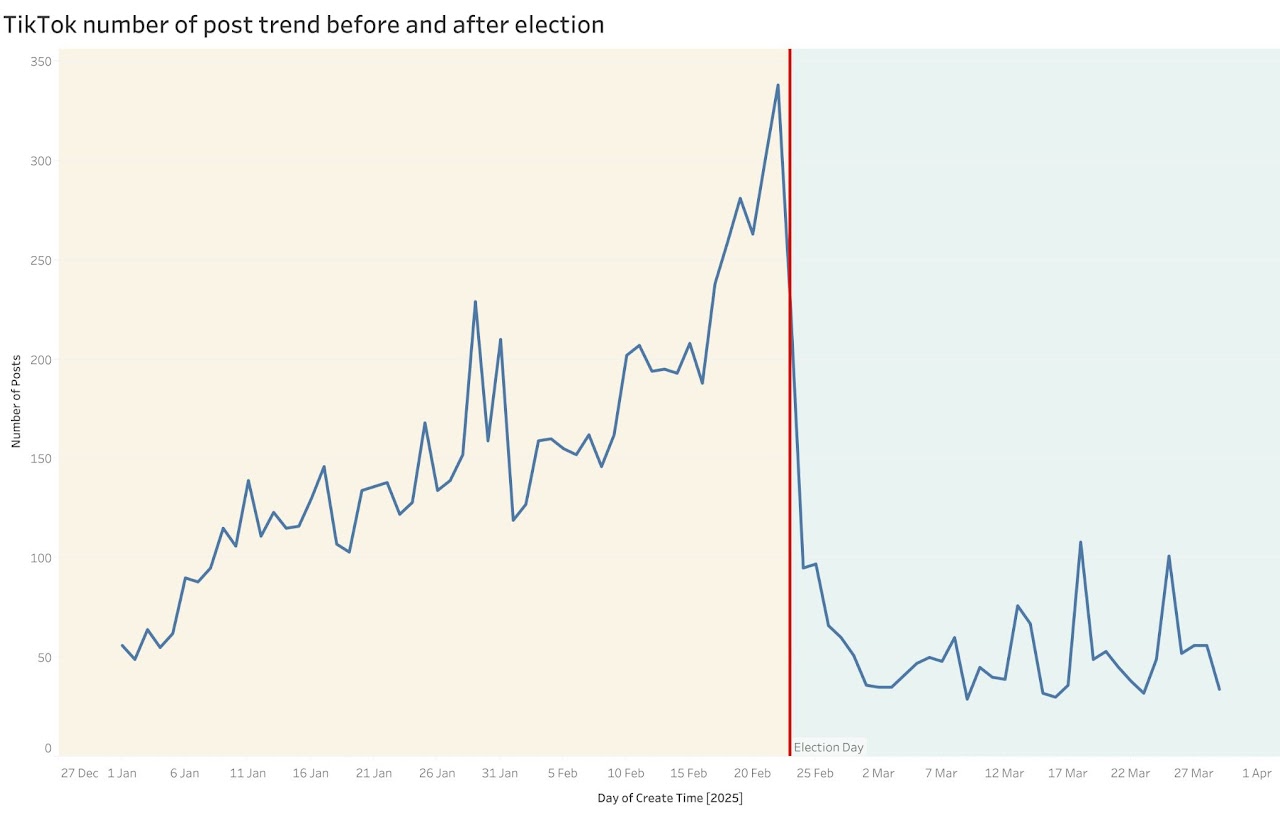
Observatory of Online Politics analyses the role of TikTok in the 2025 federal election
The Observatory of Online Politics, an interdisciplinary project of the I2SC (Interdisciplinary Institute for Societal Computing) led by Dr Rosa Navarrete, is dedicated to observing the evolving role of digital platforms in shaping political discourse and social outcomes. In a blog post, the Observatory analyses the influence of TikTok on the 2025 federal election:
While TikTok is becoming increasingly relevant among social media users, its role in elections remains understudied. The successful social media campaign targeting youth by the party Die Linke has drawn attention to new social media platforms that had previously received little focus, as they have only recently become politically relevant. While researchers in Germany have most commonly addressed the study of platforms such as Facebook and Twitter (now X) and their use in electoral campaigns, we know very little about how German politicians use TikTok, as the platform's success is relatively recent. In this respect, recent data show that the number of Twitter/X users in Germany in 2025 was around 21.63 million (DataReportal 2025).

Talk: „Dilemmas of EU criticism“
The Cluster for European Studies at Saarland University (CEUS) cordially invites you to a guest lecture by Prof Dr Timm Beichelt (European University Viadrina, Frankfurt/Oder):
Prof Dr Timm Beichelt: “Dilemmata der EU-Kritik”
26 June 2025, 18:00-20:00, Campus B3 2, Lecture Hall 0.03
The electoral and discourse successes of European right-wing populism have also given a boost to political Euroscepticism. In many national arenas, but also in Brussels itself, the debate with EU-sceptical parties and actors represents an important part of the debate landscape. In this context, academic criticism of the EU takes on a new dimension, as it not only intervenes in competing conceptions of the world, but also potentially supports right-wing extremist and/or anti-democratic actors with arguments. The lecture and subsequent discussion will be dedicated to the emerging dilemmas of EU criticism.
The event is part of the CEUS lecture series "5th Europe Discourse(s). International European research as a guest at the UdS". The talk is given in German.

Talk by Prof. Dr. Florence Metz: „Navigating the Climate Policy Paradox: Institutional Complexity and the Challenge of Policy Coherence in the EU“
The European Union has made climate action a central policy priority, committing 30% of its 2021–2027 budget—€557 billion—to climate-related spending (European Commission, 2022) and requiring all policy sectors to integrate climate objectives. Yet projections from the Climate Action Tracker (2022) indicate that the EU is unlikely to reach its 2050 net-zero emissions target.
This talk explores the paradox between political ambition and policy effectiveness. I argue that a key explanation lies in a flawed assumption: that as climate policies accumulate, their coherence remains stable. In practice, policies often contradict each other, while their interdependencies are poorly understood.
Building on the Theory of Institutional Complexity Traps, this research shows how expanding policy portfolios can become fragmented and counterproductive when not properly coordinated. Methodologically, I apply network analysis to identify and map the interactions among policy instruments and goals, highlighting areas of synergy and contradiction.
This systems-based approach provides new insights into the structural limits of climate policy integration and suggests why institutional complexity may be a hidden barrier to achieving climate goals. The research is part of the ERC Starting Grant project Climplexity: CLIMate Policy Integration—a ComPLEXITY Trap?

Recording: "Triggers of political engagement"
Dr Alex Hartland gave a presentation at the ActEU Mid-Term Conference entitled “Triggers of political engagement”, in which he described when and how individuals in civil society become politically engaged. The Mid-Term Conference of the Horizon Europe project ActEU took place in Brussels in December 2024. This scientific conference entitled "Strengthening democracy: Building trust and tackling polarisation in Europe" brought together researchers and policy makers to assess the main challenges and achievements of the project. The recording of the presentation is now available online:

New publication: "Learn, Explore and Reflect by Chatting: Understanding the Value of an LLM-Based Voting Advice Application Chatbot"
by Jianlong Zhu, Manon Kempermann, Vikram Kamath Cannanure, Alexander Hartland, Rosa M. Navarrete, Giuseppe Carteny, Daniela Braun & Ingmar Weber
Abstract: Voting advice applications (VAAs), which have become increasingly prominent in European elections, are seen as a successful tool for boosting electorates' political knowledge and engagement. However, VAAs' complex language and rigid presentation constrain their utility to less-sophisticated voters. While previous work enhanced VAAs' click-based interaction with scripted explanations, a conversational chatbot's potential for tailored discussion and deliberate political decision-making remains untapped. Our exploratory mixed-method study investigates how LLM-based chatbots can support voting preparation. We deployed a VAA chatbot to 331 users before Germany's 2024 European Parliament election, gathering insights from surveys, conversation logs, and 10 follow-up interviews. Participants found the VAA chatbot intuitive and informative, citing its simple language and flexible interaction. We further uncovered VAA chatbots' role as a catalyst for reflection and rationalization. Expanding on participants' desire for transparency, we provide design recommendations for building interactive and trustworthy VAA chatbots.

"Fact or Fake?" simulation game - students take a playful look at how the European Parliament works
How does the European Parliament work? What are the challenges of working in the Parliament? What significance does democracy have in the decision-making process? On 2 June 2025, students of Prof Dr Daniela Braun'sEuropean Integration and Political Instruments course were able to experience this in practice as part of a 4-hour panel game. During this event, organised in cooperation with Europe Direct Saarbrücken, the students had the opportunity to slip into the roles of politicians in the European Parliament and simulate everyday parliamentary life. Their task: to negotiate a new EU regulation on the regulation of disinformation and hate speech in social networks. The students were assigned fixed roles with political positions on the basis of which they were to work out a compromise that was acceptable to all sides. The result: despite long and tough negotiations, the students were unable to agree on a joint draft regulation. What does that mean? It certainly didn't mean that the simulation game was unsuccessful: the students reported that they found it very exciting, interesting and thrilling to put themselves in the shoes of different political positions and try to unite widely divergent positions in a compromise.
The simulation game is an integral part of the European Integration lecture in the Bachelor's degree programme in European Studiesand is met with great enthusiasm by the students. The department is looking forward to organising another simulation game with Europe Direct Saarbrücken next year.
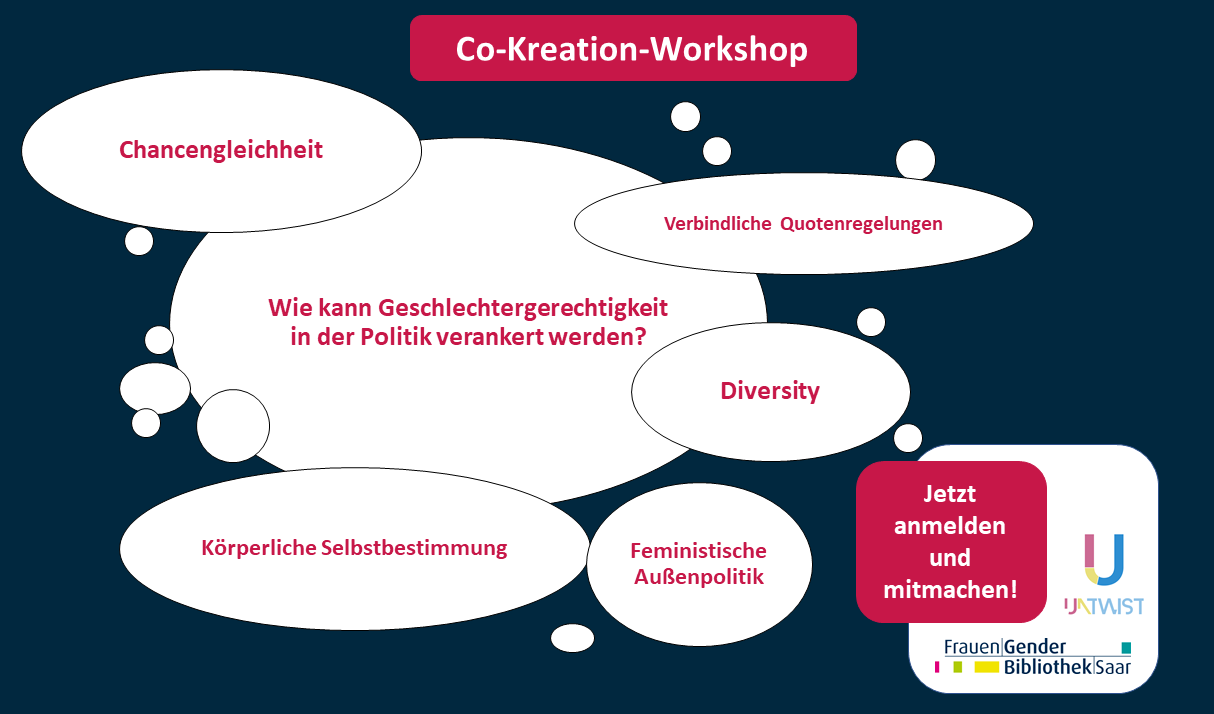
Co-Creation Workshop: “How Should Democratic Parties Address the Issue of Gender Equality in the Future?”
On May 27, 2025, a two-hour gender co-creation workshop was held from 6:00 to 8:00 PM at the FrauenGenderBibliothek Saar, with a total of 13 participants from various age groups and social backgrounds. The aim of the workshop was to develop political recommendations that could serve as guidance for democratic parties in dealing with the issue of gender equality.
Following a brief introduction to the project and the workshop’s objectives, three small groups worked on key thematic areas such as sexualized violence, gender-sensitive language, and care work. Through brainstorming, personal stories, and moderated group phases, major challenges were identified and discussed.
A key takeaway was the respectful and inspiring exchange between participants. Many found the workshop enriching as it opened up new perspectives beyond their previous experiences. In all groups, the topic of sexualized violence was discussed particularly intensively — a clear indication of its societal relevance. The workshop concluded with the development of political recommendations at both the local and national levels.
The results will directly inform the specification of the corresponding work package. A transcription of the group discussions is planned for June 2025.

Youth Democracy Lab
On 24 May, it was time again for the Open Campus Day at Saarland University. In addition to many lectures and participation in two information stands, Professor Braun's department also organised a Youth Democracy Lab as part of the Horizon-funded EU project ActEU under the title “Is trust in European politics at risk?”. Participants were able to get involved, address problems or suggest solutions.
The ActEU project aims to find answers to the following questions: How can we conceptualise and empirically measure political trust and legitimacy beyond the usual survey question ‘How much trust do you have in the Parliament?’? Does the multi-level nature of European representative democracies require an identical level of support from citizens at regional, national and EU level? To what extent does social polarisation on key political issues of our time - immigration, climate change and gender inequality - challenge political trust in democratic political systems and their legitimacy? And what can political decision-makers and civil society do to overcome these challenges?
New publication: "The role of key European issues in the 2024 election campaign"
by Alex Hartland, Daniela Braun, Giuseppe Carteny, Rosa M. Navarrete & Ann-Kathrin Reinl
Abstract: International crises and Euroscepticism have made European issues prominent in citizens’ lives. This article studies the role of three key European issues – migration, the environment, and EU integration – for political parties and citizens. The analysis centres on nine EU member states, combining party manifestos from the 2024 European Parliament elections with survey data. It finds a gap between the concerns of citizens and the political parties, an important consideration for election campaigns in general. Moreover, the analysis suggests that the salience in party manifestos has a modest direct influence and a stronger indirect impact on their appeal to citizens in most countries studied. Specifically, citizens concerned with migration and the environment evaluate parties based on the prominence they give to these issues during the campaign. The findings offer important avenues for further research on party issue emphasis and the measurement of issue salience via large language models (LLMs).
Invitation to the event "Democracy in digital times: Ideas that shape our future"
The TEDx Saarbrigge event aims to promote a vibrant democracy in digital times. All interested citizens are invited to the CoHub at Saarbrücker Neumarkt on Saturday, 14 June, from 1 pm to 6 pm to participate. TEDx Saarbrigge aims to bring voices from civil society, science and activism to the stage, which is why numerous international experts will also be guests.
The organisers are Prof Dr Ingmar Weber from the Interdisciplinary Institute for Societal Computing at Saarland University together with Dr Kevin Baum from the German Research Center for Artificial Intelligence (DFKI) and other partners. Prof Dr Daniela Braun will take part as a speaker.

Lecture on the New Climate Divide
Date: 22.05.2025
Time: 16:30-18:00
Place: Bld. C1 7, room 0.08
Endre Borbáth is a junior professor for Empirical-Analytical Participation Research at the Institute for Political Science at Heidelberg University and a visiting researcher at the Centre for Civil Society Research at the Social Science Research Center Berlin (WZB). In his lecture as part of the lecture series Politics in Europe, he will talk about the New Climate Divide - the emerging conflict over climate policy in Europe - and reflect on the process of securing an Emmy Noether fellowship.
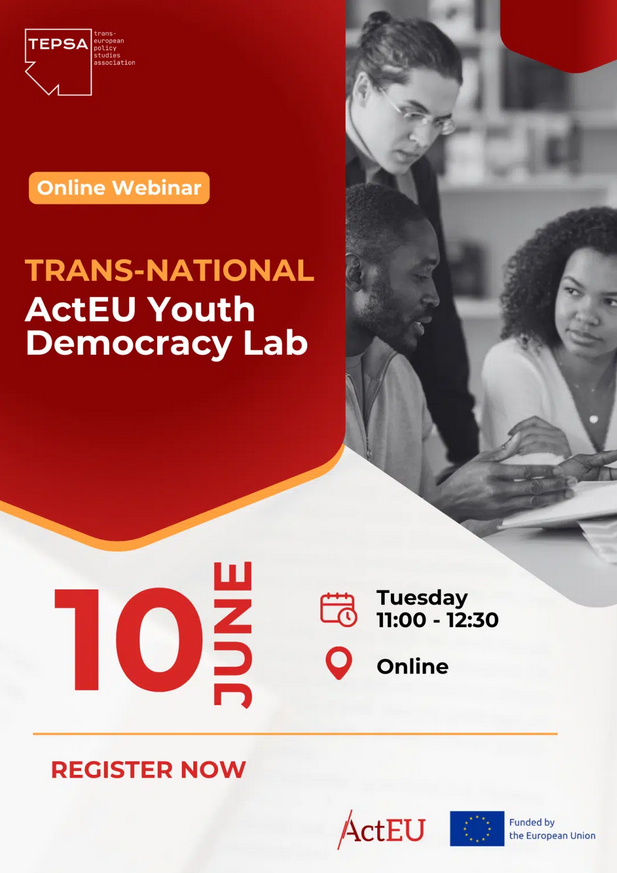
Call for Applications: ActEU Trans-National Youth Democracy Lab
Europe’s democracies are being tested. Trust is eroding. Facts are under fire. Institutions feel distant. And yet, young people across the continent still believe in building a better and more sustainable future.
The Trans-National Youth Democracy Lab, within the framework of the Horizon Europe “Activating European Citizens’ Trust in Times of Crises and Polarization (ActEU)” project, is a space for young people from across Europe to come together and take these issues seriously. Not through lectures. Not through panels. But through small-group conversations that aim to generate honest insights and practical, actionable recommendations. Your deliberations will inform a final recommendations paper which will be shared with a broad network of experts and policy-makers.
The event will take place online on 10 June, 11:00-12:30 CEST. Application Deadline: 27 May.
Summer Institute in Computational Social Science
From September 8 to September 19, 2025, the Interdisciplinary Institute for Societal Computing (I2SC) will host the Summer Institute in Computational Social Science, to be held in Saarbrücken, Germany. The purpose of the Summer Institute is to bring together graduate students, postdoctoral researchers, and junior faculty interested in computational social science. The Summer Institute is mainly focussed towards Computer Science students interested in interdisciplinary approaches to social sciences, focusing more on providing computer scientists with experience in social sciences rather than equipping social scientists with computational methods. Graduate social science students with basic knowledge of computer science approaches are also encouraged to join.
Participation is restricted to advanced Ph.D. students, postdoctoral researchers, and junior faculty (within 7 years of their Ph.D). We welcome applicants from all backgrounds, especially from neighboring institutions near Saarbrücken, Germany. About 20-25 participants will be invited. Participants are expected to fully attend and participate in the entire 10-day program. Application materials are due on April 25, 2025.

New publication: Fading EUphoria: party system polarisation and EU attitudes in Greece, Portugal and Spain
Lea Heyne, Rosa Navarrete and Alexia Katsanidou published a new paper in the journal South European Society and Politics:
Greece, Portugal, and Spain transitioned to democracy in the 1970s and joined the EEC in the 1980s, fostering positive EU attitudes through economic growth. However, the Southern European financial crisis and subsequent austerity measures deeply strained EU support, especially in Greece. This study examines how party conflict and EU politicisation influence public attitudes, finding a negative link between EU polarisation and membership support. In Portugal and Greece, polarisation impacts opinions most when EU issues are salient. The study highlights country-specific patterns and the interplay of crises, political strategies, and public opinion on the EU in the Southern European third-wave democracies.
Citizens' opinions sought: How can gender equality be anchored in politics?
What do voters expect from political parties in terms of gender equality? This question will be the focus of a workshop on 27 May from 6 to 8 pm at the FrauenGenderBibliothek Saar, to which all interested citizens are invited. The aim is to jointly develop recommendations for politicians - taking into account as many different opinions as possible. The results will feed into an EU-funded political science research project at Saarland University. Registration is required by 4 May to projekt-untwist(at)uni-saarland.de.
Interested citizens are cordially invited to actively participate in the co-creation workshop and contribute their perspective. As a thank you for taking part, all participants will receive a voucher that can be redeemed in Saarbrücken. As the event will be recorded (audio) for research purposes, all participants will receive further information on data usage in advance.
More about the UNTWIST project
Press release about the workshop
Saarbrücker Zeitung article about the workshop

Ulrich Commerçon, Member of the State Parliament, visits the Observatory of Online Politics
The Observatory of Online Politics, an interdisciplinary project of the I2SC (Interdisciplinary Institute for Societal Computing) led by Dr Rosa Navarrete, is dedicated to observing the evolving role of digital platforms in shaping political discourse and social outcomes. The sobering realisation: lying pays off for politicians. Dr Rosa Navarrete has now discussed this and the Observatory's work with Ulrich Commerçon, who is currently the leader of the SPD faction in the Saarland state parliament. "The work of the Observatory of Online Politics is so important because it looks closely at where boundaries are shifting, where quiet habituation becomes dangerous normality. And because it shows what we can do to counter these developments politically and socially," writes the former education minister on social media. Dr Rosa Navarrete was also pleased about the exchange: "It is important that we share the results of our work at the Observatory with the outside world and in politics in order to strengthen our democracy with facts and data."
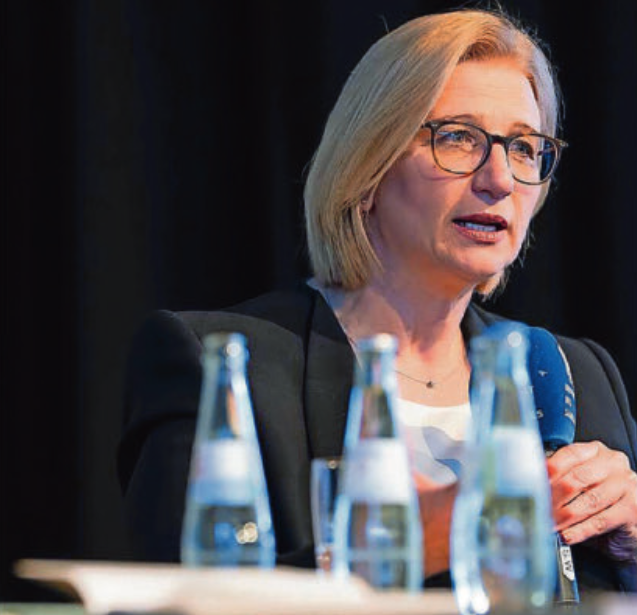
Looking back at the DVPW conference
The annual conference of the German Political Science Association (DVPW) has found a more than exciting venue this year in Saarland University: Political science was only recently revitalised here in the form of two chairs as part of the also very young faculty of European social science research. We were therefore all the more delighted to welcome political scientists from Germany and all over the world. The conference panels and the keynote speech with Bundesrat President Anke Rehlinger led to an exciting exchange on political trust in today's world, and the conference showed that the Saarland University is developing into a centre for political science: Saarland University is developing into an important part of the political science landscape in Germany that you better keep on your radar!
We would like to thank all participants for their active participation, Anke Rehlinger for taking the time for our keynote despite the ongoing coalition negotiations, and the Saarbrücker Zeitung for the two articles published as part of the conference:
“Heimspiel für Anke Rehlinger”
Interview with Prof Dr Daniela Braun and Prof Dr Georg Wenzelburger
“Citizen’s trust and societal polarization in times of transformation. Comparative Perspectives from different world regions”
The annual conference of the German Political Science Association (DVPW) has taken place at Saarland University on 27 and 28 March 2025. The main aim of this conference was to analyse one of the most pressing problems of representative democracies from different perspectives: Citizens' trust or mistrust in “their” political system, institutions and politicians. In order to place the study of trust and mistrust in a broader context, contributions are also welcome that deal with the connection between citizens and the state in general - a connection that can be expressed in different ways (e.g. public opinion/attitudes of citizens, political behaviour such as political participation, civic engagement, protest behaviour, but also feelings or emotions).
Job advertisement: Research assistant (m/f/d)
Saarland University has a distinctive European profile and a strong European focus in research and teaching with high development potential due to its unique Franco-German founding history and its special geographical location in the border region with France, Luxembourg and Belgium. Cross-faculty and interdisciplinary European research has found a platform in the Cluster for European Studies (CEUS).
The Cluster for European Studies is a central academic institution of the University. As a platform and competence centre, it brings together initiatives and projects of interdisciplinary European research in the humanities, law and social sciences and other activities in the university's historically grown European focus. The Cluster for European Research supports doctoral students and postdocs with Europe-related dissertation and postdoctoral projects in an international working environment through the Junior Research Centre Europe.
View the full job advertisement
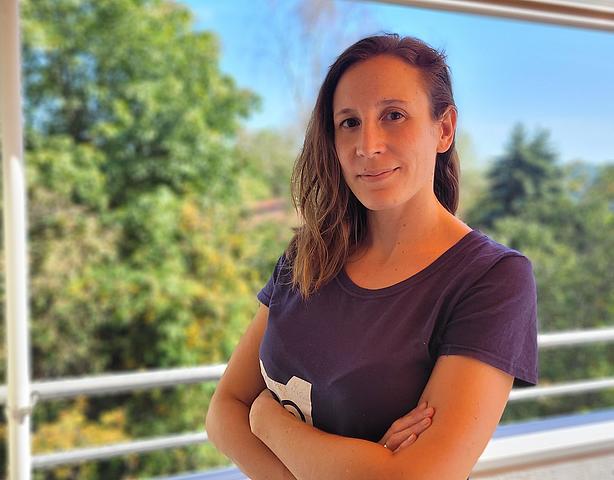
Pressemitteilung: Truth or Lie? Observatory analyses political action on the internet
It pays to lie: those who tell untruths on the internet are now often very successful in politics. Observers usually only look at the short-term consequences of political campaigns on the internet. The consequences of lies and false statements by politicians on the internet have not yet been scientifically observed over longer periods of time. A recently established "Observatory for Online Politics" at Saarland University now wants to change this.
To the full press release
To the website of the Observatory

Press release about the DVPW conference
Topics such as trust and distrust in politics as well as social polarisation are the focus of a political science conference on 27 and 28 March, which will bring together experts from Germany and abroad at Saarland University.
They will discuss their current research on one of the most pressing problems of representative democracy: the dwindling trust of citizens in “their” political system and institutions. The symposium of the “Comparative Politics” section of the German Political Science Association (DVPW) is being organised by Professor Daniela Braun and Professor Georg Wenzelburger in cooperation with the University of Duisburg-Essen.
Video: „Untwisting Gender Representation: Evidence-Based Insights for Democratic Renewal“
On 13 February, the Horizon-funded EU project UNTWIST hosted an online event entitled ‘Untwisting Gender Representation: Evidence-Based Insights for Democratic Renewal’. The aim of the event was to analyse the link between the electoral performance of right-wing populist parties and their anti-gender positions. The video will provide you with the following event content:
- A brief overview of the key findings from the UNTWIST project.
- Reflections on the general policy implications arising from the research findings, including country-specific discussions.
- An interactive discussion with participants.
New publication: Is there anything Left?: A Global Analysis on Changes in Engagement with Political Content on Twitter in the Musk Era
Over the past few years, Twitter (now X) has become an influential platform for political discourse. However, prior research suggests that Twitter may be biased towards right-wing content. Following the change in ownership in October 2022, there have been several changes to Twitter’s policies, particularly in content flagging and Twitter Blue Verification. Understanding how any shifts in outcomes vary across different political ideologies is important for comprehending the evolving political discourse, especially given recent developments. To explore this issue, we examine shifts in engagement (characterized by likes and retweets) for political figures before and after November 2022, focusing on describing how engagement has changed over time. We perform a global analysis by collecting tweets from 6550 accounts belonging to political leaders and parties from twelve countries among the ones with the highest user activity on the platform, namely, Argentina, Brazil, Canada, Colombia, France, Germany, India, Japan, Mexico, Spain, the United Kingdom, and the United States, between June 2021 and June 2023. Our findings indicate that the number of likes on political tweets increased after November 2022. However, we observe that the number of retweets decreased significantly, along with a marginal decrease in the likes-to-retweet ratio, with no statistically significant difference between the Left and the Right. Our study is the first to offer a global perspective by examining how platform engagement has shifted during the Musk Era. To support further research, we release the data on politicians and parties used in this study, with their Twitter data available upon request.
Second UNTWIST newsletter published
The UNTWIST project has published its second newsletter. The topics:
- Work Package 1: We have developed a grid concept that helps us to categorise and evaluate policy decisions.
- Outlook: What will the next Work Packages be about?
- Meet the team: The researchers from the Universidad Pablo de Olavide (UPO) introduce themselves.
What is ActEU?
The Trans European Policy Studies Association (TEPSA) has published a video as part of the ActEU kick-off conference in which Prof Dr Daniela Braun and Prof Dr Michael Kaeding present the Horizon-funded EU project ActEU.
The ActEU project aims to find answers to the following questions: How can we conceptualise and empirically measure political trust and legitimacy beyond the usual survey question ‘How much trust do you have in the Parliament?’? Does the multi-level nature of European representative democracies require an identical level of support from citizens at regional, national and EU level? To what extent does social polarisation on key political issues of our time - immigration, climate change and gender inequality - challenge political trust in democratic political systems and their legitimacy? And what can political decision-makers and civil society do to overcome these challenges?
New publication: Another sleeping giant? Environmental issue preferences in the 2019 European Parliament elections
Prof. Dr. Daniela Braun, together with Dr. Leonardo Puleo, Prof. Dr. Eftichia Teperoglou and Dr. Ann-Kathrin Reinl, has published a new article: Seminal works have highlighted a growing polarisation regarding the environment, with supporters advocating for immediate emissions reduction and others downplaying or even denying human-caused climate change. Despite this debate, little attention has been focused on how voters’ environmental preferences influence their electoral behaviour. Using the metaphor of the ‘sleeping giant’ from European Union politics literature, the article empirically explores how environmental issue preferences impact voting choices. Analysing stacked data from the 2019 European Election Study, the article examines the phenomenon of environmental issue voting by shifting the unit of analysis from individuals to party-voter dyads. Results reveal that environmental preferences moderately, yet significantly, affect vote choice. This effect is more pronounced among left-leaning voters and in countries where the environmental issue is more salient among the public. Our findings shed light on patterns of environmental preference and their role in European electoral competition.

Contribution to the WDR 5 podcast „Wissenschaft und mehr“ (Science and more)
On 7 November 2024 Prof Dr Daniela Braun took part in the episode „Wiener Narrenturm und Psychiatrie – 1,5-Grad-Schwelle – Glaube“ of the WDR 5 podcast „Wissenschaft und mehr“. Among other issues the episode was related to the matter of trust in political institutions and the political system.

Review of the 4th Europe Conference Saarbrücken
The European Union was once imagined as a dream: as a peace project in which European societies live together in unity and borders are dismantled, as a dream of unity in diversity. At present, pressing pan-European and globally relevant issues are presenting Europe and European politics with major challenges and are increasingly demanding decisions and solutions at a European level. However, high political ambitions often fail to be realised. Tensions between political aspirations and social reality are increasingly noticeable and provide a breeding ground for populist and Eurosceptic movements. The 4th Europe Conference Saarbrücken focussed on these tensions and looked at the resulting conflicts and consequences. Prof Dr Braun gave a talk on the effects of consolidated Euroscepticism on European politics.
Full review with photo gallery

Prof Dr Armin Schäfer: "Schlechte Verlierer:innen? Populismus und die Akzeptanz von Wahlergebnissen in Europa"
Date: 21.11.2024
Time: 16:30-18:00
Place: Building C1 7, room 0.08
As part of the political science lecture series Politics in Europe with an interdisciplinary focus, Prof Dr Armin Schäfer, Professor of Comparative Politics at Johannes Gutenberg University in Mainz, will give a lecture entitled “Bad losers? Populism and the acceptance of election results in Europe”. In it, he will analyse the influence that election results can have on political trust in democracy. The election results should not affect the fundamental evaluation of democracy. However, research on “losers’ consent” has shown that the winners rate democracy more favourably than the losers.
Interested parties are cordially invited to attend. Pre-registration is requested at vinciane.pilz(at)uni-saarland.de.

Conclusion on the ActEU Mid-Term Conference
On 12 December, the ActEU Mid-Term Conference took place in Brussels to present the first results of the project and promote collaboration between researchers and various stakeholders. Dr Alex Hartland presented his and Prof Dr Daniela Braun's work in two presentations: “Engagement triggers in response to controversial policies” and “Polarisation among EU political parties”. After the conference, participants had the opportunity to socialise over dinner in a more informal setting.
New publication by Dr Rosa Navarrete: "Social Media, Misinformation, and Attitudes Towards Democracy in Germany During the Covid-19 Pandemic"
Abstract: Social media platforms are a double-edged sword, serving as sources of both critical information and harmful misinformation. This duality has sparked debates about their potential role in threatening democracy, boosting radical parties, and amplifying authoritarian and populist attitudes. While much research has focused on how misinformation and social media usage can influence voting for radical and populist parties, research on how diffuse and specific support for democracy are affected by the level of misinformation is more scarce. This study examines how satisfaction with democracy, democratic legitimacy, and adherence to liberal democratic principles are shaped by social media usage and citizens’ susceptibility to misinformation. Employing novel data from an online survey conducted in Germany in June 2021, we show that political information sources and misinformation exposure have a greater impact on perceptions of democratic functioning than on support for democracy as a political ideal. Furthermore, for citizens prone to believing misinformation, media consumption habits have no significant impact highlighting a critical blind spot in addressing democracy’s resilience in the digital age.
Student assistants wanted!
The project Political Deception in the Digital Era directed by Dr Rosa Navarrete (Chair of Political Science with focus on European Integration and International Relation and the Interdisciplinary Institute for Societal Computing) and funded by the Saarland University and in the Observatory of Online Politics is looking for two student-assistants (preferably with a BA-degree) interested in and willing to support us in our project.
Are you passionate about online politics and interested in contributing to impactful research? With the German elections approaching in February, we are seeking two proactive and enthusiastic students to join our Observatory of Online Politics. This project will monitor and analyse the online activity of political actors throughout the electoral campaign and its aftermath.
As a student assistant, you will play a critical role in building the infrastructure needed to gather and manage online data from diverse sources, including Bluesky, Telegram, websites, and other relevant platforms. You will collaborate with a dynamic, interdisciplinary team of social scientists and computer scientists to produce research outputs that have real-world societal impact.

Summary of the talk "Gender and violence in focus: Sexualised warfare and women in terrorism"
As part of the event to mark the International Day for the Elimination of Violence against Women (25.11.2024), Djamila Jabra, M.A. gave a lecture at the FrauenGenderBibliothek Saarbrücken on the targeted use of sexualised violence as a weapon and the role of women in terrorist organisations. The lecture explored the question of how security policy issues such as terrorism and conflicts can be viewed from a gender perspective and what new insights can be gained from this.
At the beginning of the lecture, sexualised violence was explained as a targeted military strategy in war situations. This strategy aims to demonstrate power, intimidate and destroy social structures and is historically as old a war strategy as wars themselves. Furthermore, this form of violence is used to control and suppress political opponents and as an act of retaliation against communities. Case studies from countries such as Iran, Sudan and Myanmar illustrate this reality. In the course of the presentation, the far-reaching psychological and social consequences of sexualised violence were also discussed. Those affected suffer from severe trauma, with stigmatisation making reintegration into their community even more difficult. Of particular concern is the frequent lack of judicial action, which largely guarantees impunity for the perpetrators. In 2023, more than 170 armed conflicts were registered worldwide, directly affecting millions of women and girls. Despite international efforts to combat sexualised violence, the implementation of protective measures remains limited. In this regard, it should be noted that less than 26% of peace agreements contain explicit provisions on gender-based violence, although studies show that the participation of women increases the likelihood of sustainable peace processes.
The presentation was followed by a discussion of key challenges. In particular, the lack of accountability, limited resources for survivors and the integration of feminist approaches into security policy measures were addressed. These approaches could help to document sexualised violence and promote peace processes. Furthermore, it is emphasised that gender-based violence should not only be seen as a humanitarian problem, but also as a security policy problem.

ActEU Mid-Term Conference
The political chair at the University of Saarland are pleased to share with you the draft programme for the ActEU Mid-Term Conference, which will take place on Thursday, 12 December 2024 in Brussels. The event will showcase the project’s initial findings and foster collaboration between academics and diverse stakeholders. Following the conference, we will host a dinner to further engage with all participants in a more informal setting. We hope you will be able to join us for this evening gathering, as it would be a great opportunity to continue the conversations and strengthen our collaborative ties.
Additionally, a workshop with an interactive session (the programme will be available in the coming days) with our Civil Society Network will take place the day after, on Friday 13 December 2024 (9:00-13:30) . Please let us know if you are interested in participating, as your insights and expertise would be a valuable addition to the discussions.
New publication: “Quality not quantity: Lobbying institutions and the influence of asylum rights groups.”
Dr Alex Hartland has published an article in the British Journal of Politics and International Relations in which he examines the influence of asylum lobbyists on legislation in Germany and the UK.
With participation in electoral politics limited, asylum seekers rely on lobbying to influence policy, but the factors which facilitate or constrain this process remain unclear. He interviewed asylum rights lobbyists in Germany and the United Kingdom to study the effects of lobbying institutions, using process tracing to identify influence mechanisms. Contrary to previous research, he finds that successful lobbying stems from the quality not the quantity of institutions. He shows how Germany’s corporatist institutions provide stable lobbying structures, building trustful working relationships. This enables collaborative policymaking and increases opportunities for influence. Informal, inconsistent structures in the United Kingdom’s pluralist system impair trust, reducing collaborative policymaking and influence. UK institutions are more policy responsive, however, enabling groups to capitalise on favourable public opinion, whereas the German system remains stable. The results demonstrate the effects of institutional arrangements and identify mechanisms which can improve policy outcomes for asylum seekers and other disadvantaged groups.

“Securing Europe’s Future” Polish Pre-Presidency Conference, Warsaw, 21-22 November 2024
On 1 January 2025, Poland will take over the rotating presidency of the Council of the European Union for the second time. Following a politically charged and controversial Hungarian Presidency, the Polish Presidency will face a number of challenges in the first half of the year. In order to tackle these successfully, a solid basis for decision-making is required. This highlights the importance of bridging the gap between policy makers, academics and citizens in Europe.
The Trans European Policy Studies Association (TEPSA) and the Institute for European Studies at Jagiellonian University have therefore organised the conference “Securing Europe's Future” in Poland. The aim of the conference is to discuss which goals, priorities and policy areas in the EU require the most attention. TEPSA will also make recommendations to the future Council Presidency at the conference, which will serve as preparation for the Polish Council Presidency.
At the conference, Prof Dr Daniela Braun will present the EU-funded Horizon project “Activating Citizens Trust in Times of Crises and Polarisation (ActEU)” on 21 November in the panel “EU Democracy Renewal: Addressing the Pressures on Representative Democracy in Europe”, moderated by Petr Kratochvíl of the Institute of International Relations.

4th Saarbrücken Europe Conference at the UdS
Europe dreams? Between political ambition and social reality
The 4th Saarbrücken Europe Conference will open on 28 November with a panel discussion on the topic of “Visions of Europe. Franco-German perspectives” at Saarbrücken Town Hall. The next day, the programme of events will take place at Saarland University. This primarily includes panels on political and social topics. At 11:45, Prof. Dr Daniela Braun will give a lecture on the effects of consolidated Euroscepticism on European politics.
Talk: "Gender and violence in focus: Sexualised warfare and women in terrorism"
Date: 25.11.2024
Time: 18:00-20:00
Place: FrauenGenderBibliothek Saar
On the International Day for the Elimination of Violence against Women, Djamila Jabra, M.A. will speak about a special form of gender-specific violence: the use of sexualised violence as a weapon in conflicts. What changes when security policy issues such as terrorism, weapons and violent conflicts are viewed from a gender perspective? What is the significance of integrating feminist approaches into security policy and what new insights can be gained from this? The focus is on the role of women in terrorist organisations and the question of how gender-specific violence is used as a strategic instrument of power.
Panel: "Nationalism and Climate Change"
Climate change is an existential threat to mankind. Yet the structuring of politics in a system of sovereign states is a huge obstacle to the collective action on a planetary scale needed to deal with this crisis. This panel explores the ways in which nationalism intersects with efforts to address climate change, both at the level of domestic politics and international relations; and in both negative and positive respects.
Dr Rosa Navarrete took part in a panel moderated by Prof Dr Peter Rutland (Wesleyan University) at the Association for the Study of Nationalities, alongside Prof Dr Daniele Conversi (Universidad del País Vasco) and Prof Dr Marianna Poberezhskaya (Nottingham Trent University).
The chair at the Digital Democracy Workshop in Zürich
As part of the interdisciplinary cooperation I2SC initiated at the UdS by Prof Dr Daniela Braund and Prof Dr Ingmar Weber, research assistants Dr Alex Hartland and Dr Giuseppe Carteny from the Chair of Political Science and Dr Jianlong Zhu from the Chair of Societal Computing have developed a joint research project on the topic of “Chatbots at the Ballot Box: How do AI Chatbots Influence Political Attitudes and Behaviour?”, which Dr Rosa Navarrete presented at the Digital Democracy Workshop in Zurich. The talk focussed on how the rapid development of AI is increasingly influencing online information and people's interactions with it. This technology is also becoming a more important source of information for voters, with potential implications for political attitudes and behaviour. As little research has been conducted into these effects, the study draws on findings from election counselling tools and misinformation research. The results are intended to highlight the opportunities and risks of AI for democratic institutions.

Prof Dr Jale Tosun: "Climate policy portfolios that accelerate emission productions"
Date: 07.11.2024
Time: 16:30-18:00
Place: Bld. B3 1, Lecture hall II
As part of the political science lecture series Politics in Europe with an interdisciplinary focus, Prof Jale Tosun, Professor of Political Science at the Institute of Political Science at Heidelberg University, will give her lecture "Climate policy portfolios that accelerate emission productions". She will address the question of what effect the growing body of national climate policies actually has on climate change. In particular, she will focus on what kind of climate policy portfolios are best suited to accelerate emission reductions in line with the goals of the Paris Agreement. To this end, she will use examples to present the findings and results of her work.
Interested parties are cordially invited to attend. Please register in advance at vinciane.pilz(at)uni-saarland.de.

Article about European Studies: Politics - Law - Society in the web magazine Campus
The campus magazine has published an article on the Bachelor's degree programme "European Studies: Politics - Law - Society". Students on the new degree programme and Prof Dr Daniela Braun, who co-initiated the course, were interviewed.
First issue of the UNTWIST newsletter published
The UNTWIST project has published the first issue of its newsletter. The topics of this issue:
- Who are we? We introduce you to our 9 national teams and the 7 institutions involved in an advisory capacity, as well as our objectives related to the UNTWIST project.
- What are we currently working on? We will present the first results and findings on what and how much attention the different gender-specific needs and requirements receive from society, political parties and academia. We also analyse the way in which radical right-wing populist parties address gender-specific issues that may be overlooked by other moderate actors.
- What's new? We will introduce you to our international UNTWIST survey, with which we will conduct innovative measurements of gender-specific needs and demands from an intersectional perspective that simultaneously takes into account the voting behaviour of citizens.
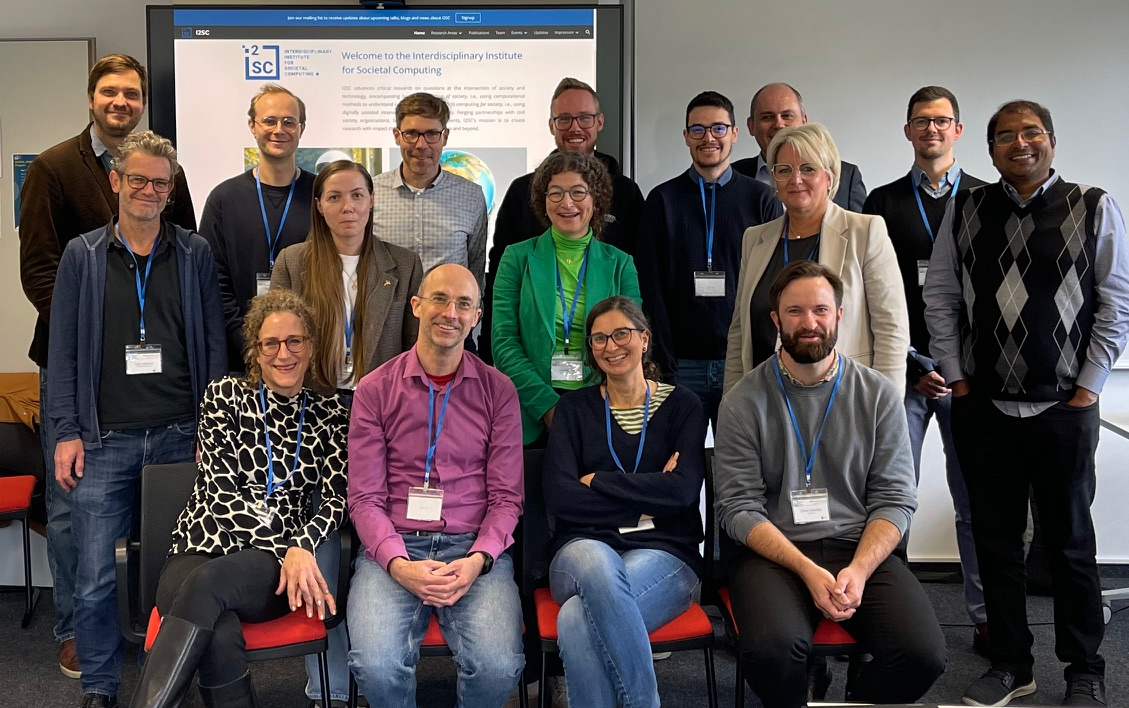
Digital Democracy Days 2024 at Saarland University
Digitalisation is having a profound impact on democracy, both positive and negative. Phenomena such as Donald Trump's election success and social movements show how digital technologies are changing political processes. A key question is which aspects of democracy are affected and how negative effects can be tackled. The I2SC (Interdisciplinary Institute for Societal Computing), a research institute founded by Prof Dr Daniela Braun and Prof Dr Ingmar Weber, therefore organised a two-day conference entitled “Digital Democracy Days”, bringing together 20-30 experts from various disciplines to discuss opportunities and risks. It was emphasised that further research is needed to secure democratic processes in the digital age and that collaboration between different fields is crucial.

ActEU-Workshop: Aufruf zur Einreichung von Bewerbungen
In February 2025, the ActEU Doctoral School will take place, where participants will spend four days exploring the topics of the ActEU research project, helping to advance our understanding and solutions. The ActEU (Activating European Citizens' Trust in Times of Crises and Polarisation) project, funded under the EU's Horizon Europe programme, aims to conceptualise and empirically measure political trust and legitimacy beyond conventional methods to explore how policy makers and civil society can respond effectively to these challenges to support democratic governance.
Talk at the EISA Pan-European Conference on International Relations (PEC)
The EISA Pan-European Conference on International Relations (PEC) took place in Lille from 27 August to 31 August. Djamila Jabra, M.A. gave a presentation entitled "From Warnings to Wars - A Comprehensive Review of IPCC Reports on Climate and Conflicts". In her presentation, she analysed how the connection between climate change and violent conflicts is presented in the six IPCC reports from 1990 to 2023. Using a qualitative content analysis according to Mayring, she analysed the terms conflict, violence, war, armed, threat and risk in order to identify the visibility of climate-related conflicts. Theoretically, she drew on the expanded security concept of international relations, which goes beyond state approaches to identify potential causes of future conflicts and their prevention.
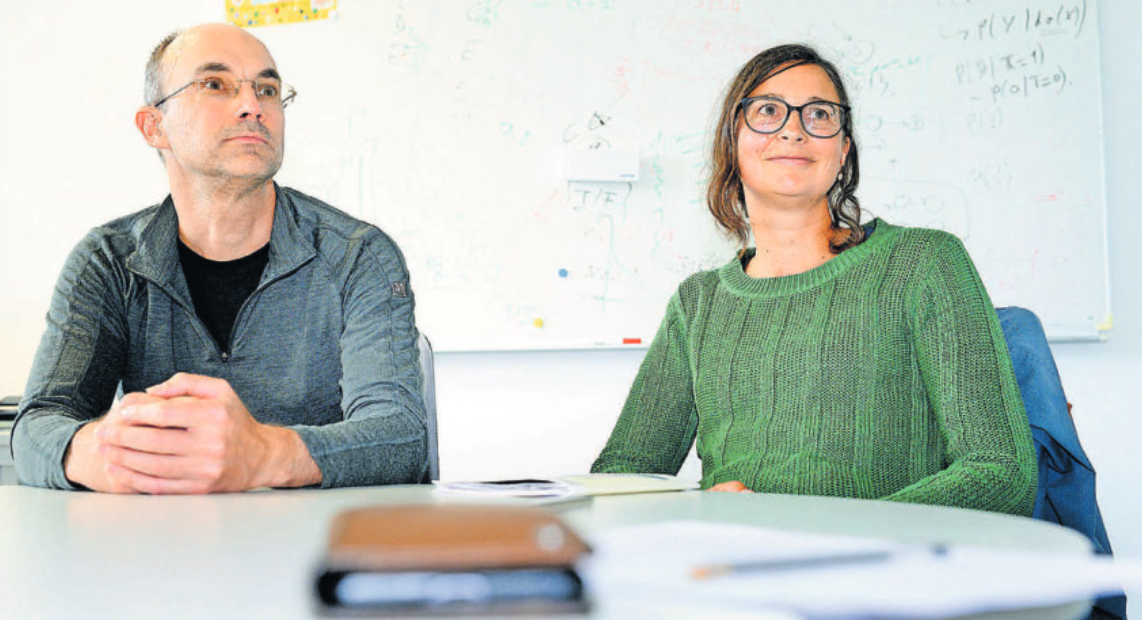
Saarbrücker Zeitung reports on I2SC
A year ago, the "I2SC" - Interdisciplinary Institute for Societal Computing - was founded at Saarland University as a new research institute that brings together computer science and political science. The idea behind it: “The computing of society meets computing for society, so to speak,” says Ingmar Weber, Humboldt Professor of AI, who heads the "I2SC" together with political scientist Prof Dr Daniela Braun at the young department of Societal European Studies. The coupling of computer science and political science is "still relatively new in Germany" (Braun) and harbours challenges. However, despite their different research interests, the synergy effects of their collaboration outweigh the challenges.

Prof Dr Braun at panel discussion on Franco-German relations
Prof Daniela Braun was invited to take part in a panel discussion on the topic of “Franco-German relations in a changing Europe” on Saturday, 28 September. The event, organised as part of the alumni exchange of the members of the alumni Master GPRE e.V., took place from 13:00 to 15:30 in the Villa Europa, Kohleweg 7, 66123 Saarbrücken.
The panel of panellists consisted of:
- Dr Stefan Seidendorf, Deputy Director, Deutsch-Französisches Institut (dfi)
- Dieter Hackmann, Member of the Board for Special Tasks, Association of Franco-German Societies for Europe (VDFG) & Chairman Weimarer Dreieck e.V.
- Prof Daniela Braun, Professor of Political Science specialising in European Integration and International Relations, Saarland University
The discussion was moderated by Jerome Friedrichs and Maya von Thenen and co-organised by Nolwenn Etienne and Tim Georgi.
Here is a brief description of the topic of the discussion: Franco-German relations in a changing Europe
The recent elections to the EU Parliament have confirmed the unstoppable rise of right-wing parties as a pan-European trend on the one hand and triggered a political earthquake in France on the other. 20 years after the ‘eastward enlargement’, the EU is facing a series of new geopolitical questions and challenges, and its future seems more uncertain than ever. Even if Franco-German co-operation is still considered a key driving force in Europe, the EU is driven by a multitude of complex dynamics and the Franco-German friendship no longer seems to be Europe's guarantor. At a time of multiple crises, especially in light of Russia's war of aggression against Ukraine, we are once again reminded that European cohesion and solidarity must be actively practised. Together with experts from institutions and academia, we therefore want to explore the question: Quo vadis Franco-German relations? Quo vadis Europe?
The panel discussion was prepared by a workshop that took place on the same morning. The participants, consisting of around 25 alumni, including three DFH-sponsored degree programmes, were also sent two texts in advance for preparation. Participants were also invited to ask questions at any time.
The debate was very stimulating and there was a lot of positive feedback. It is to be hoped that many of the topics raised and possible solutions will be discussed further in various contexts.
The event concluded with a joint visit by all participants to the Historisches Museum Saar.
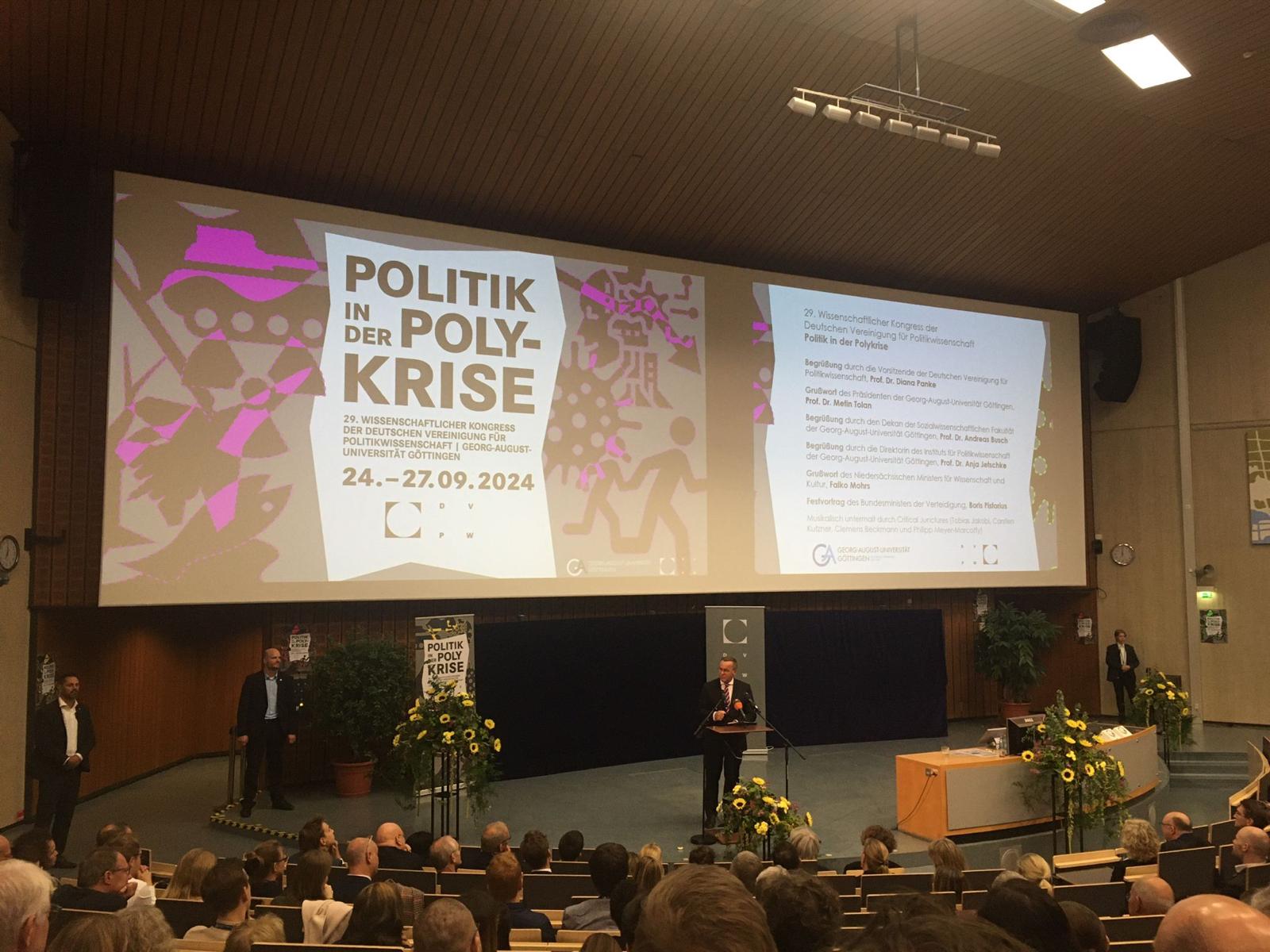
The Chair at the DVPW Congress in Göttingen
From 24 to 27 September, the congress of the German Political Science Association on “Politics in the Polycrisis” took place at the Georg August University in Göttingen. The chair took part in the congress and gave three presentations. Prof Dr Braun also took part in a panel and a podium discussion.
![[Translate to Englisch:] Logo ecpr](/fileadmin/upload/lehrstuhl/braun/Tagungen/ecpr_Logo.png)
UNTWIST at the European Conference on Politics and Gender
In July 2024, the UNTWIST teams participated in the European Conference on Politics and Gender in Cologne and presented a panel with research findings related to a better understanding of gender dynamics in voting for radical right-wing populist parties. Prof Dr Daniela Braun and Dr Giuseppe Carteny presented the following paper:
The salience of gender-related issues in European party manifestos

Welcome Day on 10. October
On 10 October, we will be welcoming new European Studies students to Saarland University from 10 a.m. in Building C3 1, Lecture Hall 1. At our Welcome Day, the new students will get to know the campus and the canteen and find out everything they need to know about the degree programme and their respective specialisations.
DVPW-Tagung 27.-28.03.2025: Bewerbungsfrist für BEITRÄGE und CLOSED PANELS bis 30. September 2024
Application procedure
After having received proposals for panels, we now open the second phase of the application procedure with a call for three categories of panels and papers. This application phase will end on September 30, 2024.
Paper submissions directed to one of the open panels (see below): Papers can be submitted to one of the panels proposed for the conference (see the list below). Paper submissions should include a title and an abstract of 250 words. Please send the paper proposals to the conference mail address tagung-dvpw-vergleich-2025(at)uni-saarland.de as well as to the respective panel chairs.
Papers unrelated to one of the panels: Paper proposals can also be directly sent to the conference organization team. We will then create panels that comprise thematically related papers. Please send the paper proposals to the conference mail address tagung-dvpw-vergleich-2025(at)uni-saarland.de.
Closed panel proposals: We also invite closed panel proposals. These should include a panel abstract, panel chairs as well as a maximum of 4 papers related to the scope of the panel with title and abstracts. Please send the panel proposals to the conference mail address tagung-dvpw-vergleich-2025(at)uni-saarland.de.
The team of organizers will inform submitters of papers and closed panels by October 11, 2024.
Please visit also the conference homepage for more information.
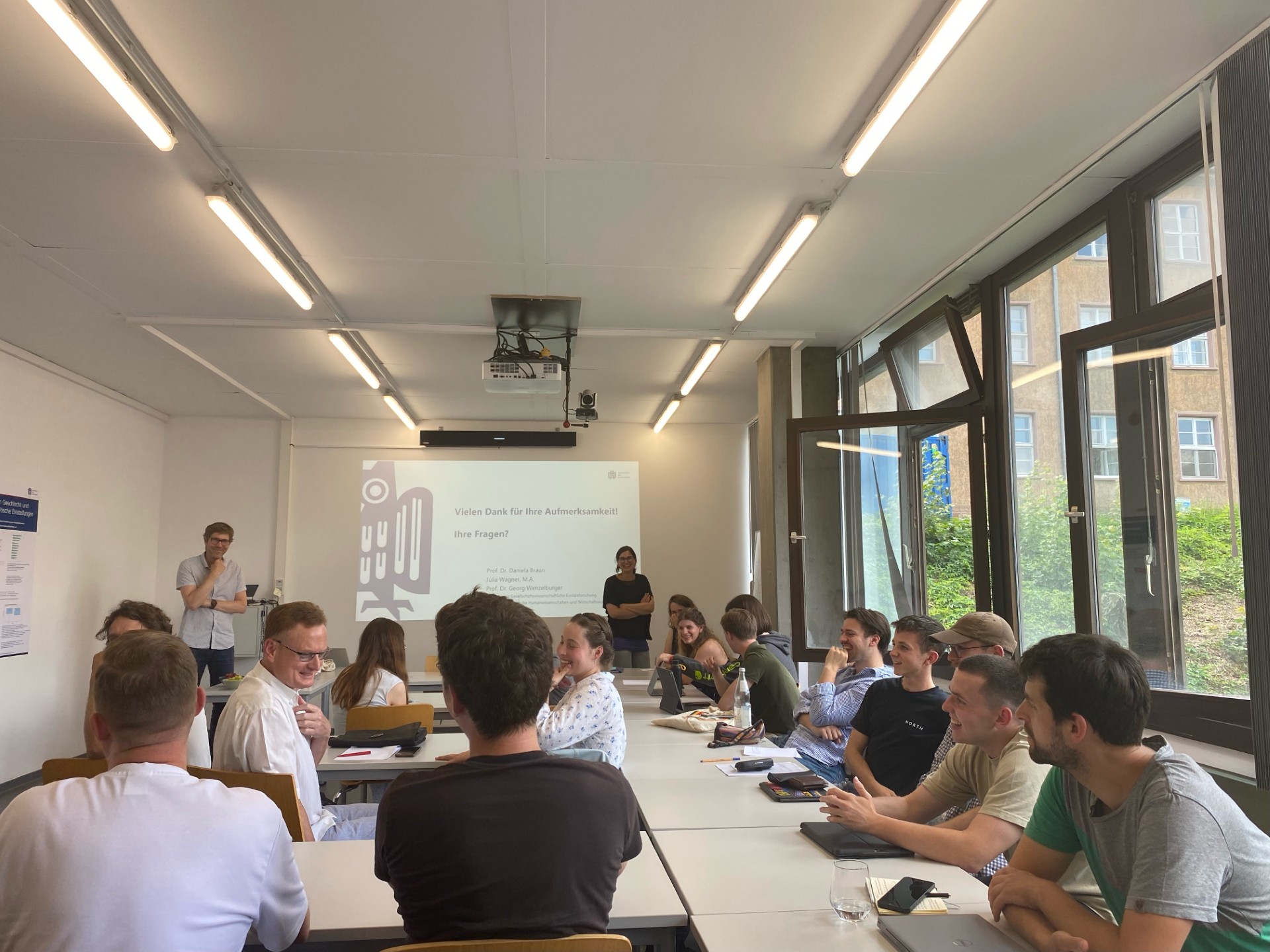
First results of Voto project published
The first results have now been published at the final discussion of the Voto project. Students from Saarland University presented these in the form of posters. For example, it emerged that even people on the left of the political spectrum can be in favour of border controls (poster) and that young people think of environmental issues as most important (poster). The influence of educational qualifications on the position (poster) (poster) and the influence of gender and age (poster) were also analysed.
Article in the Saarbrücker Zeitung

Abschlussdiskussion der Gender-Ringvorlesung
Die Ringvorlesung „Facetten der Vielfalt – Geschlechterforschung und ihre Bedeutung für die Gesellschaft“ findet am Mittwoch, den 24. Juli 2024, um 18 Uhr, ihren Abschluss im Rathausfestsaal Saarbrücken. Die zentralen Erkenntnisse der Vortragsreihe werden zusammengefasst und durch ein künstlerisches Rahmenprogramm ergänzt.
Im Sommersemester 2024 bot die Universität des Saarlandes unter der Leitung von Prof. Dr. Astrid Fellner und Prof. Dr. Daniela Braun eine öffentliche Ringvorlesung zur Genderforschung als Querschnittsdisziplin an. Organisiert wurde die Reihe vom Forum Geschlechterforschung, dem Gleichstellungsbüro, dem AK Queer und dem AStA der Universität, sowie externen Partnern wie dem Frauenbüro der Stadt Saarbrücken.
Am 24. Juli sind alle Interessierten eingeladen, einen Rückblick auf die zentralen Erkenntnisse der Ringvorlesung zu erhalten und neue Facetten der Geschlechterforschung zu entdecken. Neben den Organisatorinnen werden Juniorprofessorin Dr. Carola Fricke und Dr. des. Julia Pierzina über die Bedeutung von Gender in Raumplanung und Produktdesign sprechen. Der Abend wird von einer interaktiven Kunstaktion der Künstlerin Darja Linder begleitet.

Das „VOTO“-Wahlhilfe-Projekt: Abschlussevent mit Erkenntnissen zu den Kommunalwahlen in Merzig und Saarbrücken
Für die Kommunalwahlen im Saarland, die am 9. Juni stattfanden, wurde von der Fachrichtung für Gesellschaftswissenschaftliche Europaforschung an der Universität des Saarlandes eine Online-Wahlhilfe für die Städte Merzig und Saarbrücken entwickelt. Am Donnerstag, 18. Juli 2024, von 14.15 bis 15.45 Uhr, werden nun erste Erkenntnisse und Ergebnisse aus den Umfragerückmeldungen präsentiert.
Die an „VOTO Saarland“ beteiligten Vertreter:innen der Parteien sowie die Medien wurden hierzu bereits eingeladen. Weitere Interessierte können sich bei Vinciane.Pilz(at)uni-saarland anmelden und erhalten dann nähere Informationen zum Ort der Abschlussveranstaltung.
Aufruf zur Einreichung von Beiträgen für DVPW-Tagung an der Universität des Saarlandes
Im März 2025 wird an der Universität des Saarlandes eine Tagung der Deutschen Vereinigung für Politikwissenschaft abgehalten. Die Veranstaltung unter dem Titel „Citizen’s trust and societal polarization in times of transformation. Comparative Perspectives from different world regions“ untersucht eines der drängendsten Probleme repräsentativer Demokratien: Das Ver- bzw. Misstrauen der Bürger:innen in "ihr" politisches System, in Institutionen und Politiker:innen.

EPSA-Konferenz in Köln
Vom 4. bis 6. Juli 2024 hat die 14. jährliche Konferenz der European Political Science Association im MediaPark Köln stattfinden. Der Lehrstuhl Prof. Dr. Braun hat ebenfalls am Kongress teilgenommen und dort vier Vorträge halten. Außerdem hat Dr. Rosa Navarette an einer Panel-Diskussion zu Parteiprogrammen teilgenommen.
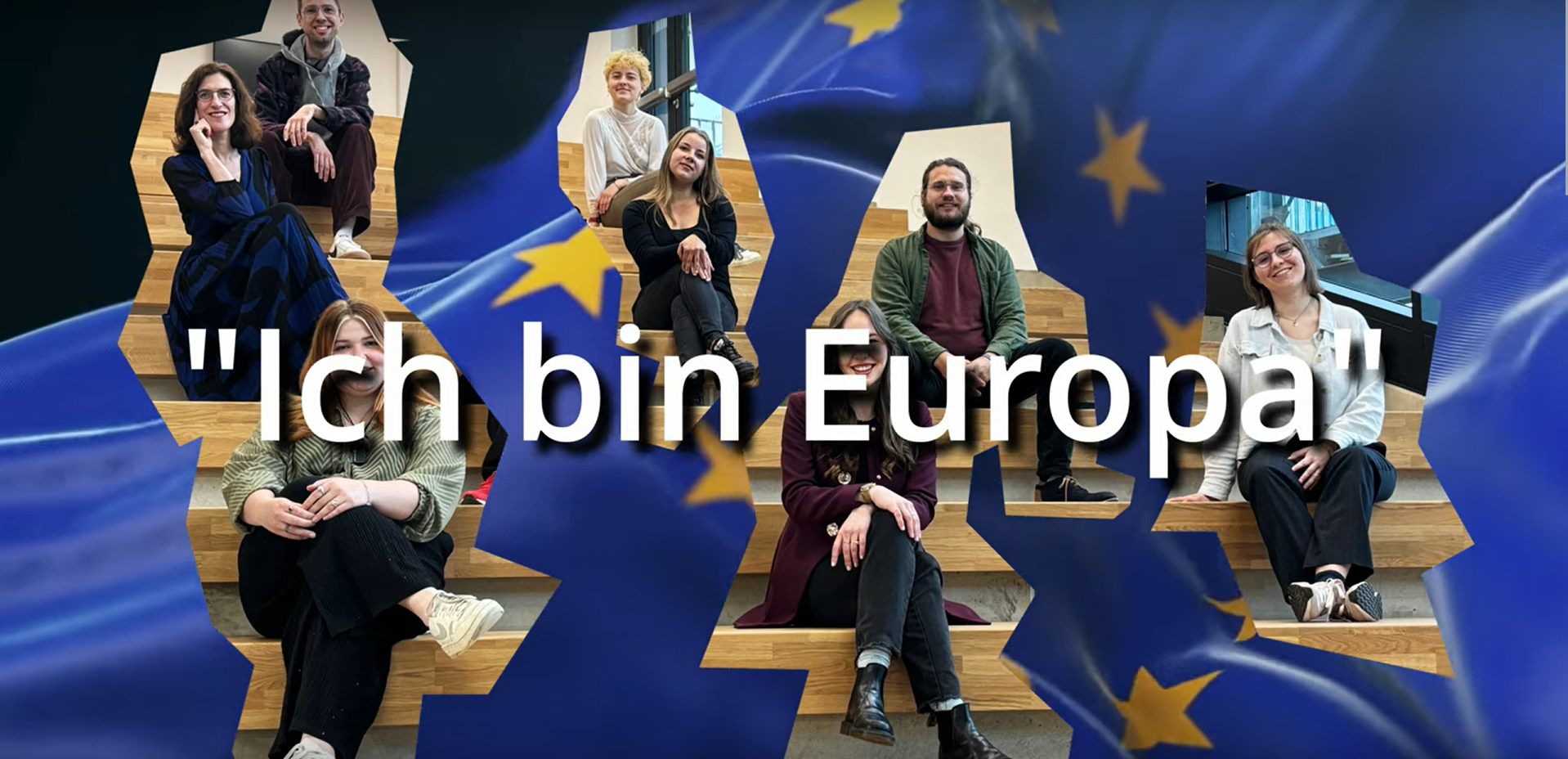
„Ich bin Europa“: Videoprojekt in Kooperation mit der Staatskanzlei
Studierende der Universität des Saarlandes haben im Wintersemester 2023/24 unter der Leitung der Europa-Gastprofessorin Dr. habil. Claire Demesmay ihre Visionen von Europa entwickelt und diesen in einer Video-Performance Ausdruck verliehen. Der Beitrag wurde am 19. April 2024 auf dem Uni-Campus gedreht und von der saarländischen Staatskanzlei technisch und beratend unterstützt. Die von den Studierenden entwickelten Texte sind an die Performance „Ich bin Europa“ des Dramaturgen Falk Richter angelehnt. Im Vorfeld haben die Studierenden sich ein Semester lang im von Claire Demesmay angebotenen Seminar „Eine Vision von Europa – mediale Bilder verstehen und selbst gestalten“ mit der Analyse von Europa-Bildern der europäischen Integration und den damit verbundenen kulturellen und politischen Kontexten und Intentionen beschäftigt, um im Anschluss ihre eigenen Visionen von Europa zu gestalten.
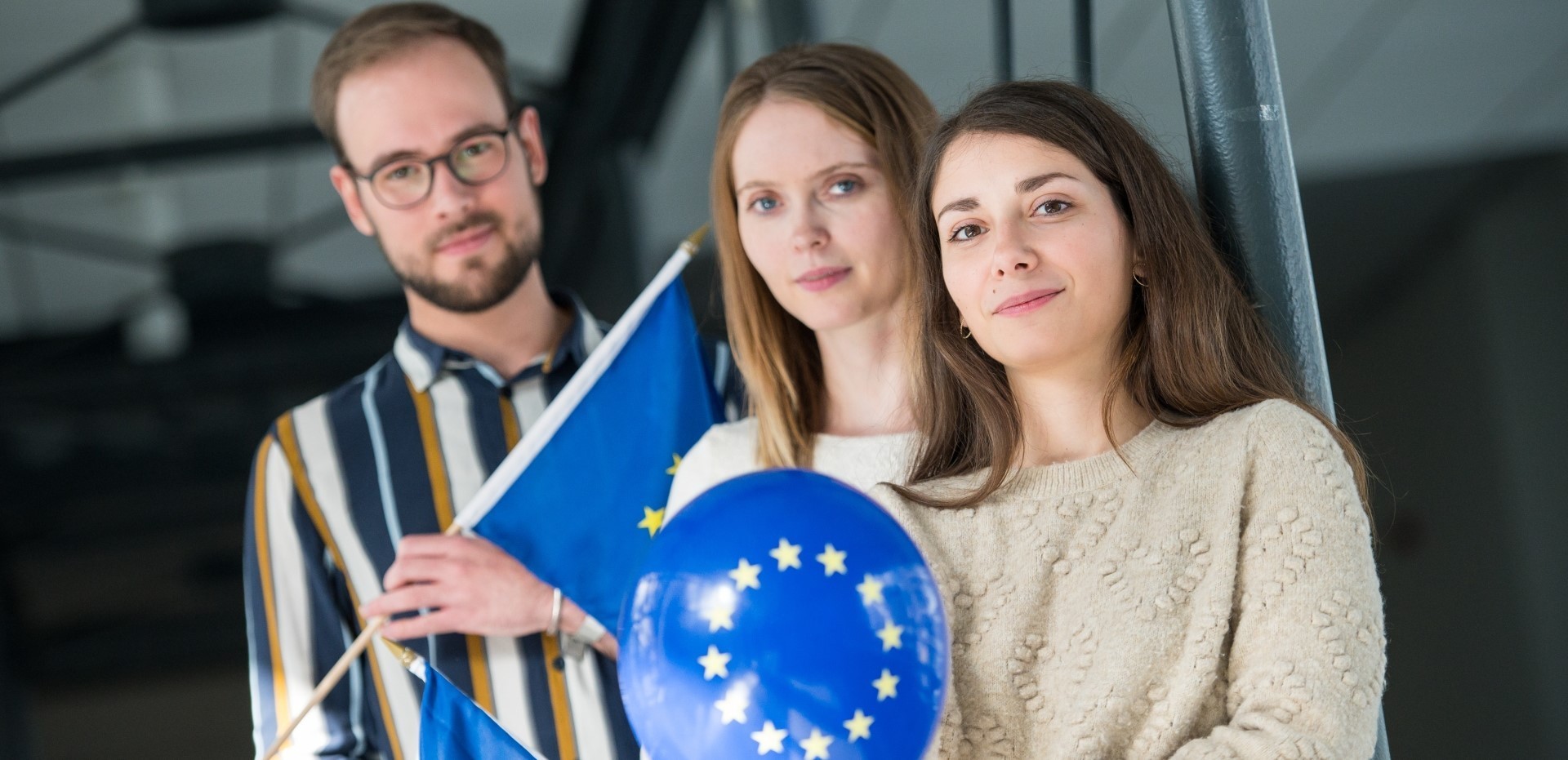
New M.A. programme: "Spaces, politics and societies of Europe"
Our new degree programme "Spaces, Politics and Societies of Europe" starts in the winter semester. Qualify for a career with a European focus with this European Studies Master's programme, which combines human geography, political science and sociology!

Lifelong Learning Podcast of the UdS: A European view of Europe with Prof Dr Daniela Braun
In the 51st episode of the Lifelong Learning Podcast, the hosts talk to Prof Daniela Braun about the European elections: How was it talked about in German and European public opinion and was it really about the EU? We ask whether it is even necessary to strive for a standardised electoral system in the EU - Daniela Braun says yes - and whether patience will help us here. In this episode, you can reflect with us on how "German" our view of the EU still is and why. You can learn which questions are of particular interest to European research with regard to this election and which future research projects will now follow.

Online Lunch Talk: Presentation of the new Franco-German degree programme "European and International Politics" on 21 June at 13:00
The winter semester 2024/25 will see the launch of the new Franco-German Master's degree programme in European and International Politics at the Chair of Comparative European Studies, which was created in cooperation with Sciences Po Strasbourg. Stefanie Thurm and Prof. Dr Georg Wenzelburger will introduce you to the programme and will be happy to answer your questions. The application deadline for the course is 15 July! Further information
All interested parties are cordially invited to the lunch talk on 21 June at 13:00. It will take place online via Teams.

New publication: "Giorgia on their minds: Vote switching to Fratelli d’Italia in the Italian general election of 2022"
The Fratelli d'Italia party became the strongest force in the Italian parliamentary elections in 2022. Until now, the party has been categorised in research as a populist right-wing party, but its electorate has remained unexplored. A new publication by Leonardo Pule, Giuseppe Carteny and Gianluca Piccolino examines whether the traditional explanations for the success of populist right-wing parties can also be applied to the FdI. They argue that in a contested field of competing populist parties, the evaluation of the party leadership plays a more important role in voting behaviour than programmatic or ideological considerations. Their results show that positive evaluations of FdI leader Giorgia Meloni were the most significant factor in the party's electoral success.
Presentation of the degree programme "European Studies: Politics - Law - Society" in the Campus Magazine
The campus magazine has published an article on the Bachelor's degree programme "European Studies: Politics - Law - Society". Students on the new degree programme and Prof Dr Daniela Braun, who co-initiated the course, were interviewed.

Cooperation agreement signed for new Franco-German study programme on European and international politics
The Franco-German degree programme "European and International Politics", which Saarland University and Sciences Po Strasbourg University are jointly offering for the first time in the winter semester 2024/25, leads to four academic degrees in five years. Students will take an in-depth look at European and international political issues and gain insights into geographical, historical, legal, social and economic backgrounds and dynamics. The programme comprises Bachelor's and Master's degrees on the German side and Master's and Diploma degrees on the French side. The cooperation agreement was signed on 6 June at the French Embassy to the Council of Europe in Strasbourg.

Online Lunch Talk on the new Master's programme "Spaces, Politics and Societies of Europe"
The Department of European Social Studies invites you to an online lunch talk on 18 June 2024 at 13:00 on our new Master's programme "Spaces, Politics and Societies of Europe".
The Master's programme "Spaces, Politics and Societies of Europe" lies at the intersection of political science, sociology and geography. The Lunch Talk offers an overview of the empirical social and spatial science focus of the programme and provides information in particular on the structure, methodological focus and career opportunities. After a short input, there will be an opportunity to ask questions. The application for the winter semester starts on 1 June and runs until 31 August.
Link
ID: 389 196 935 564
Passcode: RLwJtB
Student assistants from 1 September 2024
As part of the EU-funded UNTWIST project, the Chair of Political Science with a focus on European Integration and International Relations is looking for a student assistant with 10 hours per week to support research activities from 1 September 2024. To apply, please send your CV and a letter of motivation (as a single pdf) to Giuseppe Carteny by 30 June 2024.
We are also looking for two assistants with 8 hours per week to support teaching and researchactivities. To apply, please send your CV and a letter of motivation (ideally also in one file) to Djamila Jabra by 30 June 2024.
Call for applications (UNTWIST)
Call for applications (teaching & research)
Article in Saarbrücker Zeitung on the open day and Prof Dr Braun's talk on political opinion-forming
The Saarbrücker Zeitung reported on the open day at Saarland University. Prof Daniela Braun's talk on political opinion-forming and how it has changed in the age of social media and the internet was also discussed.

Talk: "Is there an Affective Component of Political Trust Ratings in Surveys?"
Date: 18.06.2024
Time: 16:30-18:00
Location: Building C1 7, Room 0.08
Part of the lecture series Politics in Europe
Dr Paul C. Bauer conducts research at the University of Freiburg (Institute of Political Science) and the LMU Munich (Institute of Statistics). He also heads a research project on trust measurement at the MZES Mannheim. His talk entitled "Is there an Affective Component of Political Trust Ratings in Surveys?" examines the influence of emotions on political trust based on open-ended audio responses analysed using AI to detect emotions.
Saarbrücker Zeitung reports on Voto
In the run-up to the "Super Election Sunday" (European and local elections), the Saarbrücker Zeitung reported on Voto, a voting aid for local elections, the Saarland version of which (available for Saarbrücken and Merzig) was developed at Saarland University by the political science departments of Prof Dr Braun and Prof Dr Wenzelburger. In Saarbrücken alone, Voto has now been used by more than 3000 voters. This means that the citizens of both cities now have the opportunity to easily compare their personal interests with the content of the current local election programmes of the parties represented.
Read the article
Voto Saarbrücken
Voto Merzig
New publication: "A matter of time, not generations: rising emotional attachment to the European Union 1991–2023. An age period cohort analysis"
Martin Schröder, Daniela Braun, Katrin Luisa Grimm, Martin Ulrich and Georg Wenzelburger have jointly published an article in the Journal of European Public Policy in which they analyse the assumption that younger generations have a stronger bond with the EU in times of increasing European integration. Using Eurobarometer data from 1991 to 2023, the authors show that not only younger generations, but all generations have developed a stronger bond with the EU over time. This suggests that there are no fixed "generations of Europeans", but that attachment to the EU is increasing for all generations.
Article in the Saarbrücker Zeitung on the conference at the UdS
The international conference "Emotional Dynamics of (In)security and Politics" will take place at Saarland University next week. The conference (11-13 June 2024) will examine the relationship between feelings of (in)security and emotional needs for protection as well as the political reactions to them. Prof Dr Daniela Braun will moderate the second panel.
Prof Dr Georg Wenzelburger and Alex Hartland, PhD., among others, were interviewed in a Saarbrücker Zeitung article on the conference.

Talk: "How motivated are parties and voters to get involved?"
On 9 June 2024, citizens will elect the European Parliament for the 10th time. The lecture will provide insights into political science research on European elections: Are European elections European? What are the reasons for the low voter turnout? What expectations can be formulated for the 2024 elections?
Prof Dr Daniela Braun will address these questions during Saarland University's Open Day on 8 June in her talk entitled: "How motivated are parties and voters to get involved?"
Information on the Bachelor of European Studies at the Open Day
On Saarland University's Open Day on 8 June, the Cluster for European Studies (CEUS) will be running an information stand on the Bachelor of European Studies at the Campus Center from 10:00 to 16:00. If you want to study a versatile and future-orientated subject and are interested in international contexts across disciplines, the Bachelor of European Studies is the right programme for you.
There will also be a talk in Building B3 2, Room 0.03 from 13:00 to 14:00. It will provide information about the structure and content of the degree programme and the possible specialisations, as well as career opportunities. Afterwards, questions can be asked about the degree programme and the specialisations on offer.
Further information about the information stand
Further information on the talk
Talk on the Open Day: "European elections in danger?"
Date: 8 June
Time: 10:30 to 11 a.m.
Location: Building E1 3, Room 0.02
Can AI and fake news jeopardise elections? How does political opinion-forming work in times of social media and AI-generated content? How can their influence be measured? Political science professor and European policy expert Daniela Braun will get to the bottom of these questions together with Humboldt Professor of Artificial Intelligence Ingmar Weber. They discuss the opportunities and risks of digital technologies for European democracies.
Interview mit Prof. Dr. Braun in der Saarbrücker Zeitung: „Alles Negative wird auf EU-Ebene geschoben“
Am 9. Juni 2024 wird ein neues Europäisches Parlament gewählt. Prof. Daniela Braun gab der Saarbrücker Zeitung ein Interview zu den anstehenden Wahlen. Im Gespräch mit der Zeitung diskutierte sie verschiedene Aspekte der Europawahlen und der Europäischen Union im Allgemeinen. Dabei ging es um Fragen der demokratischen Legitimation, der Rolle des Europäischen Parlaments und der nationalen Regierungen sowie der Bedeutung der Wahlen für die Bürger:innen.
Eines der besprochenen Themen war, ob es ein Demokratie-Defizit der EU gibt, insbesondere im Hinblick auf die Sitzverteilung im Europäischen Parlament. Prof. Braun betonte auch die Wichtigkeit der Europawahlen und ermutigte die Bürger:innen, wählen zu gehen. Sie erklärte, dass das Europäische Parlament in fast allen Politikbereichen mitentscheide und dass die Wahlen eine Möglichkeit seien, die eigene Stimme hörbar zu machen.
Talk: "Gender in Political Science: Europe - Climate - Security"
Date: 29.05.2024
Time: 18:00-20:00
Location: Building E2 5, Lecture Hall II
On 29 May 2024, the talk "Gender in Political Science: Europe - Climate - Security" by Prof Dr Daniela Braun and Djamila Jabra, M.A. will take place. The lecture will shed light on the role of gender research in political science and will focus in particular on the importance of feminist approaches to the study of European policy issues, climate conflicts and security measures.
The lecture is part of the Gender Lecture Series "Facets of Diversity: Gender Research and its Significance for Society".
VOTO - Wahlhilfe für Saarbrücken und Merzig ist jetzt ONLINE!
VOTO, die digitale Wahlhilfe für die Kommunalwahlen in Saarbrücken und Merzig ist jetzt online. Die beiden politikwissenschaftlichen Lehrstühle Prof. Dr. Daniela Braun und Prof. Dr. Georg Wenzelburger haben das Tool speziell für die Kommunalwahlen in Saarbrücken und Merzig entwickelt. Damit haben die Bürger:innen der beiden Städte nun die Möglichkeit, ihre persönlichen Interessen mit den Inhalten der aktuellen örtlichen Wahlprogramme der vertretenen Parteien einfach abzugleichen. Die Saarbrücker Zeitung hat einen ausführlichen Bericht über die Entwicklung, die Inhalte und den Nutzen von VOTO verfasst, der hier nachgelesen werden kann: Bericht Saarbrücker Zeitung_Online-Wahlhilfe in Saarbrücken und Merzig_15.05.2024
Die VOTO-Wahlhilfe steht online unter folgenden Links zur Verfügung:
Das VOTO-Projekt dient der politischen Bildung, verfolgt keinerlei kommerzielle Interessen, ist kostenlos und politisch neutral.
Talk and debate: "Germany before the European elections"
03 June 2024, 6 pm
Europaallee 8, 66113 Saarbrücken
Against the backdrop of the upcoming European elections, Stiftung Demokratie Saarland is organising an introductory event on the topic of European elections. In their joint lecture ‘Germany before the European elections’, Prof Dr Daniela Braun and Prof Dr Markus Tausendpfund will provide an introduction to and an overview of the topic of EU elections. In terms of content, they will look at various modalities and aspects accompanying the European elections. They will look at the EU election programmes and identify their theses: are they predominantly national or European in nature? At the end, the audience will be invited to discuss the question: ‘Are European elections actually European elections?’.
International Political Science Conference: Emotional Dynamics of (In)security and Politics
At the conference (11-13 June 2024) the relationship between feelings of (in)security and emotional protection needs as well as the political responses to them will be examined. Prof. Dr. Bethany Albertson (The University of Texas at Austin) has been secured as keynote speaker and will give her lecture entitled ‘What Counts as Protection in an Age of Insecurity?’ on 11 June 2024 at 6 pm. The final lecture on 13 June will be given by Prof. Dr. Iryna Hubeladze (Institute for Social and Political Psychology of the National Academy of Educational Sciences of Ukraine) with the title ‘Sense of Security and Civic Responsibility: The Identity of Ukrainians in the Conditions of the Russian-Ukrainian War’.
Prof Dr Daniela Braun will host the second panel. The event is organised by the Chair of Political Science and Comparative European Studies at Saarland University. There is no conference fee. If you have any questions, please contact the organising team Dr Beatriz Carbone and Prof. Dr Georg Wenzelburger.

Vortrag von Beate Klünder, NABU e. V.
Im Rahmen der Vorlesung im Kernbereich des BA Europawissenschaften "Europäische Integration und politische Instrumente"( Prof. Dr. Daniela Braun), findet ein Vortrag zum Thema „Interessengruppen und Lobbyismus im EU-Mehrebenensystem aus der Perspektive des NABU“ mit anschließender Diskussion statt. Der Vortrag wird gehalten von Beate Klünder, die als persönliche Referentin des Fachbereichsleiters Klima- und Umweltpolitik, NABU – Naturschutzbund Deutschland e.V. in Berlin tätig ist.
Der Vortrag richtet sich insbesondere an die Studierenden der Fachrichtung Gesellschaftswissenschaftliche Europaforschung, welche herzlich zur Teilnahme eingeladen sind: Dienstag, 07.05.2024 ,14:15-16:45 Uhr, Raum 0.23, Gebäude C5.3.
Online voting aid VOTO
This year is a super election year: on 9 June 2024, not only will the European elections take place, but local elections will also be held at the same time in some German federal states - including Saarland.
Especially for this occasion, Saarland University is currently developing an online voting aid similar to the Wahl-O-Mat: ‘VOTO’. This online tool is intended to offer citizens the opportunity to compare their political preferences with the local parties' electoral offerings in order to obtain an overview of the range of local political options available to them.

SWR2-Interview mit Prof. Dr. Daniela Braun: Warum wir EU-Politik oft langweilig finden
Prof. Daniela Braun wurde am 03.05.2024 von SWR Aktuell-Moderator Pascal Fournier interviewt. Thema des Gesprächs im Rahmen des Formats „Aktuell“ war die im Juni bevorstehende Europawahl. Denn gemäß einer Infratest dimap-Umfrage, interessiert sich nur knapp die Hälfte der Deutschen Bevölkerung dafür. Warum das so ist, welche Bedeutung sie für uns im Alltag haben, wer sich besonders für Europathemen interessiert und was man ändern kann - darüber haben sie hier gesprochen: Zum SWR2-Interview. Das Interview wurde am 03.05.2024 um 12:00 Uhr auf SWR2 ausgestrahlt.
Talk by Prof Dr Daniela Braun in Heidelberg
On 3 May, Prof. Daniela Braun will give a talk at the Europe Weeks organised by the Franco-German Cultural Circle in her former place of study, Heidelberg. The talk is entitled "The 2024 European elections - a Franco-German analysis in the run-up" and will take place in the Friedrich-Ebert-Haus from 18:00. It will be followed by a drink in the bakery. In her talk , Prof Daniela Braun will compare the German and French perspectives on the European elections: What are the differences in the process, what expectations are associated with the elections in the two countries and are European elections European?

Panel discussion "Why gender studies?"
On 8 May, the panel discussion "Why gender studies?" will take place in the Ratshausfestsaal Saarbrücken from 6 to 8 pm. The panel discussion is part of the lecture series "Facets of Diversity - Gender Research and its Significance for Society" and the UdS Diversity Weeks 2024. It will be followed by a comic reading by Elisabeth Pich.
Guests:
- Prof Andrea Geier (CePoG Trier)
- Prof Ulrike Zöller (htw saar)
- Prof Astrid Fellner (UdS)
- L Crescimone (Queer-Referat AStA UdS)
- Dr Sybille Jung (Equal Opportunities Office UdS)
Moderation: Dr Lisa Juliane Schneider (Women's Representative LH Saarbrücken)

Event info: Prof. Michaela Maier (RPTU): "Shades of EU scepticism 2024"
As part of the lecture series "Politics in Europe" of the joint political science colloquium of the chairs of Prof. Dr Daniela Braun and Prof. Dr Georg Wenzelburger, a lecture will take place on 2 May 2024.
Prof Dr Michaela Maier is Professor of Communication Psychology at the Institute of Communication Psychology and Media Education at the Rhineland-Palatinate University of Technology Kaiserslautern-Landau. In her lecture entitled "Shades of EU secpticism 2024", she summarises how Eurosceptic and pro-European parties strategically communicated their respective positions during the election campaign for the last European elections and compares the results with materials from the current election campaign.
Lecture: "What data and AI reveal about the world - new opportunities and risks"
Prof Dr Daniela Braun and Prof Dr Ingmar Weber will give a lecture entitled "What data and AI reveal about the world - new opportunities and risks" on 24 April from 6 to 8 p.m. in building E1 7 on the UdS campus. The interdisciplinary lecture serves as an excursion destination for the course "ChatGPT and co - Understanding Artificial Intelligence" organised by the Protestant Academy in Saarland.
Lecture: "European elections 2024 - how motivated are the parties and voters to get involved?"
As part of the Open Day programme, Prof Dr Braun will give an insight into political science. The European elections will take place in Germany on 9 June 2024. Against this background, we would like to look at the motivations of voters as well as the parties standing for election on the previous day. These elections are the only direct elections at European level. They were introduced over forty years ago to strengthen the importance of the parliament in the institutional system of the European Union (EU) and at the same time to increase the democratic legitimacy of the confederation of states. At the same time, these elections are known for their characterisation as less important elections with comparatively low voter turnout and little interest on the part of the population. The lecture will take place from 12:00 in room 0.03, building B3 2.
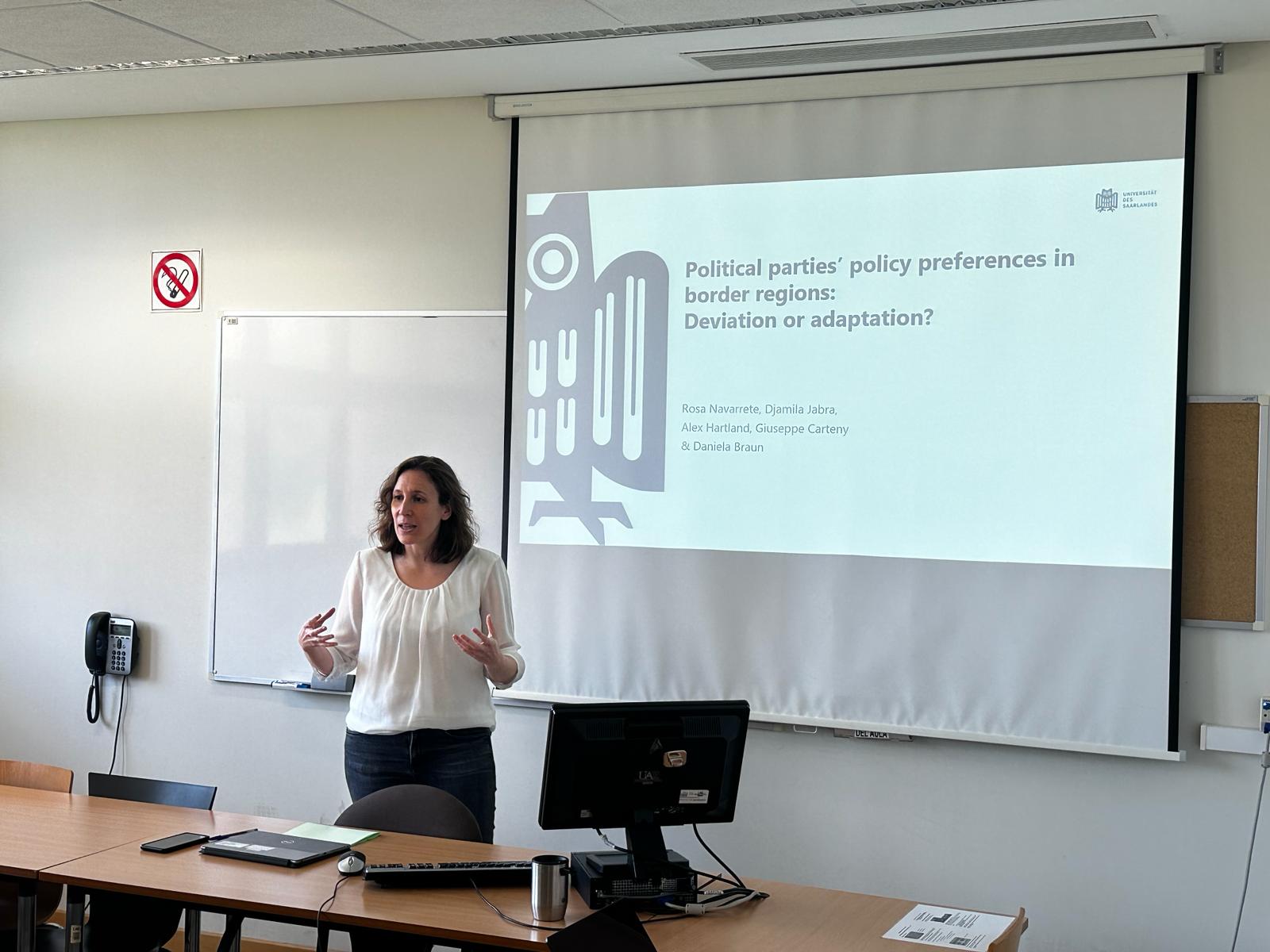
Presentation in Spain on political parties in border regions
From 1 to 5 April, Dr. Rosa Navarrete attended the Autonomous University of Madrid (Spain) with funding from the Erasmus+ Staff Training Mobility program. During her stay she engaged in teaching and research activities and presented her work done in cooperation with Prof. Dr. Daniela Braun, Dr. Giuseppe Carteny, Dr. Alexander Hartland and Djamila Jabra about political parties in border regions in the context of the lecture series of the Research Group "Elites and Political Actors".
Series of lectures: "Politics in Europe"
As part of a joint political science colloquium of the chairs of Prof. Dr. Daniela Braun (focus on European Integration and International Relations) and Prof. Dr. Georg Wenzelburger (Comparative European Studies) of the Department of European Social Research and the Cluster for European Studies CEUS, the lecture series "Politics in Europe" will take place again in the summer semester with three contributions:
02.05.2024, 16:30-18:00, Building B3 1, Room 0.13
Prof. Michaela Maier (RPTU Kaiserslautern-Landau)
Shades of EU scepticism 2024
Event information
18.06.2024, 16:30-18:00, Building C1 7, Room 0.08
Dr. Paul C. Bauer (Uni Freiburg)
Is there an Affective Component of Political Trust Ratings in Surveys?
Event information will follow shortly
25.07.2024,16:30-18:00, Building B3 1, Room 0.13
Dr. Martin Gross (LMU München)
How Salient is Cohesion Policy for Regional Governments? Empirical Evidence from Germany
Event information
Interested parties are cordially invited to attend. Please register in advance at vinciane.pilz(at)uni-saarland.de.
"Who cares about Europe?" - Dossier of the bpb
What is the state of public support for the EU? How do international crises influence political trust? And how are the EU institutions perceived? These questions are addressed in a dossier by Prof Dr Daniela Braun, published by the Federal Agency for Civic Education (bpb) under the title "Who cares about Europe: Public opinion on the European Union and its elections".

Podcast episode of the State Agency for Civic Education of Baden-Württemberg with Prof Dr Daniela Braun
For the "Politisch bildet" podcast, the State Agency for Civic Education of Baden-Württemberg has invited Prof Daniela Braun as a discussion partner. The episode entitled "European elections 2024: Are the European elections European enough?" focuses on the relevance of the European elections for the population, the effects of the lowered voting age in the upcoming European elections this year and, of course, the question of how European the European elections are. Towards the end, Prof Braun will give tips to first-time voters on how to make the decision to vote easier. Prof Braun wrote an analysis on the topic for the state agency's magazine "Deutschland & Europa" last year.

Lectures for the public lecture series "Facets of diversity - gender research and its significance for society" have been announced
The lecture series "Facets of Diversity - Gender Research and its Significance for Society" is organised by Prof Dr Daniela Braun and Prof Dr Astrid Fellner and is part of the Diversity Week programme initiated by the Equal Opportunities and Diversity Management Office. In terms of content, it poses questions, offers answers and aims to illuminate and discuss the significance of various diversity factors in science and society. Based on the latest findings from feminist theory, gender, queer and trans studies as well as empirical gender research, selected experts from various research areas will provide an insight into recent research areas and current research approaches in the humanities, cultural studies, social sciences, law and natural sciences. Exciting findings from current research projects will be explained and the significance of this research and its findings for society will be demonstrated. The events are open to all interested parties without registration and are free of charge.
The lectures of the public lecture series have been published in a press release.
Information on the overall programme of Diversity Week 2024 can be found here.
Further information
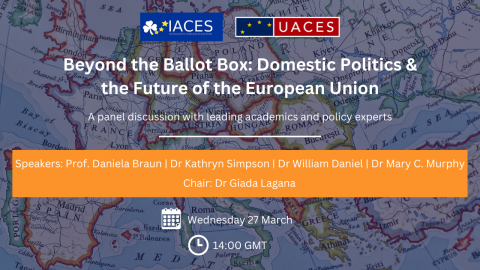
UACES panel discussion with Prof Dr Daniela Braun
The University Association for Contemporary European Studies (UACES) is hosting a panel discussion on 27 March 2024 entitled "Beyond the Ballot Box: Domestic Politics & the Future of the European Union", in which Prof Daniela Braun will participate. The webinar will focus on the upcoming European elections and how the challenges of the last five years will affect the election and what influence domestic events and elections of the individual EU member states will have.
Djamila Jabra elected as ECIB spokesperson
From 20 to 22 March 2024, the 17th Early Career Conference on International Relations of the DVPW took place at the Academy for Political Education in Tutzing. Djamila Jabra, M.A. gave a presentation entitled "From Warnings to Wars - A Comprehensive Review of IPCC Reports on Climate and Conflicts" as part of her doctoral project. She was also elected to the team of speakers of the Early Career Group International Relations (ECIB).
Interview with Prof Dr Daniela Braun on Saarländischer Rundfunk
An interview with Prof Daniela Braun was featured in the "Aktueller Bericht" programme on Saarländischer Rundfunk on 21 March 2024 on the topic of crises. Prof Braun spoke about the influence of crises on politics, to what extent they pose a threat, but also to what extent they offer opportunities to enable a rethink. The programme is available in German in the ARD media library, the report starts at minute 14:00, the interview at 16:45.
Programme in the ARD media library
EU project ActEU turns one year old
The Horizon-funded EU project ActEU has now been running for a year. Prof Dr Daniela Braun and Dr Alex Hartland will present the first results in June at the conference Emotional Dynamics of (In)security and Politics at Saarland University, in July at the annual EPSA conference in Cologne and in September at the DVPW Congress in Göttingen.
The ActEU project aims to find answers to the following questions: How can we conceptualise and empirically measure political trust and legitimacy beyond the usual survey question "How much trust do you have in the Parliament?"? Does the multi-level nature of European representative democracies require an identical level of support from citizens at regional, national and EU level? To what extent does social polarisation on key political issues of our time - immigration, climate change and gender inequality - challenge political trust in democratic political systems and their legitimacy? And what can political decision-makers and civil society do to overcome these challenges?
Presentation of the "ProConEU" project at the Conference of European Affairs Ministers
On 20 March 2024, the project "ProConEU - Proponents and Opponents of the European Union: The Consequences of an Increasing Divide in Europe" of the BMBF funding line "Cohesion in Europe" will be presented at the meeting of the Standing Working Group of the Conference of European Affairs Ministers. The aim of the project, led by Prof Dr Daniela Braun, was to investigate the consequences of increasing division in and for Europe in the areas of party politics, the behaviour and attitudes of the electorate and the new social media.

New seminar on the 2024 European elections
As part of the seminar "The 2024 European Elections: Issues, Parties and Voters", students at Saarland University, led by Prof Dr Daniela Braun, will be developing topics for the online voting tool Voto (similar to Wahl-O-Mat).
The European elections are (so far) characterised as so-called "second-order elections": i.e. they are characterised by low participation and low interest among the population. At the same time, however, more and more Eurosceptic parties are winning these elections and political decisions are increasingly being made at EU level. In this respect, public attention may have increased as a result. Against this background, we will take a closer look at the election campaign, voting behaviour, the parties and the voters around the European elections.
The seminar is part of a block seminar entitled "Super election year 2024 in Saarland: European and local elections" with Prof. Dr Georg Wenzelburger, in whose seminar theses on local political issues will be developed.

Talk by Prof Dr Braun at the practical day of the Master of Public Policy programme at the University of Duisburg-Essen
At the practical day of the Master of Public Policy at the University of Duisburg-Essen on 6 March 2024, Prof. Daniela Braun will give a talk entitled "Elections in the EU: European Institutions, Parties and Policies". This will be followed by a discussion with the audience. The practical day with the topic "Super election year 2024: Elections in Germany, the EU and worldwide" will take place at the NRW School of Governance.
Full programme of the practical day

Facets of diversity: gender research and its significance for society
Prof. Dr Daniela Braun and Prof. Dr Astrid M. Fellner
Every wednesday 18-20h c.t. (17.04. to 24.07.)
Location: Town hall and UdS campus (Building B3 2, Room 0.03)
In cooperation with the Gender Studies Forum of the UdS, the Equal Opportunities Office of the UdS, the Queer Working Group of the UdS, the ZelL, the htw, the Women's Office of the City of Saarbrücken and the FrauenGenderBibliothek Saar
What actually is gender research? What does it deal with? And why is the consideration of gender and other diversity factors an important aspect of many scientific disciplines and why is this important for society? To what extent are other dimensions of social, ethnic, cultural and sexual differentiation processes connected? The interdisciplinary lecture series "Facets of Diversity: Gender Research and its Significance for Society" poses questions, offers answers and aims to shed light on and discuss the significance of various diversity factors in science and society. Based on the latest findings from feminist theory, gender, queer and trans studies as well as empirical gender research, selected experts from various research areas will provide an insight into recent research areas and current research approaches in the humanities, cultural studies, social sciences, law and natural sciences.
BGA European Committee event with Prof Dr Daniela Braun
The European Committee of the Federation of German Wholesale, Foreign Trade and Services (BGA), which represents the interests of the German economy, is organising a digital exchange on 5 March 2024 with Prof. Daniela Braun as keynote speaker.
The event, chaired by BGA Vice President and Committee Chairman Till Blässinger, will focus on the European elections on 9 June and questions about the future of the European Union: How must the EU be shaped so that trust in it grows again? How can we achieve long-term stability, less bureaucracy and a competitive economic area? The aim of the event is for as many companies as possible that are members of the BGA to enter into a constructive dialogue with the European level in order to increase interest in the elections and exchange views on current forecasts.
Further information (in German)
Event information: Presentation of Prof Dr Armin Schäfer
The lecture of Armin Schäfer (Uni Mainz): 'Sore losers? Populism and the acceptance of election results in Europe' on 23 January 2023, 16:30-18:00, Building B3 2, HS 0.03 as part of the lecture series 'Politics in Europe' of the joint political science colloquium of the chairs of Prof. Dr Daniela Braun and Prof. Dr Georg Wenzelburger is CANCELED!
Prof Armin Schäfer has been a Professor of Comparative Politics at the Johannes Gutenberg University in Mainz since April 2022. He began his academic career by studying political science and economics at the Philipps University of Marburg. After completing his studies, he earned his doctorate at the Max Planck Institute for the Study of Societies in Cologne in 2004 and then worked as a research assistant at the University of Bremen.
In 2014, Armin Schäfer completed his habilitation at the Ruprecht Karls University of Heidelberg and accepted a professorship in political science specialising in 'International Comparative Political Economy' at the University of Osnabrück. He later moved to the Westfälische Wilhelms-Universität Münster, specialising in comparative politics, and returned to the MPI as a visiting researcher. Armin Schäfer has also been the spokesperson for the Political Economy section since 2012 and a member of the board of the German Political Science Association since 2015.
Tagesschau interview with Prof Dr Daniela Braun: How trust in politics can be restored
In a personal interview with Corinna Emundts, federal political correspondent for tagesschau.de, Prof Daniela Braun looks back on the political year of the 'traffic light' coalition and, against the backdrop of the last budget debates, examines the question of whether politics, and the coalition in particular, is experiencing a crisis of confidence – and if so, what could be the reason for this and what could be done to change it.

New publication on "How European are the European elections?"
In their article published in the Zeitschrift für Gemeinschaftskunde, Geschichte und Wirtschaft, Prof Dr Daniela Braun and Prof Dr Markus Tausendpfund explore the question of how European the European elections are.
"From 6 to 9 June 2024, the citizens of the European Union (EU) will be asked to elect the European Parliament (EP) for the tenth time. MEPs have been directly elected since 1979. The aim of these elections was to strengthen the role of the Parliament in the EU's institutional system and to address the much-cited democratic deficit in the EU. Nevertheless, since their introduction, the European elections have been known for their secondary election character" Full article
Policy webinar "Europe has the choice - programmes and economic perspectives for the future of Europe" with Prof. Dr. Daniela Braun
On Tuesday, 05.12.2023 from 10:00-16:00 there will be a policy webinar organised by ISWA on the above lecture.
The webinar, organised by the Institute for Social and Economic Policy Education (ISWA), will focus on the upcoming European elections and the fundamental question: What are the priorities that European policy should focus on? Various topics will be discussed with experts from politics, business, science and the media. Prof Daniela Braun, Professor of Political Science with a focus on European Integration and International Relations at Saarland University, together with Dr Manuel Müller, Senior Research Fellow at the Finnish Institute of International Affairs (FIIA) and founder of the blog The (European) Federalist, Helsinki (Finland), will discuss the topic of forecasts for majorities in the European Parliament - significance for decision-making, economic policy and Europe as a business location.
Further information and registration

Dialogue evening on the climate crisis, transformation and democracy
As part of the "Baustelle Nachhaltigkeit" lecture series, Jonas Schaible, Spiegel editor and author of the book "Demokratie im Feuer. Warum wir die Freiheit nur bewahren, wenn wir das Klima retten - und umgekehrt" will be speaking on Wednesday, 6 December from 6 p.m. in the main hall of the vhs-Zentrum at the Schloss (Am Schloßplatz 2, 66119 Saarbrücken, 1st floor) on the topic of the climate crisis, transformation and democracy.
In the subsequent discussion with Dr Frank Nägele, Saarland Commissioner for Structural Change, Jörn Didas, Director of the Adolf Bender Centre and Prof. Dr Daniela Braun, political scientist at Saarland University, these and other questions will be explored in greater depth. Ulrike Dausend, Network Coordinator of the One World Promoter Programme in Saarland and Managing Director of NES e.V., will moderate the event.
Studentische Hilfskraft im EU-geförderten Projekt ActEU ab 15. Januar 2024 gesucht
Im Rahmen des EU-geförderten Projektes ActEU sucht der Lehrstuhl für Politikwissenschaft mit dem Schwerpunkt Europäische Integration und Internationale Beziehungen zum 15. Januar 2024 eine studentische Hilfskraft mit 8 Wochenstunden als Unterstützung bei den Forschungstätigkeiten.
Zur Bewerbung können Lebenslauf und ein Motivationsschreiben (als einzelnes pdf) mit dem Betreff „Student Assistant Application“ bis zum 30. November 2023 an Alex Hartland gesendet werden. Ausschreibung
Event information: Dr Isabelle Guinaudeau (Science Po Paris): "Mandates, Pledge fulfilment and Representation in France and Germany"
Lecture on 21 November 2023, 16:15-17:45, Building B3 2, HS 0.03 as part of the lecture series "Politics in Europe" of the joint political science colloquium of the chairs of Prof. Dr Daniela Braun and Prof. Dr Georg Wenzelburger.
Dr Isabelle Guinaudeau holds a double degree in social sciences from Sciences Po Bordeaux and the Institute of Social Sciences at the University of Stuttgart. She also completed a Master's degree in German language, literature and culture at the Université de Strasbourg. She completed her Franco-German doctorate in political science at Sciences Po Bordeaux and the University of Stuttgart with summa cum laude honours. In addition to her position as a CNRS researcher at Sciences Po Paris, she is a visiting professor at the University of Zurich.
Her research focuses on comparative politics, party competition, European integration, parties in policymaking and policy analysis. In recent years, she has been studying, among other things, public support for European integration in a comparison of time and countries, the conditions for the implementation of electoral programmes, contemporary changes in political parties in a Franco-German comparison and the significance of party programmes in policy-making.
Interested parties are cordially invited to register in advance at Vinciane Pilz.View complete programme

Studentische Hilfskraft ab 15. Januar 2024 gesucht
Der Lehrstuhl von Prof. Dr. Daniela Braun für Politikwissenschaft mit Schwerpunkt Europäische Integration und Internationale Beziehungen der Fachrichtung Gesellschaftswissenschaftliche Europaforschung hat zum 15. Januar 2024 eine Stelle als studentische Hilfskraft (ohne Abschluss) mit acht Wochenstunden zu besetzen.
Zur Bewerbung können Lebenslauf und Motivationsschreiben in einer Datei bis zum 30. November 2023 an Vinciane Pilz gerichtet werden.

Lecture series "Politics in Europe"
As part of a joint political science colloquium of the chairs of Prof. Dr. Daniela Braun (focus on European Integration and International Relations) and Prof. Dr. Georg Wenzelburger (Comparative European Studies) of the Department of European Social Research and the Cluster for European Studies CEUS, the lecture series "Politics in Europe" will take place in the winter semester with three contributions (see poster).
Interested parties are cordially invited to attend. Please register in advance at Vinciane Pilz.

Lecture "Representative democracy in decline"
On October 19, Alex Hartland gave his lecture "Representative democracy in decline" at Fraunhofer ISI. He presented an overview of the ActEU project.
The ISI lecture series bundles exciting topics from the Fraunhofer ISI portfolio and offers opportunities for discussion and exchange at regular intervals.
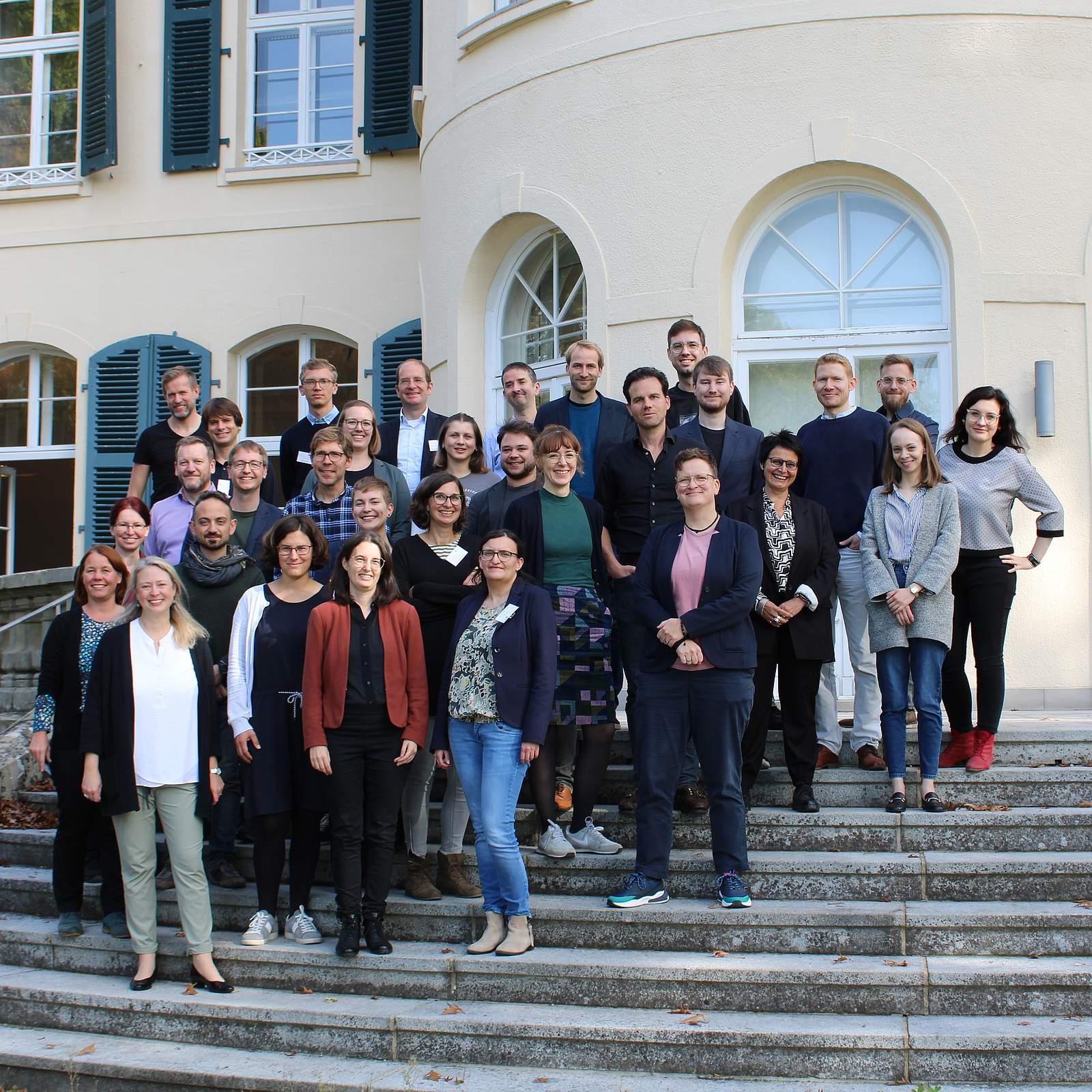
CEUS Conference "Border Regions as Laboratories for European Research"
On 9 and 10 October 2023, the interdisciplinary conference of the CEUS (Cluster for European Research) took place at the Villa Europa in Saarbrücken with the theme "Border Regions as Laboratories of European Research". The starting point was the assumption that Europe's political, social, legal, historical, cultural and linguistic fault lines become more prominent in inner-European border regions, as became clear, for example, during the so-called "refugee crisis" and the Corona pandemic, when border regions were particularly affected by controls or even border closures. However, quite independently of these crisis phases, it can be assumed that in such inner-European border regions certain developments that are given within Europe or the multi-level system of the EU are more prominent (e.g. support for politics in Europe; identification with the EU; European party politics).
Prof. Dr. Daniela Braun was the moderator of the conference and Dr. Rosa Navarrete, Dr. Giuseppe Carteny, Dr. Alex Hartland and Djamila Jabra, M.A. also participated from the chair team.

TEPSA Training: "Inside the European Parliament"
Prof Dr Daniela Braun will participate in the Trans European Policy Studies Association's online seminar from 11-13 October 2023. 20 students will have an opportunity to gain first-hand insights from researchers, EU practitioners, and policymakers on the functioning of the European Parliament, its role in the complex architecture of EU governance, and the role of youth electoral participation. The event takes place in the framework of the ActEU project.

New publication by Dr Rosa M. Navarrete
"Protecting the climate to challenge the centre? Secessionism and climate policy preferences in Catalonia"
Climate policy is mostly ruled by national governments, which in multi-level systems creates tensions with sub-national tiers. In this research, the authors analyse whether the salience of climate change in the manifestos of parties competing in the 2017 and 2021 Catalan regional elections varies between them and if these differences are associated with the aforementioned cleavage. The empirical findings reveal that the prominence given to climate change in the manifestos of the parties studied tends to be higher the more pro-periphery the positions of parties are, and the more salient decentralisation and independence.
Interview series "life after the PhD": Alex Hartland
"Life after the PhD" is a series of interviews conducted with former University of Manchester postgraduate students, discussing the multiple paths available for students once they finish their doctoral research. In this issue, a summary of the conversation with Alex Hartland is presented, who finished his PhD in Politics at the University of Manchester to take on a role as a postdoctoral researcher at the University of Saarland, Germany.
New article by Prof. Dr. Daniela Braun in the Zeitschrift für Politikwissenschaft
"Arising calls for national sovereignty in times of European crises and the political Zeitenwende"
The recent periods of multiple crises go hand in hand with calls for more national sovereignty. Drawing on data provided by the Manifesto Project, this contribution seeks to study empirically how widespread the wish to ‘take back control’ is reflected through political parties all over Europe. We show that although ‘sovereignist’ issues across EU member states were not among the political top priorities in the past, parties’ issue emphasis has increased in the shadow of the last decade’s multiple crises. On top of that, we argue that sovereignist aspirations have the potential to further increase alongside upcoming international challenges. In particular, events such as the Russian-Ukrainian war and the declared Zeitenwende may raise calls for more national sovereignty.
Read article or download article

Lecture by Prof Dr Daniela Braun
"How can we Measure, Study and Improve Citizens' Dissatisfaction with Representative Democracy in the EU's Multi-level System?" - Prof. Daniela Braun will give a lecture on this topic on 19 September 2023 from 12-13:30. This will provide an insight into the ActEU project funded by Horizon Europe.
The event will take place in building A 5 6 in room A 231. Further information

Dr Rosa Navarrete in a podcast on the situation in Spain
Spain does not yet have a majority capable of governing. The separatist Carles Puigdemont and his party could now be decisive.
Detektor.fm presenter Nina Potzel spoke with Dr Rosa Navarrete about the political situation in Spain. She comments on the situation in the podcast "Government with separatists?".

New research institute "Interdisciplinary Institute for Societal Computing (I2SC)"
On 7 and 8 September 2023, the "Interdisciplinary Institute for Societal Computing (I2SC)" will be inaugurated at Saarland University with a two-day symposium. The institute promotes interdisciplinary research at Saar University and offers a platform for exchange between social sciences, humanities and computer sciences. It is headed by Ingmar Weber, Humboldt Professor of Artificial Intelligence, and Daniela Braun, Professor of Political Science. Read full article

Official announcement of the new focus of the Bachelor's degree programme in European Studies "Politics - Law - Society"
How does the interaction of political institutions in Europe work? What influence do national governments have? And how do culture and economy differ in the individual EU member states? These are the questions that the new focus of the Bachelor's programme in European Studies examines, concentrating on politics, law and society in Europe. Enrolment in the admission-free degree programme is still possible until 30 September. This article officially announces the new specialisation.

Dr. Rosa Navarrete talks to BBC about the election results in Spain
Dr. Rosa Navarrete is a research assistant at the Chair of Political Science with a focus on European Integration and International Relations in the Department of European Social Research. She is an expert in the field of politics in Spain and was interviewed by the BBC about the results and their interpretation in the context of the current electoral events in Spain.
Translation by Dr. Navarrete in English

Presentation of the degree programme "European Studies: Politics - Law - Society (B.A.)"
Three questions - three answers: in this video, Prof. Dr. Daniela Braun, Prof. Dr. Georg Wenzelburger and Prof. Dr. Martin Schröder introduce the Bachelor's programme "European Studies" with a specialisation in Politics - Law - Society at Saarland University. They answer the questions: "What can I expect during my studies?", "Why should I study in Saarbrücken?" and "What job opportunities will I have afterwards?".
Event information: Prof Dr Joachim Schild (University of Trier): "Deutsch-französische Beziehungen in der Zeitwende"
Lecture as part of the series "Politik in Europa" on 13.07.2023, 16:30-18 h, Building B2 2, HS II (R. 1.08)
Prof Joachim Schild of the University of Trier will give his lecture as a part of the series "Politik in Europa", which is organised as part of the political science colloquium of the two chairs of political science Prof Dr Daniela Braun (focus on European Integration and International Relations) and Prof Dr Georg Wenzelburger (Comparative European Politics) of the Department of European Social Research and the Cluster for European Studies CEUS.
The speaker, Prof Joachim Schild, is Professor of Political Science/Comparative Politics at the University of Trier. His research focuses on French European policy, Franco-German relations, political economy of European integration and the political system of the V French Republic.
Interested persons are cordially invited, pre-registration to Vinciane.Pilz(at)uni-saarland.de is requested.
Event information: Dr. Katjana Gattermann (University of Amsterdam): "The personalization of politics in the European Union"
Lecture by Dr. Katjana Gattermann (University of Amsterdam) as part of the series "Politik in Europa" on 20.06.2023, 16:30-18:00, Building B3 1, R. 0.14.
Dr. Katjana Gattermann from the University of Amsterdam will give her lecture in the lecture series "Politik in Europa", which is organised as part of the political science colloquium of the two chairs of political science Prof. Dr. Daniela Braun (focus on European Integration and International Relations) and Prof. Dr. Georg Wenzelburger (Comparative European Politics) of the Department of European Social Research and the Cluster for European Studies CEUS.
The speaker, Dr Katjana Gattermann, is a researcher at the University of Amsterdam in the Faculty of Social and Behavioural Sciences, specialising in Political Communication and Journalism. Research interests include political communication, political behaviour, public opinion, journalism and legislative behaviour with a regional focus on the European Union. Her work addresses issues concerning the relationship between representatives and representatives and, in particular, the unifying role of the media in this relationship, thus feeding into debates on the legitimacy and accountability of politics.
Interested persons are cordially invited to attend. Please register in advance at Vinciane.Pilz(at)uni-saarland.de.

Prof Dr Daniela Braun is a member of the CEUS Board of Directors
As the central academic institution of Saarland University, the Cluster for European Studies (CEUS) offers European researchers at the University an interdisciplinary platform for exchanging ideas, networking and implementing joint research and project ideas. The board of directors is composed of three interdisciplinary members of the college, each of whom belongs to one of the three participating faculties (Empirical Human Sciences and Economics HW, Faculty of Philosophy P, Faculty of Law R).

We are pleased to welcome Prof Dr Dr hc Hermann Schmitt as a visiting scholar at Saarland University!
Prof. Dr. Dr. h.c. Hermann Schmitt's research interests include the following:
- Party democracy, in particular the conditions and mechanisms of the responsiveness of political parties to changes in the policy preferences of their electorates
- European elections (which he, together with Karl-Heinz Reif, first characterised as "second-order elections" in 1980)
- Questions of political representation
- Public opinion, especially the emergence of policy moods and the problem of non-attitudes
He examines these questions with regard to German politics and the multi-level system of the European Union, but also in international comparison. Methodologically, this mostly involves international comparative survey analyses and quantitative content analyses, as well as the linking of both. For a long time, he was one of the main authors ofEuropean Election Studies.
His habilitation (venia legendi for political science) took place at the Free University of Berlin and at the University of Mannheim, his doctorate in social sciences (Dr. sc. pol.) at the University of Duisburg. Hermann Schmitt is Professor Emeritus of Electoral Politicsat the University of Manchester and is a Research Fellowat the Mannheim Centre for European Social Research (MZES).

New publication by Dr Rosa M. Navarrete and Marc Debus: "The Importance of EU Issues in German Elections"
The decision-making processes employed by German politicians and voters in elections to the German Bundestag matter decisively for policy-making at the European level. When casting their vote, German voters choose their representatives and are in a position to use federal elections to keep European Union (EU) policy accountable and better defend their national interests. Nevertheless, the German press and political parties—with the exception of those on the radical right, like the Alternative for Germany (AfD—Alternative für Deutschland)—tend not to use EU issues to mobilize voters and do not politicize EU integration policy. This pro-European vocation would suggest there is no place for EU issue voting in Germany; however, this is not the case. This contribution disentangles the apparent consensus about the EU and assesses the nuances that indicate the Europeanization of German elections.

Series of lectures: "Politik in Europa"
In the summer semester 2023, the lecture series "Politik in Europa" will take place as part of a joint colloquium of the two chairs of political science Prof. Dr. Daniela Braun (focus on European Integration and International Relations) and Prof. Dr. Georg Wenzelburger (Comparative European Politics) - both political science chairs at the Cluster for European Studies CEUS. Event poster
Unfortunately, the lecture by Ms Isabelle Guinaudeau announced for 11.05.2023 had to be cancelled at short notice. A colloquium of our political science chairs of the Department of European Social Research of the CEUS Cluster is planned again for the winter semester 23/24, in which she will present her lecture. As soon as the planning is finalised, we will be happy to forward the exact event information to everyone interested.
The other event dates remain unchanged and we look forward to a lively participation!
Please register in advance at Vinciane.Pilz(at)uni-saarland.de. You will then be informed of the respective rooms by e-mail.
New research projects on democracy promotion and gender-related party politics in Europe
How can political trust be strengthened and how can gender-related issues be adequately taken into account in party politics? Two new European research consortia are dealing with these questions on European politics. Daniela Braun, professor of Political Science with a focus on European Integration and International Relations and a member of the Cluster for European Studies at Saarland University, is involved in them.

Latest publication
New publication on the topic of pan-European parties: What are pan-European parties, how have pan-European party activities developed and what are their major challenges?

Invitation to the inaugural lecture
The Department of European Social Research cordially invites you to the joint inaugural lecture of Prof. Dr. Daniela Braun, Prof. Dr. Martin Schröder and Prof. Dr. Georg Wenzelburger on Wednesday, 25 January 2023 at 4:30 pm.
The event will take place in the large lecture hall, building A1 7.
Further information can be found in the invitation.

Europe Podium 2023: Between Europeanisation and Renationalisation. How much political trust does the EU generate?
Panel discussion on Thursday, 19 January 2023 at 6:30 pm in the Festival Hall of St. Johann Town Hall. Discussing:
- Prof. Dr. Daniela Braun (Saarland University)
- Patrick Lobis (Representation of the European Commission in Germany, EU Regional Office in Bonn)
- Prof. Dr. Birte Wassenberg (Sciences Po Strasbourg)
- Moderation: Marc-André Kruppa (Saarländischer Rundfunk)
For further information, please see the invitation.

60 Years of the Élysée Treaty: Interview with Professor Daniela Braun
On Sunday it will be 60 years since the Élysée Treaty was signed and 60 years later Europe seems to be at a crossroads: Some would like to dare more Europe, others are once again increasingly sounding nationalistic tones. Where is Europe heading? And what role do Germany and France play in it?
A conversation between Prof. Daniela Braun and Katrin Aue on SR 2 on 17 January 2023.

Recent publication: "Who holds the union together? Citizens’ preferences for European Union cohesion in challenging times"
Although polarisation risks breaking up the European family, such conflicts paired with transnational challenges can also raise awareness of the need for more European Union (EU) cohesion. In order to approach the hitherto underspecified concept, this article connects the recent literature on social cohesion with research on various facets of public EU support – integration preferences, identity, voting behaviour, and solidarity. Building on survey data from 10 EU countries taken at the end of 2020, a latent class analysis identifies two distinct groups of preferences for EU cohesion: its friends and its foes. EU cohesion can be achieved by highlighting personal advantages of European integration and by stressing joint approaches to crises, civic education, and democratic processes.

Prof Dr Daniela Braun: New Professor of Political Science with a focus on European Integration and International Relations
Prof. Daniela Braun, formerly Academic Councillor at the Geschwister Scholl Institute of the Ludwig Maximilian University of Munich, is the new Professor of Political Science with a focus on European Integration and International Relations.