Information for
 Quick links
 Faculties


The following text has been machine translated from the German with no human editing.
Good news for climate protection: the “climate killer” CO₂can already be removed from the air and recovered today. The catch is that the processes currently in use require a great deal of energy and are therefore inefficient and unprofitable. That is why an interdisciplinary research team comprising the Fraunhofer Institute for Interfacial Engineering and Biotechnology IGB, the Chair of Polymer Chemistry at Saarland University and the Centre for Solar Energy and Hydrogen Research (ZSW) is now working on an innovative solution that is both environmentally friendly and economically viable. The key to this lies in novel adsorbents. CO₂ capture can be carried out on a chemical or physical-adsorptive basis. However, chemical processes present major challenges, particularly the high energy requirements during regeneration. This is where the SAFE-CO₂project partners come in.
A new approach to more energy-efficient CO₂capture
The project team led by Dr Thomas Schiestel, Group Leader for Membranes at Fraunhofer IGB, is focusing on developing new thermoresponsive membrane adsorbers that alter their e properties depending on the temperature. These have a high CO₂capacity, are stable in the long term and regenerate even at low temperatures. In doing so, the institute is drawing on its more than 40 years of experience in membrane development. “Our aim is to develop polymer-based membrane adsorbers as a structured adsorber bed,” explains Tobias Götz, the lead scientist at IGB. “The use of membranes ensures a minimised pressure drop during air flow and thus during CO₂adsorption. Furthermore, we reduce energy consumption by harnessing the full potential of thermoresponsive CO₂ adsorbers through their embedding in an open-pored membrane. This offers a double benefit – we reduce energy consumption and contribute to the fight against climate change by making recovered CO₂ reusable.”
Smart modules with thermoresponsive polymer systems as CO₂ adsorbers
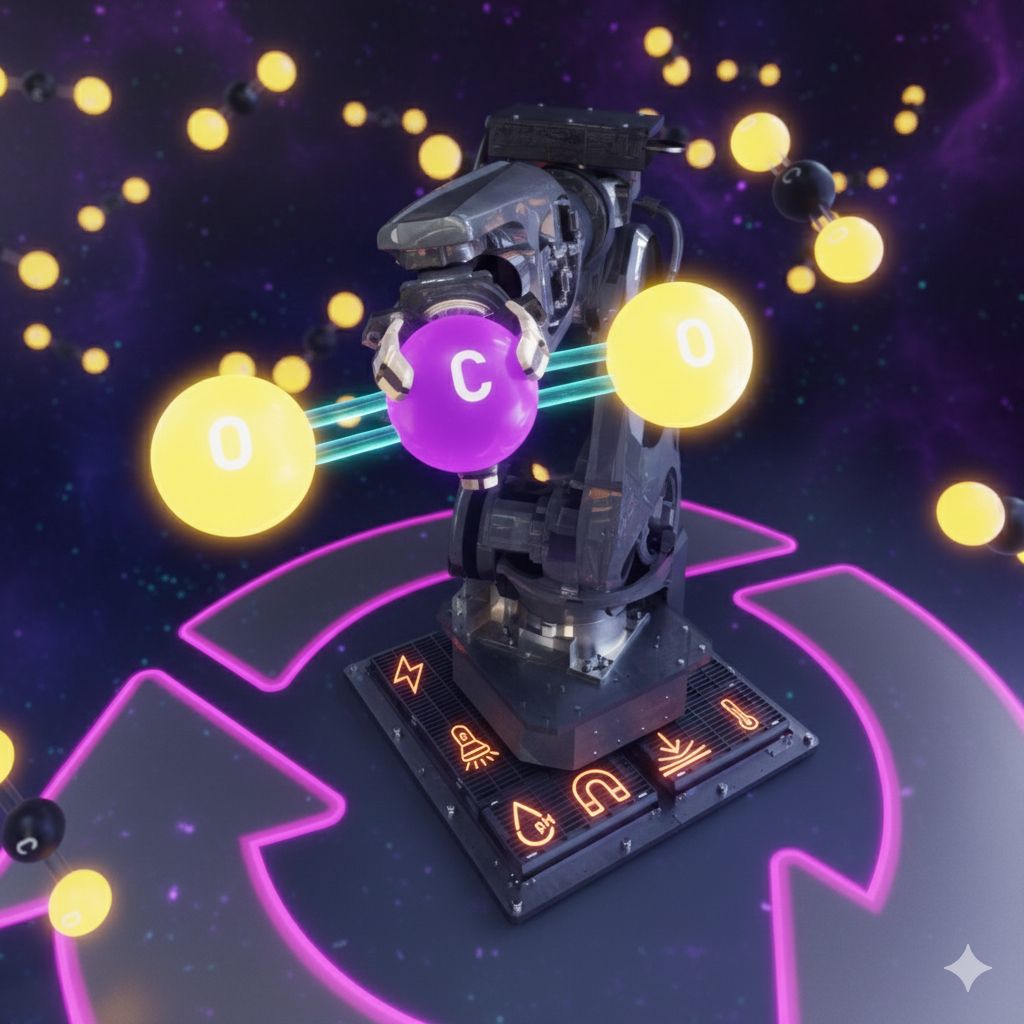
The focus of Götz and his colleagues’ work at the IGB is on the development of the porous structures and the module design. The adsorbents used in these come from the Polymer Chemistry Research Group at Saarland University. “For the membrane modules, we will produce the thermoresponsive CO₂adsorbents in the form of microgel and core-shell particles,” explains Prof. Dr.-Ing. Markus Gallei. His area of expertise lies in so-called ‘smart polymers’, i.e. materials that can respond to external stimuli from their environment – such as changes in the solvent, temperature, light or pH value, as well as mechanical, electrical or magnetic stimuli. “The materials we are using as part of SAFE-CO₂ react to changes in temperature. The thermal phase transition generated in the process can influence the binding properties of CO₂. This allows them to be used in the IGB’s membrane modules as a switch between adsorption and desorption to efficiently control CO₂ capture.”
Another step in the SAFE-CO₂ projectis the characterisation of the membrane adsorbers used. The ZSW in Stuttgart is contributing its expertise to this. The ZSW focuses on research and development in the field of renewable energies and on supporting the market launch of new technological developments. The ZSW has also been researching technologies for direct CO₂capture from the atmosphere for more than 30 years. In addition to developing its own liquid-based technology for direct air capture (DAC), the ZSW operates the “DACLab”, a test laboratory where various DAC approaches are investigated and evaluated. “Our contribution to SAFE-CO₂consists of extensively testing the materials used and assessing how environmentally friendly and cost-effective they are compared to existing solutions ,” says Dr Marc-Simon Löffler, Head of the Renewable Energy Sources and Processes Division at ZSW.
Outlook: Long-term contribution to climate protection
The SAFE-CO2project, which has now been launched, will run until 2029. By then, the participants aim to provide supporting documents to support the claim that direct CO2capture from the air is not only technically feasible, but that it can also be achieved with low energy input and that the developed solution can be used over a longer period. IGB expert Götz sums it up: “In the long term, we want our technology to help offset unavoidable emissions. In doing so, we want to focus on sustainable value chains that promote climate-neutral processes and support the transition to a more environmentally friendly economy.”
Funding
The SAFE-CO2project is funded by the Federal Ministry of Research, Technology and Space (BMFTR) as part of the CDRterra programme. This programme focuses on reducing CO2emissions. The aim is to achieve greenhouse gas neutrality by 2045. To this end, CDRterra supports the development of technologies and processes that permanently remove carbon dioxide from the atmosphere (Carbon Dioxide Removal). The SAFE-CO2project is receiving total funding of around 1,260,000 euros.
Further information: