Information for
 Quick links
 Faculties


The aim is to obtain new, high-precision data that will help to further improve the material. A follow-up series of ISS experiments involving other alloys is already in preparation. The project is funded by the German Research Foundation, DFG.
What makes the International Space Station so valuable for the Saarbrücken materials researchers is the apparent weightlessness experienced on board. At an altitude of around 400 kilometres, the gravitational pull of the Earth is not actually that much smaller than at the Earth’s surface, but because the ISS is travelling forwards at very high speed, it doesn’t fall back to Earth but remains in a continuous free-fall orbit around the Earth – and everything on board appears weightless as a result. This sustained state of suspension is exactly what Busch’s research team at Saarland University needs: droplets of their new alloy that can remain stable and stationary during measurement.
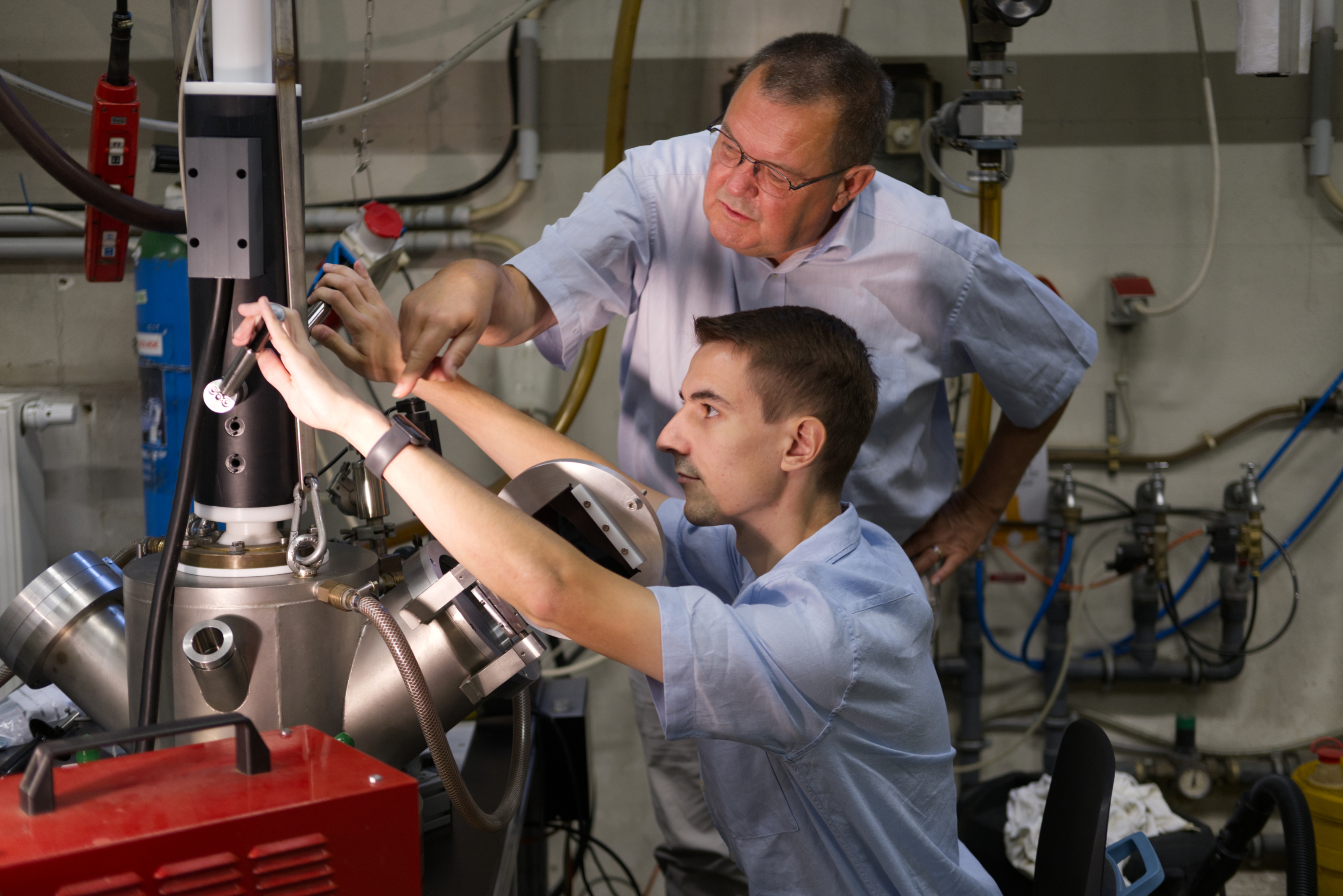
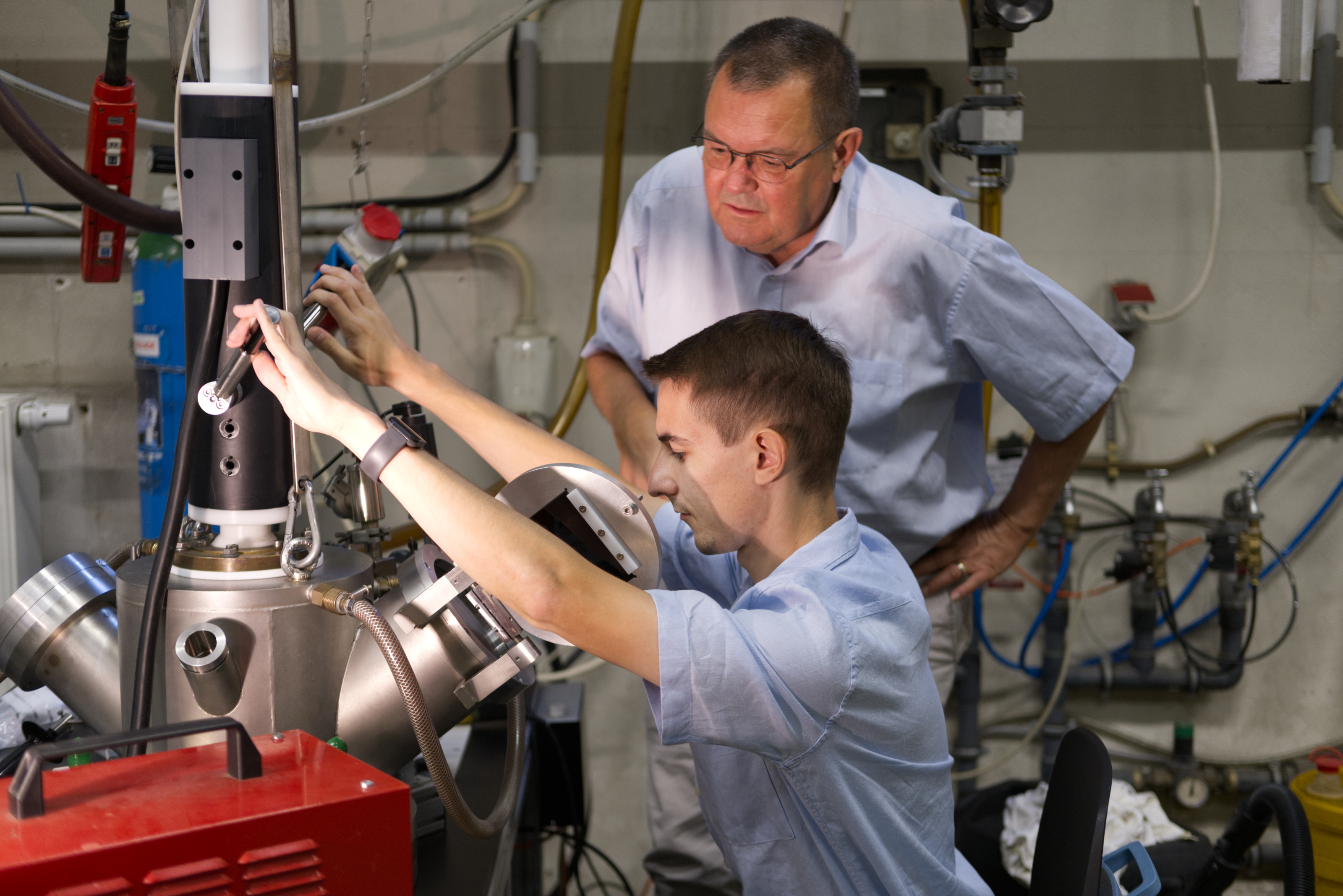
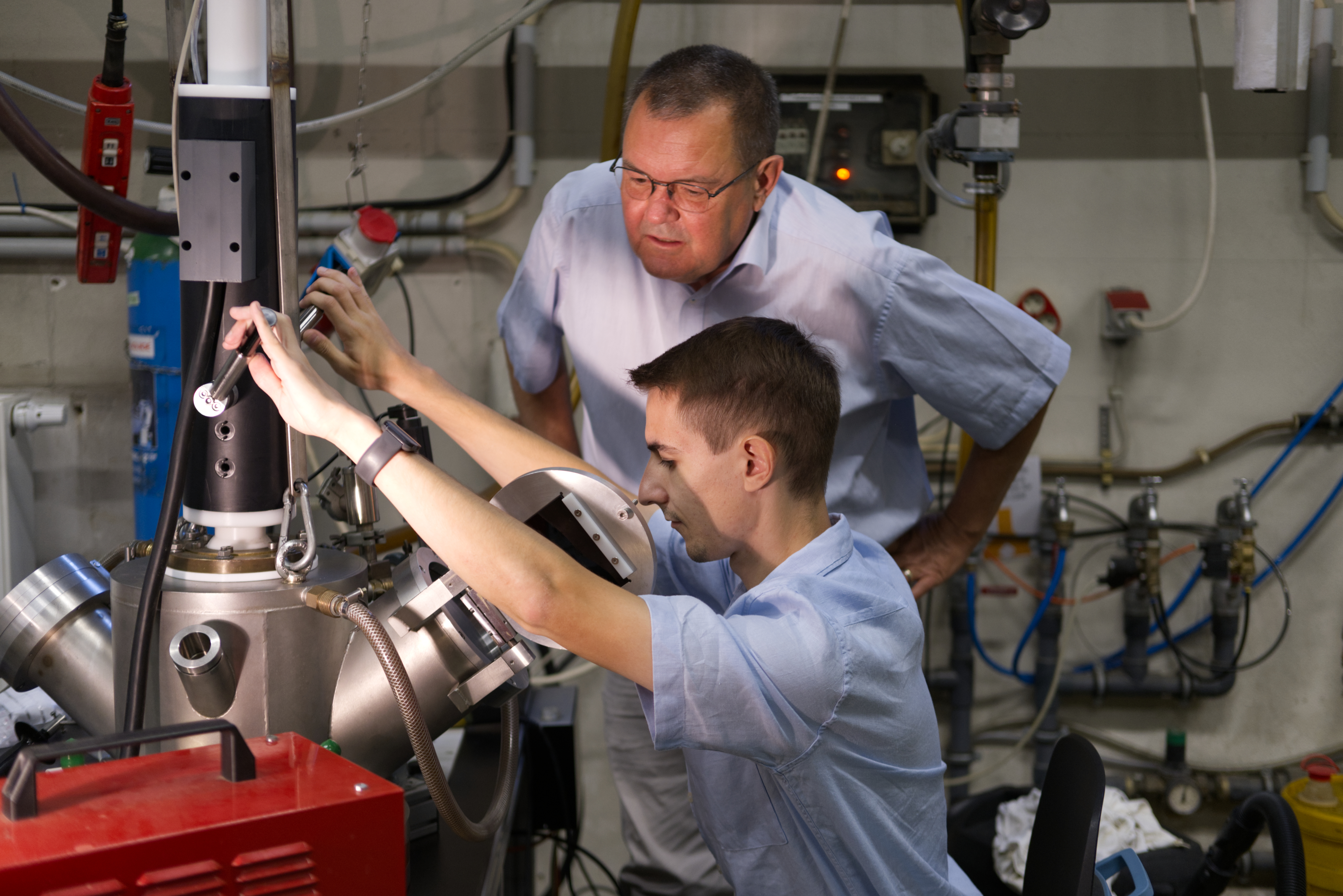
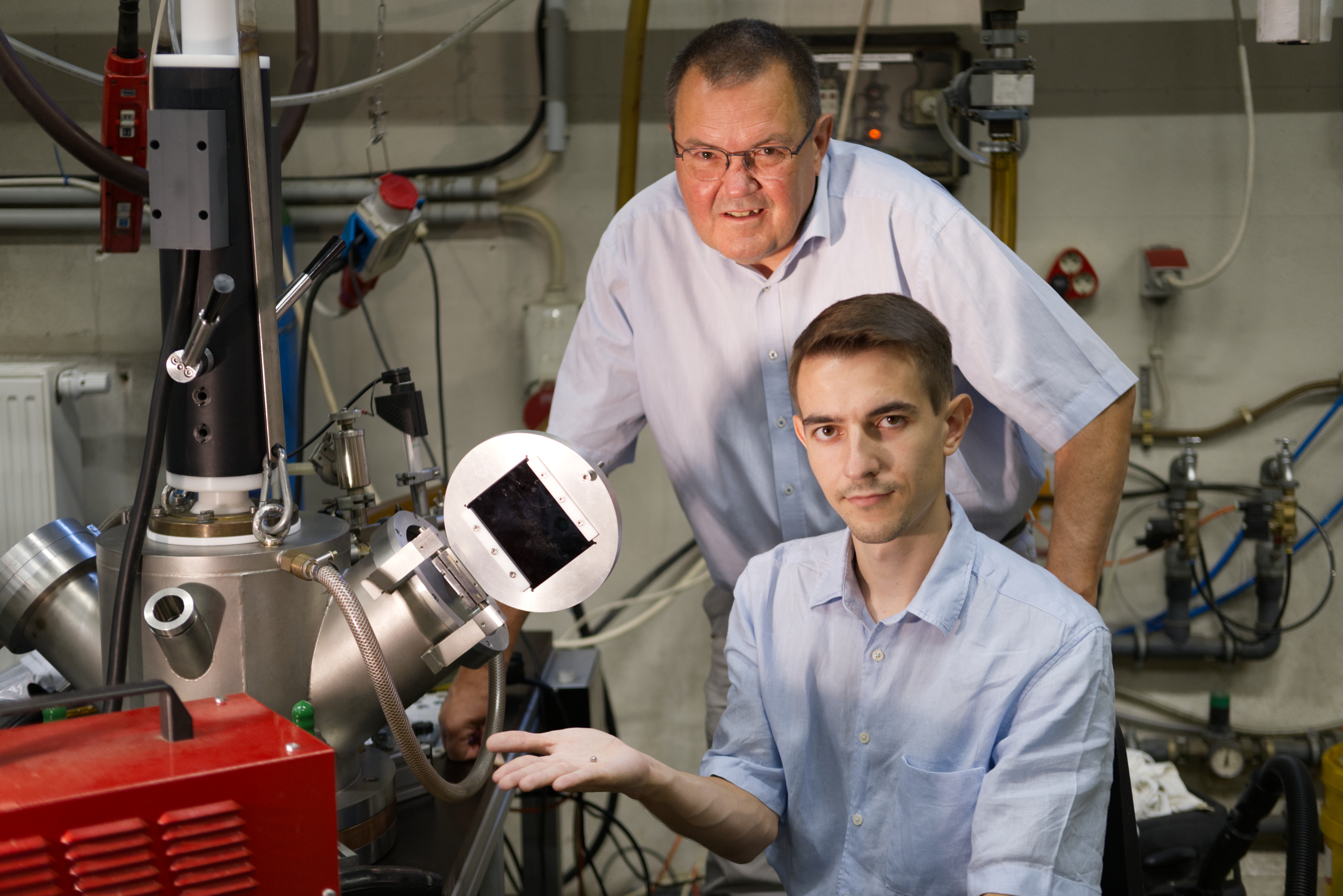
Ralf Busch is one of the international pioneers in the field of metallic glass. Metallic glasses are metals that solidify like glass. In numerous research projects, many of which were funded by the EU, the German federal government and the DFG, Busch and his team have been developing and refining these novel alloys, which can be tailored to have specific properties. The word ‘glass’ should not be interpreted to mean that a metallic glass is fragile. On the contrary, these alloys are stronger than steel. ‘They are also elastic and at elevated temperatures can be formed like plastics, which means they can be processed using techniques such as injection moulding or metal 3D printing,’ says Ralf Busch. This allows metallic glasses to be shaped into complex geometries of almost any kind, a further active area of research for Busch and his team. His research group at Saarland University already holds several patents for novel, ultra-high-strength alloys with new properties.
The metallic glasses being developed in Saarbrücken are new materials whose properties can be tailored for use in engines and machinery. Examples include new components that make electric motors more energy-efficient, as well as screws and geometrically complex parts that are strong enough to withstand the extreme conditions encountered in aerospace applications.
How metals solidify into glass
These metal alloys are described as glasses because of their internal structure. ‘Conventional metals have a crystalline structure, with their atoms arranged in regular lattices,’ explains Professor Busch. Metallic glasses are different: their internal atomic structure is disordered, just like that of glass. ‘The atoms in metallic glasses are not ordered; these materials are amorphous, like glass,’ explains Busch. To achieve this, the researchers develop alloys that are far less prone to crystallization and in which crystal formation is significantly slowed. This makes it difficult for the atoms to arrange themselves in the ordered patterns needed to form crystals, so the molten metal solidifies with its atoms in a disordered state.
The fact that metals can be made to ‘solidify into glass’, and that these alloys also exhibit the right properties for applications such as metal 3D printing, is the result of many years of research. The atomic composition of these alloys has to be very carefully fine-tuned. ‘It takes years to develop an alloy like this. We design them in a multidimensional compositional space in order to get alloys that crystallize more slowly and that show the right combination of properties,’ explains Busch. For decades, his research has involved collaboration with partners including NASA, the Jet Propulsion Laboratory, which builds and operates satellites and space probes for NASA, and the German Aerospace Center.
High-strength nickel-based alloys bound for the ISS
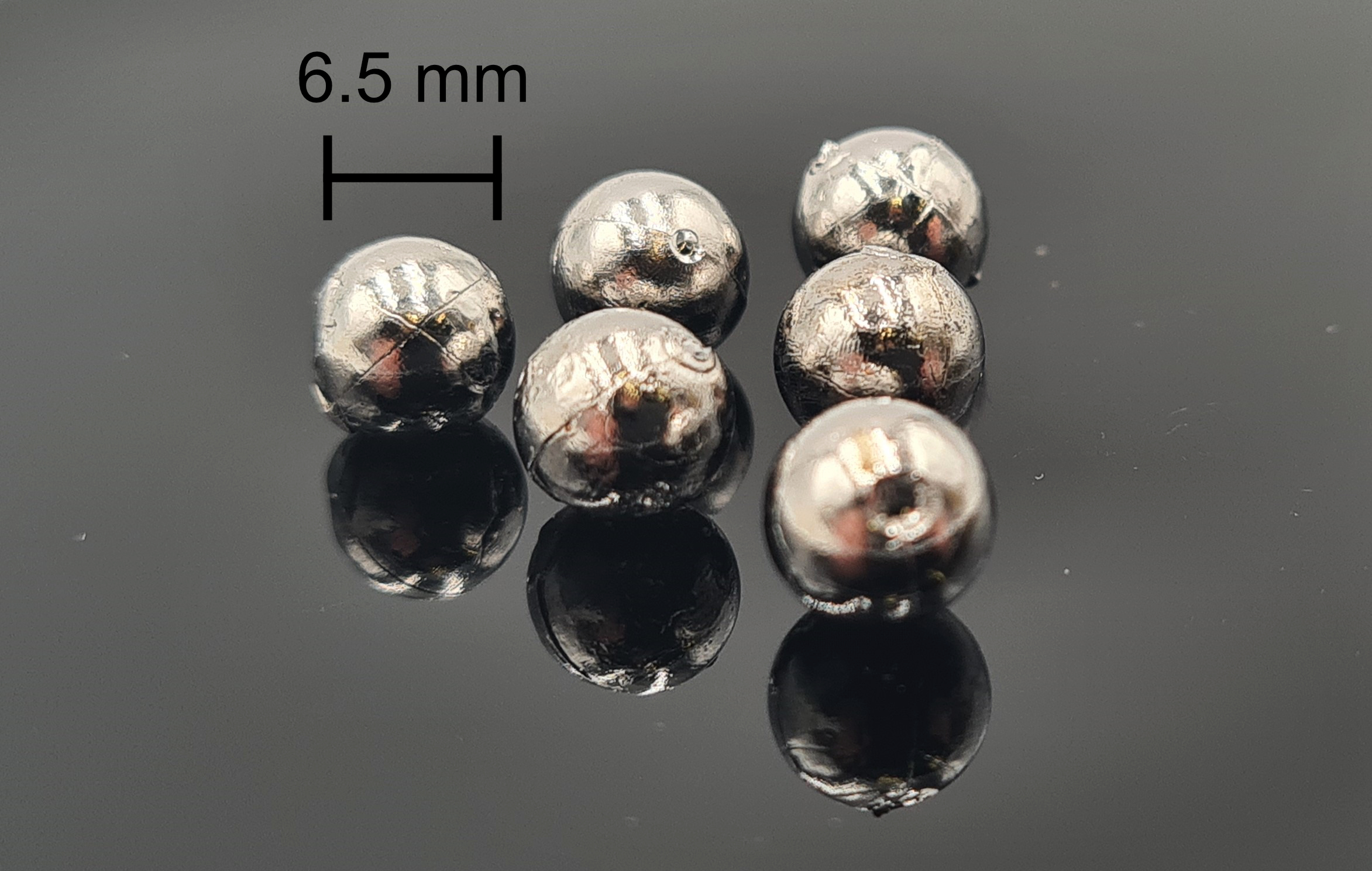
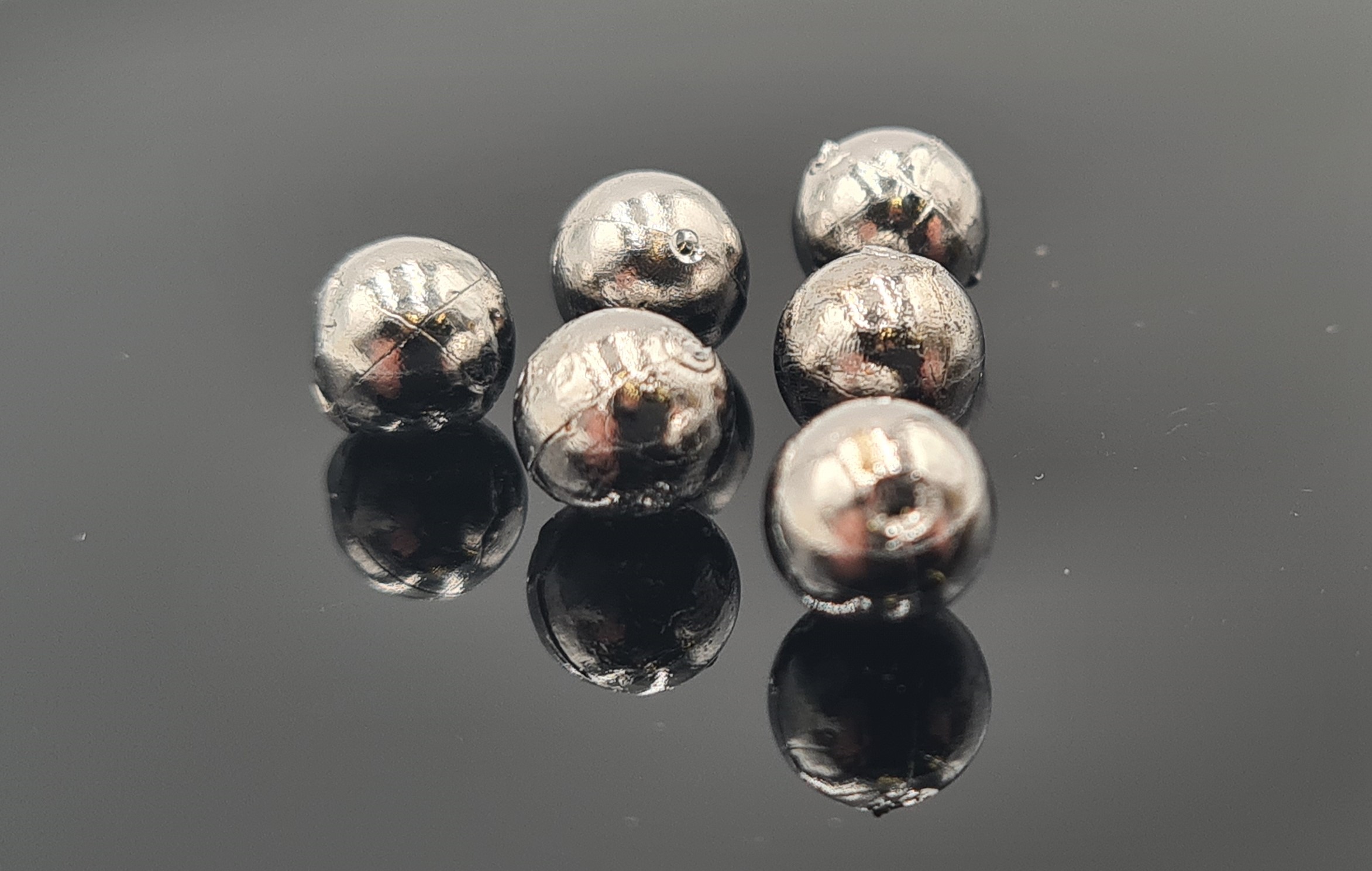
The experiments in the space station are scheduled to be carried out from 31 August to 4 September and will focus on nickel-niobium and nickel-niobium-sulfur alloys. Nickel-niobium alloy was first developed at the Massachusetts Institute of Technology, MIT, in the United States back in 1967. The nickel-niobium-sulfur alloy comes from Busch’s laboratory on the Saarbrücken campus. By studying the alloys under near-weightless conditions on the ISS, his team aims to broaden scientific understanding of the physical properties of metallic glass. The experiments to be performed on the ISS will examine levitated droplets heated to temperatures of up to 1,700 degrees Celsius, in order to study material properties such as surface tension, viscosity, thermal expansion, supercooling, oscillation behaviour and heat capacity. ‘The alloy is highly reactive, so on the ISS we don’t need a crucible to melt the beads,’ explains Busch. The metallic-glass beads that were specially produced on the Saarbrücken campus by Lucas Ruschel, a former doctoral researcher in Busch’s group, have already been flown to the ISS. They have been certified on the basis of tests carried out on Earth that they pose no risk on board the ISS.
The experiments will be carried out in ESA’s Columbus module, using the Electromagnetic Levitator, EML, which was installed in 2014 by German ESA astronaut Alexander Gerst. Lucas Eisenhut, another doctoral student in Ralf Busch’s research group, has a full week of measurement time on the ISS. He will be controlling the experiments from the DLR control centre in Cologne together with Dr. Fan Yang, a senior researcher working towards his habilitation in Ralf Busch’s group in Saarbrücken. ‘The ISS will transmit a live stream of the experiments to the control centre, which enables us to observe what’s happening in real time. We can send commands directly to the levitator on the ISS, which allows us to adjust process parameters and to influence the sample and the experimental conditions,’ explains Lucas Eisenhut.
Why a levitating droplet on Earth is not enough
Preparations for the space tests have been under way for years. The researchers have repeatedly levitated hot droplets of the alloy on Earth: in vacuum, and in electromagnetic and electrostatic fields at DLR in Cologne. At DESY, the German Electron Synchrotron facility, droplets were examined using X-rays. Lucas Ruschel, who completed his doctorate in Busch’s research group, undertook a total of 30 parabolic flights over the Atlantic off the coast of France in a single day in order to study the droplets during brief phases of weightlessness, each lasting around 22 seconds.
For the Saarbrücken research team, however, these short test phases are not long enough and there are too many interference factors that affect measurements on Earth. The conditions in space on the ISS are much better. ‘We expect results significantly more precise than those so far conducted on Earth. Here, the force we need to counteract gravity and keep the droplet in position is far greater than it is on the ISS. Under the near-weightless conditions on the ISS, we only need to apply far smaller forces to keep the droplet stationary – and that is a huge advantage,’ explains Ralf Busch. On Earth, phenomena, such as flow patterns within the droplet, can interfere with the measurement. ‘Another major advantage is the much longer experiment time under near-weightless conditions. On the ISS, we can run several experimental cycles a day, each lasting up to 45 minutes, which gives us several hours of measurement time in total. This makes it possible to conduct more extensive experiments and obtain more meaningful results than during 22-second parabolic flights,’ adds doctoral student Lucas Eisenhut.
The aim is to use the new and hopefully highly precise measurement data to further improve the material and to develop new materials for spaceflight, medical technology, high-performance components and even everyday products. Metallic glass beads made from other alloys have also been developed by Busch’s team and preparations are now under way for testing these materials, such as a palladium-nickel-phosphorus alloy, on a future mission to the ISS.
Materials science in Saarbrücken enjoys close ties with space research more broadly. The team led by Busch’s colleague Professor Frank Mücklich has also conducted research on the ISS, investigating surfaces that prevent pathogens like bacteria and viruses from sticking to the surface and proliferating. Those experiments were supervised on board by ESA astronaut Matthias Maurer, who himself studied materials science and engineering at Saarland University.
The project is supported by the German Research Foundation, DFG, and the European Space Agency, ESA. The Institute of Materials Physics at the University of Münster, led by Professor Gerhard Wilde, and DLR’s Institute for Frontier Materials on Earth and in Space (Professor Andreas Meyer) are also involved in the ISS measurements and the preparatory work.
Questions can be addressed to:
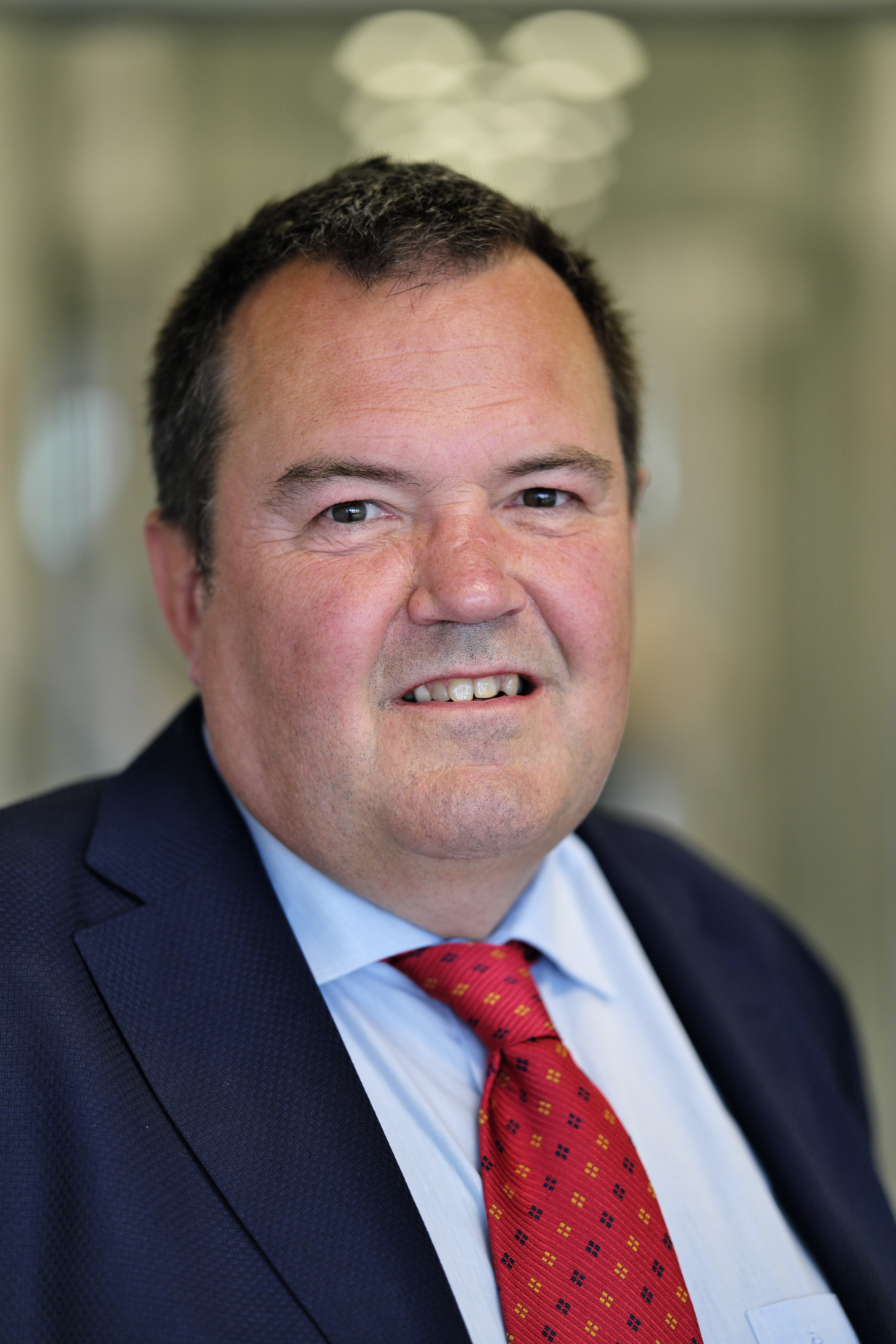
Professor Ralf Busch (Chair of Metallic Materials at Saarland University)
Tel.: +49 0681 302-3208, Email: r.busch@mx.uni-saarland.de
Press photographs:
Press photographs can be used free of charge with this press release or in connection with reports about Saarland University provided that a photo credit with the photographer’s name is included.