Information for
 Quick links
 Faculties


To investigate the material properties of paper in greater depth, the German Research Foundation (DFG) is funding a new Collaborative Research Centre 'Functional Papers' at the Technical University of Darmstadt from October 2026. Markus Gallei, Professor of Polymer Chemistry at Saarland University, is one of the researchers involved.
The following text has been machine translated from the German with no human editing.
Paper is one of the most widely used materials. However, it is not only used in books and as packaging in the ubiquitous mail-order sector. “Beyond these standard applications for the mass market, where paper serves as a carrier material, the unique properties of paper could inspire a multitude of new application scenarios that go far beyond current uses of paper,” explains Markus Gallei, Professor of Polymer Chemistry at Saarland University. These could include, for example, its use as a lightweight construction material, the construction of high-tech sensors in medicine, and 4D-printed, paper-based robots (‘Paperbots’).
Paper has a further, decisive advantage in this regard: it is produced on a large scale from renewable raw materials, primarily wood. “Paper has one of the highest recycling rates, and most paper materials decompose completely when released into the environment. This combination of biological origin and complete biodegradability makes paper one of the most sustainable materials in use today,” says Markus Gallei, highlighting further advantages of this ubiquitous material.
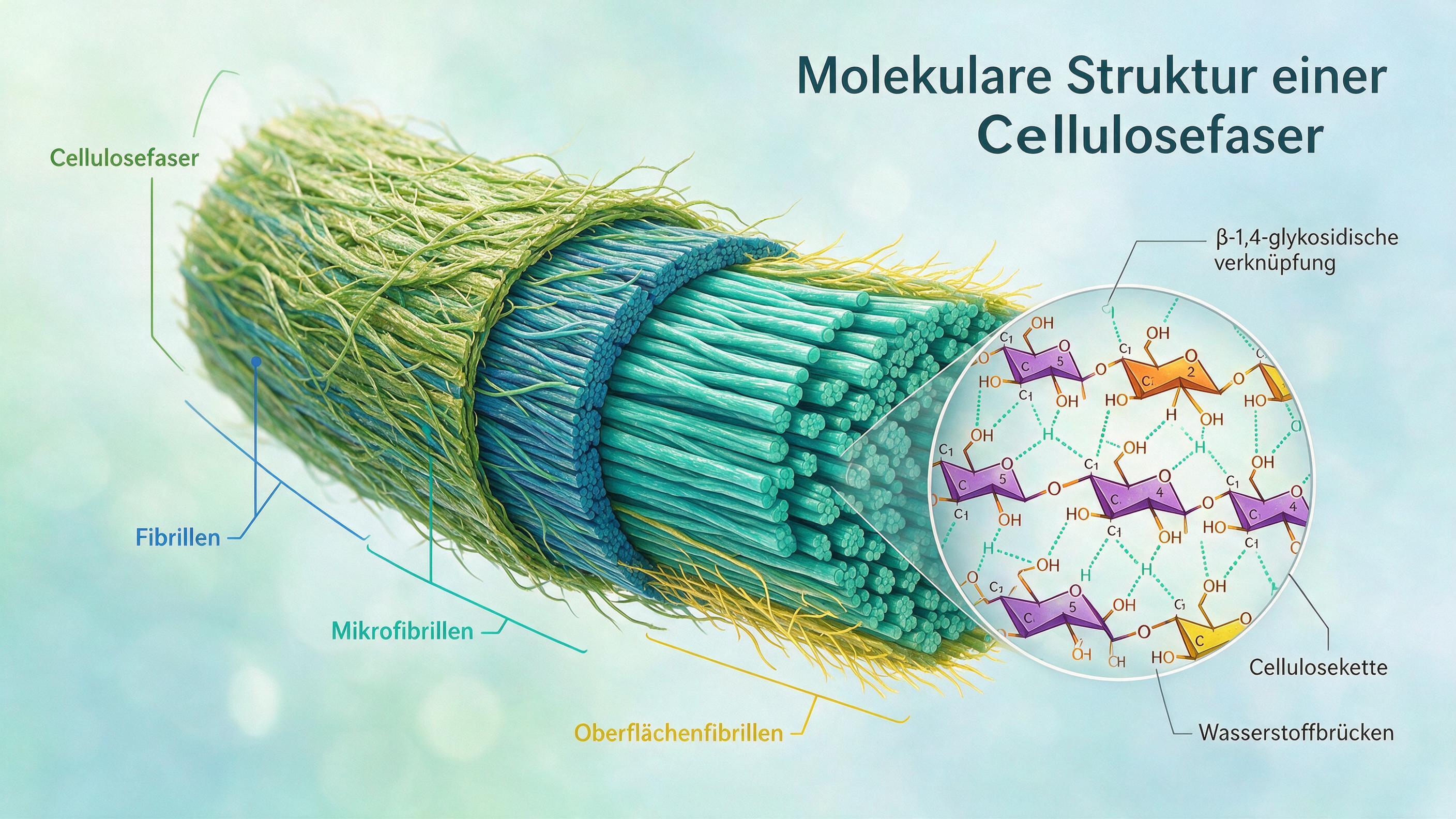
However, the relationship between the chemical and geometric structure of paper is not yet sufficiently understood, meaning it is not possible to control the property profile of paper to the extent required to realise these visions. One of the reasons is the complexity of the underlying cellulose fibres (see figure) and their interaction within the composite structure of paper.
Only by understanding how the structure of paper influences its properties will it be possible to develop functional, tailor-made paper-based materials to expand the current uses of paper and to further develop entirely new or emerging areas of application. To achieve this overarching goal, the collaborative research centre ‘Functional Papers’ will thoroughly investigate the relationships between fibre and paper structure, manufacturing processes, and the properties of the finished paper product and its applications.
The collaborative research centre comprises three project areas: A. Paper Manufacturing, B. Understanding Paper, and C. Paper in New Applications. Markus Gallei and his team are leading Project A04 within the consortium. It focuses on the development of novel paper materials whose properties are specifically modified using specially developed chain molecules (block copolymers). These polymers form tiny pores on and between the paper’s cellulose fibres, which influence how liquids and gases are absorbed, transported or retained. In the long term, the aim is to create functional, resource-efficient and easily recyclable paper-plastic hybrids whose wetting and transport properties can be precisely controlled (i.e. not only 3D but also 4D) and which can be used, for example, in sensors or intelligent bio-based membrane systems.
The collaborative research centre (SFB) ‘Functional Papers’ will commence on 1 October 2026 and will initially receive funding until 2030. The spokesperson is Markus Biesalski, Professor of Macromolecular Chemistry and Paper Chemistry at TU Darmstadt. In addition to the lead institution, TU Darmstadt, and Saarland University, the project involves the University of Freiburg, Friedrich-Alexander University Erlangen-Nuremberg, Mainz University of Applied Sciences, the University of Stuttgart and the Heidenau Institute for Fibres & Paper.
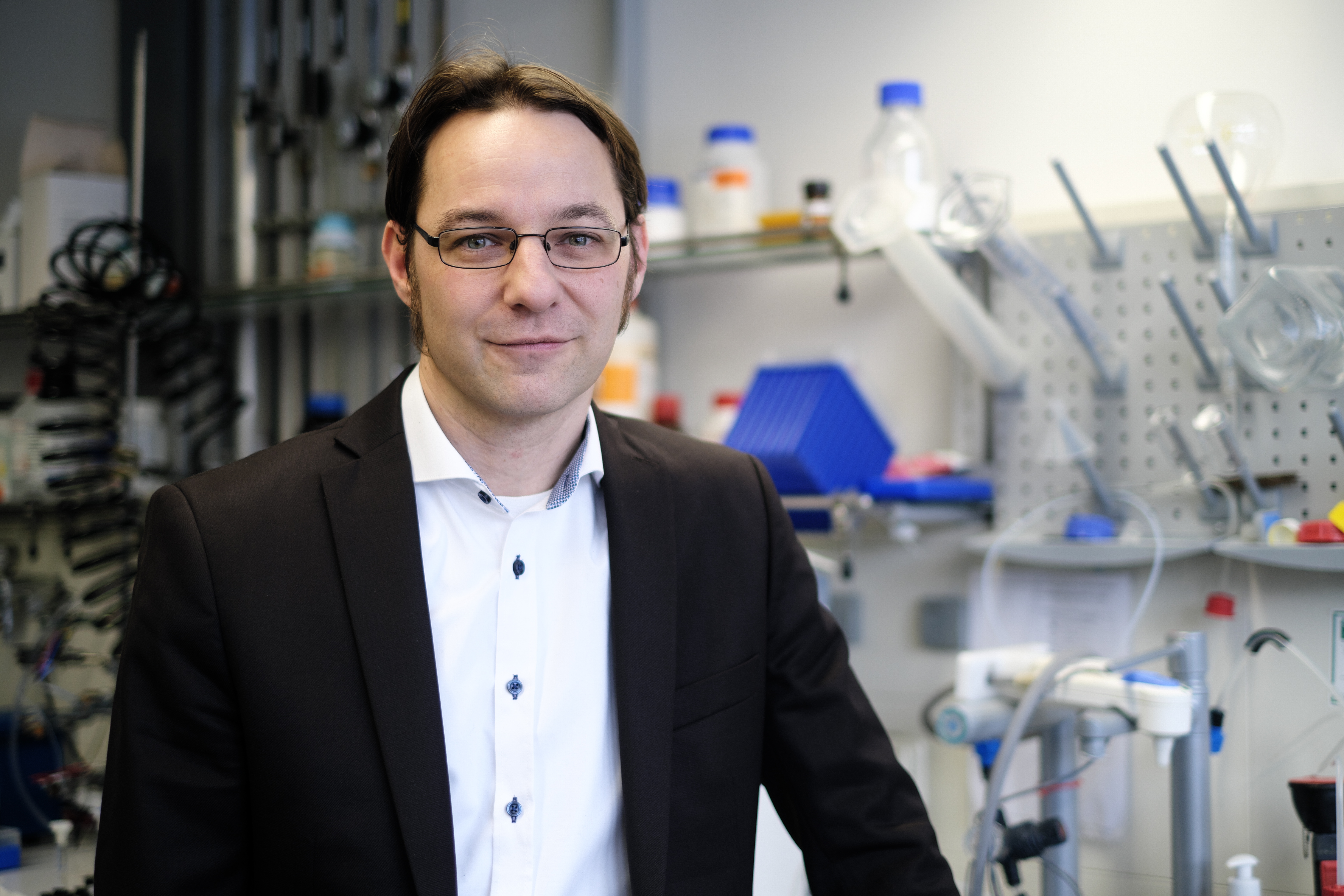
A press photo and an infographic can be found at the very bottom of this news webpage. You may use the press photos free of charge in connection with this press release and reporting on Saarland University, provided you credit the photographer.
Background information is available at:
saarene – Saarland Centre for Energy Materials and Sustainability
For enquiries, please contact:
Prof. Dr.-Ing. Markus Gallei
Tel.: 0681 302-4840