Information for
 Quick links
 Faculties


The Saarland Ministry of Economic Affairs, Innovation, Digitalization and Energy is providing approximately €580,000 in funding through the European Regional Development Fund programme ‘Investment for Growth and Jobs’.
Joint press release issued by KIST Europe and Saarland University
From arsenic and lead to mercury and zinc, heavy metals can find their way into the environment and aquatic ecosystems through a wide range of routes. Some are released by industry and mining, while others come from vehicle emissions, agriculture, pesticides and waste, or from natural processes such as volcanic activity. Once absorbed by plants and animals, these pollutants enter the food chain and can ultimately reach the human body. If they accumulate in organs and tissues, they can cause serious harm to human health, generating substantial long-term costs for society.
A joint project involving researchers from Saarland University and KIST Europe is seeking to address this problem. ‘Our aim is to remove heavy metals from aquatic environments. To do this, we’re developing a novel method using an interdisciplinary approach,’ says experimental physicist Professor Uwe Hartmann of Saarland University. The team is developing vast numbers of nanoscale biological ‘fishing hooks’ that will be used to capture the heavy-metal particles and retrieve them from the water. The physicists in the group are currently developing the technology needed to be able to detect heavy metal particles in aquatic environments. These particles will then be captured by the nanoscale hooks being developed by the microbiologists at KIST Europe.
Fishing for heavy-metal particles using specialized molecular ‘hooks’
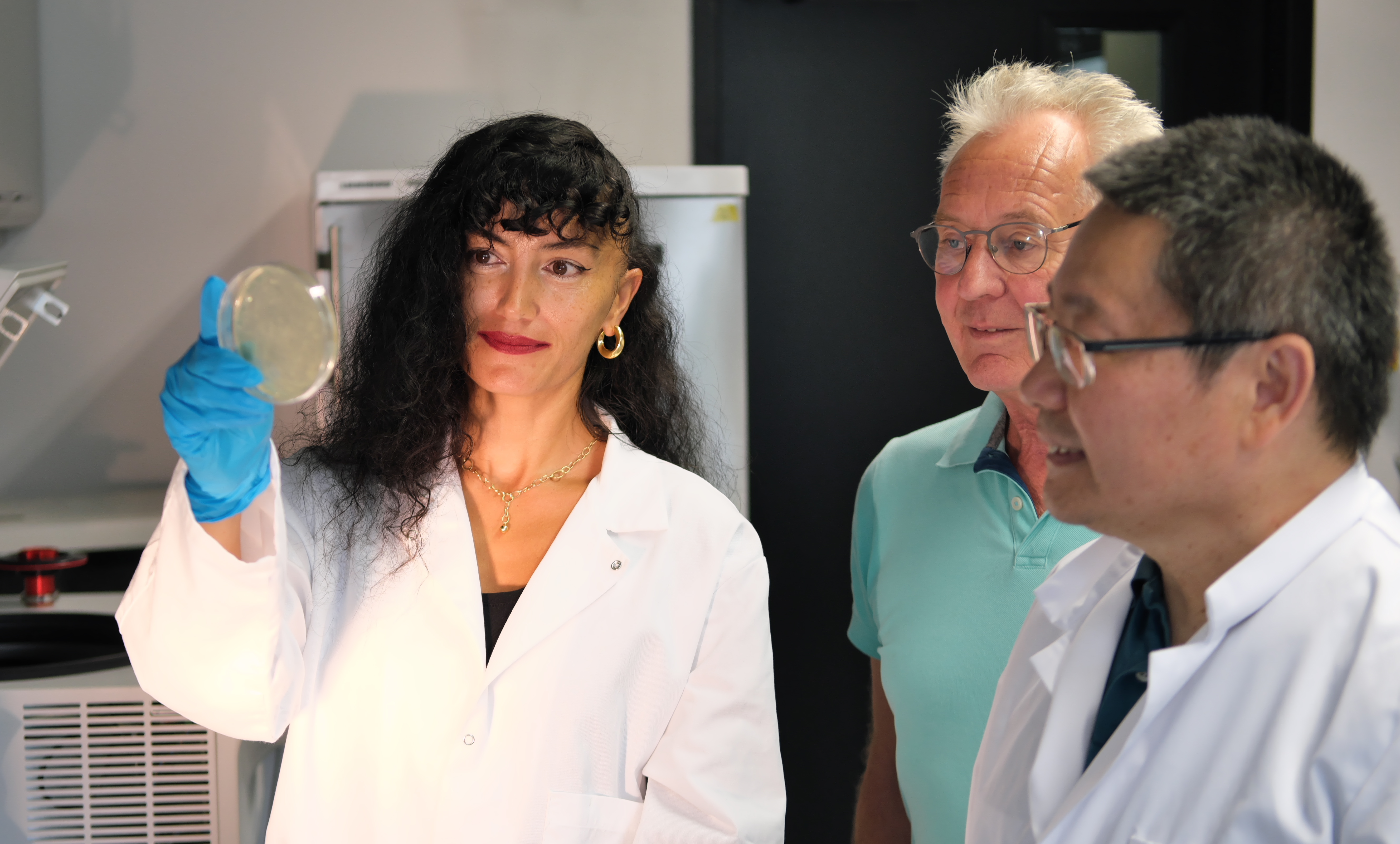
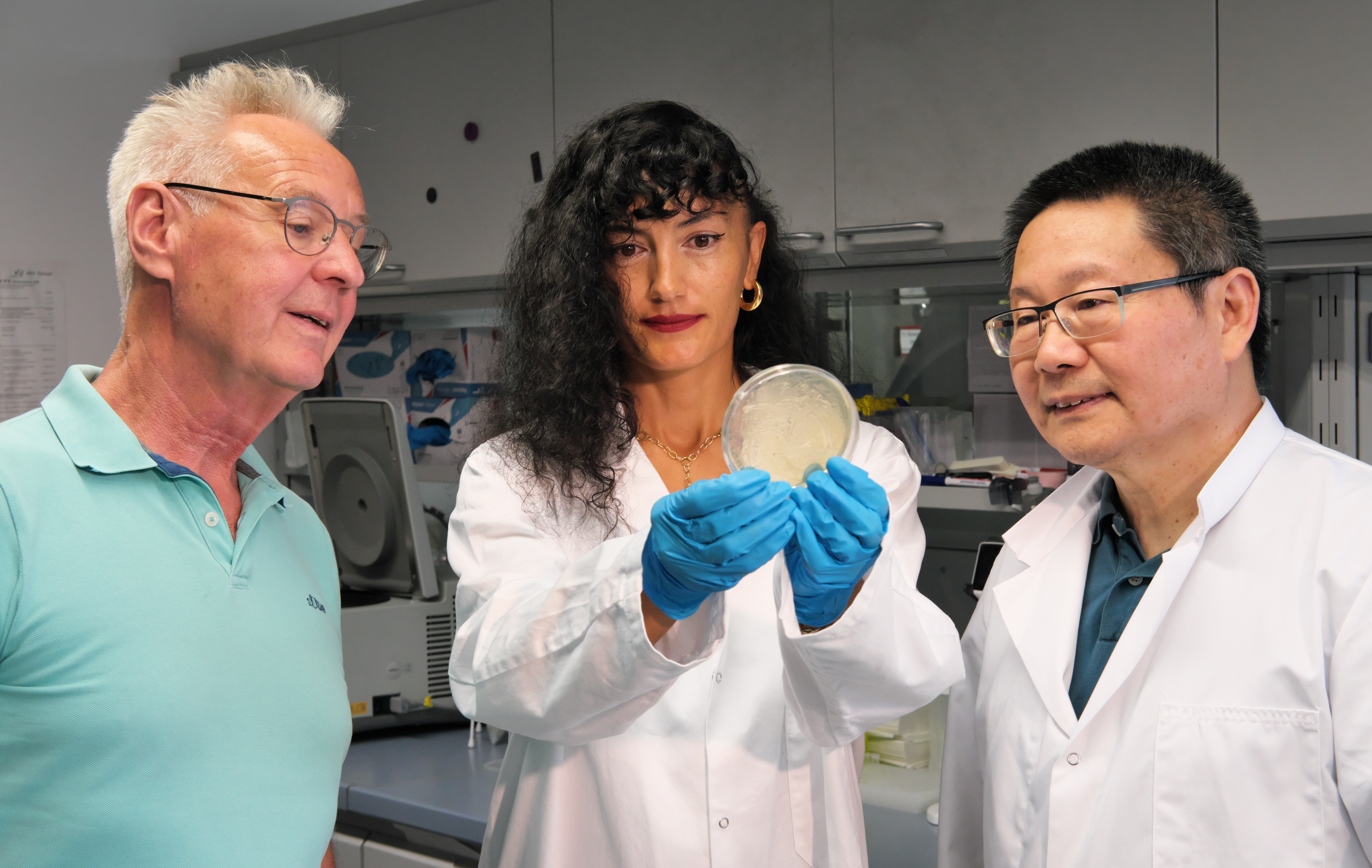
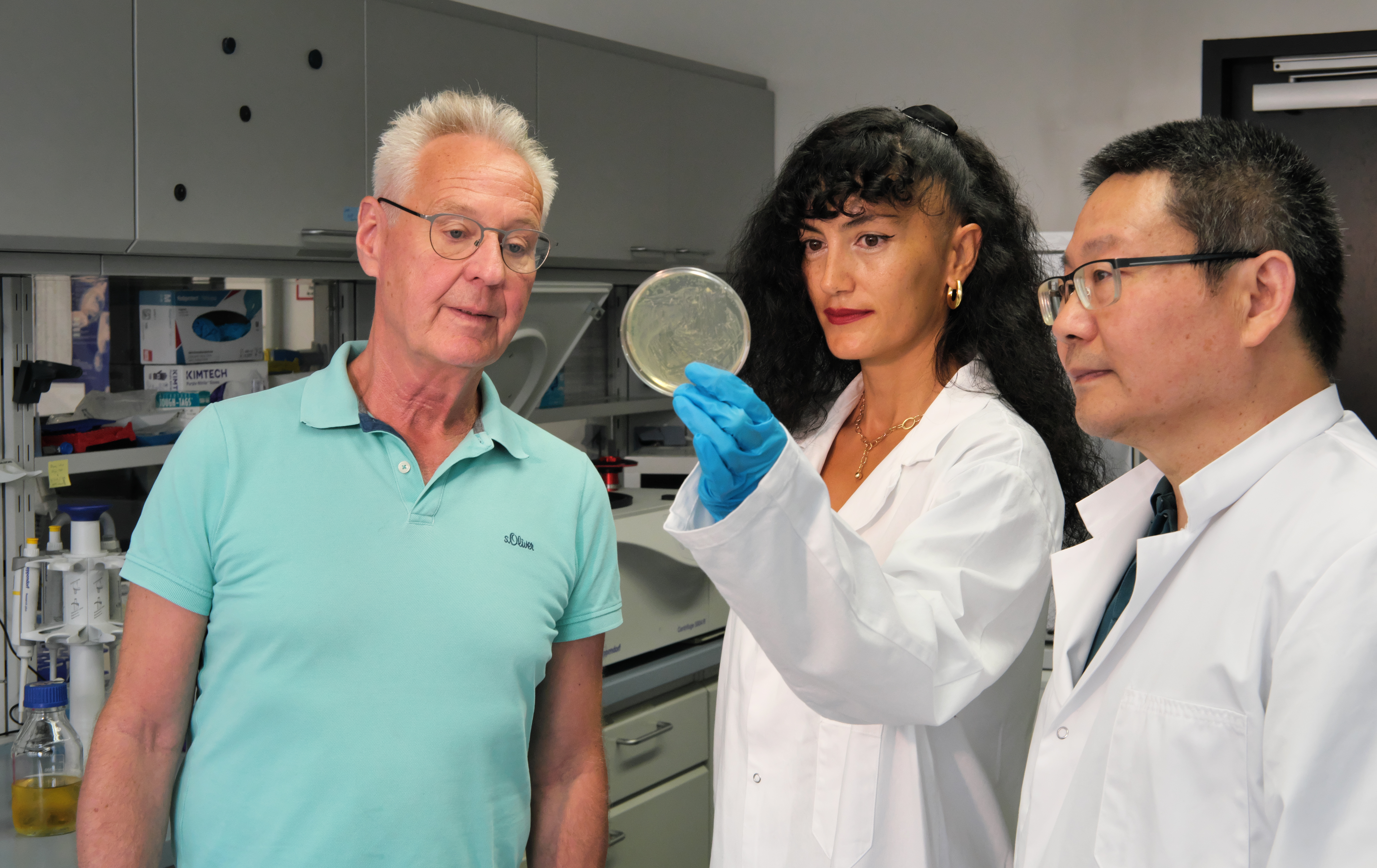
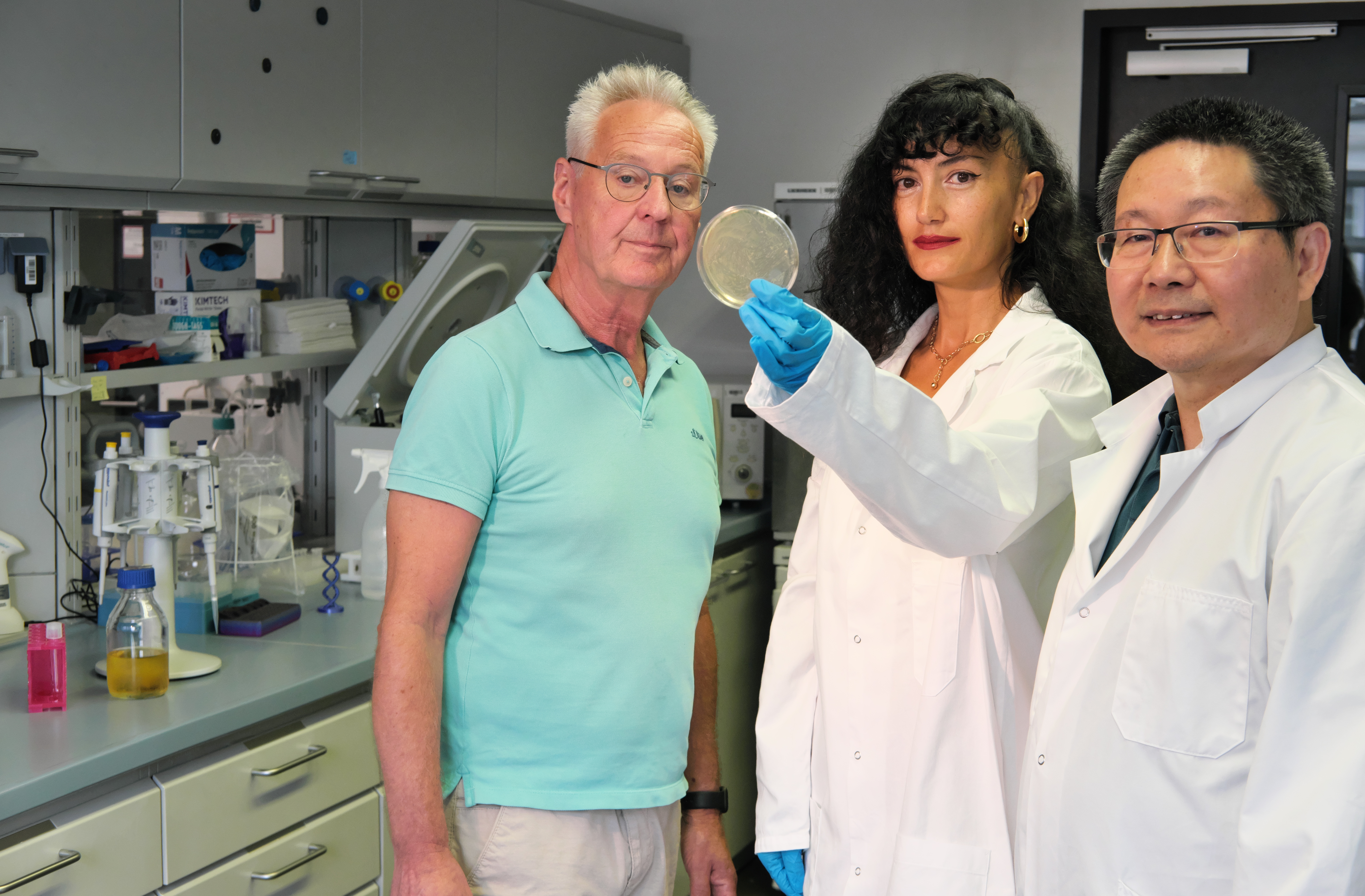
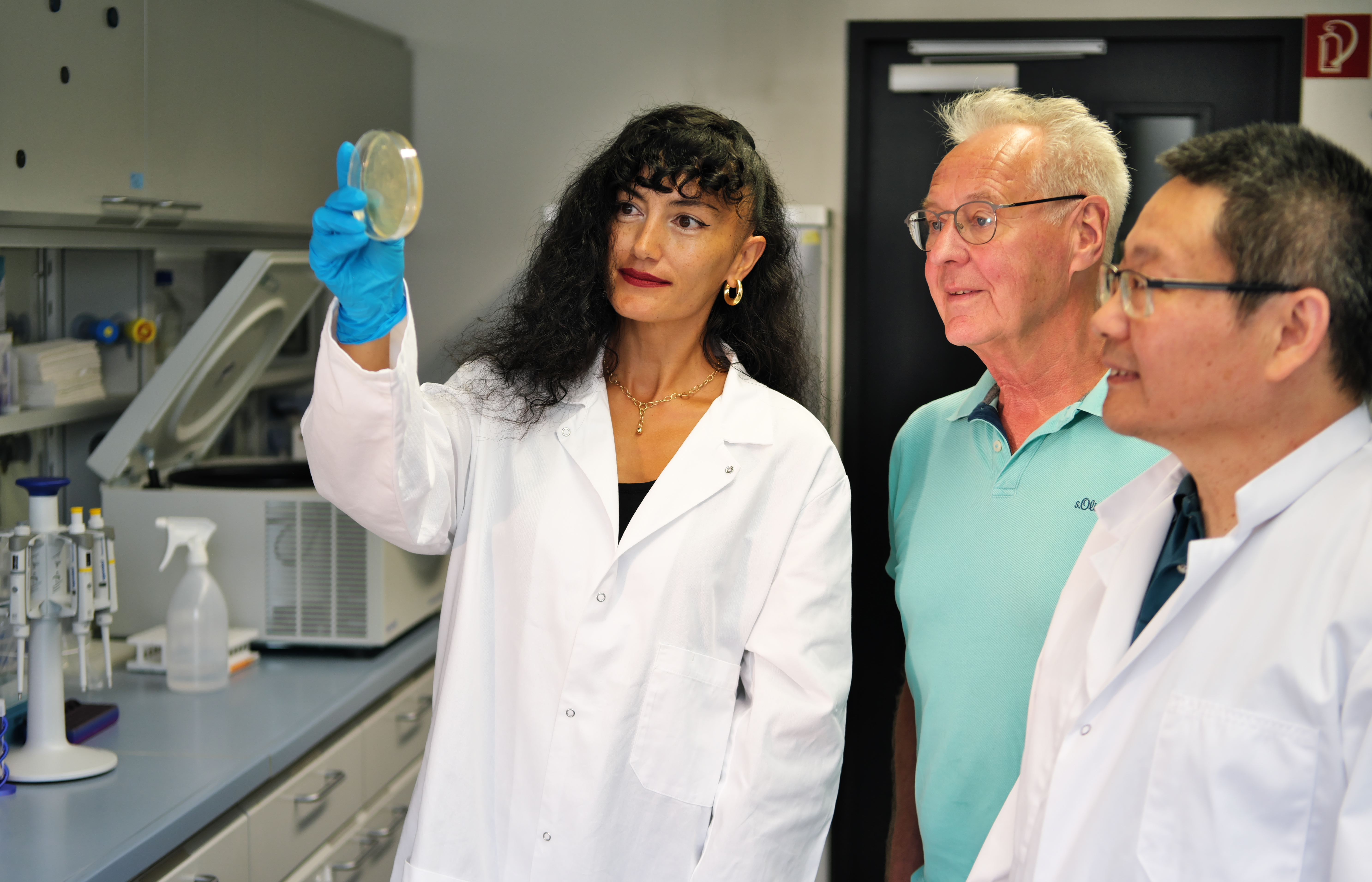
Dr. Nuriye Korkmaz Zirpel, a molecular biologist at KIST Europe, is using a specialized laboratory technique known as phage display, which is also employed in the development of new active pharmaceutical compounds. ‘Phages are viruses that are harmless to humans and animals. They only infect bacteria and they can’t replicate independently without their bacterial host cells,’ she explains. But phages have a unique property: they can be engineered to display molecules on their outer surface that are capable of binding specific substances – effectively providing them with a coat of molecular fishing hooks. ‘These hooks are peptides that are attached to the surface of the viruses. In our case, the peptides are designed to bind heavy-metal ions,’ explains Korkmaz Zirpel.
The initial stage involves the molecular biologist searching for suitable peptides that can act as hooks. By modifying the viral DNA, she can induce the phages to display different peptide hooks on their surfaces. To identify which phages and which peptides bind heavy-metal particles most effectively, she exposes billions of these harmless viruses to the target metals. She then selects and replicates the most successful candidates. In addition, Korkmaz Zirpel modifies the viral surface so that it displays multiple copies of the most effective peptide hooks rather than just one. The ultimate goal is to produce a phage-display system composed of molecular hooks that are highly effective in binding heavy metals. ‘These peptides will selectively recognize their target heavy-metal species and will subsequently be used as biorecognition elements in a biosensor,’ explains Nuriye Korkmaz Zirpel.
Highly sensitive sensor system for pollutant detection and removal
The experimental physicists in Professor Uwe Hartmann’s research group in Saarbrücken are developing technology that can detect the heavy-metal particles bound to the phages and then remove them from the water. Hartmann’s group specializes in highly sensitive sensor technologies and their use in a broad range of practical applications. ‘Our role in this project is to develop a portable biosensor system based on field-effect transistors that can detect whether the phages have bound heavy metals,’ explains Dr. Haibin Gao, a physicist in Hartmann’s team.
Field-effect transistors, or FETs for short, are essentially electronic switches that control the flow of electrical current. Even extremely small changes in the electrical environment around a transistor alter the current flow and generate measurable signals. In this case, the researchers are training the sensors to distinguish the signal changes produced by different heavy metals and are optimizing them so that these metals can be detected with a high degree of reliability.
This involves tailoring the components of the field-effect transistors to the specific requirements that arise when heavy-metal particles bind to peptides on viral surfaces. ‘We are designing and fabricating field-effect transistors using laser lithography and sputter deposition techniques,’ explains Gao. These techniques enable the researchers to structure and coat the sensors so that they can detect the different pollutants with a high degree of precision. ‘To boost sensor sensitivity and improve their ability to detect heavy metals, we’re also using carbon nanotubes as the FET channel material,’ says Gao.
The research team is currently evaluating the technology in a series of experiments involving different water samples. ‘At the present time, we are testing the first generation of our FET-based sensor system and expect to be able to demonstrate proof of concept very soon,’ says Haibin Gao. ‘In the longer term, one of the questions we are investigating is how AI-based algorithms can help us minimize interference from factors that disrupt the measurements,’ says the researcher.
Once the heavy-metal particles can be detected by the field-effect transistors and captured by the phage-based ‘hooks’, the next step will be to research and develop environmentally friendly methods of removing them from the water. ‘Looking further ahead, we plan to explore whether the phages could also be linked to magnetic nanoparticles, enabling the resulting complexes to be removed from the water using magnets,’ explains Uwe Hartmann. ‘We also want to explore how heavy-metal detection and removal can best be combined in practical applications, and how several heavy metals can be detected simultaneously to make the method more effective,’ says Hartmann, outlining the team’s longer-term plans for this novel technology.
Questions can be addressed to:
Professor Uwe Hartmann: +49 681 302-3799
Email: uwe.hartmann(at)uni-saarland.de
Dr. Haibin Gao: +49 681 302-3654
Email: haibin.gao(at)uni-saarland.de
Dr. Nuriye Korkmaz Zirpel, +49 681 938-2252
Email: n.korkmaz(at)kist-europe.de
Press photographs:
Press photographs can be used free of charge with this press release or in connection with reports about Saarland University provided that a photo credit with the photographer’s name is included.