Information for
 Quick links
 Faculties


The researchers from Hannover Medical School (MHH), Saarland University Hospital (UKS) and the Helmholtz Institute for Pharmaceutical Research Saarland (HIPS) published their findings in the journal npj Antimicrobials and Resistance.
The following text has been machine translated from the German with no human editing.
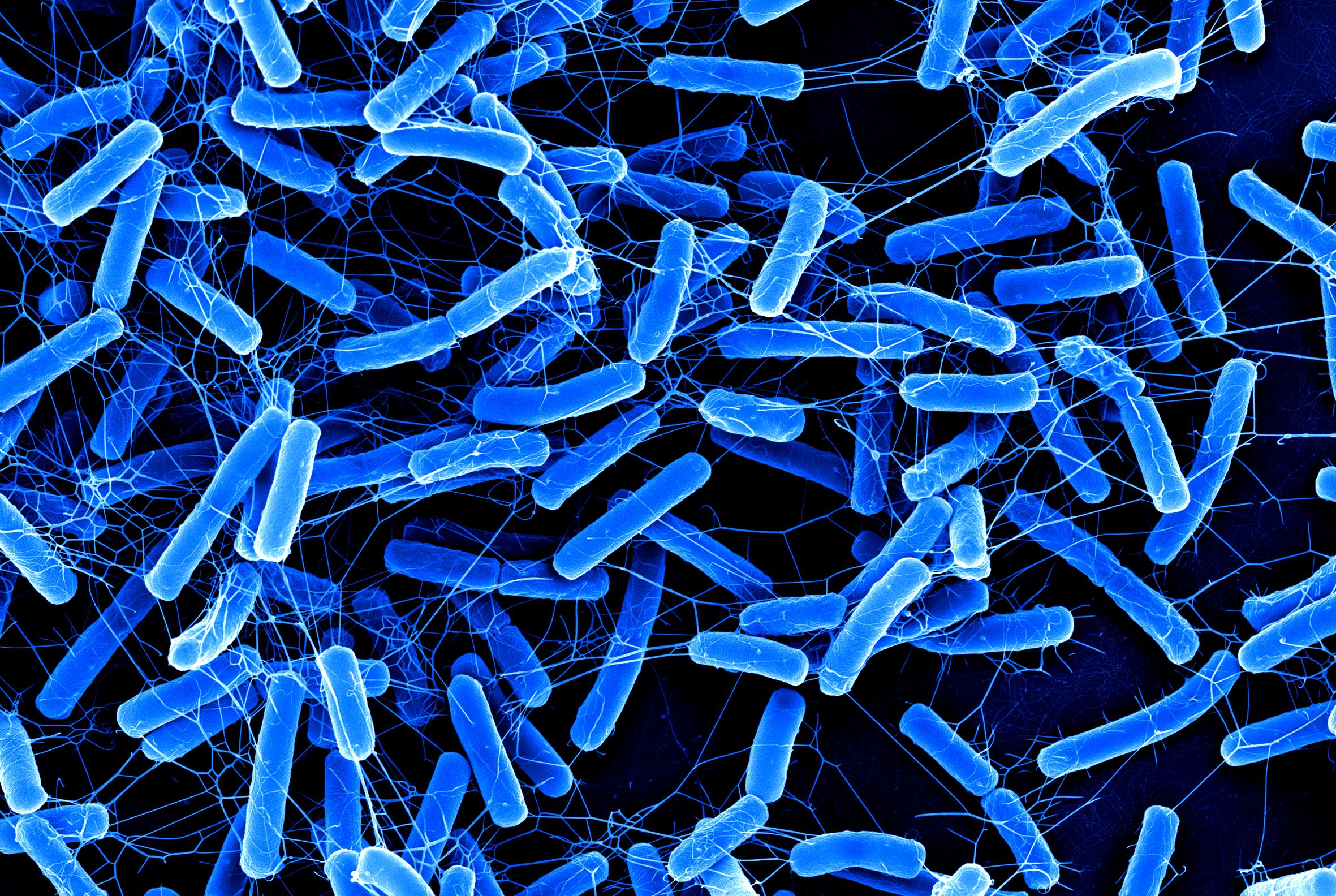
The pathogen Clostridioides difficile (C. difficile) is naturally present in the gut of many people. In small numbers, its presence usually causes no symptoms. However, treatment with broad-spectrum antibiotics can severely disrupt the balance of the healthy gut microbiome, allowing the bacterium to multiply unchecked. The result is acute intestinal inflammation, which can also become chronic. Such infections with C. difficile (CDI) are one of the main causes of antibiotic-associated diarrhoea. As the bacteria release toxins that can lead to dangerous, sometimes life-threatening intestinal inflammation with high relapse rates, new therapeutic approaches are urgently needed.
A research team led by HIPS Head of Department and Scientific Director Professor Rolf Müller has now identified a candidate compound that specifically kills C. difficile whilst sparing large parts of the microbiome. “We were able to demonstrate that the natural compound argyrin B is highly effective against CDI: both in laboratory experiments and in a mouse model of the infection, where it significantly reduces the bacterial load,” says Jennifer Herrmann, a pharmacist with a PhD and senior scientist in the ‘Microbial Natural Products’ department at HIPS. “An antibacterial target of the argyrins had previously been identified and characterised in the notorious hospital-acquired pathogen Pseudomonas aeruginosa. We have now been able to show that Argyrin B also acts via this target in C. difficile, demonstrating particularly high efficacy in the process. By contrast, the argyrins have virtually no effect on the beneficial microorganisms in our digestive tract. “The gut microbiome could therefore be spared during treatment with argyrin and restored to a healthy state more quickly.”
The argyrins were identified in soil-dwelling myxobacteria. These bacteria use such natural compounds, amongst other things, to hunt other microorganisms and utilise them as a food source. However, before argyrins can be used as medicines, not only their efficacy but also the pharmaceutical properties of this class of substances must be investigated. In doing so, the researchers discovered that argyrin B barely enters the bloodstream of mice when administered orally. Instead, it remains largely in the large intestine. This also helps to prevent unwanted side effects elsewhere in the body. Argyrin B therefore represents a potentially well-tolerated therapeutic approach against the pathogen Clostridioides difficile.
Fecal microbiota transfer (commonly known as a stool transplant) is often used to treat CDI in cases of multiple relapses. However, this is a complex procedure and unpleasant for many patients. A new active substance based on argyrin could help to prevent the risk of further disturbances to the gut flora, infections and relapses, which would otherwise have to be treated by means of microbiota transfer. In follow-up studies, the researchers now aim to determine the quantities of Argyrin B that need to be administered to achieve optimal efficacy. They also intend to test, using appropriate models, how effective the natural compound can be in cases of recurrent infections.
Original publication:
Sari Rasheed, Katrin Ehrhardt, Ahmed Mohamed Mostafa Abdrabou, Alexander Mellmann, Anna Lechleiter, Domen Pogorevc, Sabryna Junker, Lutz von Müller, Marius Vital, Jennifer Herrmann, Guntram A. Grassl, Markus Bischoff, Rolf Müller: Argyrin B Exhibits Potent Therapeutic Efficacy in a Clostridioides difficile Infection Mouse Model whilst Preserving Microbiota Functionality. npj antimicrobials and resistance (2026); doi.org/10.1038/s44259-026-00248-x
DOI: https://doi.org/10.1038/s44259-026-00248-x
Link zum HIPS