Information for
 Quick links
 Faculties


The following text has been machine translated from the German with no human editing.
The interaction between light and catalysts plays a vital role in nature, for example in photosynthesis. But in the laboratory, too, light is increasingly becoming the driving force behind chemical processes. Unlike in classical, heat-driven synthesis, light can be used to access reactions and reactivities that are not accessible, or only with great difficulty, by thermal means. The chemical industry's interest is correspondingly high: many companies have established their own research and development departments to harness these new principles for the production of molecules. However, there is still a long way to go before reliable and efficient application on an industrial scale can be achieved. A key reason for this is that the underlying reaction mechanisms are not yet fully understood, and side reactions and degradation reactions remain difficult to predict.
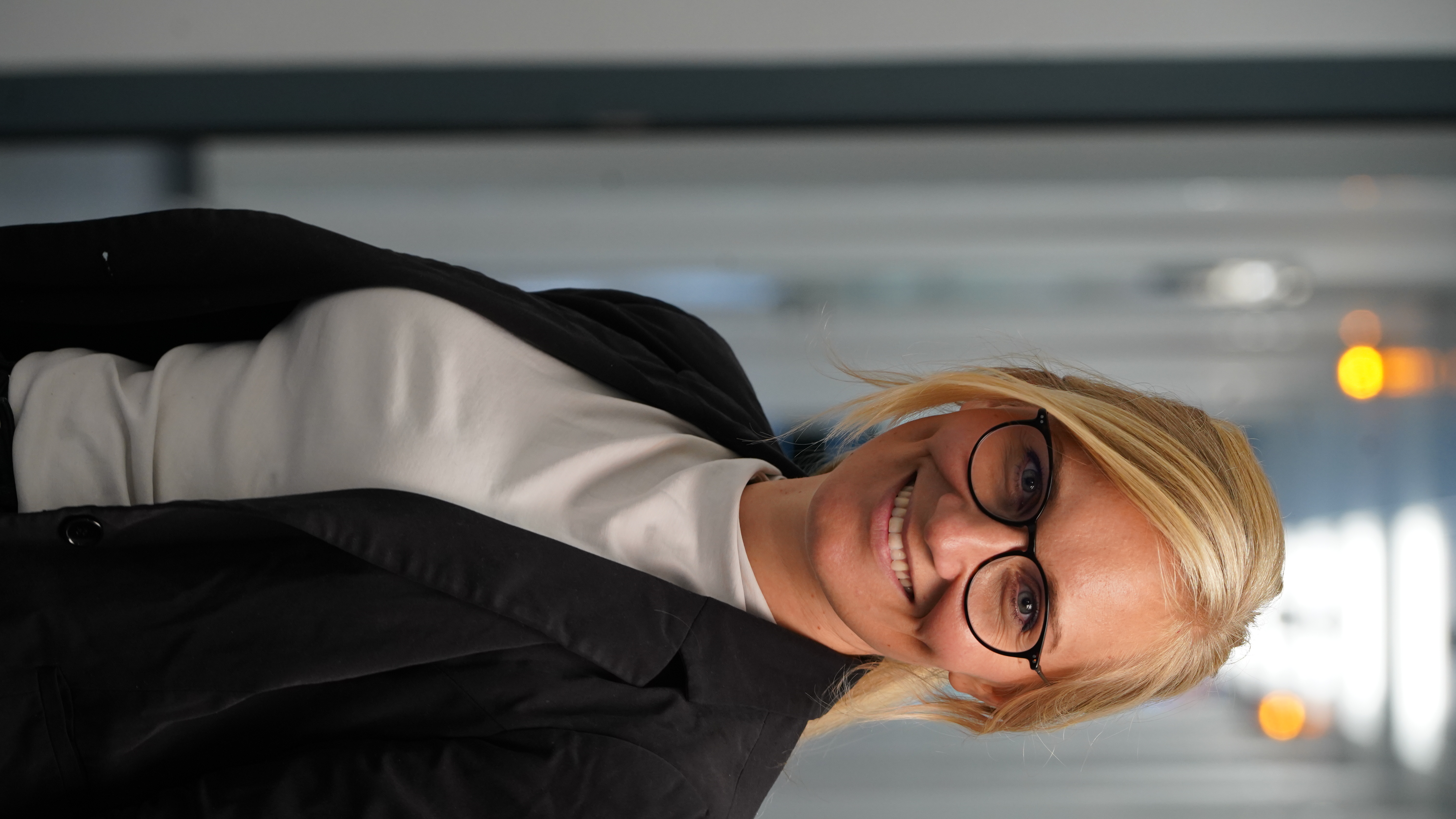
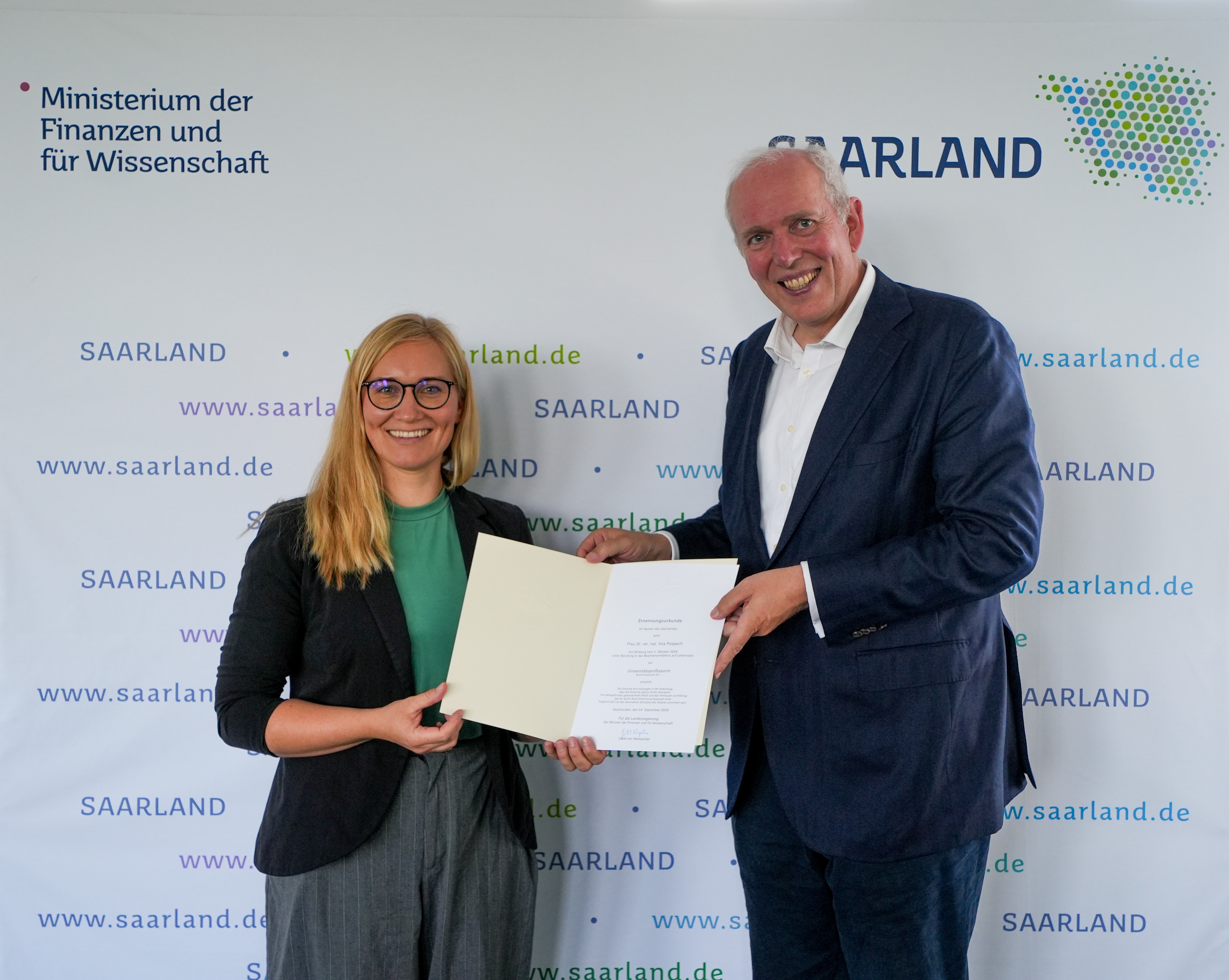
This is precisely where Jola Pospech's research comes in. At Saarland University, the chemist aims to investigate how photocatalysts interact with light and the molecules involved – and how researchers can track and understand these processes step by step, right through to the formation of the desired molecule. On this basis, researchers will also develop new strategies to optimize photocatalytic reactions in a targeted and efficient manner.
To gain a comprehensive understanding of these complex processes, Jola Pospech relies on close collaboration across disciplinary boundaries. Methods from spectroscopy and theoretical chemistry play just as important a role as digitalization and automation. Her research approach thus opens up numerous points of connection within Saarland University and strengthens interdisciplinary exchange in the natural sciences and engineering.
Jola Pospech's research priorities therefore enrich the scientific environment at Saarland University in a number of ways. There are particularly close links to the Research Training Group 'Regulation of Covalent Bonds in Molecules and Materials', in which several research groups from the Faculty of Natural Sciences and Technology are involved and which the German Research Foundation (DFG) will continue to fund until 2030. Jola Pospech will take up her post at Saarland University on 1 October 2026.
Brief CV of Jola Pospech
Jola Pospech has been a research group leader at the Leibniz Institute for Catalysis (LIKAT) in Rostock since 2022, where she initially established a junior research group in the field of catalytic functionalisation of organic molecules from 2017 to 2022. A native of Schleswig-Holstein, she studied Chemistry at the Georg-August University of Göttingen and, following periods abroad at Stockholm University (Sweden) and ETH Zurich (Switzerland), obtained her doctoral degree at the University of Rostock as part of her research work at LIKAT. She then spent two years conducting research at the University of Illinois at Urbana-Champaign (USA), working, amongst other things, on the development of light-driven total syntheses of active compounds and natural products.