Information for
 Quick links
 Faculties


Research teams from Saarland University and the German Research Center for Artificial Intelligence (DFKI) aim to develop this type of tool in collaboration with the company abat+ GmbH and will funding of just under 900,000 euros from the European Regional Development Fund (ERDF).
The following text has been machine translated from the German with no human editing.
'Conventional planning systems reach their limits when processes in industrial production – or indeed in other sectors – become too complex. Over the past few years, we have developed self-learning algorithms that can help to efficiently optimize processes consisting of various sub-steps,' says Verena Wolf, Professor of Computer Science at Saarland University. The team now aims to transfer these research findings into industrial practice as quickly as possible. 'We are focusing on what is known as sequencing – for example, in automotive production, where certain components must be available at a defined point in time so that they can be fitted into the vehicle in the correct order,' explains the researcher. In this context, artificial intelligence opens up new possibilities for incorporating the complex interdependencies of supply chains, model variants and staff availability into process planning, thereby significantly increasing manufacturing efficiency.
Together with the German Research Center for Artificial Intelligence (DFKI) and the company abat+ GmbH, Verena Wolf intends to develop an open and scalable planning platform that can be used to optimize all possible production data with the aid of AI. 'We are also creating digital twins to train AI models in a simulation environment to match real production systems. Furthermore, we want to support small and medium-sized enterprises, which still plan many processes manually, in their digital transformation,' explains the professor.
The planning system will, on the one hand, focus on production processes that are being set up from scratch. 'However, we also want to look at ongoing production lines where plans need to be adjusted at short notice – for example, because the delivery of individual components is delayed or certain vehicles need to be prioritized. These are the day-to-day challenges in industry, which are becoming even more acute in the face of global competition and supply chains that are not particularly resilient to crises,' says Verena Wolf.
The AI-supported platform is also intended to be used for planning scenarios beyond industrial production. For instance, it could be used to optimize the complex procedures in the operating theatres of large hospitals. 'For every operation, staff must prepare different surgical instruments, recalibrate high-tech medical equipment and make the appropriate specialist staff available,' explains Verena Wolf. Clinics could save time and costs by using the AI-supported planning platform to schedule operations with similar requirements back-to-back, thereby minimising the effort required for preparations.
In the transfer project that has now been launched, abat+ GmbH in St. Ingbert will contribute its expertise in the necessary software and cloud infrastructure, as well as its experience in production planning for large industrial companies. Over the coming months, the planning platform is to be expanded into an AI toolkit that can be adapted very quickly and individually to the specific challenges faced by individual industrial clients. The project, entitled 'Preparing an AI-Based Rearranging Hub' (PreAIrranging), is led by Professor of Computer Science Verena Wolf, Timo Philipp Gros (DFKI) and Philipp Stopp (abat+ GmbH). The European Regional Development Fund (ERDF) and the European Union fund it.
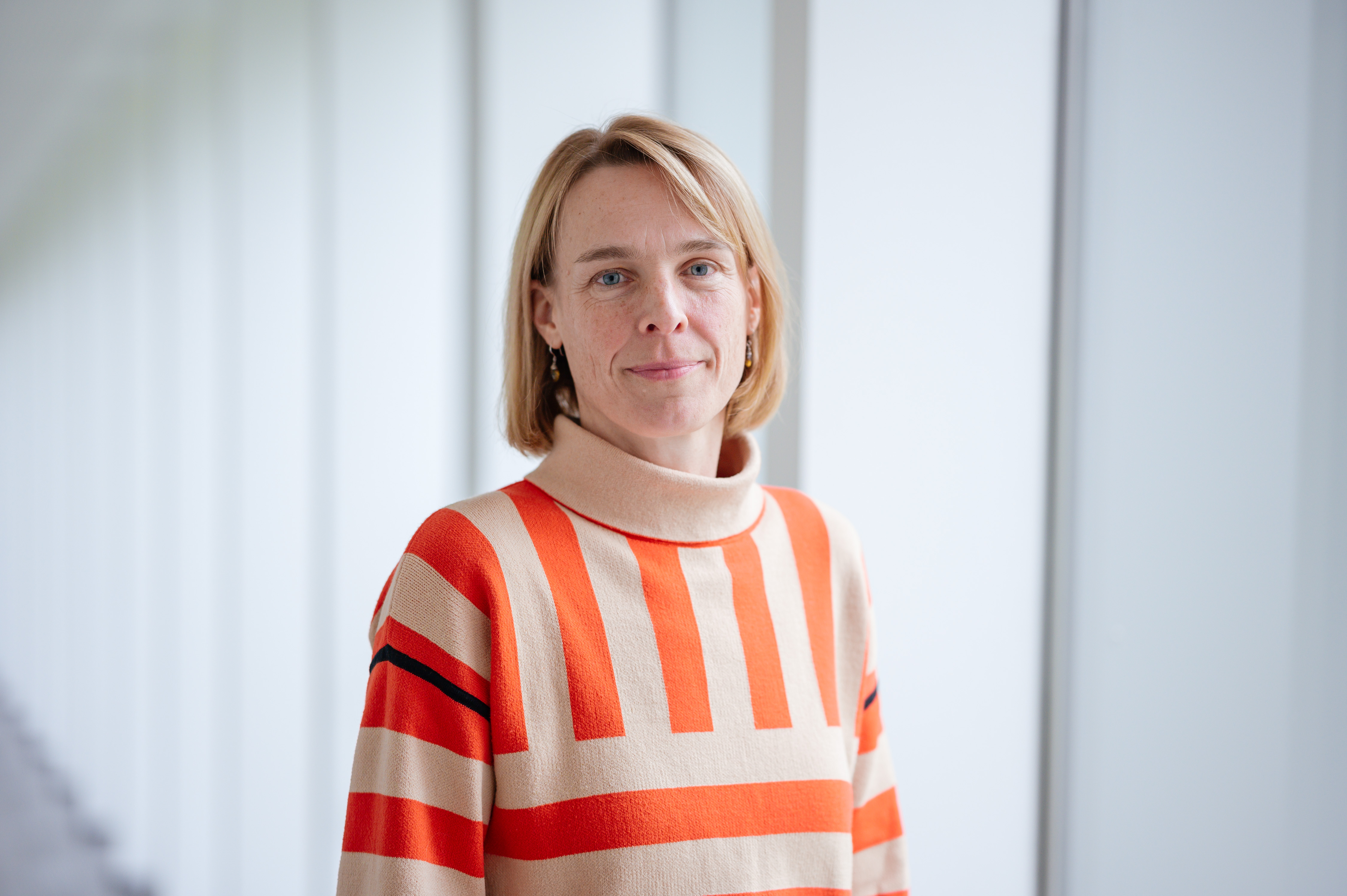
Press photos for download, for royalty-free use in connection with this press release, can be found at the very bottom of the following webpage under 'Portrait photos': https://www.dfki.de/web/news-media/presse/presse-material
For further information, please contact:
Prof. Dr. Verena Wolf
Chair of 'Modelling and Simulation' at Saarland University
Head of the Neuro-mechanistic Modelling Research Group at DFKI
Tel.: +49-681-302-5586
Email: verena.wolf(at)uni-saarland.de