Information for
 Quick links
 Faculties


The following text has been machine translated from the German with no human editing.
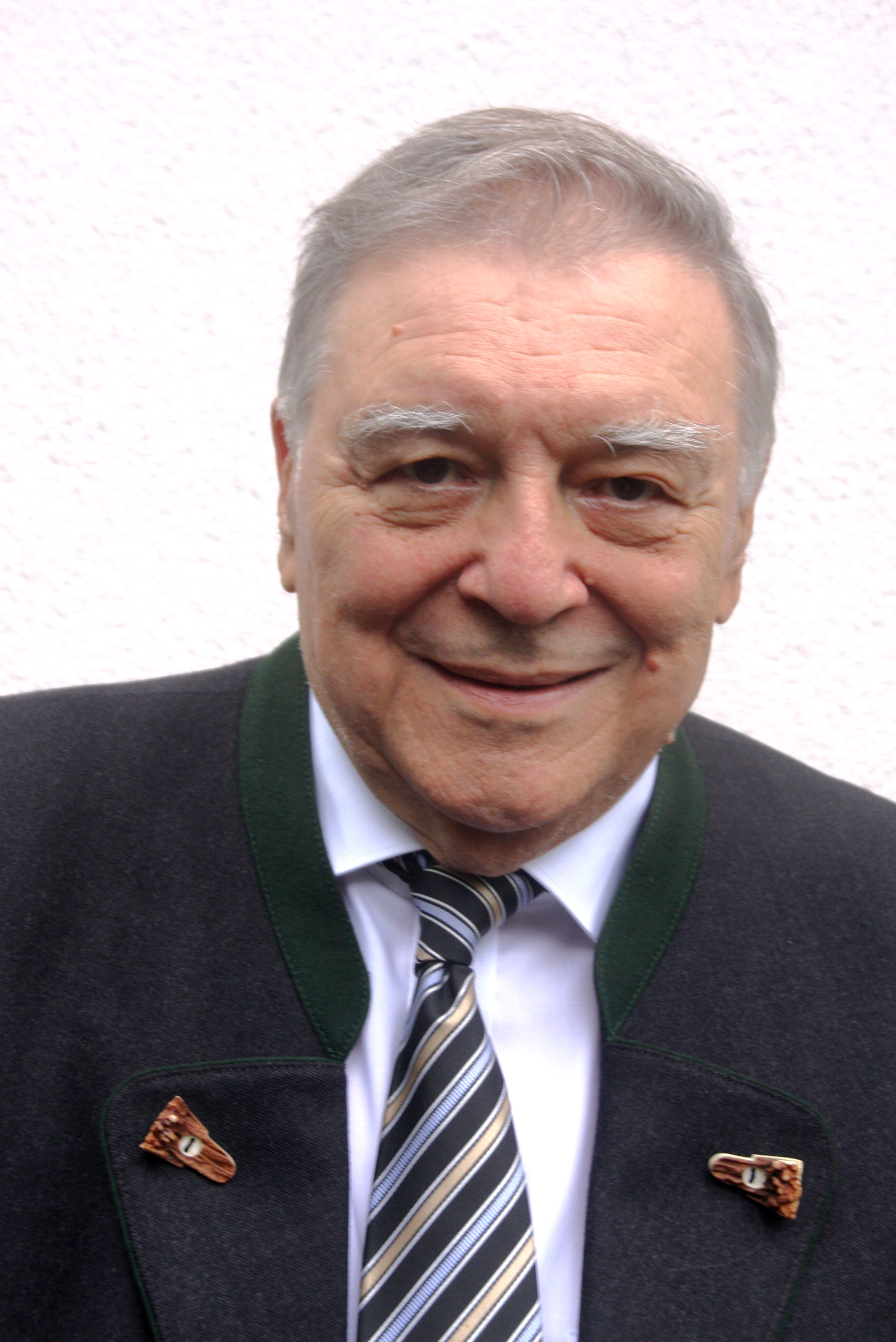
Born in Augsburg in 1941, he studied chemistry and chemical engineering at the Technical University of Munich, obtained his doctorate in 1973 with a thesis entitled ‘Heterogeneous Catalysis with Philipps Catalysts’, and took up a postdoctoral position at the Free University of Berlin. Following a research stay in the USA, he joined the Fraunhofer Institute for Silicate Research in Würzburg (ISC) as a research associate in 1975, where he made a significant mark through pioneering, application-oriented innovations. In 1986, Helmut Schmidt was appointed Director of the Institute and a member of the Senate of the Fraunhofer Society. In 1989, he obtained his habilitation at the University of Würzburg in the Department of Inorganic Chemistry; this was followed by activities involved in setting up new institutions and international research stays, including at MIT (Massachusetts Institute of Technology) in Cambridge, USA.
In 1990, Schmidt accepted a post as full professor at Saarland University – combined with the position of Managing Director and Scientific Director of the ‘Institute for New Materials GmbH’ (INM) in Saarbrücken (shareholders: 51 per cent Saarland University, 49 per cent the State of Saarland, since 1991). The explicit remit of the new institute was to bring new technologies into practical application in order to strengthen the Saarland’s economic structure. As a pioneer in chemical nanotechnology for surface materials, the honouree built the institute – based on this technology and, in particular, through projects funded by the Federal Ministry of Education, Science, Research and Technology, the German Research Foundation, the EU’s materials research programmes and industry – into an internationally renowned institution, ultimately employing 250 staff.
Owing to the institute’s rapid rise to national prominence and its approach to implementing R&D results, the Science Council recommended as early as 1993 that the institute be admitted to the ‘Blue List’ scientific community (later the Leibniz Association) and, following a lengthy ‘promotion process’, was included in federal-state funding in 1999. In 2003, it was renamed the ‘Leibniz Institute for New Materials’. A milestone in the Institute’s history was the acquisition of funding for the NMO User Centre (New Materials for Surface Technology).
The Institute, which successfully secured extensive third-party funding, maintained a wide range of international collaborations and developed numerous innovations in the fields of medicine and environmental technology, automotive engineering, optics and construction technology. In this way, the INM promoted not only technology transfer and structural change but also the establishment of eleven new companies. Furthermore, together with the University of Tübingen, the institute co-founded and coordinated, amongst other initiatives, the German Centre of Excellence for Chemical Nanotechnologies (CCNanoChem).
At the end of his tenure in August 2005, the ‘International Society of Sol-Gel Science and Technology’ honoured Professor Schmidt by presenting him with the inaugural ‘Lifetime Achievement Award’. He is also the recipient of the ‘George W. Morey Award of the Glass and Optical Materials Division of the American Ceramic Society’ and a Fellow of the American Ceramic Society.
The honouree’s academic body of work – he is a member of numerous national and international professional societies and has supervised around 100 doctoral theses and master’s dissertations – comprises, amongst other things, around 400 publications and 150 patent families. Alongside his scientific work, his success in technological implementation is equally noteworthy. Around 100 of the 400 or so projects carried out in collaboration with industrial partners have resulted in successful product launches that are still on the market today, including separation systems for HIV and hepatitis analysis and countless hard coatings.
Following his time at the Institute in Saarbrücken, Helmut Schmidt founded and led ‘Engineered Nano Products Germany’ – initially in Zweibrücken and later in Henriville (Lorraine) – as Managing Director and Technical Director until 2011, before establishing HSM TechConsult GmbH in Saarbrücken. The company specialises in consultancy, product development and innovation management for new surface technologies using sol-gel and chemical nanotechnology processes. To this end, HSM has access to a national and international network of partners for technical implementation. The current focus of its activities is on the Far East. Examples of technical developments include multi-functional surface materials and highly efficient flexible barrier layers.
Contact:
Dr Wolfgang Müller, University Archives
wolfgang.mueller(at)uni-saarland.de and dr.wolfgang-mueller(at)t-online.de
Press photo available for download