Information for
 Quick links
 Faculties


A team led by European studies researcher Florian Weber is addressing these questions as part of a European consortium that brings together a number of universities, companies and public authorities. The consortium has been awarded around €5 million under the Horizon Europe programme.
The following text has been machine translated from the German with no human editing.
Most people on the European continent live in cities. They are particularly affected by extreme weather events such as heatwaves and floods, which are set to increase further as a result of climate change. The European Union has therefore defined sustainability goals, which cities and local authorities are to implement with the help of funding, amongst other measures. 'We want to find out how policy strategies are carried through from the European level, via national governments, to the regions and cities. What actually gets through, what is effectively implemented, and why is it that some cities are already very far ahead, whilst others with similar structures tend to lag behind when it comes to sustainability?' explains Florian Weber, Professor of European Studies at Saarland University, who is leading a sub-project within a new European research consortium.
Using the four cities of Saarlouis, Münster, Ljubljana and Koper as case studies, the European studies scholar and their international team aim to investigate which European Union guidelines are receiving particular attention in these local authorities and may already have led to significant changes. 'To this end, we are examining public documents such as sustainability strategies, climate protection plans and city council resolutions. We will also be conducting interviews with numerous stakeholders in the cities to find out where they see their priorities. These range from traffic-calmed city centres and well-developed cycling and local transport infrastructure, through to green façades and urban avenues, right up to the promotion of renewable energy," says Florian Weber.
The Slovenian capital, Ljubljana, was named 'European Green Capital' back in 2016. Around three-quarters of its urban area consists of green, protected or agricultural land; the historic old town is a car-free zone and easily accessible by bicycle and public transport. The city also committed itself early on to a strict zero-waste policy in order to prevent waste and pursue an effective circular economy. In Saarlouis, for example, the Interreg project 'LivableCities' is already exploring ways to better protect the city from extreme weather events. To this end, the project aims to unseal hard-sealed surfaces and green them, as well as roofs and façades; in line with the 'sponge city' concept, the team also plans to install underground rainwater storage facilities. 'We want cities across Europe to learn from one another and gain an even deeper understanding of the measures that can be taken to implement sustainability goals at local level,' says Florian Weber's colleague Julia Dittel.
'When submitting the project proposal, we were able to draw on the European university network Tranform4Europe, within which, amongst others, Saarland University and the University of Primorska – with campuses in Izola and Koper – have been collaborating for some time,' explains Julian Wendlinger from the International Relations Division. The call for proposals under Horizon Europe was highly competitive; the program approved only eight per cent of applications, including the new collaborative project 'WISE: From Widening to Urban Sustainability, Innovation and Excellence', with a total budget of 4.98 million euros and a duration of four years. The project involves 16 partners from twelve European countries, including eleven universities as well as five public institutions, companies and civil society organizations. The aim is to strengthen research excellence in the new Member States of the European Union and to promote sustainable development in European cities.
The research consortium comprises various sub-projects, such as those focusing on remote sensing for climate adaptation measures or on wood as a building material. The PoliSCI sub-project (Policy transfer driving sustainable and resilient cities), which compares sustainable urban development , is led by Florian Weber and Julia Dittel in Saarbrücken. Marie Darimont and Julian Wendlinger from the Transform4Europe project management team in the International Relations Division at Saarland University are also involved.
Further information:
https://www.uni-saarland.de/lehrstuhl/weber/forschung/urbane-nachhaltigkeit-wise-polisci.html
For enquiries, please contact:
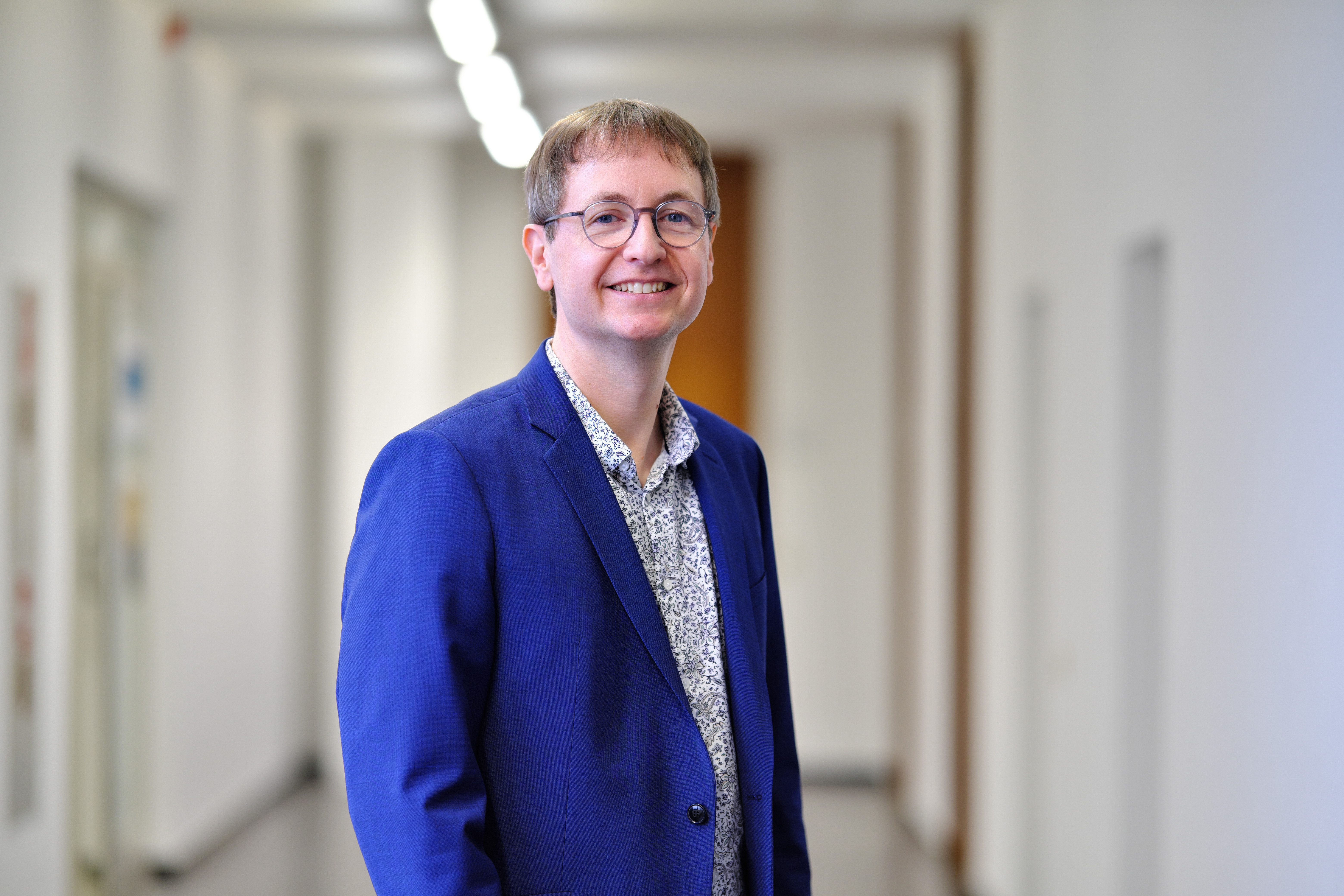
Prof. Dr. Florian Weber (from 9 September) European Studies | Specialising in Western Europe and border regions
Tel.: +49-681-302-64220
Email: florian.weber(at)uni-saarland.de
Marie Darimont
Transform4Europe Project Manager
Tel.: +49-681-302-2872 Email:marie.darimont(at)uni-saarland.de
Julian Wendlinger
Transform4Europe Project Manager
Email: julian.wendlinger(at)uni-saarland.de