Information for
 Quick links
 Faculties


The following text has been machine translated from the German with no human editing.
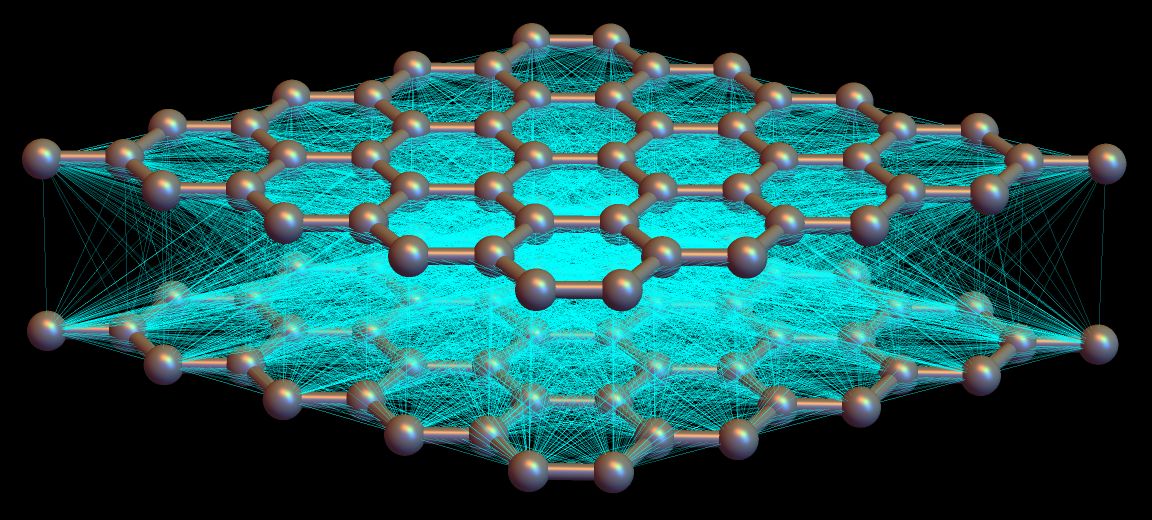
It all began in 1911 with the discovery that certain metals, at extremely low temperatures close to absolute zero (around minus 273 degrees Celsius), exhibit properties they do not possess above these temperatures: they conduct electricity with absolutely no resistance. Materials that behave in this way have since been called superconductors. In 1986, physicists discovered that there are also 'high-temperature superconductors', whose transition temperature is significantly higher than near absolute zero. The term 'high-temperature' should be taken with a pinch of salt, however; it does not usually refer to a pleasant 30 degrees or more on the beach. Rather, it means that these materials conduct electricity without resistance as early as minus 196 degrees Celsius. Science has not yet fully explained why this is the case.
To better understand the processes in superconductors and, in the long term, to develop materials that can be used at less frigid temperatures, more basic research is needed. This is where Andreas Buchheit (mathematician; Saarland University/ETH Zurich), Benedikt Fauseweh (physicist; TU Dortmund), Torsten Keßler (mathematician; TU Eindhoven) and Kirill Serkh (mathematician; University of Toronto). Together, the four principal investigators (group leaders) of the project funded by the Klaus Tschira Foundation aim to gain a more precise understanding of what happens inside a high-temperature superconductor, enabling electricity to flow through it without resistance.
'Superconductors are a unique class of materials, but high-temperature superconductors in particular are still not fully understood in many respects,' explains Benedikt Fauseweh, who, together with his group, develops theoretical descriptions of superconductors. 'Among other things, we are looking at so-called topologically non-trivial phases,' adds Andreas Buchheit, who, together with his colleagues, has already carried out some preliminary work in this field (see https://idw-online.de/de/news822713, https://idw-online.de/de/news842032).
The researchers are operating at the very limits of currently known physics, which they aim to push further with the help of mathematics. 'We are feeling our way forward mathematically, step by step, to identify new physical mechanisms that can raise the critical temperature of superconductors,' says Buchheit. He explains what is meant by 'topologically non-trivial phases': 'Such states can be compared to a knot tied in a thread. If I then jiggle the thread, the knot remains intact and does not come undone, unless you pull at the right spot. The same applies to such materials: if I 'jiggle' them – that is, disturb the system – they remain stable up to a certain degree of disturbance,' says the researcher.
Designing the superconductor so that it behaves like the metaphorical knot and remains relatively stable despite external influences is a major challenge. This is because the qubits – the computational units corresponding to the bits in a conventional computer – are so sensitive that even the tiniest disturbance destroys the quantum state. So far, quantum computers have been 'capricious divas' that brook no outside interference. Topological superconductors promise to make these 'divas' a little more amenable.
In previous work, the researchers have already shown that long-range interactions between electrons can lead precisely to such an effect, which stabilizes the superconductor. The team will now further develop these findings to enable efficient computer simulations of exotic superconductors that previous methods could not achieve. This goal requires sophisticated operations in Mathematics: 'In simulations, the physically desirable "knots" manifest as mathematical singularities. Their numerical treatment requires bespoke methods and algorithms that reliably detect and preserve such states,' adds Torsten Keßler. He specializes in large-scale computations in the field of quantum systems and is a co-founder of the start-up 'Simkinetic', which aims to significantly accelerate design and development cycles in the high-tech industry with the help of new impetus from research. 'Modern quantum computers based on superconductors still have many drawbacks that can be attributed to material issues. To resolve these issues, we need a fundamental understanding of superconductors," explains Benedikt Fauseweh, who is researching the opportunities and challenges of quantum computers (https://idw-online.de/de/news830505).
Materials that allow electricity to pass through without any resistance play a crucial role in quantum computing. They form the basis for qubits in modern quantum computers. If we knew how to specifically turn a material into a superconductor at higher temperatures – thereby reducing the need for cooling – we would be a significant step closer to achieving more stable quantum states. To use Andreas Buchheit's analogy: the knot in the thread would be much tighter.
Further information:
Dr. Andreas Buchheit
Tel.: 0151 27246209
Email: andreas.buchheit(at)uni-saarland.de and andreas.buchheit(at)sam.math.ethz.ch
Jun.-Prof. Dr Benedikt Fauseweh
Tel.: +49-231-755-2057
Email: benedikt.fauseweh(at)tu-dortmund.de
Dr Torsten Keßler
Email: t.kessler(at)tue.nl
Prof. Dr. Kirill Serkh
Email: kserkh(at)math.toronto.edu
Dr Saskia Haupt
Telephone: +49-6221-533-102
Email: saskia.haupt(at)klaus-tschira-stiftung.de
About the Klaus Tschira Foundation:
Established by physicist and SAP co-founder Klaus Tschira (1940–2015), the foundation supports the natural sciences, Physics and Computer Science – with a focus on research, education and science communication. Its nationwide activities begin in nursery schools and continue in schools, universities and research institutions. The Klaus Tschira Foundation is committed to fostering dialogue between science and society.
https://Klaus Tschira Stiftung.de/