Information for
 Quick links
 Faculties


The following text has been machine translated from the German with no human editing.
There are currently 160 care homes in the Saarland, home to more than 14,000 people, many of whom suffer from dementia or have severely limited mobility. When these elderly people develop health problems, hospitals usually admit them for several days solely for diagnostic purposes. The journey and the unfamiliar surroundings place a significant strain on this high-risk patient group. To spare them this ordeal and relieve the pressure on hospital A&E departments, Klaus Faßbender, a long-standing professor of medicine at Saarland University, has developed a comprehensive concept for mobile diagnostics for care home residents. This concept already won over the Joint Federal Committee four years ago: the highest self-governing body in the German healthcare system commissioned the professor of medicine to develop a suitable vehicle equipped with diagnostic technology as part of an innovative healthcare model and to trial it in care homes in Saarland.
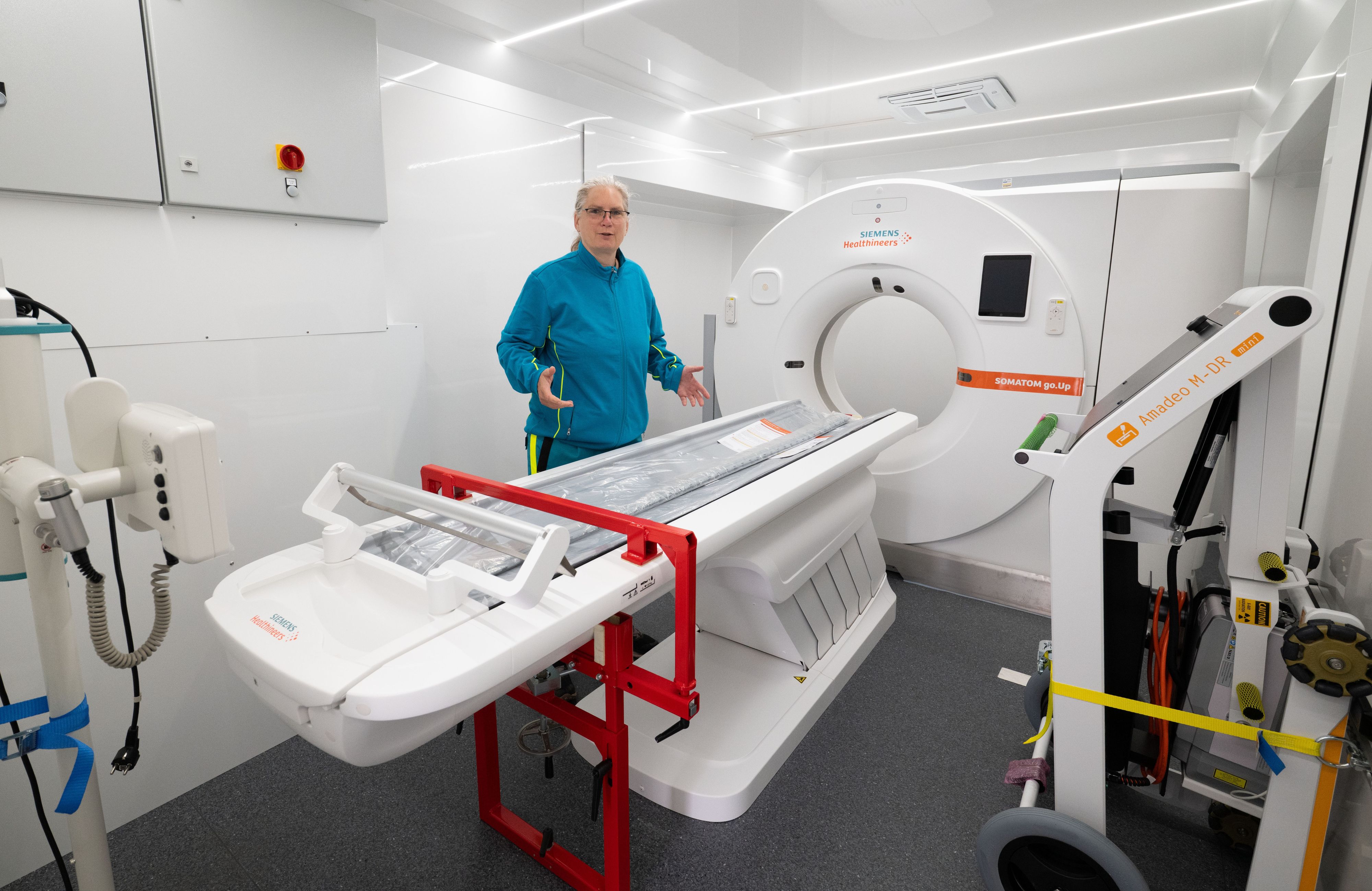
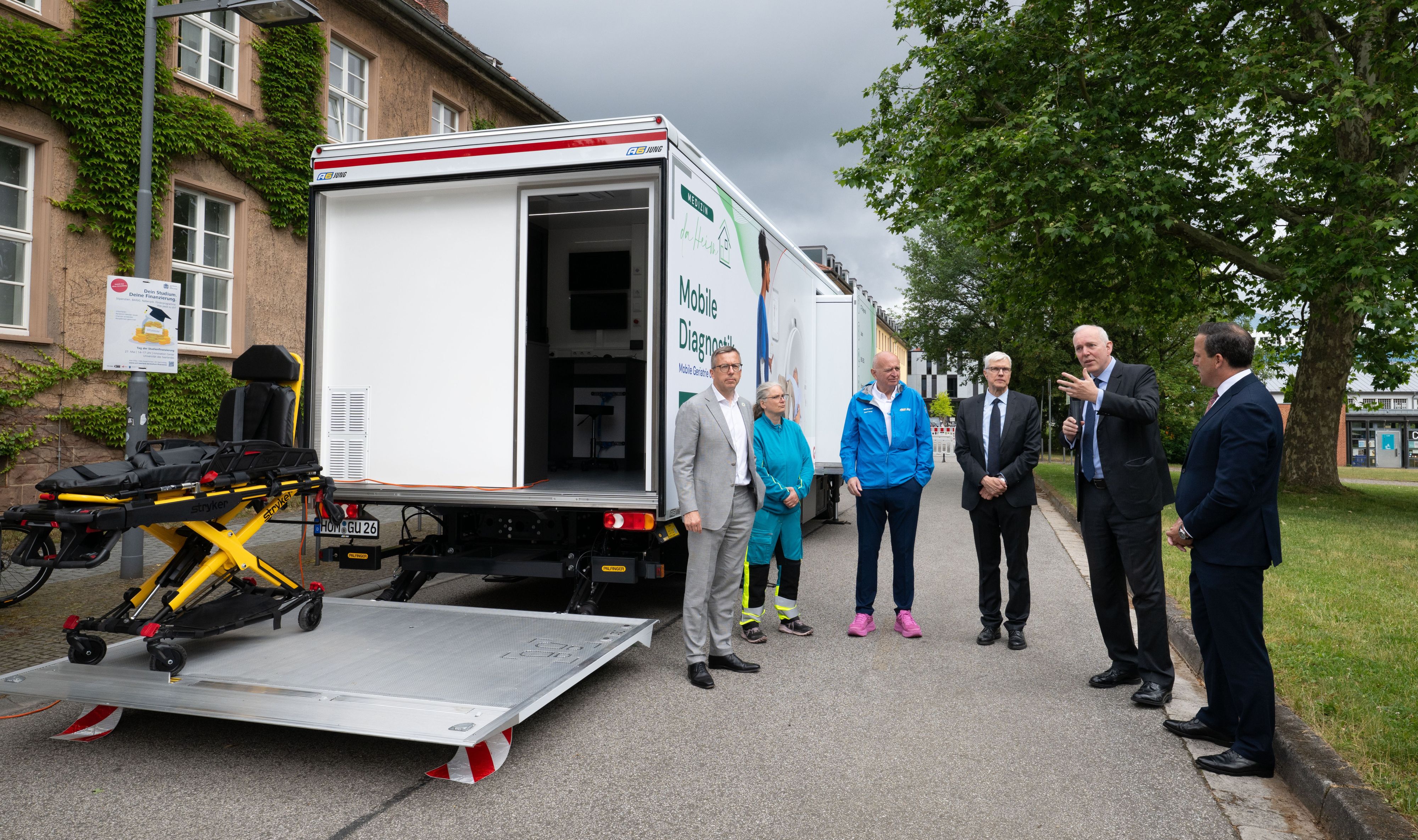
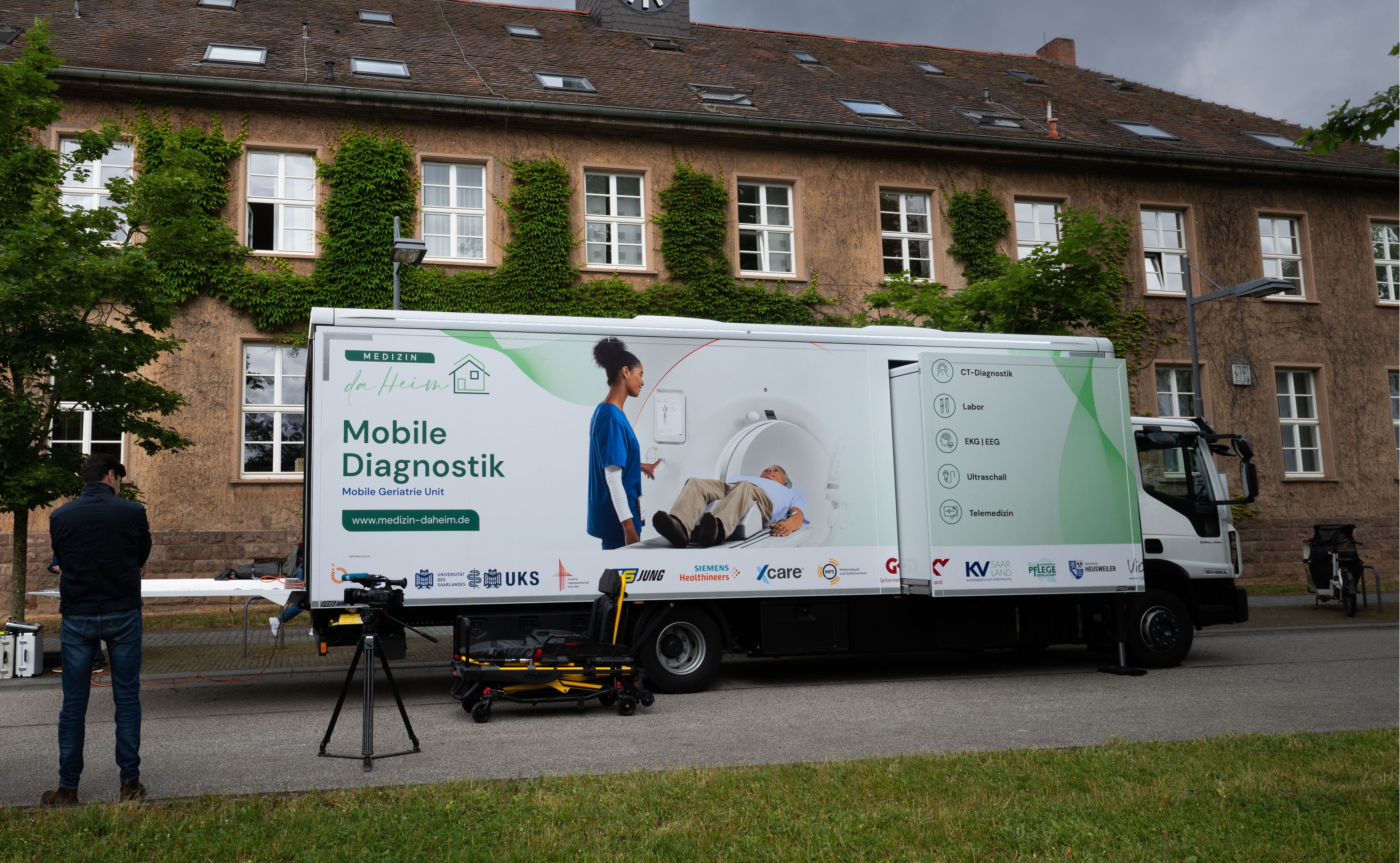
The DIKOM vehicle has been equipped with a CT scanner, an X-ray and ultrasound machine, EEG and ECG equipment and a laboratory, meeting the standards of a clinical A&E department. The truck features a treatment room with barrier-free access and high-quality equipment for digital networking and telemedical communication. The power supply is also a major challenge, for which the team developed a particularly powerful battery system, guaranteeing all-day operation of all diagnostic devices and making telemedical networking possible in the first place. The batteries charge overnight to keep the mobile geriatric unit fully operational during the day. The Homburg-based company 'A6 JUNG', which specialises in bespoke vehicle construction, played a key role in the technical development and implementation.
The 'Mobile Geriatric Unit' (MGU) is accompanied on its examination visits by specialist doctors as well as medical radiology technicians and paramedics. The data collected in the specialized vehicle is transmitted directly via a secure mobile connection to specialists in radiology, internal medicine and geriatrics as well as neurology and orthopaedics. 'These experts evaluate the findings and make them available promptly to the referring GPs and the care teams in the care homes, so that they can continue to care for their patients in familiar surroundings. In this way, local GPs and specialists are supported and the burden on hospitals is eased. The contributions made by insured persons are also used more economically,' explains Professor Klaus Faßbender.
Researchers are scientifically monitoring the deployment of the new high-tech vehicle at care homes in Saarland to evaluate the medical and economic benefits as a basis for future integration into standard care. The pilot project, entitled 'DIKOM – Diagnostics and Consultation in Nursing Homes using a Mobile Geriatric Unit', is supported by the Saarland Nursing Association, the Association of Statutory Health Insurance Physicians, all health and nursing care insurance funds operating in Saarland, the Saarland-based diagnostic experts from Xcare, the Caritas Clinic in Lebach and various institutes at the University Hospital.
The project is led by Saarland University. The Institute for Social Research and Social Economy (ISO) in Saarbrücken and the Institute for Applied Health Services Research (inav) in Berlin are providing scientific support for the entire innovative care process. Over the course of the three-year project, Professor Klaus Faßbender and his team have secured the participation of twelve consortium partners and 33 cooperation partners. In the active pilot phase, which begins in September, around 4,000 care home residents from approximately 50 care homes will initially receive 'mobile diagnostics' in their familiar surroundings.
Speaking at the presentation of the mobile geriatric unit, University President Ludger Santen said: 'The DIKOM vehicle is a prime example of knowledge transfer at the university. The brilliant idea of bringing high-tech diagnostics to elderly people, thereby sparing them stressful hospital stays, originated at the Faculty of Medicine. With a great deal of commitment and ingenuity, as well as the support of numerous partners from the fields of medicine and medical technology and the social and healthcare sectors, this idea has now literally been put into practice. Nursing homes in Saarland will benefit from this during the pilot phase. We very much hope that this pilot project will inspire the federal government, the Länder and health insurance funds, so that this mobile yet high-quality service becomes the standard across the board following a successful pilot."
Jakob von Weizsäcker, Minister for Finance and Science of the Saarland, emphasises: ‘Germany and the Saarland are ageing. In itself, it is extremely encouraging that our life expectancy is high. However, this brings with it new demands on our healthcare system. To meet these better, we need innovations. That is why I welcome the commissioning of the DIKOM vehicle. The aim is to test how medical care, including modern diagnostics, can be delivered to older people and those in need of care. In doing so, we are closing a major gap in care provision in Saarland. Saarland University and the University Hospital, together with their partners, are carrying out truly pioneering work here. I wish this new form of care every success!’
Further information: https://www.medizin-daheim.de
Press photos will be made available for download after the press conference for royalty-free use in connection with this press invitation on the following website.
Questions will be answered and contacts provided by the communications officer for the DIKOM model: Armin Lang, Lang Consult GmbH in Saarbrücken
Mobile +49-171-520-2676, Email:mail(at)langcon.de