Information for
 Quick links
 Faculties


The following text has been machine translated from the German with no human editing.
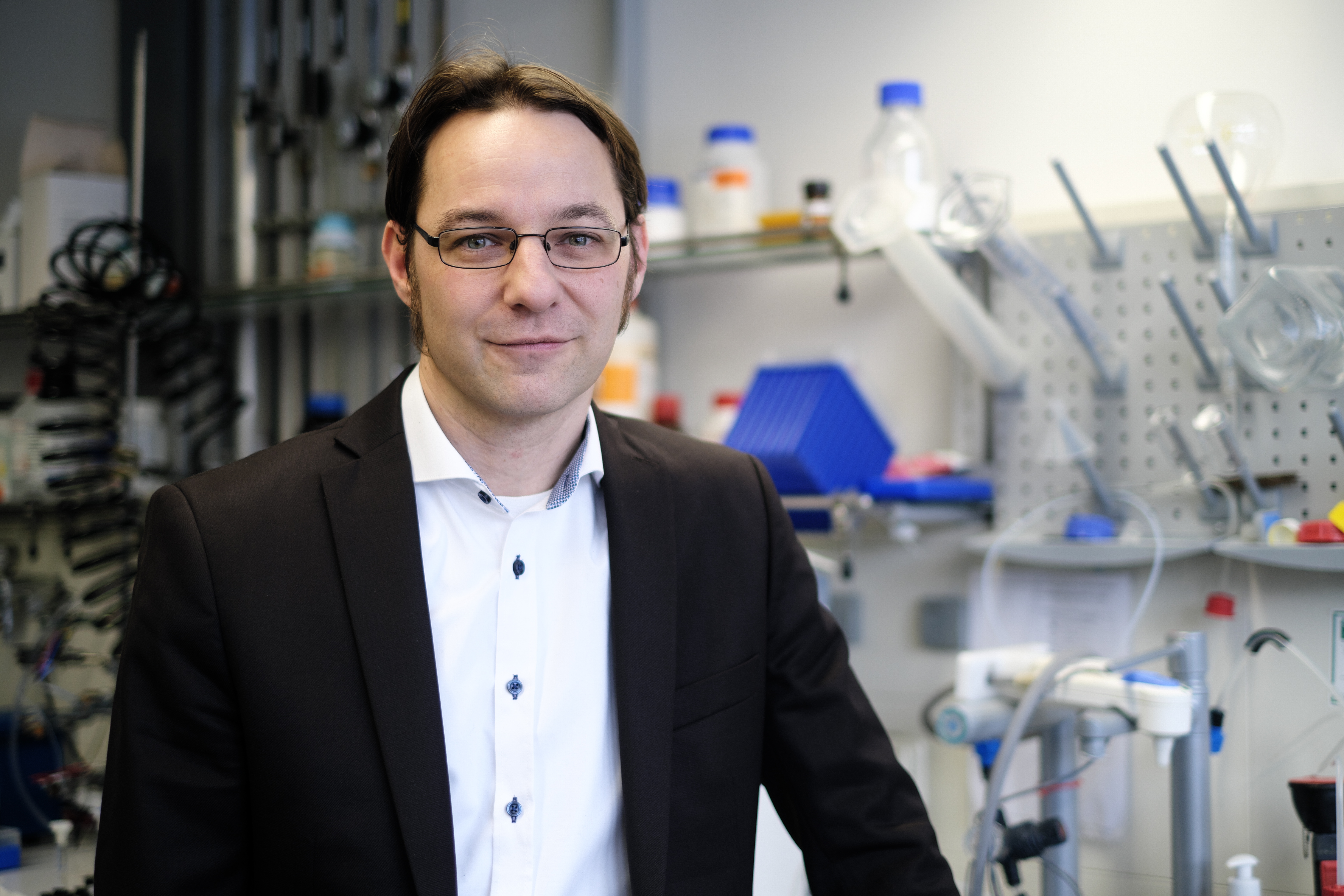
In the project "SWIMEMSYS – Smart switchable membrane systems", the working groups of Professor Matthias Faust (htw saar) and Professor Markus Gallei (UdS) aim to develop membranes for the sustainable and resource-saving filtration of nano- and microplastics from drinking water. "Within SWIMEMSYS, novel, externally switchable polymer membranes made of new materials are being produced at the University of Saarland. These membranes are used for water filtration at htw saar," says Markus Gallei, explaining the project's objectives. "In order to find out how such membranes should be constructed, it is necessary to investigate the basic surface properties of the most important types of microplastics," the polymer chemist continues. This is being investigated at htw saar.
This information is then used at the University of Saarland to develop novel "smart" polymers with tailor-made functionalities. The main focus is on the "switchability" of the membranes by exposing them to external stimuli. Such stimuli can be, for example, a slight change in temperature at the membrane , a change in pH value or even the application of a low electrical voltage, which leads to a precise change in the pore size or surface properties of the membranes. "In this way, we significantly increase the efficiency of membrane cleaning, which conserves resources and extends the service life of the membranes," explains Markus Gallei.
About the collaboration:
Both research groups, Markus Gallei's Chair of Polymer Chemistry and Matthias Faust's Institute of Physical Process Engineering, are involved in membrane technology, but with different focuses. While Professor Markus Gallei's group is engaged in the research and development of membranes made from new materials, Professor Matthias Faust's group has expertise in industrial manufacturing processes for membranes and the application of membranes in filtration. Both groups are looking for new areas of application for membranes. The combination of expertise in new projects makes it possible to generate optimal membrane structures and use them in application-oriented, socially relevant processes. The SWIMEMSYS project is funded by the European Regional Development Fund (ERDF) and the Saarland with a total of 340,000 euros.