Information for
 Quick links
 Faculties


Businesses, public authorities and representative organizations are invited to attend the kick-off event free of charge and to contribute topics of their own.
The following text has been machine translated from the German with no human editing.
When a damaged area of woodland is replanted in the Saarland, it takes years to see whether the young trees are taking root. Until now, this has only been visible on satellite images once a canopy has formed, often after five years. Angela Nyangate John has developed a method that detects reforestation around a year after planting. In a test area in Kenya, it identified 94 per cent of the sites where forest later grew, whilst a standard method detected only 47 per cent. Worldwide, several hundred million hectares of forest are set to regrow by 2030. This method would make it possible to assess whether this is successful much earlier. Partners from the Saarland forestry administration are registered to attend the event on 2 September and will take part in the discussions.
Traces that arise in everyday life anyway are increasingly replacing surveys, counts and site inspections. Satellite images show how heavily a location is visited, even if individual cars are not visible in the images. Theophilus Aidoo and Till Koebe analyse this data from car parks. Barriers and pay-and-display machines provide such figures for individual car parks, whilst satellite images provide them for all car parks in a region simultaneously. A retailer can use this to gauge how busy an area is beyond their own door, or to identify where in a city there is a shortage of parking spaces and where they remain empty.
Google reviews of swimming pools reveal what bathers write about their encounters with other visitors. Ethel Mensah has analysed 1.2 million of these. Around 40 per cent of the reviews concern such encounters; in roughly two per cent of these, the people involved are described in terms of their origin, ethnicity, culture or religion – and this proportion is rising. Whether there are links to the local political and social situation is part of the ongoing investigation.
These examples represent over a dozen projects from which applications for society, the economy and public administration in the Saarland may emerge.
SOUNDS kick-off event on 2 September
The kick-off event on 2 September begins at 9.30 am and has two main focuses: research and its methods in the morning, and practical applications in the afternoon. Melanie Revilla from the Institut Barcelona d’Estudis Internacionals will report on what six years of research using image, language and usage data have revealed about the reliability of such sources. Afterwards, the researchers will present their projects and discuss the findings at their research posters. Both sides will then seek common ground in short discussion sessions.
In the afternoon, Christina Elmer, who holds Germany’s first professorship in data journalism at TU Dortmund University, will demonstrate how newsrooms close data gaps using data donations, proxy variables and their own measurements. Afterwards, the guests will split into three workshops. Together with East Side Fab, the innovation network in the Saarland, experts from business, public administration and civil society will work with the researchers to develop joint research questions and initial projects. Two workshops with Triathlon, the university’s start-up and innovation centre, will focus on spin-offs – a career path that is rarely considered by early-career researchers. University President Ludger Santen, Lord Mayor Uwe Conradt and Minister for Science Jakob von Weizsäcker will deliver the welcoming addresses.
Register at: https://www.uni-saarland.de/forschen/sounds/kick-off-veranstaltung.html
Background: The SOUNDS transformation project
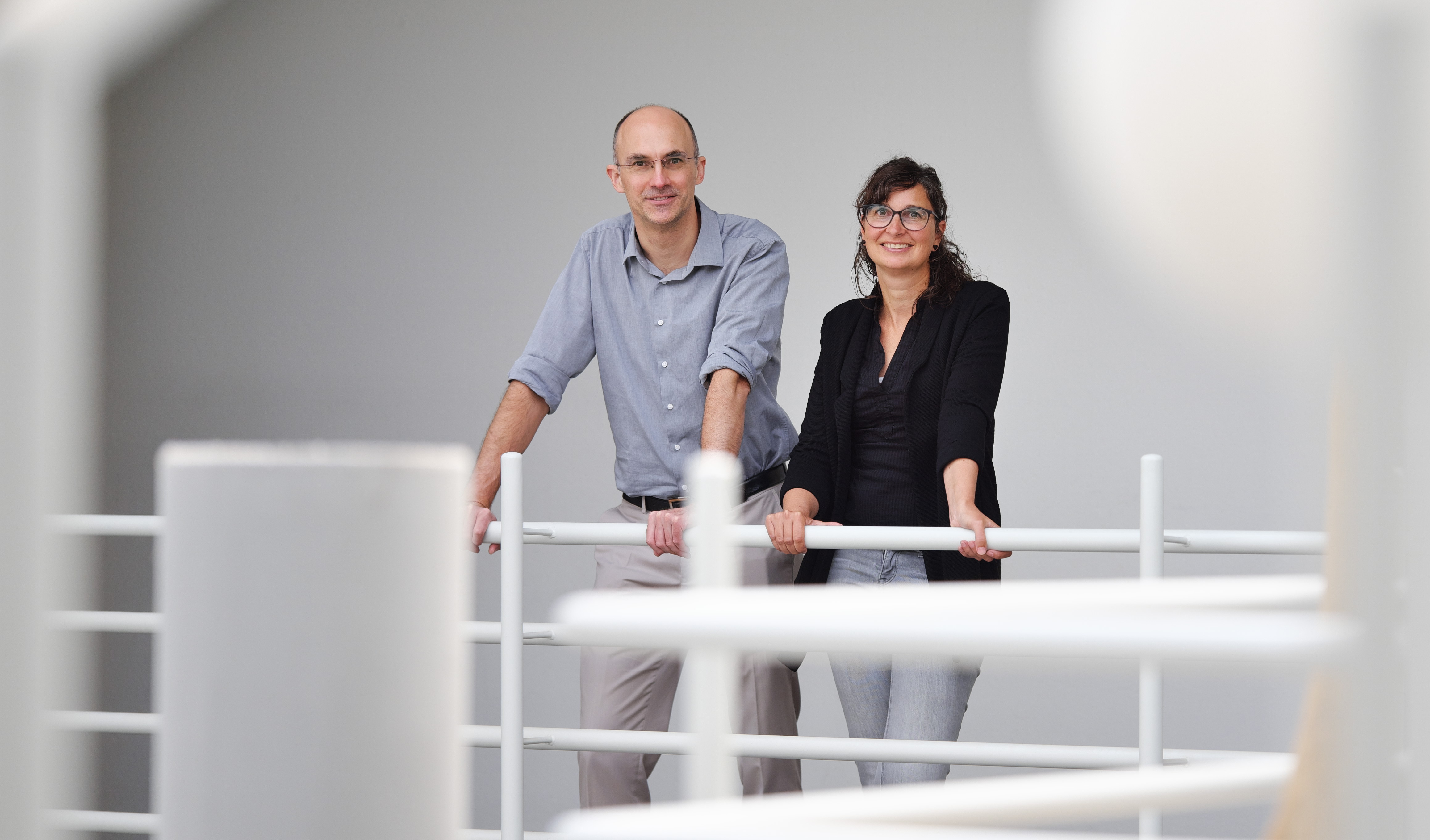
The Societal Observatory Using Novel Data Sources (SOUNDS) is based at Saarland University. It is led by Daniela Braun, Professor of Political Science specialising in European integration and international relations, and Ingmar Weber, Alexander von Humboldt Professor of Artificial Intelligence specialising in societal computing. SOUNDS takes socially relevant questions as its starting point and answers them using methods from Computer Science and novel data sources, including satellite imagery, social media posts, search queries, reviews and mapping services. The findings are intended to support decision-making, promote public participation and make democracy more resilient.
The state government has been funding SOUNDS since 2025 with 29 million euros from the Saar Transformation Fund for Research and Knowledge Transfer; the project will run until August 2032. This funding is intended to create jobs, foster collaborations with businesses and public authorities, and lead to spin-offs from the research.
Further information: www.uni-saarland.de/sounds
Media representatives are invited to the kick-off event and should also register via the following link. The project team can arrange interview slots with the researchers and provide photographic material: projekt-sounds(at)uni-saarland.de