Information for
 Quick links
 Faculties


The following text has been machine translated from the German with no human editing.
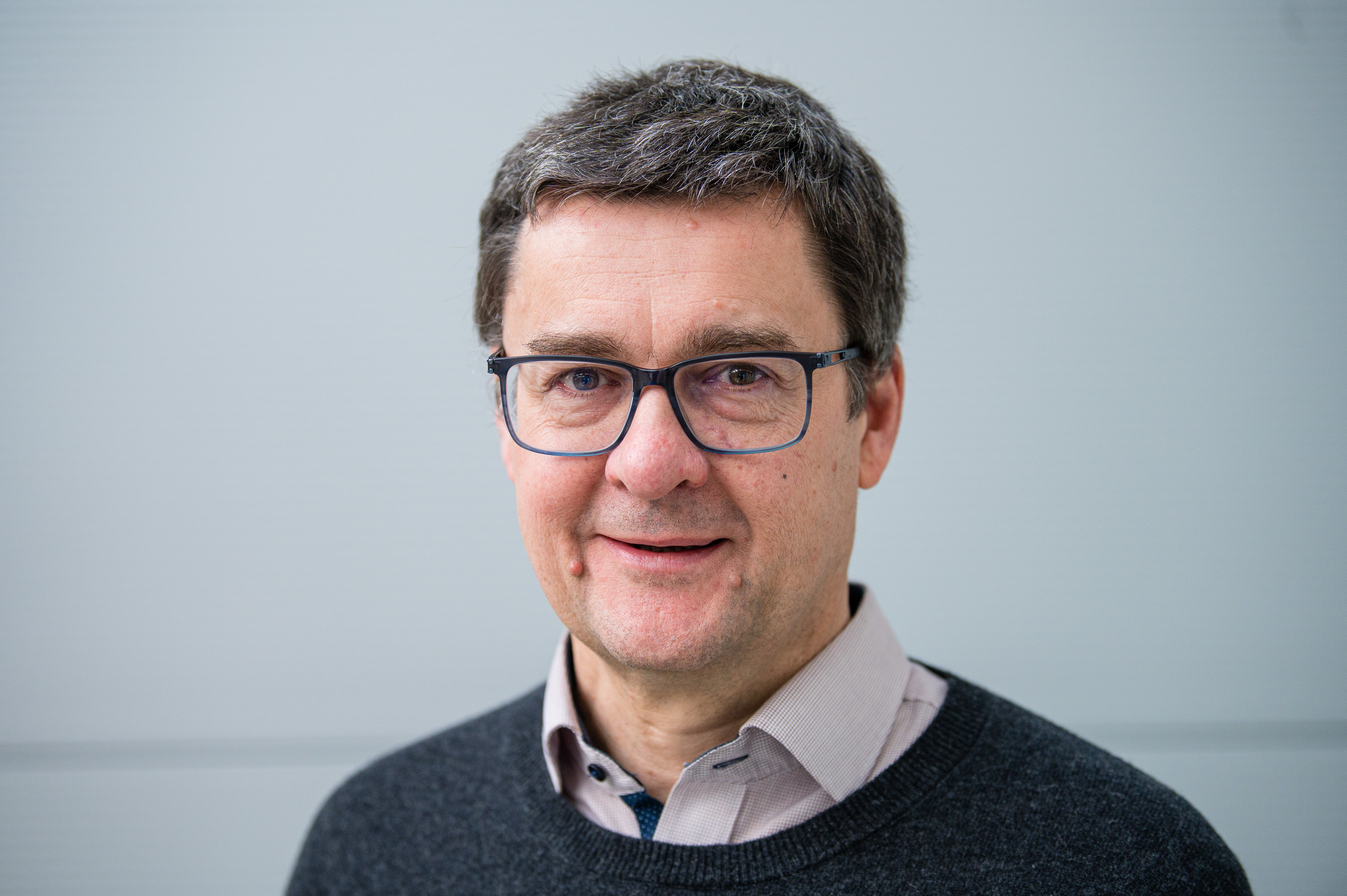
Real-life researchers visit schools in person. They showcase their research projects and explain why technology fascinates them. And they demonstrate how engineers are helping to solve the challenges of the future and contribute to the responsible use of energy, raw materials and the environment: this is the concept behind the ‘Technology@School Day’. “We want to spark an interest in science and technology, attract young people to engineering and the wide range of vocational training opportunities in this field, and show them the prospects that lie ahead,” explains Andreas Schütze, Professor of Measurement Technology at Saarland University and Chairman of VDE Saar. “It’s particularly great when the researchers return to their own schools – that makes it even more tangible for the pupils,” he says.
Professor Christoph Kutter, President of the Association for Electrical, Electronic and Information Technologies ( , VDE) – one of Europe’s largest technology organisations – will also be coming to Blieskastel for the anniversary on 2 June to give three talks at the Von der Leyen Gymnasium, explaining to pupils how their smartphones can ‘sense’ things thanks to sensors and microelectronics.
According to a recent study by the VDE, there will be a shortfall of 30,000 engineering graduates by 2029 to offset those retiring. “In the age of automation and artificial intelligence, engineers are and will remain indispensable. Despite economic fluctuations, there is a structural shortage of skilled workers across all sectors, which we must address,” says Andreas Schütze, who initiated the 2022 Technology@School Day. Since then, he has been organising the events for VDE Saar and the Association of German Engineers (VDI) Saar, together with colleagues from Saarland University, the University of Applied Sciences htw saar, and partners from research, education and industry. The Fraunhofer Institutes IZFP and IBMT, the Center for Mechatronics and Automation Technology (ZeMA), the Saarlouis Student Research Centre and lab courses for school students are also involved.
The ‘Technology Day@School’ concept is proving a success. So far, 14 events have taken place at 13 secondary schools in Saarland and one comprehensive school. By 2 June, the programme will have reached more than 10,000 pupils. “However, Technology Day@School is just one part of our programme for schoolchildren. We don’t want to inspire children and young people with an interest in technology for just one school day. Rather, we focus on recurring programmes that accompany children and young people over several years. To this end, we have developed a range of student programmes tailored to different age groups,” says Andreas Schütze, who helped launch many of the programmes and also co-organises them. Saarland University offers a wide range of activities for pupils of all ages, particularly in the departments of Systems Engineering, Materials Science and Engineering, and the natural sciences: from the IngFo school work experience programme to lab courses for school students and holiday activities, right through to ‘Gymnasium goes Uni’. (https://www.uni-saarland.de/schueler)
The programme on 2 June
Just how well-developed these activities are will be evident on 2 June at the Von der Leyen- Gymnasium in Blieskastel. Schütze and his team have also put together a packed programme here for 530 pupils, running from 7.50 am to 1 pm.
Years 5 to 7 will spend the day on a science rally. From 7.50 am to 12.15 pm, the classes will rotate through ten stations where they will tinker, build and experiment. Skill, speed and clever solutions will be key. At the end, the best classes are awarded prizes and receive 250 euros from the Montan-Stiftung-Saar for the class fund, for example to visit an extracurricular STEM activity.
Pupils in Years 8 and 9 can choose from workshops, talks and an interactive exhibition in the hall. The young people move between the different activities so that they gain a variety of insights.
At the interactive exhibition, they learn how a 3D printer or the welding technology of tomorrow works, immerse themselves in virtual worlds, and discover new climate technology and smart materials that make robotic grippers light and agile and also bring movement to smart textiles. They learn new things about renewable energies, biomedicine and biotechnology, phenomena in electric fields and CO2 sensors. Under the motto “Shaping the future with innovative high-tech automation made in Blieskastel”, a local company is also taking part: Schaller Automation offers insights into the development and production of intelligent sensor systems for the safe monitoring of large engines in shipping and power generation.
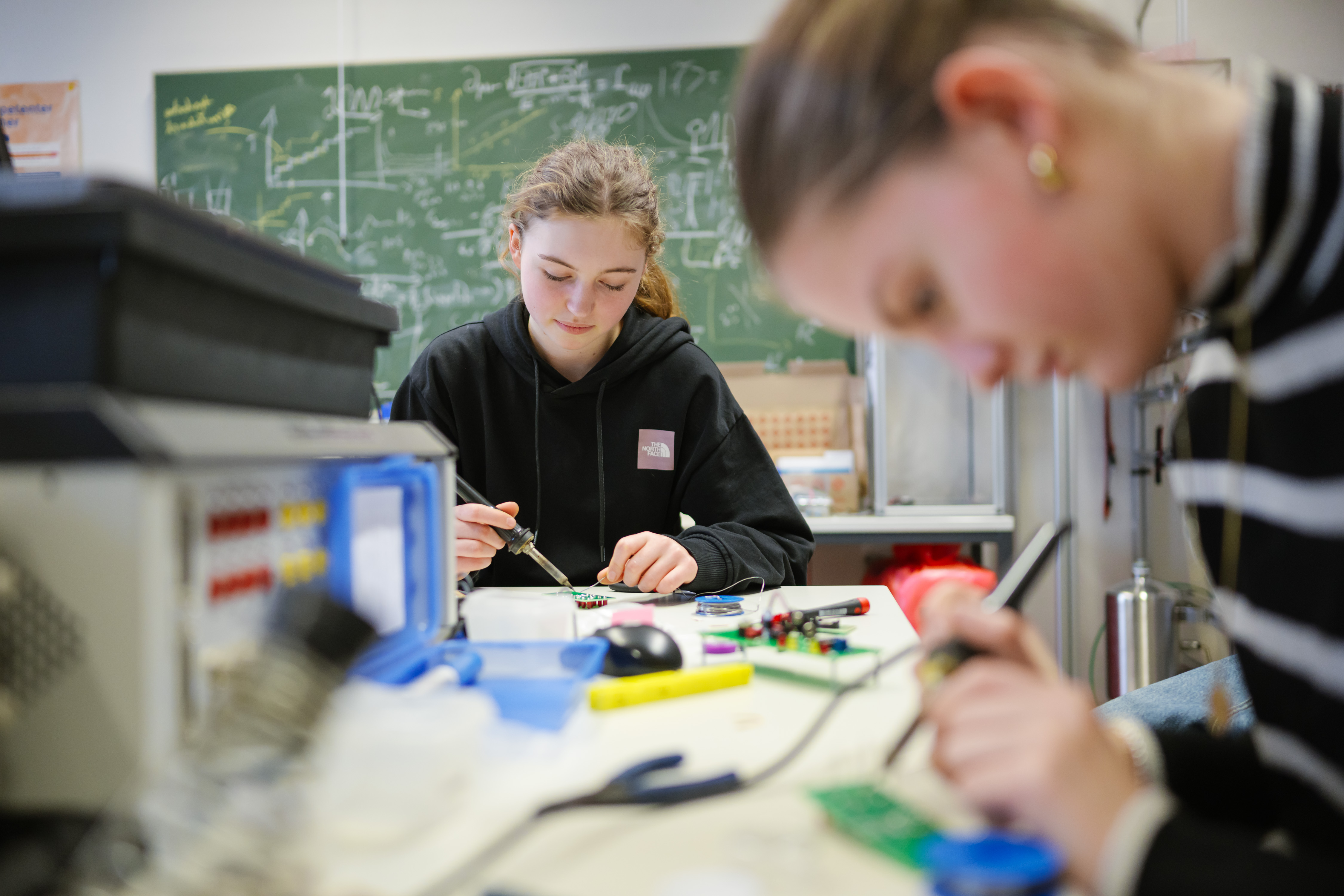
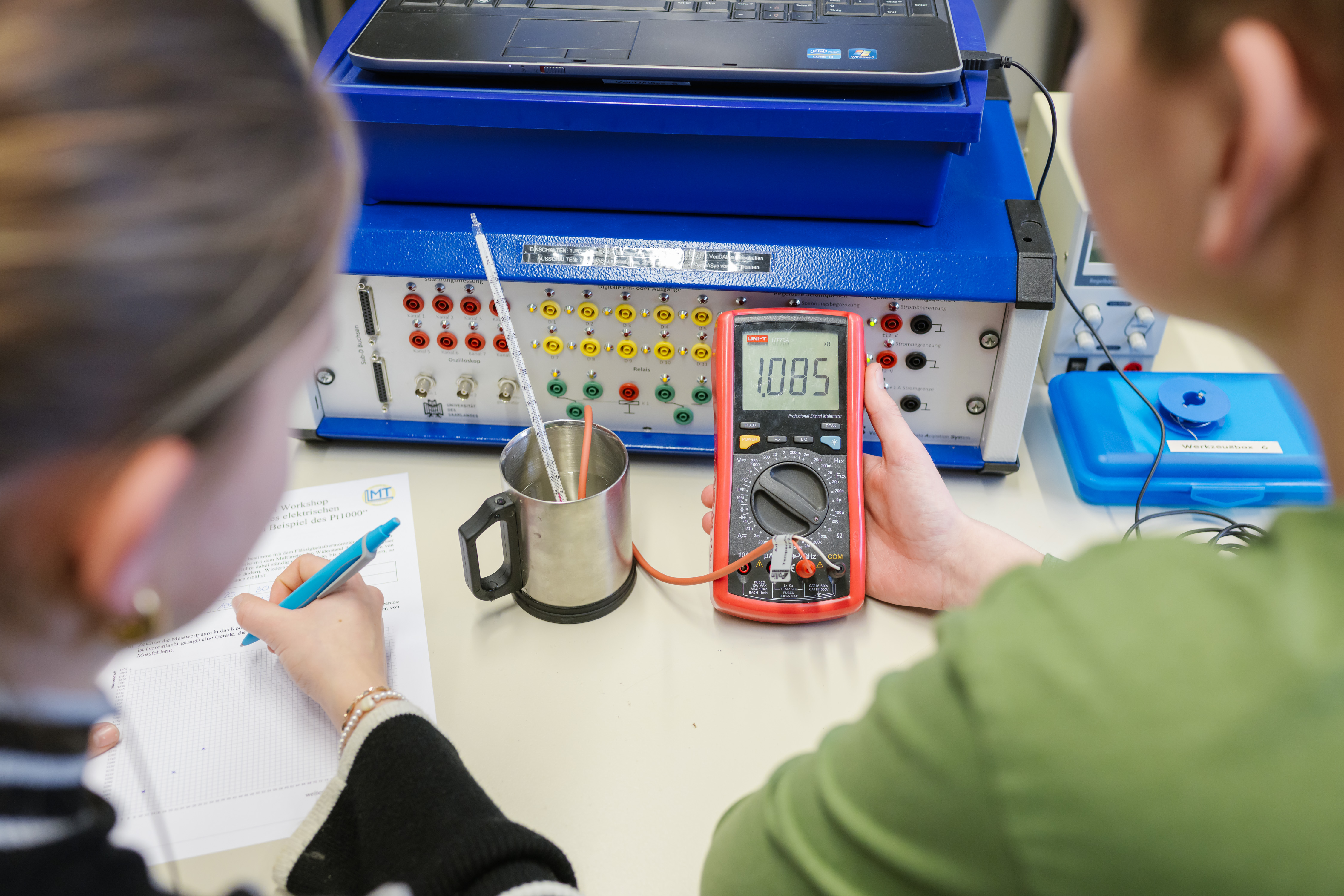
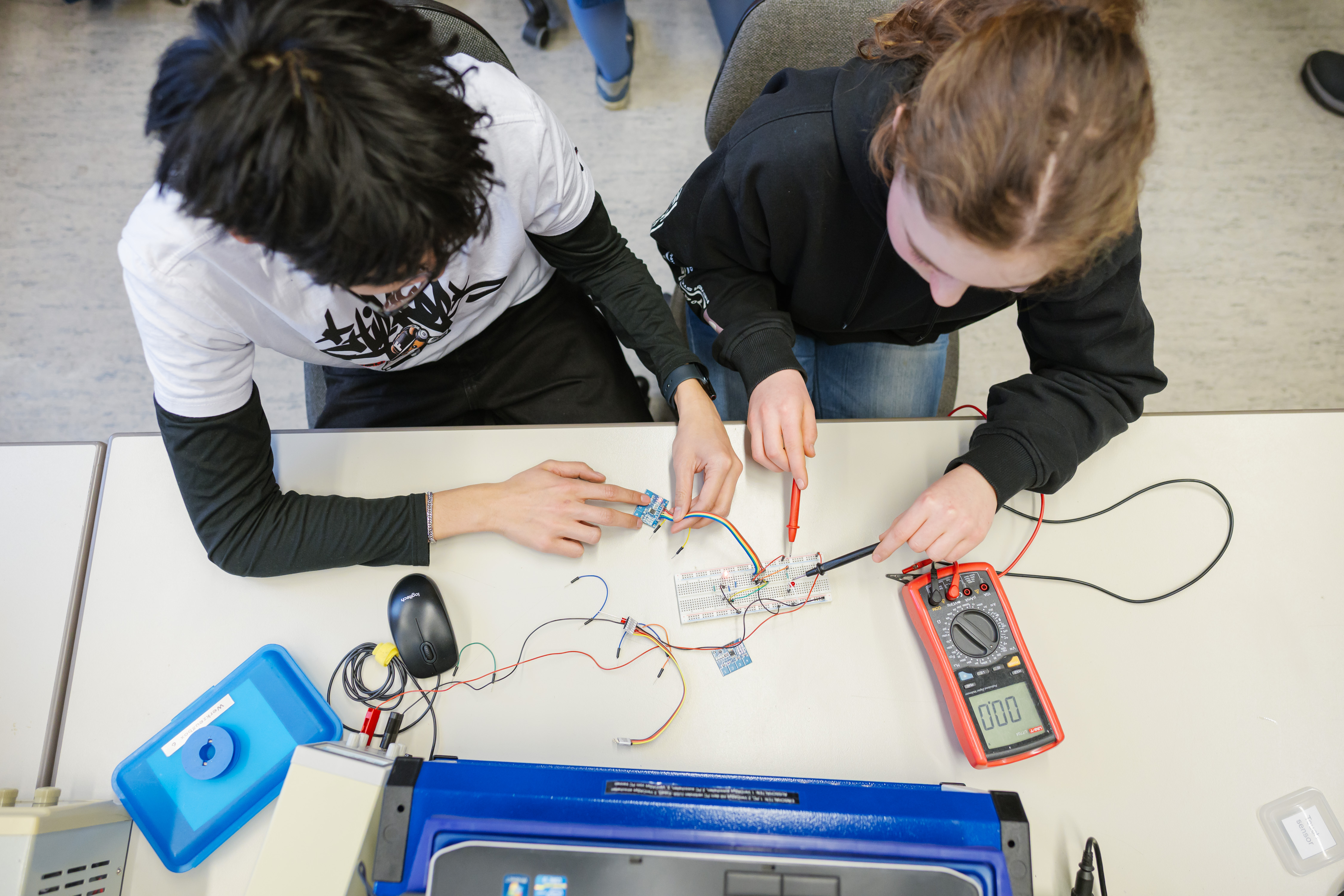
Working in small groups, the pupils carry out experiments with electronic sensors, learn about the technology inside smartphones and discover how people work alongside robots. Others build mechanical ‘computers’ in which falling balls act as codes, thereby discovering the basic principles of Computer Science. Or they use ultrasound techniques for materials testing to uncover the hidden and learn about smart materials: metallic muscles with memory for robotics and other innovative technologies.
Lectures highlight applications in Materials Science and Engineering, from the atomic level to the ISS, and explain how Systems Engineering shapes the products and systems of tomorrow, or how recycling is improved through technical odour monitoring. The programme also covers bicycle technology, the diagnosis of structural damage, and the swivel joint as a challenge for materials engineers.
Year 10 and 11 pupils will conduct experiments with fuel cells and electrolysers and, in a workshop, discover AI as a boost for programming. Here, they will learn how clever prompting can help them understand programming languages more quickly and develop their own web applications without prior knowledge. They will also visit the interactive exhibition. In talks, VDE President Professor Christoph Kutter explains how a smartphone can ‘feel’. Further talks will demonstrate how engineering can be used to shape the future.
Schools wishing to organise their own ‘Technology Day@School’ can contact VDE Saar (https://www.tag-der-technik.saarland/kontakt). Headteachers interested in seeing ‘Technology Day@School’ for themselves are welcome to attend the event.
Questions answered by:
Prof. Dr Andreas Schütze, Saarland University/VDE Saar:
Tel.: 0681 302-4663; Email: schuetze@lmt.uni-saarland.de
VDE Saar Office: Christiana Dabove,
Email: vde-saar@vde-online.de, Tel.: 0681 302-4683
Press photos available for download:
Press photos can be found on this news website:
https://www.uni-saarland.de/aktuell/tag-der-technikschool-10000-46811.html
You may use the press photos free of charge in connection with this press release and reporting on Saarland University, provided you credit the photographer.