Information for
 Quick links
 Faculties


Complex molecular machines are at the heart of Taylor’s research, and from 2027, he will support the establishment of state-of-the-art molecular imaging techniques at Saarland University, helping to position the university as one of Europe's leading institutions in anti-infective and drug discovery research.
The following text has been machine translated from the German with no human editing.
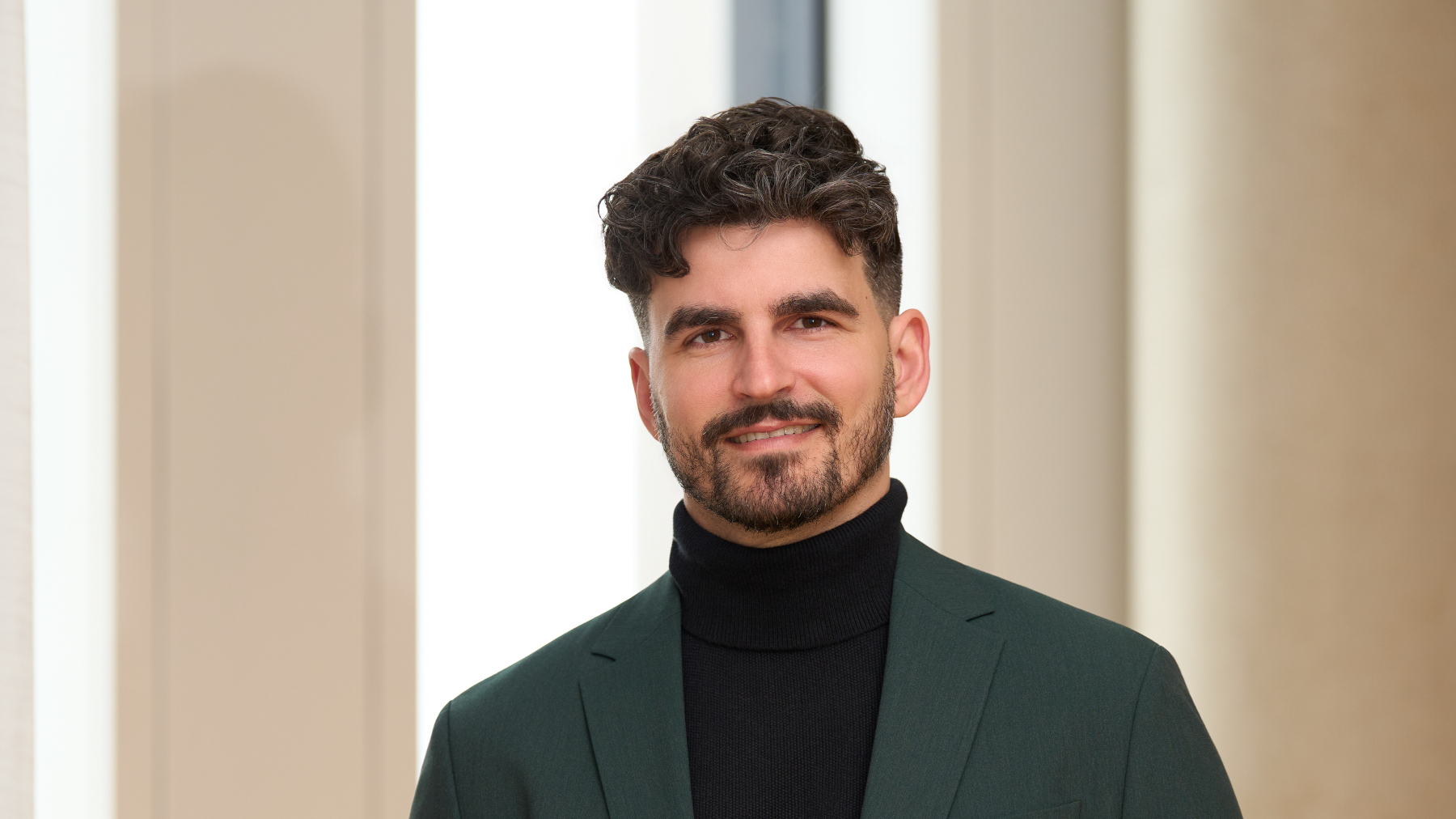
Thousands of so-called molecular machines are at work in our body’s cells, involved in the transport of molecules across cell membranes. Nicholas Taylor investigates the structure and function of these complex molecular machines. His aim is to better understand their biological role in order to harness them for biomedical purposes – in other words, to use the new knowledge gained to enable the development of novel active substances and medicines. The structural biologist, who has previously been conducting research and teaching at the University of Copenhagen in Denmark, makes the processes visible at the cellular level: he is a world-leading expert in high-resolution cryo-electron microscopy (cryo-EM).
“At Saarland University, we are currently bringing together state-of-the-art molecular imaging techniques to expand our focus on drug development and raise its international profile. The aim is to develop new drugs for patients more quickly than before, from the laboratory to market readiness. To this end, we are centralising specialist equipment, technologies, methods and expertise in so-called core facilities in order to share the infrastructure and make it accessible to our research teams across various departments. “As a Humboldt Professor, Nicholas Taylor will head a state-of-the-art cryo-EM core facility, which is already under construction,” explains University President Ludger Santen, who nominated Taylor for Saarland University.
Scientists from the fields of medicine, Pharmaceutical Science, life sciences, bioinformatics and the natural sciences are collaborating within the “BioMed – Life and Matter” research focus on the Saarbrücken and Homburg campuses to develop new active substances, diagnostic and treatment methods. “For Saarland University, the highly endowed Humboldt Professorship represents a further strengthening of our BioMed research focus and another step on our path to becoming a leading European institution in anti-infective and drug discovery research,” emphasises Ludger Santen.
High-resolution cryo-electron microscopy allows the structures of biological molecules to be visualised at near-atomic resolution. The biological samples are flash-frozen, which prevents the formation of crystals and instead produces glassy ice. In this way, the samples can be examined in their natural, functional state. By combining cryo-electron microscopy with other biophysical and functional investigations, Taylor is able to gain a complete picture of these systems.
At the heart of Taylor’s research is the question of how molecular machines function, what processes take place when, for example, bacteria move actively and involuntarily, or exactly how the body’s defence against viruses works. In particular, he is interested in how bacteriophages – viruses that attack bacteria – manage to inject DNA and proteins into the host cells.
“Nicholas Taylor’s research findings provide fundamental insights into transport across the cell membrane and can help in the development of structure-based active substances and medicines. He will therefore be conducting research across both the Homburg and Saarbrücken campuses,” says the Dean of the Faculty of Medicine, Professor Matthias Hannig. “From 2027, Nicholas Taylor will not only use his expertise to strengthen our university’s current biomolecular research, but will also work closely with research teams from a wide range of departments to build new synergies,” explains Matthias Hannig.
Nicholas Taylor will hold a Chair of Structural Biology at the Faculty of Medicine, specialising in cryo-electron microscopy, which will act as a bridge between the Helmholtz Institute for Pharmaceutical Research Saarland (HIPS) and the Faculty of Medicine. Taylor will be based at the Homburg Medical Campus, where he will collaborate with numerous research groups. At HIPS on the Saarbrücken campus, he will serve as an associate professor. He will also be involved in the PharmaScienceHub, the collaborative platform of Saarland University and HIPS, where more than 70 research groups and over 300 researchers from various disciplines work together.
Nicholas Taylor will head the new Electron Microscopy Equipment Centre, which will bring together cryo-electron microscopy and other innovative electron microscopy technologies as a core facility, together with Professor Matthias Hannig. A dedicated building for this purpose will be constructed on the Homburg Campus in the coming years.
The Alexander von Humboldt Professorship is awarded by the Alexander von Humboldt Foundation and funded by the Federal Ministry of Research, Technology and Space. Nicholas Taylor is one of eight researchers selected for a Humboldt Professorship this year.
The Alexander von Humboldt Foundation announced the award winners today (10 June). The award ceremony will take place in 2027. Saarland University had nominated the scientist for Germany’s most highly endowed international research prize. Thanks to the Federal Ministry of Research, Technology and Space’s ‘1,000 Heads Plus’ programme, the prize money has been increased this year to up to 10 million euros per laureate. It is intended to fund a professorship for the first seven years, thereby providing optimal conditions for flexible and outstanding cutting-edge research. The aim is to attract laureates to work at German research institutions in the long term by offering the country’s most highly endowed international research prize.
About the recipient
Nicholas Taylor is a professor at the University of Copenhagen, Denmark. As a postdoctoral researcher, he conducted research in Basel and Lausanne in Switzerland, as well as in Madrid, Spain, and Heidelberg, where he was awarded a doctoral degree in Molecular Biology from the EMBL (European Molecular Biology Laboratory) in 2011. In 2021, he was named an EMBO Young Investigator and, in 2025, was recognised as a Future Leader in Biophysics by the IUPAB (International Union for Pure and Applied Biophysics).
For further information, please contact:
Prof. Dr Nicholas Taylor: Email: nicholas.taylor(at)sund.ku.dk
Prof. Dr Matthias Hannig, Dean of the Faculty of Medicine at Saarland University: Email: mf-dekanat(at)uni-saarland.de
Press photos available for download:
You may use the press photos free of charge in connection with this press release and reporting on Saarland University, provided you credit the photographer.