Information for
 Quick links
 Faculties


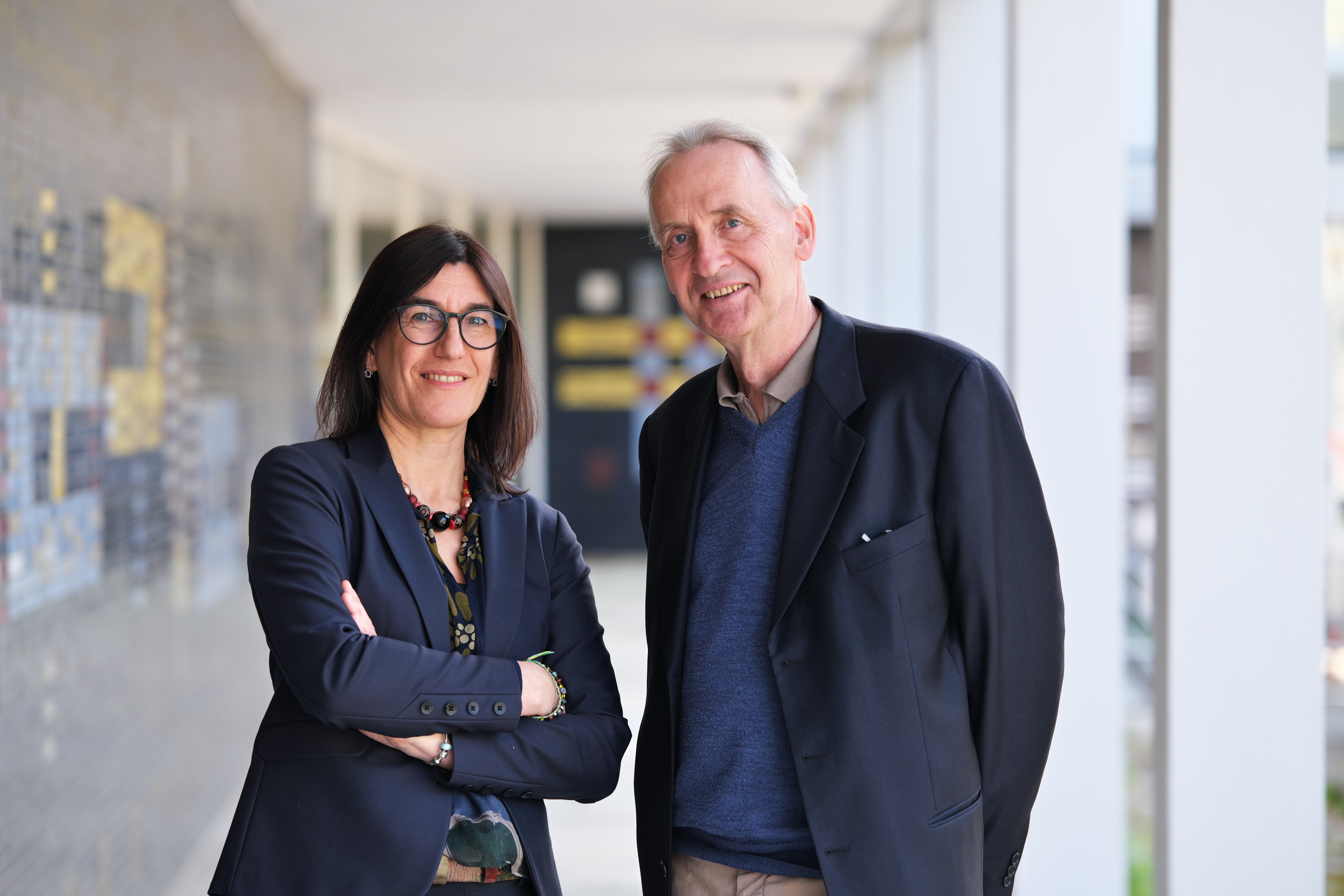
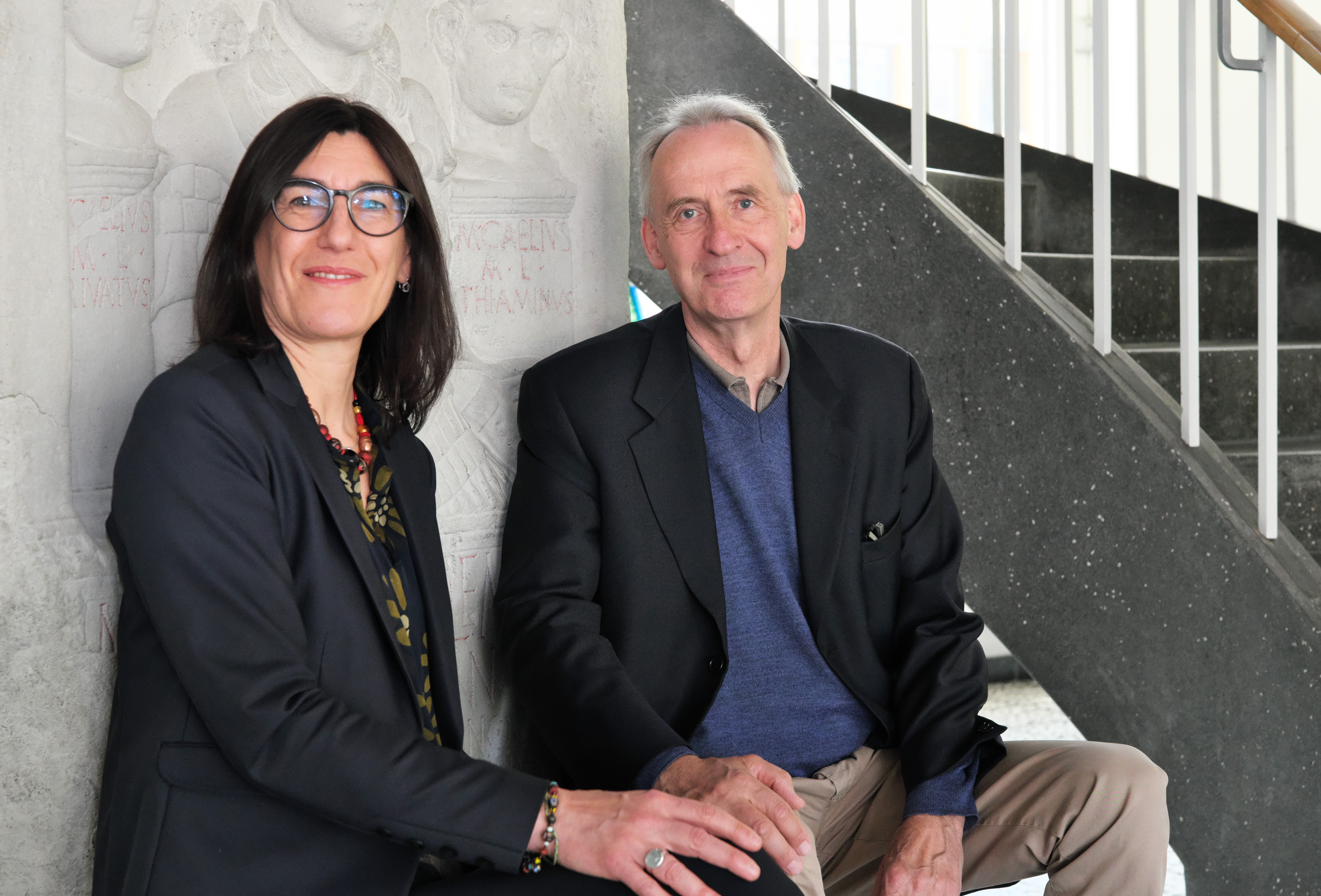
Historians Cristina Andenna, Heinrich Schlange-Schöningen and Timo Klär are organizing the conference, which is funded by the German Research Foundation (DFG) and the German Academic Exchange Service (DAAD), as part of a project focus addressing research, teaching and international collaboration. Interested members of the public are warmly invited to attend.
The following text has been machine translated from the German with no human editing.
Zeus, who abducts Princess Europa in the guise of a bull; the Nibelungen saga, centred on Siegfried’s murder and Kriemhild’s revenge; Emperor Barbarossa, who sleeps in the Kyffhäuser Mountains – tales of gods, heroines and heroes of the past have been passed down through the centuries and millennia. They are anything but true stories. Yet they still have a profound influence on European societies. “Myths from earlier eras have a living impact right through to modern Europe, even into the present day – regardless of whether they possess a reliable, true historical core,” emphasises Professor Heinrich Schlange-Schöningen of Saarland University. “Myths are not self-contained narratives from a pre-scientific era that have since been replaced by rational thinking. Ancient myths continue to exert an influence, and new myths continue to emerge to this day,” explains the historian.
Together with Cristina Andenna, Professor of Medieval History, and Timo Klär, a lecturer, the Professor of Ancient History is organising the conference on European myths and identities. The focus is on the question of why and how these ancient narratives continue to have an impact today and how they shape perceptions of origin, community or power. “We will explore the extent to which myths have contributed to identity formation in the emerging nation states of Europe: how have national cultures positioned and legitimised themselves over the course of the ages by drawing on ancient and medieval myths? What interpretations and reinterpretations have the myths undergone in the process?” explains Cristina Andenna.
One focus is on Eastern Europe. Experts from Eastern European countries will contribute the perspective of their own cultures. However, the experts will also examine Western European myths, such as the founding myths of the cities of Trier and Metz. “Our aim is to adopt a comparative perspective that transcends not only national borders but also disciplinary boundaries, for example into the fields of philology and art history. Given the diversity of research and illustrative material, we are dedicating a separate section to the staging of myths, focusing on art and architecture in public spaces. However, we are also considering literature and media such as film or comics as potential subjects of study,” says the historian.
Cross-disciplinary and cross-border exchange for students and PhD candidates too
Myths simplify complex contexts, passing them on skilfully packaged in exciting stories with vivid imagery, and often also foster social or political identities. At the same time, they idealise and romanticise the past, thereby clouding our view – and are exploited for political purposes: an extremely broad field that lends itself excellently as a research focus and for international cooperation – particularly for young researchers. For the past three years, Schlange-Schöningen and Andenna have been bringing students and doctoral candidates together with experts from various countries. In seminars and on excursions, they explore the connection between myths and identities, as they did last year on a trail of clues through Germany or two years ago in Bulgaria.
“Ancient and medieval myths were and remain a central point of reference for social and political discourse in European countries. This provides us with a very rich and multi-layered topic for cross-border and interdisciplinary exchange,” says Schlange-Schöningen. The wealth of topics leads to a new twist every year . In July, for example, there will be a summer school in Prague, including an excursion to the Czech Republic. “It is precisely the exchange between cultures that opens up exciting insights,” says Cristina Andenna.
A look at the conference programme
The conference opens with a look at the myth of Europa, the king’s daughter, as it has been retold time and again since antiquity, and how it reflects the continent’s changing self-image. Under the heading ‘Myth, Religion and Identity’, the scholars in the first section of the conference will examine the interplay between tradition, faith and belonging. Papers will address topics such as the desert in hagiographies and explore the – royal? – ancestry of early medieval abbesses and monastery founders. One lecture will examine the Cathars, a Christian sect in medieval France from which the word “heretic” is derived. Christian, ancient and Germanic concepts of understanding and interpretation in the Middle Ages will be addressed, as will enemy stereotypes that have shaped entire peoples since antiquity.
Lectures on the British resistance against Rome, the myth of Romulus and the issue of asylum in Europe, the Nibelungenlied, and ‘Iphigenia on the theatre stage of the Nazi state’ demonstrate, among other things, how myth and politics are intertwined. The focus on myth, poetry and art shows how myths live on in poetry, art and monuments. Lectures will address modern Greek statues, the myths of Hero and Leander, and the phoenix as a figure of transformation in European modernity. The reinterpretation of ancient myths in works of art and architecture—such as in parliamentary and state assembly buildings in Central Europe—is also a theme, as is myth-rich victory poetry and its reception.
International conference from 21 (from 9 am) to 23 May 2026, Conference Room 1.17 in Building C7 4, Saarbrücken Campus.
All interested parties are warmly invited. For organisational reasons, please register by emailing: maximilian.bacher@uni-saarland.de
The bilingual conference (German and English) is funded by the German Research Foundation (DFG) and the German Academic Exchange Service (DAAD) as part of the ‘Eastern Partnerships’ programme, as well as by the Faculty of Humanities at Saarland University ( ) through its Strategic Fund and by the Cluster for European Research (CEUS).
Conference programme:https://www.uni-saarland.de/lehrstuhl/andenna/aktuelles/mythen-und-identitaeten-in-der-Europaeischen History.html
For further information:
Prof. Dr. Heinrich Schlange-Schöningen, Saarland University, Chair of Ancient History, Tel.: 0681/302-2220, Email: schlange-schoeningen@mx.uni-saarland.de
Prof. Dr Cristina Andenna, Saarland University, Chair of History of the Early and High Middle Ages, Tel.: 0681/302-3312, Email: cristina.andenna@uni-saarland.de
Press photos available for download: Press photos can be found on this news website: www.uni-saarland.de/aktuell/konferenz-mythen-46252.html
You may use the press photos free of charge in connection with this press release and reporting on Saarland University, provided you credit the photographer.