Information for
 Quick links
 Faculties


The following text has been machine translated from the German with no human editing.
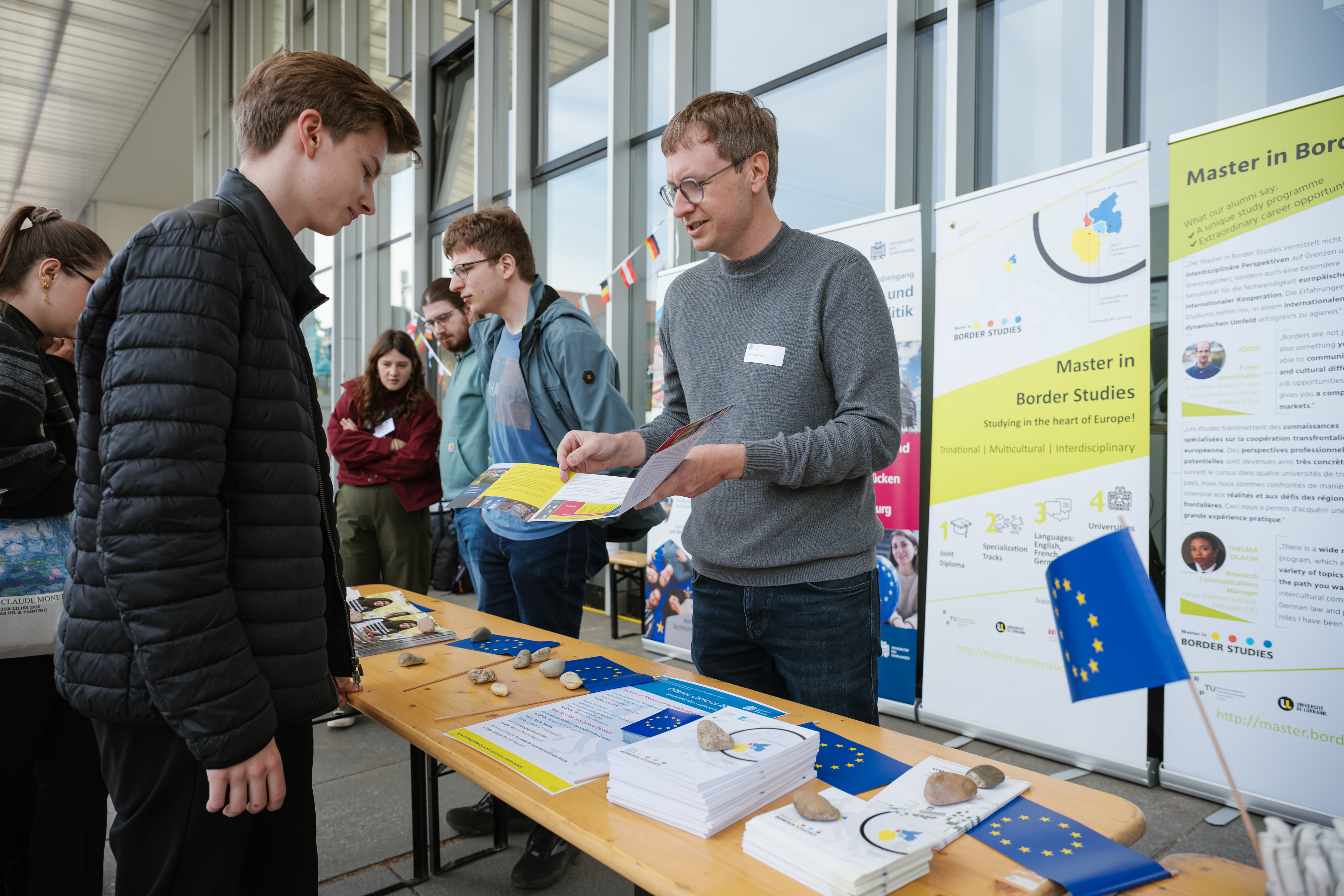
There will also be a wide range of hands-on activities for children and young people. The 'Open Campus' event on the Saarbrücken university campus will take place this time on a Friday afternoon from 3 p.m. – much like the Long Night of Science on the Homburg campus a week later (19 June). Alongside a wide range of services and advice, an information zone around the Campus Centre will also feature experiments for young and old alike. The university will hold all lectures in the Audimax building B4 1. Various campus and laboratory tours will start from an information point. On Französischer Platz, various UdS bands will perform on stage, and from around 7 p.m. until 9 p.m. there will be an after-party with professors as DJs. Various specialities will be on offer from several food trucks throughout the afternoon and evening.
We present a selection of the programme items below; further details appear in the university newspaper 'campus extra', which the Saarbrücker Zeitung will include on 6 June. The full Open Campus programme, including all locations and times, can be found online: www.uni-saarland.de/infotag
The natural sciences offer a varied programme, ranging from laboratory tours and lectures to hands-on stations on the Info Mile. The Department of Physics offers insights into areas of research that, until a few years ago, sounded like science fiction à la 'Star Trek'. In a series of lectures, Professor Frank Wihelm-Mauch, a leading expert in quantum computing at the Jülich Research Centre, will present the new Centre for Quantum Technologies at Saarland University. The interdisciplinary team of physicists, mathematicians, Computer Science experts and engineers is exploring new possibilities and applications for quantum technologies. Professor Jürgen Eschner will then present some examples from experimental quantum research (4:30 p.m., Music Room C5 1).
How will artificial intelligence (AI) shape our future? Experts from the Saarland Informatics Campus will discuss this in a live debate. The discussion will feature Professors Philipp Slusallek and Peter Fettke (both of whom also conduct research at the German Research Centre for Artificial Intelligence), alongside Vera Demberg, Professor of Computer Science and Computational Linguistics, and Alexander Koller, Professor of Computational Linguistics, as well as SIC Managing Director Christian Theres. Guests at the panel discussion can put their questions to the panel of experts (5:30 p.m. to 6:15 p.m., Music Hall, C5 1).
In the biosciences, a series of talks and a laboratory tour will cover topics including epigenetics and how it influences our genetic makeup. The Helmholtz Institute for Pharmaceutical Research (HIPS) and the INM – Leibniz Institute for New Materials will also be offering experiments and talks on the Info Mile and in the Audimax building. At the Institute of Systems Biotechnology, Professor Christoph Wittmann invites visitors to discover the world of biotechnology. This also involves the vision of a bio-based circular economy that uses microbial cell factories to produce everyday products from renewable raw materials and waste streams (A1 5, 2nd floor)
Is there such a thing as 'men's flu' and do people assigned female at birth really suffer from migraines more often? The Center for Gender-Specific Biology and Medicine (CGBM) at the University is seeking answers to such questions. It focuses on the differences that arise among people in many biological processes, such as ageing, cancer and the immune system. To this end, disciplines such as Pharmaceutical Science, biology, bioinformatics and medicine work closely together. Those interested can learn about this research in the lecture (5:30 p.m., B4 1, Lecture Theatre 0.04).
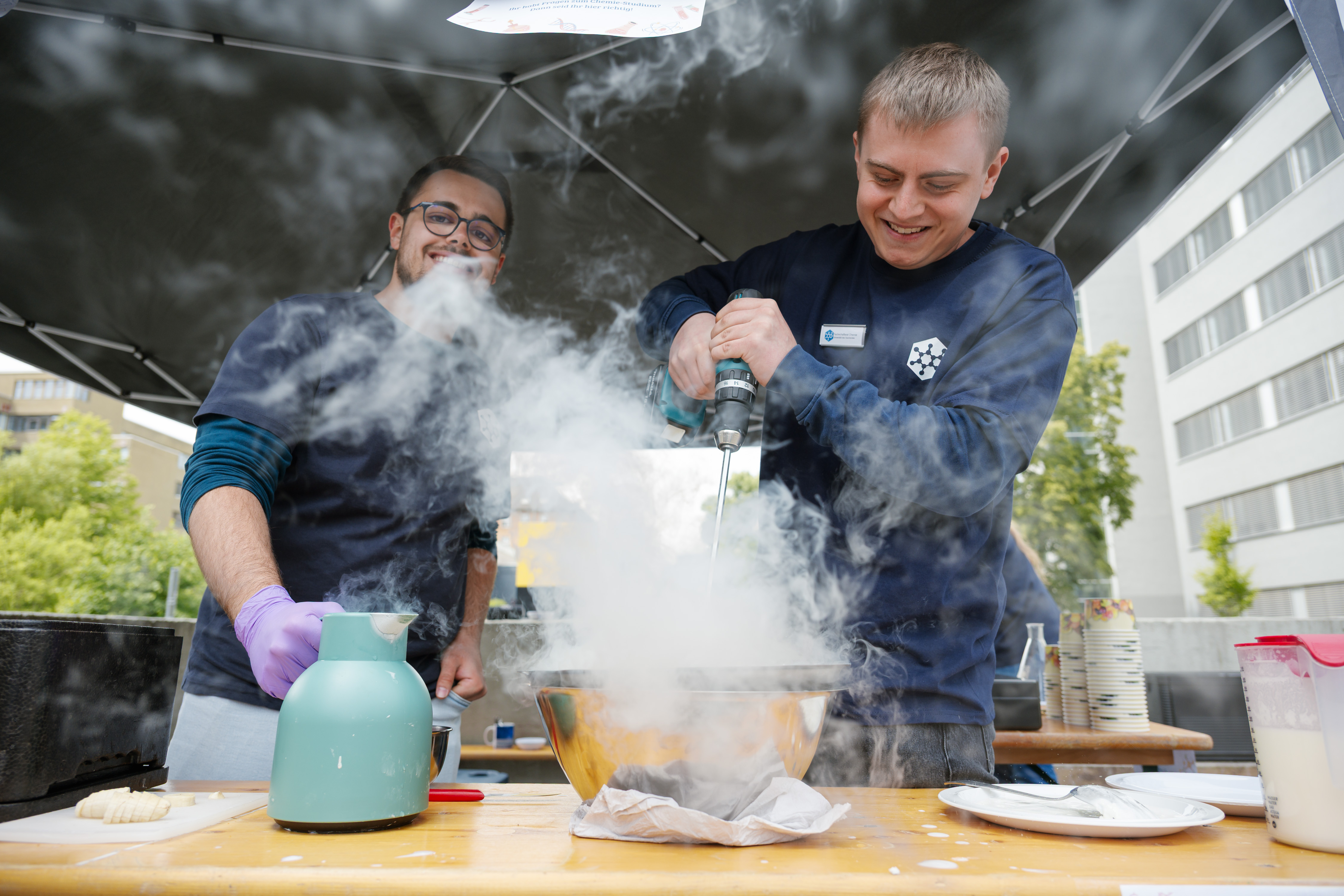
Spectacular nitrogen show: Anyone wishing to experience a frosty experiment involving the extreme cold of minus 196 degrees Celsius should come to the NanoBioLab school laboratory (B2 2, Room -1.21) at 3:30 p.m. or 4:30 p.m. Here, curious visitors can witness how liquid nitrogen transforms ordinary objects in a matter of seconds. Children and young people can also become researchers themselves here, conducting experiments in a real laboratory with a university atmosphere and thus discovering the world of Chemistry and the natural sciences.
At the SinnTec lab course for school students, children and teenagers can also build their own electronic circuits – either a reaction timer or a musical instrument – which they can take home with them. As they tinker away, they gain a real understanding of technology and sensor technology (3 p.m. to 6:30 p.m., A5 1). Smart materials make robotic grippers as flexible as an octopus's tentacles and enable a new, climate-friendly cooling and heating technology. Students are already working alongside Professor Paul Motzki on this cutting-edge research in engineering. You can find out more at a stand on the Info Mile. At 5:30 p.m., experts from the EnFoSaar transformation project will explain why batteries are important for the energy transition and how research can help to recycle raw materials and treat water (B4 1, HS 0.18).
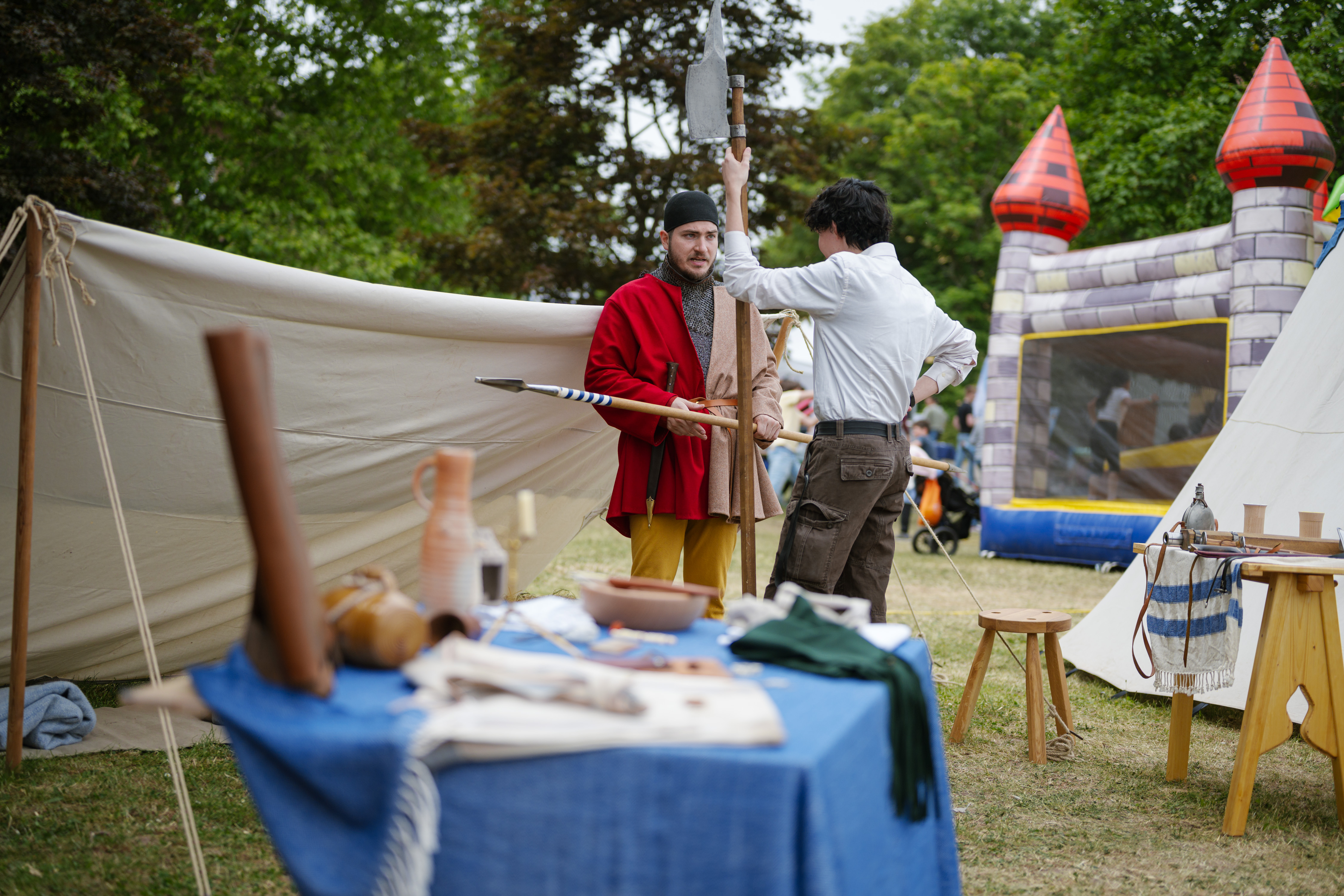
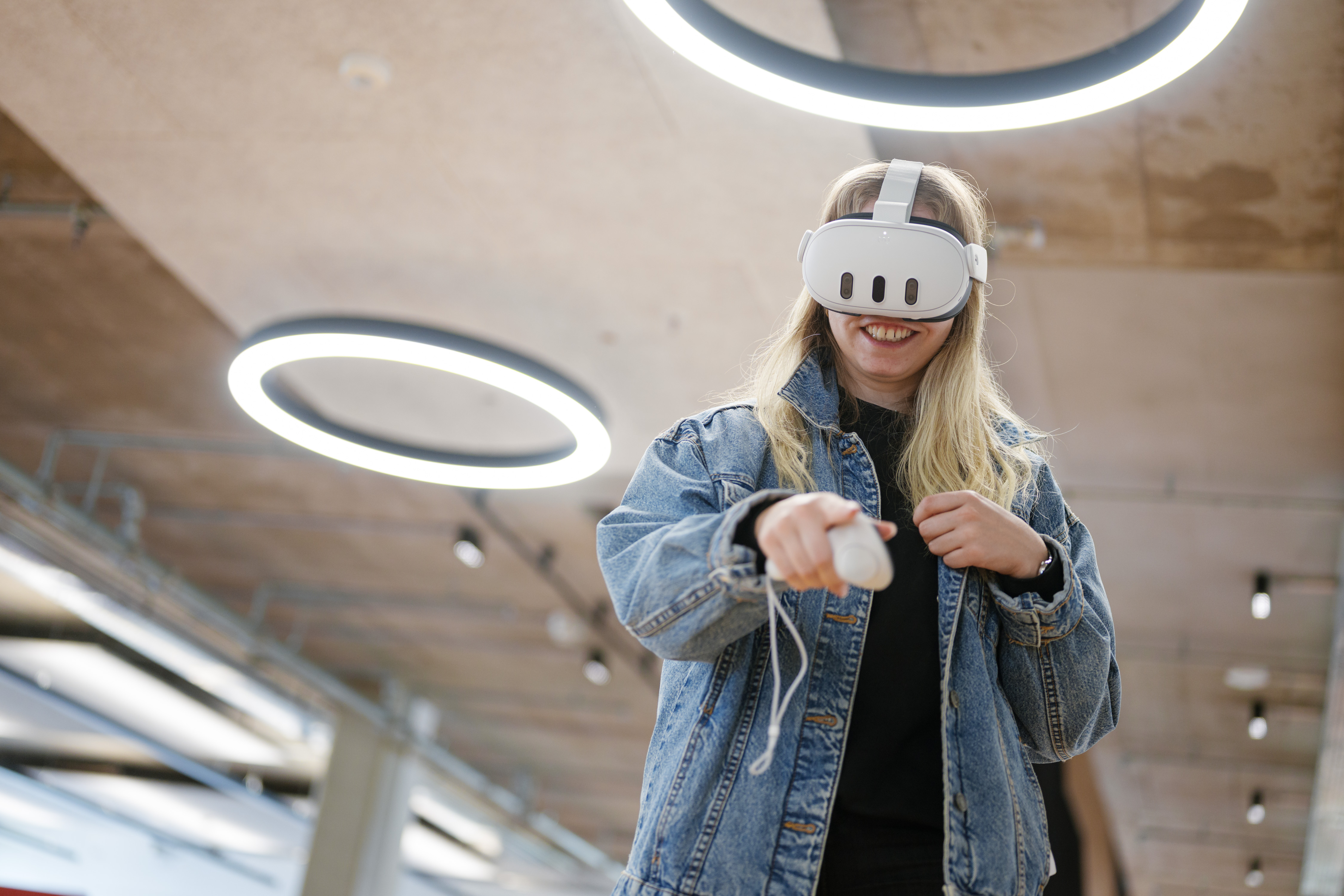
Was the Middle Ages really a 'Dark Age'? Few periods in history remain shrouded in so many misconceptions. What is mere cliché and what is true? At the information stand, fans of the Middle Ages can put their knowledge to the test. At 3:30 p.m., Professor of Medieval Studies Cristina Andenna will demonstrate there how a history project promotes a critical approach to AI. Furthermore, antiquitymeets virtual reality: those eager to learn can explore how digital methods breathe new life into ancient sculptures in the Classical Archaeology collection. A method developed at the university blends reality and virtual reality: those interested can find out more on two guided tours starting at 3:30 p.m. and 5 p.m. (Info Point). In an experiment with the 'morality machine', the Department of Protestant Theology demonstrates why machines cannot relieve us of responsibility when making decisions (5 p.m., B4 1, Lecture Theatre 0.07).
The Faculty of Medicine will be providing advice at the Info Mile on degree programmes in Medicine, Dentistry, Nutricional Medicine and Dietetics as well as Physiotherapy and Advanced Practice Nursing. The 'Center for Digital Neurotechnologies Saar' will demonstrate at the Info Mile what happens when neuroscience, medicine, Computer Science and technology converge: interdisciplinary research is being channelled into new therapeutic approaches and digital innovations to improve health and quality of life in the long term. It will become possible to diagnose illnesses without physical contact, as well as to perform operations using augmented reality or to arrange virtual visits with a sense of physical presence for sick children in isolation wards.
Watching the brain at work: During a laboratory tour, visitors will learn how an electroencephalogram (EEG) measures brain activity via electrodes placed on the scalp and how these signals yield insights: researchers from the Psychology department will explain how they use the recordings to draw conclusions about thought processes (3:45 p.m., 4:30 p.m., 5:15 p.m., meeting point: Info-Point).
You can find all events for the Open Day, including locations and times, in the online programme. You can create your own personalised programme using the favourites selection with the heart symbol. On Saturday 6 June, the university newspaper 'campus extra' will also appear with the Saarbrücker Zeitung; we will publish the printable PDF on this website.
Further information and the online programme can be found at: www.uni-saarland.de/infotag