Information for
 Quick links
 Faculties


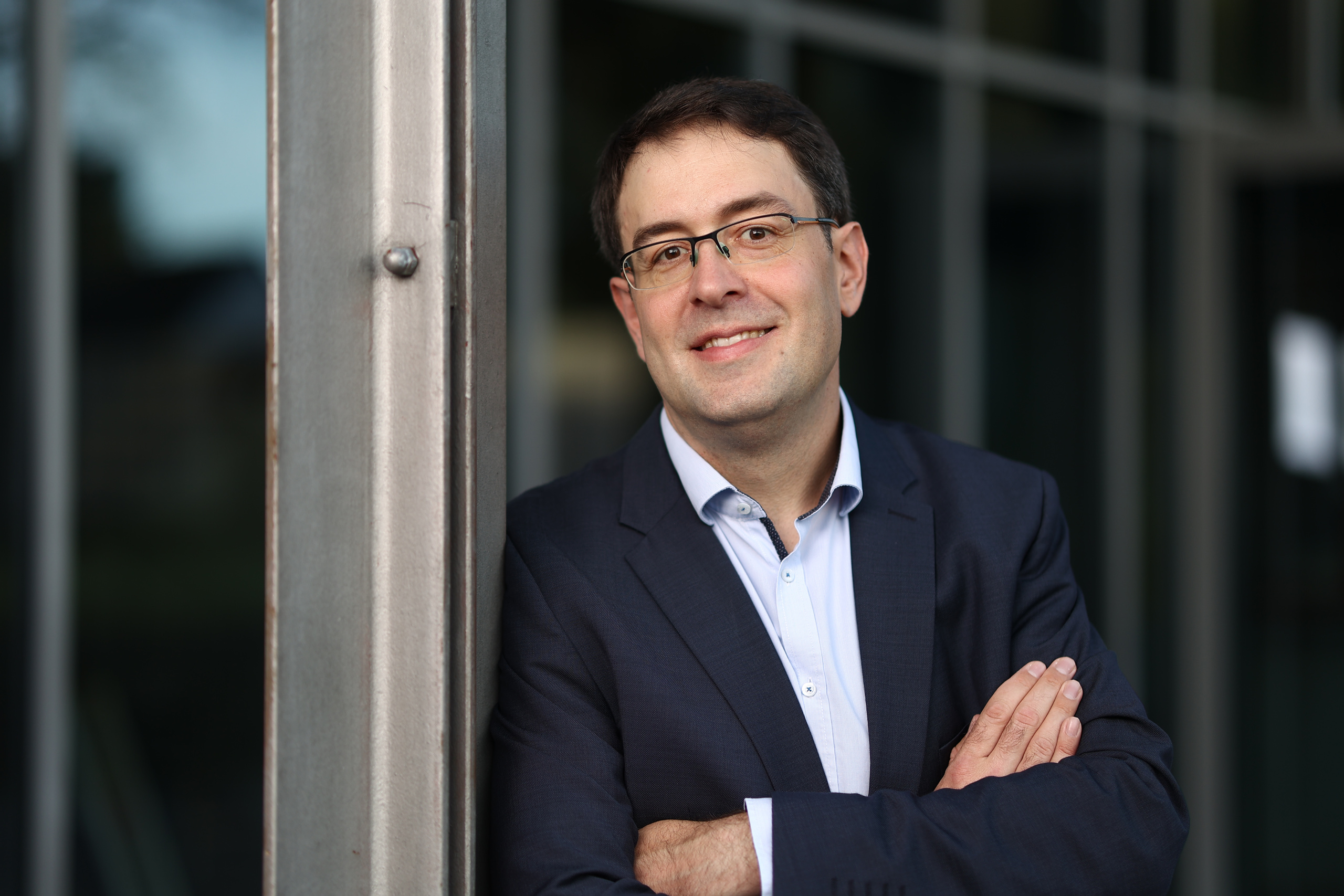
To support this work, Höller will receive funding of up to €1.8 million through the German Research Foundation's (DFG) Emmy Noether Programme.
The following text has been machine translated from the German with no human editing.
When planning complex processes, it is advantageous if the systems used can react flexibly to changes in the environment. 'The advantage of systems from automated planning is that they can solve different problems without the system itself needing to be changed. They operate based on a model, a simplified description of the problem,' explains Daniel Höller, an research associate at Saarland University. The behaviour of these model-based systems is mathematically provable and therefore reliable. It is also possible to explain exactly why a particular behaviour occurs. 'However, these systems also have some disadvantages. In particular, they may solve small problems but require a great deal of computing time once the problems become larger. Furthermore, the model must also be adapted to minor changes, making it relatively inflexible,' explains Daniel Höller.
For this reason, researchers are increasingly using machine learning algorithms in automated planning. Such computer programmes have the advantage that they can adapt flexibly and are more scalable. They can therefore be trained on small-scale scenarios and then also work for large-scale applications. 'Compared to systems from automated planning, however, behaviour based purely on machine learning is difficult to interpret or explain to a human. Why, for example, does the robot do what it does?' says the computer scientist, who has a doctoral degree in Computer Science.
His aim is therefore to develop planning systems that combine traditional, explainable techniques with machine learning. 'This combination is useful not only when solving planning problems, but also right from the model-building stage. If, for example, you look at a city's road network and want to predict how long a particular journey will take, factors such as the day of the week, the time of day or weather conditions come into play. Using machine learning techniques, these factors can be incorporated into the model and thus into the planning process," explains Daniel Höller.
A main application of machine learning in the context of automated planning is to speed up the systems and find solutions more quickly. 'Here, we will be working in particular on systems that can provide guarantees despite the integration of machine learning, such as the optimality of the resulting behaviour,' explains the Computer Science expert. In addition to this integration of machine learning techniques into planning systems, work is also being carried out in the opposite direction. 'We want to use techniques from automated planning to prove that following a learned action policy can never result in unsafe states,' explains Daniel Höller, who has previously been researching the fundamentals of AI in Professor Jörg Hoffmann's group at Saarland University.
Daniel Höller's research project on 'Neuro-Symbolic Methods in Sequential Decision Making' was successful in a special call for proposals on 'Artificial Intelligence Methods' under the Emmy Noether Programme. An internationally renowned panel of experts selected 36 out of 178 outline project proposals for submission of a full application. Of these, only 15 were selected for funding. Daniel Höller will now receive – subject to a successful interim evaluation – a total of 1.8 million euros to establish an Emmy Noether Group. Through the Emmy Noether Programme, the German Research Foundation (DFG) supports exceptionally qualified researchers in the early stages of their careers whose doctoral degrees were awarded no more than four years ago, who have international experience and who have completed a postdoctoral phase.
Further information:
Emmy Noether Programme of the German Research Foundation (DFG):
Press release on the call for proposals 'Methods of Artificial Intelligence'
Emmy Noether Programme website
Daniel Höller's website: https://fai.cs.uni-saarland.de/hoeller/
For further information, please contact:
Dr. Daniel Höller
Academic Research Associate
Foundations of Artificial Intelligence (FAI) Group
Email: hoeller(at)cs.uni-saarland.de