Information for
 Quick links
 Faculties


The following text has been machine translated from the German with no human editing.
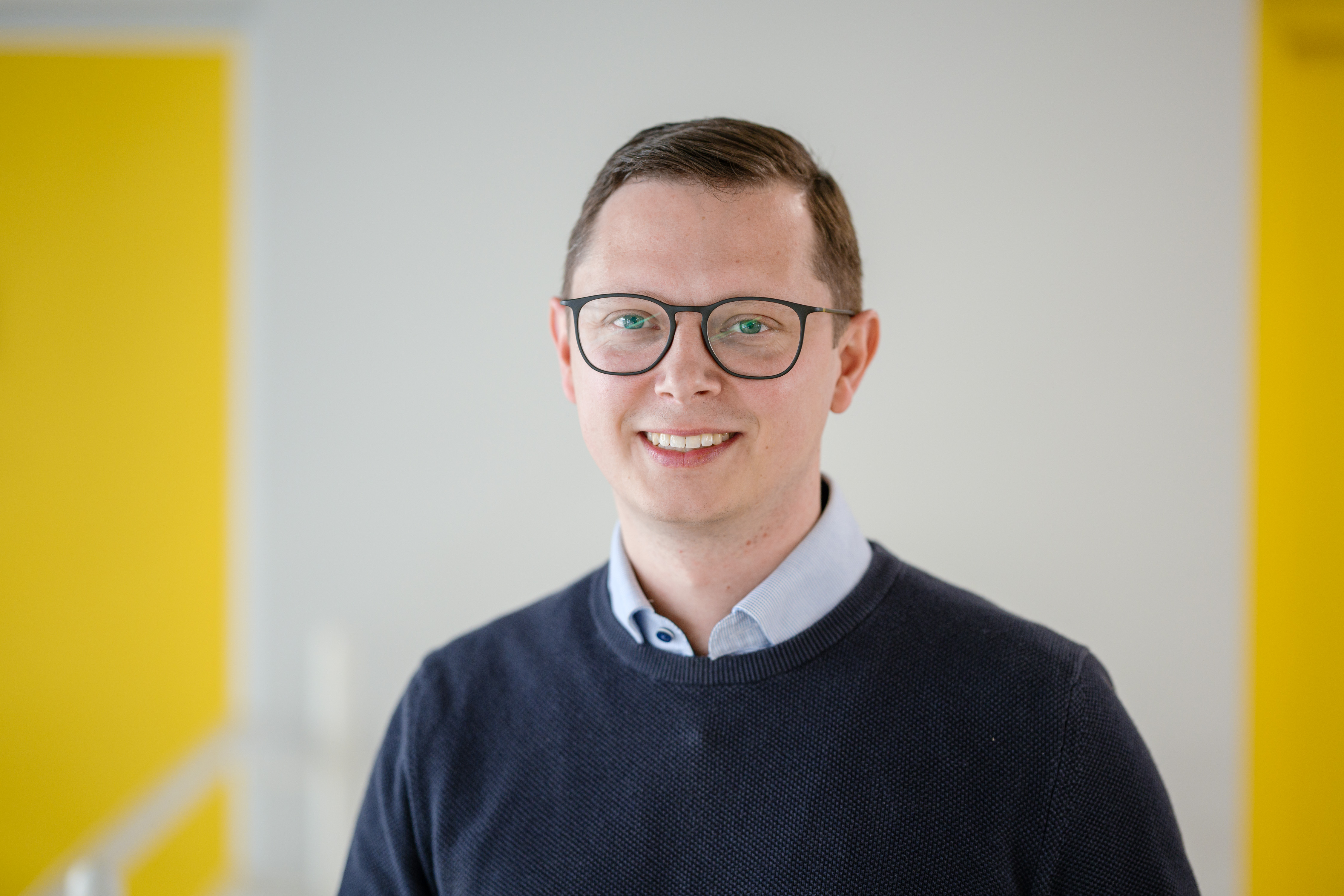
A key example of the novel biomaterials that Oskar Staufer and his team are researching are artificial lymph nodes. These enable the activation of immune cells to be studied outside the body. In addition, they can be used in the future to produce more powerful immune cells for cancer therapies. Oskar Staufer intends to link his materials science research even more closely with clinical applications in the future, focusing in particular on researching new physical effects that underlie immunological processes.
The new Professor of Experimental Biophysics intends to contribute his expertise in the development of biomimetic materials – i.e. materials based on natural models – and his knowledge of immune cell activation to larger, interdisciplinary research networks. These include the BioMed – Life and Matter research focus at Saarland University, as well as future collaborative research centres and possible excellence initiatives.
Short CV of Oskar Staufer
Oskar Staufer studied molecular biotechnology at Heidelberg University. For his doctoral thesis, for which he was awarded the Otto Hahn Medal by the Max Planck Society, he moved to the Max Planck Institute for Medical Research, where he joined
the newly founded Max Planck School 'Matter to Life'. With the Marie Skłodowska-Curie Fellowship from the European Commission, he was able to further deepen his work on the interaction between artificial systems and immune cells at the University of Oxford.
Since 1 November 2022, Oskar Staufer has been heading the 'Immuno-Materials' research group at INM – Leibniz Institute for New Materials. The Emmy Noether Programme of the German Research Foundation (DFG) funds this group with €2.4 million. The Saarland Pharmaceutical Research Alliance, which links INM with the Helmholtz Institute for Pharmaceutical Research Saarland (HIPS) and Saarland University, supported the recruitment of Oskar Staufer in order to strengthen the NanoBioMed focus area. The new Professor of Experimental Biophysics will take up his post on 1 May 2026.