Research news

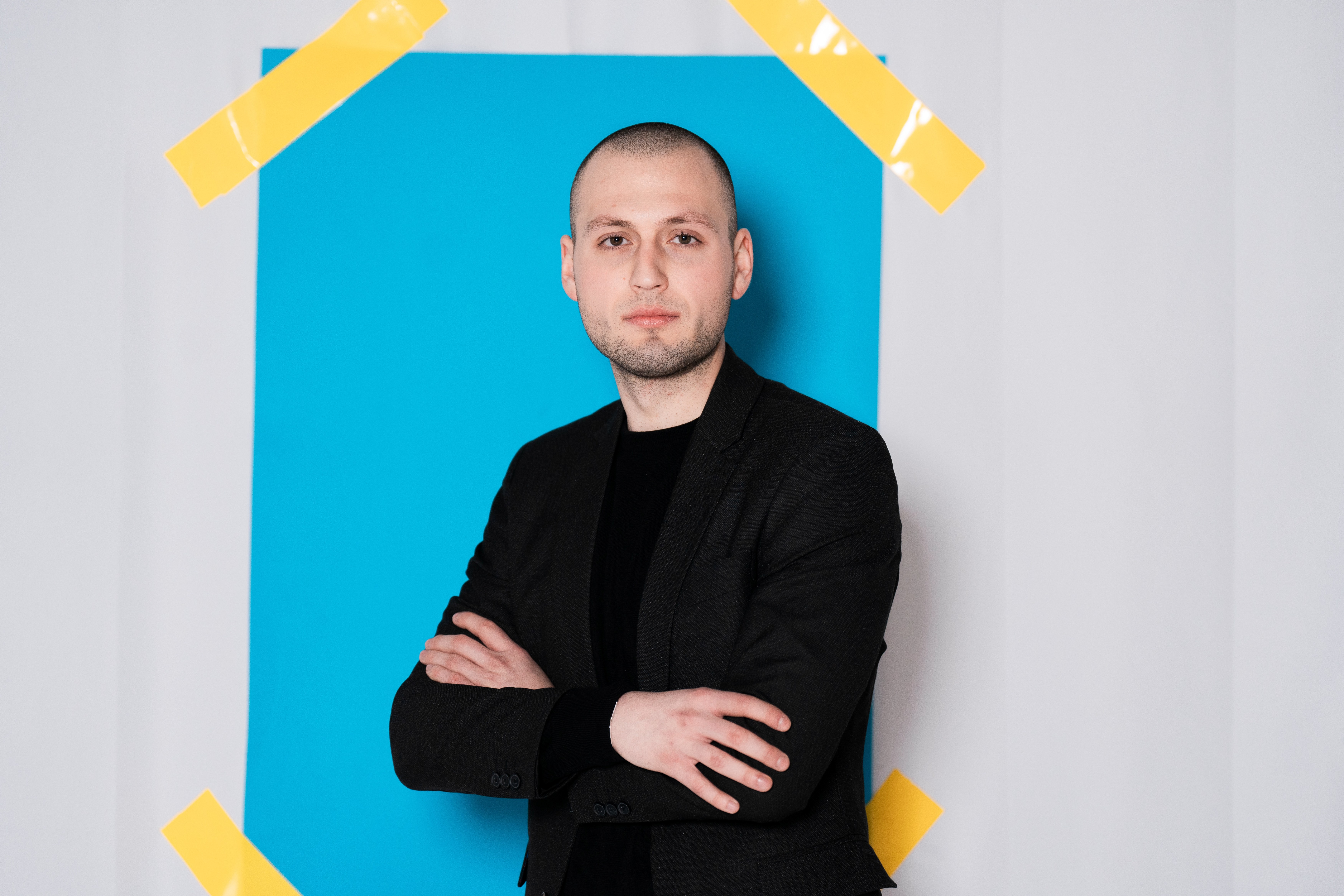
Portrait von Martin Ulrich
The war in Ukraine is a polarising issue – not only among political parties, but also among individual citizens. Martin Ulrich, a sociologist at Saarland University, has used Austrian data to show that Austrians' party preferences lead to significant differences in their assessment of how important peace in Europe is for Austrian politics and what they think of refugees.
[...]
Zwei Personen arbeiten im Pharmazie-Labor.
The global skin care company Beiersdorf and the Helmholtz Institute for Pharmaceutical Research Saarland (HIPS) on the Saarbrücken university campus have entered into a long-term, exclusive partnership. In this collaboration they aim to investigate the role of the skin microbiome in maintaining healthy skin. The goal is to identify natural products produced by microorganisms on the skin that have a positive effect on skin balance. [...]
Illustration des Wirkprinzips der Membranen zur Trennung von Öl und Wasser
Industrial wastewater often contains oils and fats that can pollute our rivers and seas. Companies are therefore subject to strict regulations before treated water may be discharged into the environment. A new joint project between inomat GmbH, Saarland University of Applied Sciences (htw saar) and Saarland University aims to develop advanced filter membranes capable of reliably removing these contaminants in a resource-efficient manner. [...]
Abbildung von vier Blutproben mit unterschiedlicher Volumenkonzentration
When red blood cells are centrifuged in a density-gradient medium, they form a striking banded pattern. The cells arrange themselves into vivid red stripes containing high concentrations of red blood cells with paler bands containing far fewer red blood cells in between. The lowest density red cells are found in the uppermost red band while those with the highest density are located in the lowest band. Until now, scientists believed this was caused by uneven water loss as cells age. [...]
On 16 and 17 January, a symposium at the Medical Campus in Homburg will be exploring how AI-based technologies are reshaping healthcare. The symposium ‘Artificial Intelligence in Medicine’ is hosted by the Health.AI network, Saarland University, Saarland University Medical Center and the German Research Center for Artificial Intelligence (DFKI). It is aimed at clinicians, healthcare professionals, and researchers, as well as anyone with an interest in the topic. [...]
Porträtfoto
The European Research Council has awarded Jonas-Frederic Sauer, Professor of Physiology at Saarland University, an ERC Consolidator Grant for his basic research on the brain. This research prize is endowed with around €2 million. [...]
Prof. Dr. Dominik Munz
It sounds a bit like the search for an alternative philosopher's stone. Over the next few years, a team led by Dominik Munz, Professor of Coordination Chemistry at Saarland University, will be looking for ways to turn cheap coal into valuable materials such as diamonds, which play an important role in industry. Munz received an ERC Consolidator Grant from the European Union for this project, meaning two million euros will be allocated to the research group over a period of five years.

[...]
Schematische Darstellung von Teilen aus anisotropen Teilchen
Physicists identify a fundamental mechanism

We all know that when held up to a mirror a right hand looks like a left hand – and that a right hand and a left hand differ in that they cannot be superposed on each other. This absence of left–right (mirror) symmetry is known as chirality and is ubiquitous in nature: from the coiling of snail shells to the double helix of DNA. Despite its importance, chirality has largely been missing from theoretical descriptions of interacting active matter.
[...]
In a new research project led by the Central Institute of Mental Health (CIMH) in Mannheim, scientists are investigating how insights into learning processes in animal brains can be used to make artificial intelligence (AI) systems more flexible and efficient. Jonas-Frederic Sauer, Professor of Physiology at Saarland University, is involved in the project and conducts research at the Center for Integrative Physiology and Molecular Medicine (CIPMM) on the Homburg campus. [...]
Portrait von Tim Meyer
Verletzungen wie Kreuzbandrisse oder Meniskusschäden gehören zu den größten Risiken im Jugendfußball. Sie führen oft zu monatelangen Pausen und können die sportliche Entwicklung nachhaltig beeinträchtigen und Karrieren bereits zu einem frühen Zeitpunkt beenden. Ein internationales Forschungsteam hat nun herausgefunden, dass ein spezielles Aufwärm- und Trainingsprogramm namens „FUNBALL“ diese Gefahr deutlich verringern kann. Die Studie wurde im Fachmagazin Sports Medicine - Open veröffentlicht. [...]