Information for
 Quick links
 Faculties


The German Research Foundation (DFG) has agreed to provide around €14.2 million in funding to continue supporting this Transregional Collaborative Research Centre during its third funding period from 2026 to 2029.
The following text has been machine translated from the German with no human editing.
Patients whose kidneys no longer function properly have to live with a variety of limitations and complications. Around 100,000 people in Germany require regular dialysis and around 25,000 people live with a transplanted kidney, whose functions are also often impaired. In total, an estimated 1.5 to 2 million people in Germany have impaired kidney function.
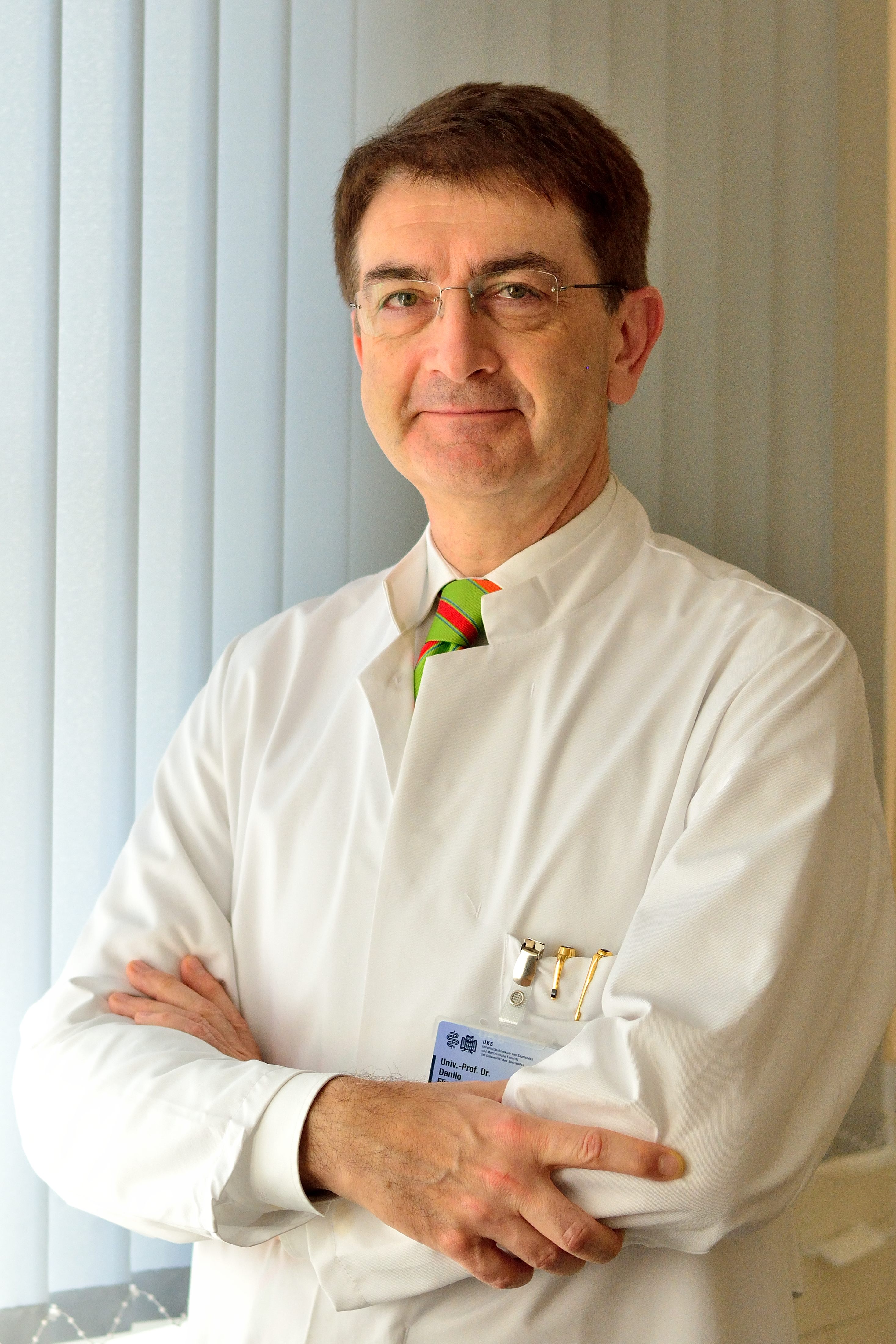
They often also have to contend with secondary diseases caused by the malfunctioning of the kidneys, such as anaemia. 'The main problem, however, is actually cardiovascular disease, which these patients suffer from significantly more often than the normal population,' explains Professor Danilo Fliser, who heads the Saarland projects of the Transregional Collaborative Research Centre, which is now entering its third funding period. 'A dialysis patient has a three- ely higher risk of dying from cardiovascular failure than a person with healthy kidneys. Why this is the case has not yet been sufficiently researched medically,' explains the director of the Clinic for Kidney and Hypertension Diseases at Homburg University Hospital.
'In the first funding period from 2018 to 2021, we were able to discover that uraemia, i.e. poisoning of the body with substances that should actually be excreted in the urine, affects the body's own molecules in such a way that damage to the circulatory system can result,' explains the nephrologist. In addition, the physicians have discovered that patients with kidney disease can experience misguided adaptation processes in the body, which can cause the cardiovascular system to become more sensitive to disturbances, making it easier for cardiovascular diseases to develop. 'As an example, kidney dysfunction can prevent the body from producing sufficient quantities of a certain protein, matrix Gla protein. This deficiency can lead to dangerous vascular calcification,' Professor Fliser continues.
Such processes in the body can have serious consequences for the patients affected. 'After a first heart attack, the second heart attack is worse in kidney patients than in otherwise healthy patients,' explains the expert, who is working closely with cardiologists in the research network to investigate the links between kidney disease and the cardiovascular system. 'In the second funding period, one of our most important goals was therefore to find out why this is the case, after we were able to identify this connection in the first period.'
'In the third funding period, we will focus more strongly on translating our research results into clinical application. In particular, we want to validate newly identified molecules as potential disease biomarkers and therapeutic candidates in initial clinical pilot studies with the aim of developing innovative therapies for patients with kidney and heart disease,' says Professor Fliser, outlining the goals for the third and final funding period. Transregional Collaborative Research Centres are generally funded by the German Research Foundation for a maximum of 12 years.
In 21 sub-projects, including a joint research training group, nephrologists and cardiologists are conducting research together in equal proportions. 'The fact that the German Research Foundation is now supporting such a transregional project for a third funding period, and thus for the longest possible time, also demonstrates the significance of the problem,' says Danilo Fliser. What is unique about this research network is the 'patient collective' on which the work is based. Usually, researchers do not primarily design studies on cardiovascular diseases using patients who also suffer from kidney disease. This is now different in the network of researchers from Saarland and Aachen.
Jakob von Weizsäcker, Saarland Minister of Finance and Science, congratulates the consortium on this success: 'For the third and final funding period, I wish the participating scientists every success and exciting research findings in this important field, not least because cardiovascular diseases are one of the leading causes of death worldwide, especially in patients with chronic kidney disease.'
Background:
The Transregio 'TRR 219: Mechanisms of Cardiovascular Complications in Chronic Kidney Disease' is a joint research network of Saarland University and RWTH Aachen University, which is also the coordinating university. In its third funding period, it consists of a total of 21 sub-projects, which the German Research Foundation will fund from 1 January 2026 to the end of 2029. The total funding amount is around 14.2 million euros, of which just under a quarter will go to Saarland University.
Further information:
Prof. Dr. Danilo Fliser
Tel.: +49-6841-16-15040