Information for
 Quick links
 Faculties


This fundamental research may help pave the way for new therapeutic strategies against cancer. The research team has published its findings in the International Journal of Biological Sciences.
The following text has been machine translated from the German with no human editing.
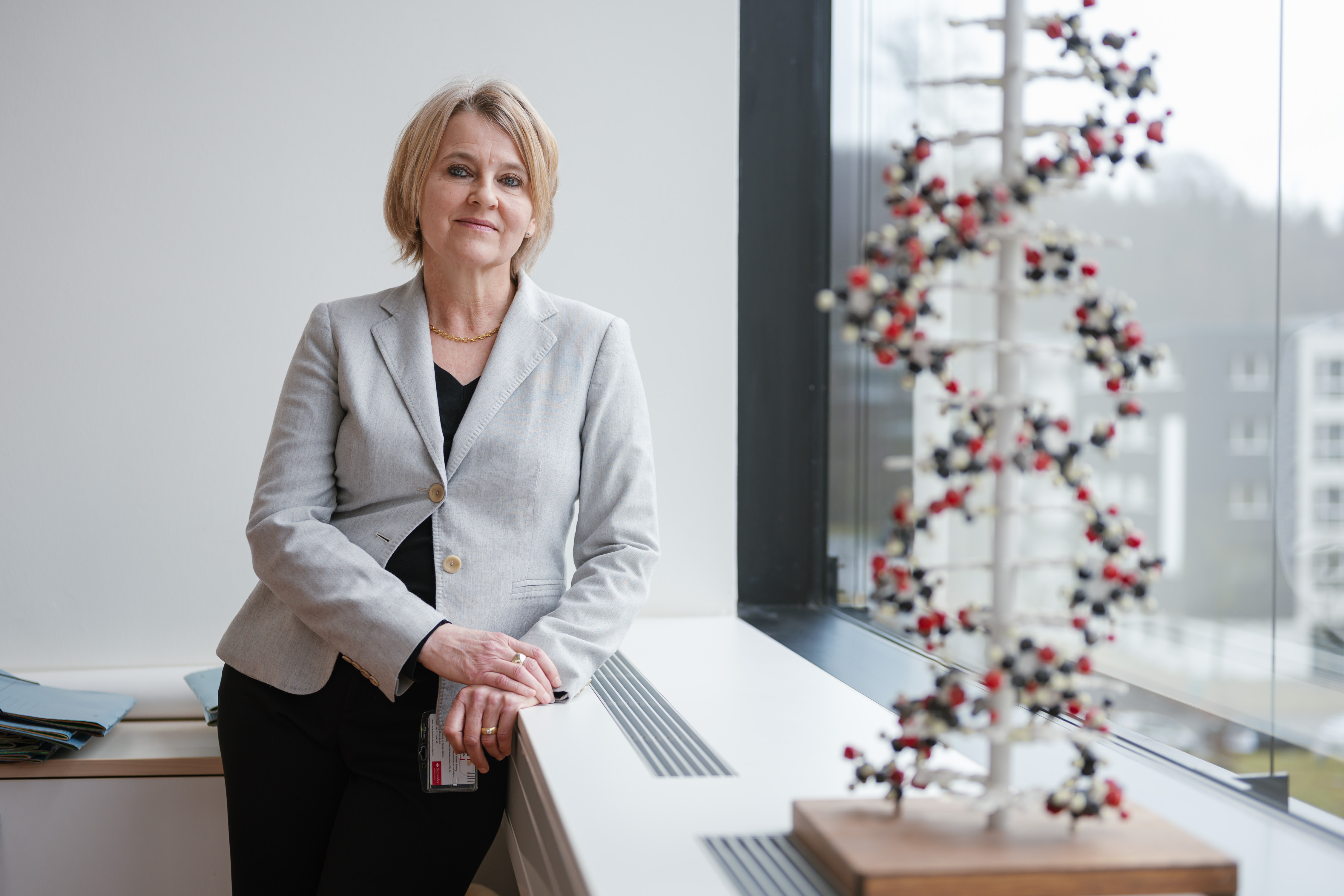
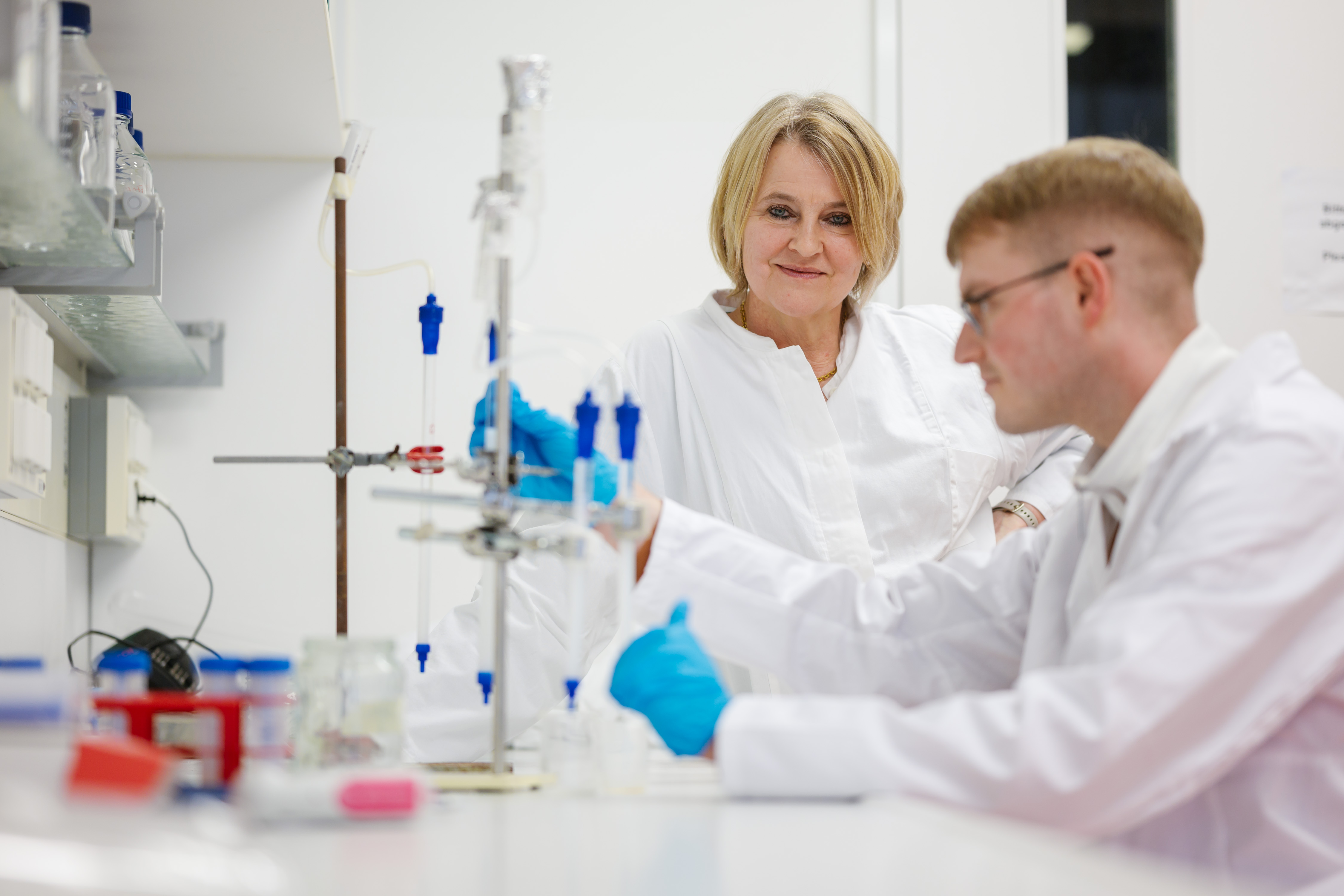
Cancer cells, which divide rapidly and grow aggressively, need to be nourished and require helpers in the body. However, this makes them dependent on their environment – and therefore vulnerable. If such supporters can be identified, it may be possible in the long term to specifically thwart their assistance. Saarbrücken-based pharmacist Alexandra Kiemer and her team are searching for such weak points. They are targeting the tumour cells themselves, but are also examining their environment to find out which processes support cancer. One promising candidate is the protein IMP2.
Kiemer and her research group have been studying this protein for a long time. They are uncovering more and more about its disastrous interaction in the body: "In earlier work, we were able to show that cancer cells use IMP2 to recruit macrophages and polarise them to become defectors," says Alexandra Kiemer. Macrophages, the immune system's scavenger cells, are actually part of the body's mobile task force and are supposed to fight cancer cells. Once they have been reprogrammed, however, they help to promote tumour growth instead.
"We were able to show that such macrophages, which promote the tumour, produce more IMP2 themselves. Since the role of IMP2 has so far been studied almost exclusively in cancer cells, we found this observation exciting," explains Kiemer. Until now, it has been largely unclear what IMP2 does in the microenvironment around the tumour, especially in macrophages. In the current study, the research team therefore focused specifically on macrophages: the researchers wanted to know what happens when the IMP2 protein is absent in macrophages.
They therefore examined the growth of cancer cells, firstly when macrophages in the tumour environment produced IMP2 and secondly when they did not produce IMP2. Their finding: if the macrophages did not produce IMP2, the tumours grew more slowly. "Tumour growth was slowed down simply because IMP2 was absent in the macrophages. So IMP2 in the immune cells must be directly involved in this process," concludes the professor of pharmaceutical biology.
The question is: what exactly does IMP2 do in the cells surrounding the tumour? "We suspect that IMP2 makes it easier for macrophages to migrate into the tumour," says the pharmacist. When IMP2 is present in macrophages, the phagocytes actually move faster in the cell culture model. The outer shell of cells, the cell membrane, consists of fat molecules. These can be more solid or more liquid – as in butter and oil. "If the fat molecules of the cell membrane are more liquid like oil than solid like butter, it becomes more mobile," explains Alexandra Kiemer. She suspects that IMP2 plays a major role in this process.
To investigate this, the team examined the composition of the fat molecules in the phagocytes. "When IMP2 is present, the fat metabolism of the macrophages is massively altered. In this case, the cell membranes are similar to liquid oil. This could explain why these macrophages can move more easily," explains Kiemer. At first glance, one might think that such mobile phagocytes are good for the body and help it. "However, in the microenvironment around the tumour, phagocytes can take on properties that benefit the cancer. If such cells are active in the tumour, this can promote its growth," she says.
A better understanding of the role of the IMP2 protein can help exploit the weaknesses of cancer. In the future, this could lead to new therapeutic strategies to slow down or, at best, halt the growth of tumours.
The research team published these findings in the International Journal of Biological Sciences:
Schymik HS, Wrublewsky S, Höring M, Liebisch G, Both S, Gasparoni G, Bickelmann C, Robertson H, Dahlem C, Walter J, Helms V, Laschke MW, Ampofo E, Hoppstädter J, Kiemer AK. "IGF2BP2 Deficiency in Macrophages Impairs Migration, Reprograms Metabolism, and Limits Tumor Progression." Int J Biol Sci 2026; 22(6):2754-2773. doi:10.7150/ijbs.122142. https://www.ijbs.com/v22p2754.htm
In a study published at the same time by researchers at Saarland University and Saarland University Hospital in Homburg, IMP2 was also investigated in other cell types (DOI: 10.1002/ijc.70340, International Journal of Cancer). There, too, the protein influences fundamental processes such as cell metabolism and cell motility in the interaction between tumour cells and immune cells.
Press release on further IMP2 research by Professor Alexandra Kiemer's working group: "Tumour cells tie up packages that turn phagocytes into defectors" (2024) https://idw-online.de/de/news836829
Questions answered by: Prof. Dr Alexandra K. Kiemer (Pharmaceutical Biology)
Tel.: 0681 302-57301; Email: pharm.bio.kiemer(at)uni-saarland.de
Press photos available for download:
You may use the press photos free of charge in connection with this press release and reporting on Saarland University, provided you credit the photographer.