Information for
 Quick links
 Faculties


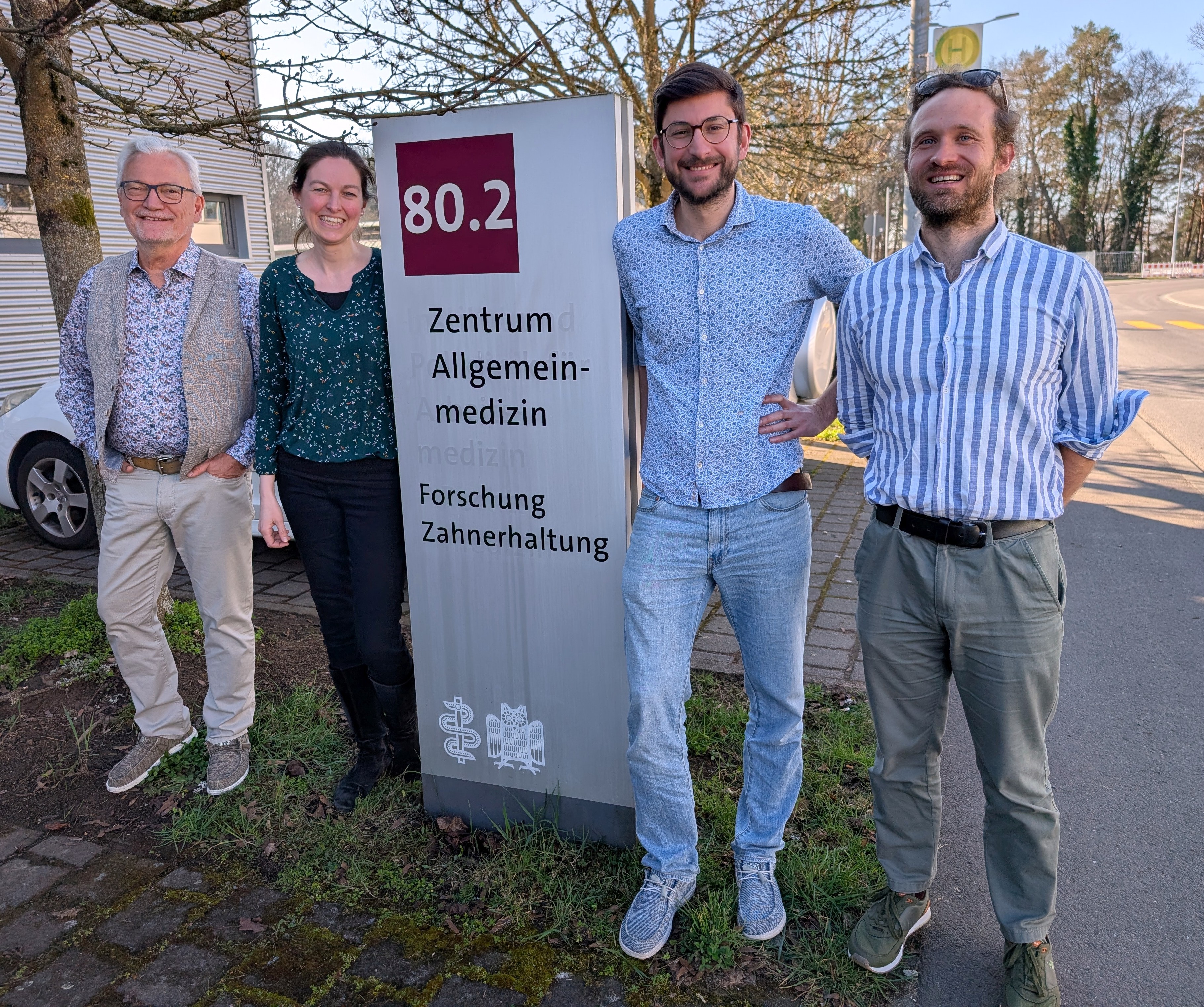
A prize for student engagement and an award of €2,000 was given to the 'Teddy Bear Clinic Homburg' project led by Maria Römbke and Julien Wallasch.
The awards were presented on 13 March 2026 by the Saarland Ministry of Finance and Science at an award ceremony in the Old Protestant Church of St. Johann in Saarbrücken.
The following text has been machine translated from the German with no human editing.
Teaching project ‘Interuniversity PJ Teaching’:
During the year of clinical practice, which follows the tenth semester and the second state examination (Staatsexamen) in medical studies, students put their theoretical knowledge into practice for the first time. In general medicine, this training takes place in a decentralised manner in various teaching practices. At the same time, students can take PJ teaching courses, which previously took place exclusively on campus in Homburg. However, continuous participation in these classes is often difficult to achieve, especially when students are trained in practices in rural areas.
This is where the new teaching project of the Centre of General Medicine in Homburg comes in: Under the direction of Dr Sinan Durant, the team has developed a concept that continuously supports students throughout their year of clinical practice – ‘inter-university PJ teaching’. ‘With this concept, the lessons that were originally only held in person are supplemented by interactive online seminars, which makes it easier for students to organise their training,’ explains Sinan Durant. He is a doctor undergoing further training to become a specialist in general medicine and works as an academic research associate at the Centre of General Medicine. His concept, for which he has now been awarded the 2025 State Prize for University Teaching, combines case discussions, workshops and small group work. Students work on real-life GP case studies, outline diagnostic and therapeutic steps based on current guidelines – and receive feedback. They are also supported by a digital platform with seminar links, podcasts and additional materials. The curriculum is already based on the future requirements of the National Competence-Based Learning Objectives Catalogue for Medicine and the German Society for General Medicine (DEGAM).
Sinan Durant highlights the nationwide networking of the new teaching concept as a key feature: ‘Fourteen medical faculties participate equally in the joint PJ teaching with their teaching content,’ he emphasises. Since then, regular online courses for PJ students have been held throughout Germany. In addition, the inter-university cooperation leads to an intensive exchange of learning content, teaching methods and didactic innovations – even beyond the year of clinical practice.
The evaluation of the first series of events shows that the students are satisfied with the programme and would recommend it to others. Many also state that they have been encouraged in their desire to choose general medicine as their specialist training.
Teddy Clinic Homburg project
Taking away children's fear of visiting the doctor and giving them the opportunity to explore the medical environment on their own – that is the goal of the Teddy Clinic Homburg, which medical students in Homburg have been organising on a voluntary basis for about ten years. The project is led by Julien Wallasch and Maria Römbke. They have now been awarded the special prize for outstanding student commitment to teaching for their tireless, independent work.
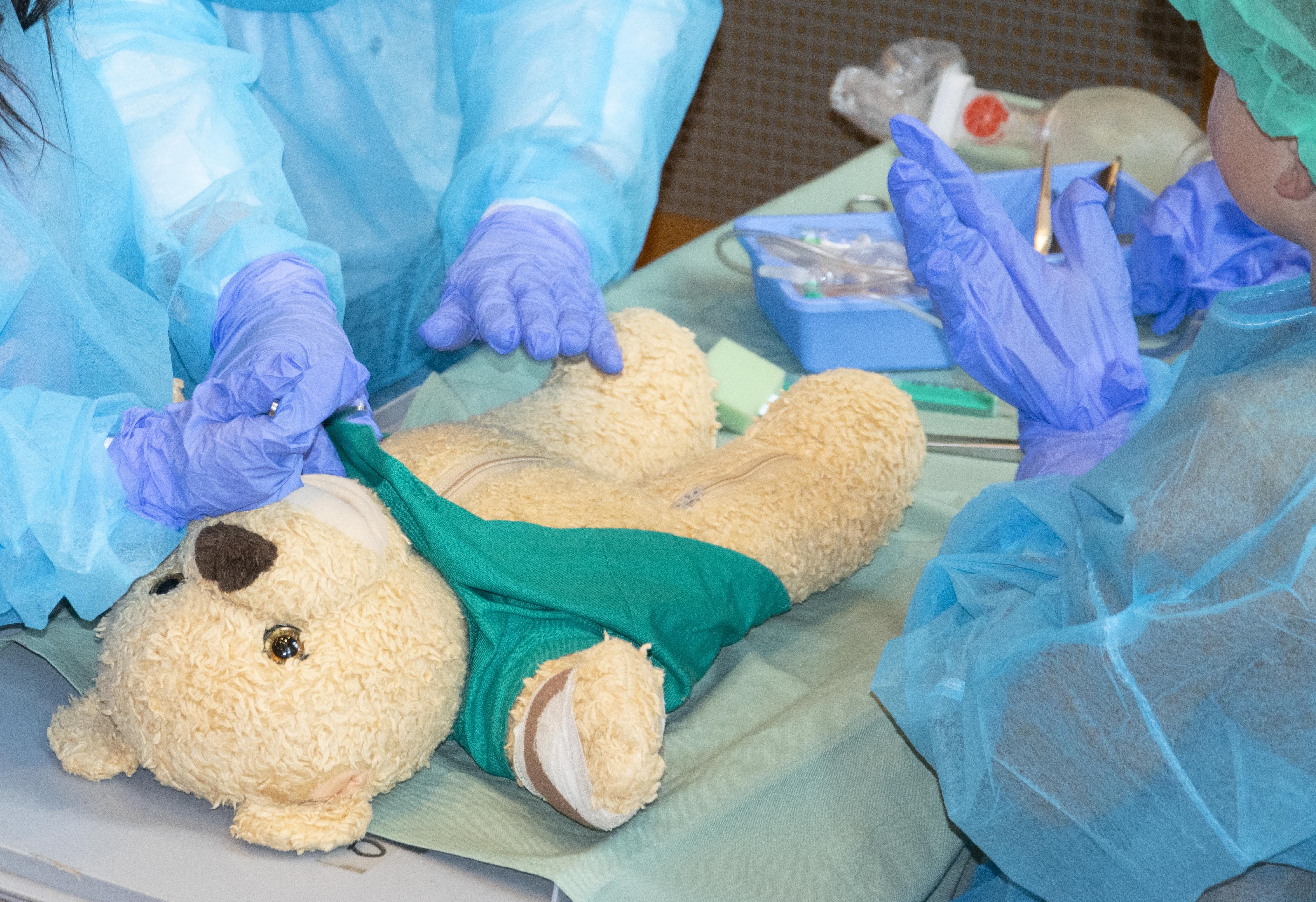
Once a year, the two students organise a teddy clinic in the Saalbau Homburg – supported by an organisational team of 73 members and twelve group leaders. More than 180 medical students were actively involved in the last teddy bear clinic in November 2025. Over four days, they looked after and cared for around a thousand children and their teddy bear patients: from penguins with colds to broken dragon wings to preventive medical check-ups for the plush patients. The children usually enthusiastically help with the treatment – for example, on the homemade computer tomograph, in the laboratory or in the teddy bear operating theatre. The children were also able to experience eye tests and tooth brushing together with their cuddly toys, as the optometry school and dental students also support the Teddy Clinic.
‘We show children how to use medical equipment in a child-friendly way, such as stethoscopes, reflex hammers or homemade teddy bear X-ray machines, right through to eye tests and operations on teddy bears. As many children are understandably afraid of unfamiliar situations, this can reduce their fear of future visits to the doctor,’ explains Julien Wallasch.
For many nurseries and primary schools in the area, a visit to the Teddy Clinic has become a fixed date in the calendar. ‘The team always receives a lot of grateful feedback,’ report the award winners. The students also benefit from the event, as it allows them to strengthen their communication and organisational skills and train their manual dexterity – for example, by making medical equipment on a ‘teddy bear scale’. The ‘Teddy Clinic Homburg’ has now accompanied many generations of medical students; as one of the largest teddy clinics in Germany, it has even gained national attention.
On the initiative of the students, the ‘Teddy Clinic’ was also established in 2024 as an official elective subject in the pre-clinical section of medical studies under the direction of Professor Carola Meier. Students of the elective subject are introduced to topics such as paediatric resuscitation and child protection, for example, and learn how to communicate with children in the context of the Teddy Clinic. ‘We receive a lot of positive feedback from the students, for example that dealing with children at the Teddy Clinic gives them more confidence in clinical situations. In addition, students can practise using layman's terms to explain complex medical terminology, which is necessary in all departments,’ emphasises award winner Maria Römbke.
The Saarland State Prize for University Teaching:
The State Prize for University Teaching has been awarded annually by the relevant ministry since 2003. The prize recognises outstanding and innovative achievements in teaching at universities in Saarland over the past year. At the same time, lecturers are encouraged to seek out and try new ways of teaching. The prize money of €48,000 is intended to further improve the quality of teaching and can be divided among several winners. Since 2023, the Ministry of Finance and Science has also awarded a special prize of €2,000 for exceptional student commitment that serves as a role model.
For more information, visit:
https://www.saarland.de/mfw/DE/portale/wissenschaft/informationen/foerderung/preise/landespreishochschullehre
und https://www.uni-saarland.de/dezernat/ls/qualitaetsinstrumente/landespreis-hochschullehre.html
Contact for enquiries:
Katharina Kessler
Leitung Lehr-Lern-Innovation
Universität des Saarlandes
E-Mail: katharina.kessler@uni-saarland.de
www.uni-saarland.de/dezernat/ls
Für das Lehrprojekt „interuniversitäres PJ-Teaching“
Prof. Dr. med. Fabian Dupont
Wissenschaftliche Projektleitung-Lehrentwicklung
Zentrum Allgemeinmedizin, Medizinische Fakultät der Universität des Saarlandes
Tel.: +49 6841 16-26802
E-Mail: fabian.dupont@uni-saarland.de
https://www.uni-saarland.de/fakultaet-m/zentrum-allgemeinmedizin/ueber-uns/unser-team.html
Für das Projekt „Teddyklinik Homburg“
Prof. Dr. Carola Meier
Studiendekanin der Medizinischen Fakultät
Universität des Saarlandes
Tel.: +49 6841 16-26106, -26073
E-Mail: carola.meier@mx.uni-saarland.de
You may use the press photos free of charge in connection with this press release and in reports on Saarland University, provided you credit the photographer.